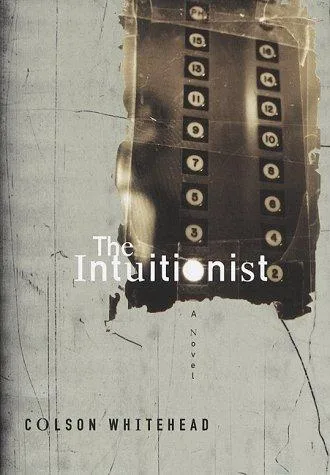
The intuitionist
 78
78

The intuitionist
Colson Whitehead’s 2017 novel, The Intuitionist, presents a fascinating, if at times deliberately opaque, look at a fictionalized department of public transportation that relies on ‘Intuitionists’ to assess elevator malfunctions. The strength of the book lies in its rigorous world-building; the mechanics of Intuitionism, with its own jargon and internal politics, feel remarkably solid, almost like a genuine academic discipline. Lila Mae Watson, our protagonist, is a compelling figure, a Black woman breaking barriers in this strange professional sphere. However, the novel’s deliberate pacing and abstract thematic concerns can occasionally feel like a barrier to emotional engagement. The section detailing the ‘Sacred Scroll’ and the philosophical underpinnings of their methods, while intellectually stimulating, borders on the overly didactic, risking the narrative’s momentum. Despite this, The Intuitionist succeeds as a sharp, unique examination of how we assign authority and trust, particularly when the grounds for that trust are inherently subjective.
📝 Description
78
### What It Is The Intuitionist by Colson Whitehead, first published in 2017, is a novel that interrogates the nature of belief and authority within a highly formalized, almost ritualistic system. It centers on the Intuitionist Department of the city's public transportation system, a branch where judgments are made not on empirical evidence but on subjective, intuitive pronouncements. The narrative follows Lila Mae Watson, one of the first Black women to become an Intuitionist, as she navigates the internal politics and existential questions of her profession.
### Who It's For This book will appeal to readers interested in philosophical fiction, particularly those who appreciate explorations of systems of knowledge and power. It is suited for individuals who enjoy narratives that challenge conventional modes of understanding and decision-making, and who are drawn to character studies set against unique, meticulously constructed worlds. Readers seeking straightforward plot resolution may find its ambiguities demanding.
### Historical Context Published in 2017, The Intuitionist emerged during a period of increased public discourse on expertise, bias, and the subjective elements inherent in professional judgment, especially within fields like law enforcement and technology. Whitehead’s work can be seen as engaging with a broader literary tradition that questions institutional structures, echoing concerns present in earlier works that examined the alienation and dehumanization within bureaucratic systems. The novel’s focus on intuition within a technical field offers a counterpoint to the era’s emphasis on data-driven decision-making.
### Key Concepts The central concept is "intuition" itself, treated not as a mystical gift but as a professional discipline with its own rules, hierarchies, and potential for corruption. The novel examines the tension between objective facts and subjective interpretation, particularly within a profession that ostensibly relies on the latter. It also delves into themes of identity, race, and gender, as Lila Mae’s position as a Black woman in a predominantly white, male institution shapes her experiences and the challenges she faces.
💡 Why Read This Book?
• You will gain a critical perspective on how professional authority is constructed and maintained, even when its basis is subjective. The novel's depiction of the Intuitionist Department’s internal doctrines offers a concrete example of institutionalized belief. • You will explore the complexities of identity within specialized professions through Lila Mae Watson’s experience as a Black woman navigating the Intuitionist ranks, providing a specific lens on systemic barriers. • You will consider the philosophical implications of judgment and evidence by examining the novel’s central debate between empirical observation and intuitive pronouncements, a core conflict within the text.
⭐ Reader Reviews
Honest opinions from readers who have explored this book.
❓ Frequently Asked Questions
What is the central premise of Colson Whitehead's The Intuitionist?
The Intuitionist, published in 2017, is set in a fictional city where a department of public transportation employs 'Intuitionists' to diagnose elevator failures based on subjective intuition rather than empirical evidence.
Who is the main character in The Intuitionist?
The protagonist is Lila Mae Watson, one of the first Black women to become an Intuitionist, who finds herself at the center of departmental controversy and personal scrutiny.
What year was The Intuitionist originally published?
Colson Whitehead's novel, The Intuitionist, was first published in 2017.
What themes does The Intuitionist explore?
The book delves into themes of belief, authority, professional judgment, race, gender, and the nature of subjective versus objective knowledge within formalized systems.
Is The Intuitionist a mystery novel?
While it features an investigation into an elevator accident, its primary focus is on exploring the philosophical underpinnings of the Intuitionist profession and its societal implications, rather than a traditional mystery plot.
What makes the Intuitionist department unique?
The department's unique aspect is its reliance on 'intuition' as a formal diagnostic tool for mechanical failures, creating a system where subjective feeling holds professional weight.
🔮 Key Themes & Symbolism
The Discipline of Intuition
The novel meticulously constructs 'Intuitionism' as a professional practice, complete with its own sacred texts, historical figures, and diagnostic methods. It's presented not as a vague feeling but as a rigorous system of belief and judgment. This treatment elevates intuition from a personal trait to an institutionalized form of knowledge, challenging readers to consider how systems of authority are built upon foundations that may appear irrational to outsiders. The work explores the potential for both profound insight and profound manipulation within such a framework.
Race and Professional Identity
Lila Mae Watson's position as a Black woman within the predominantly white and male Intuitionist department is central. Her struggles are not solely about her professional competence but also about navigating the racial and gendered expectations of the institution. The novel uses her experience to highlight how identity intersects with professional belonging and the challenges of asserting oneself within established power structures. Her intuition is constantly being tested, both by mechanical issues and by the prejudices of her colleagues.
Systems of Belief and Authority
At its core, The Intuitionist is an examination of how societies establish and maintain systems of belief and authority. The Intuitionist Department serves as a microcosm, demonstrating how a specialized field can develop its own logic, dogma, and hierarchy. The novel questions the basis of expertise, particularly when it relies on subjective interpretation rather than verifiable data. It prompts reflection on the trust we place in institutions and the individuals who operate within them, regardless of their apparent rationality.
The Nature of Truth
The novel grapples with differing conceptions of truth. Is truth found in objective, observable facts, or can it be accessed through subjective experience and insight? The conflict between empirical investigation and intuitive assessment within the Intuitionist Department forces a confrontation with these questions. The narrative suggests that in certain professional contexts, the *belief* in a method, and the authority it confers, can become more significant than the method's inherent validity.
💬 Memorable Quotes
“The whole point of the department was that it didn’t need proof.”
— This line encapsulates the novel's central thesis: the deliberate embrace of non-empirical methods within a professional context. It highlights the inherent subjectivity and the potential for unquestioned authority that arises when proof is not a requirement.
“She felt the familiar flutter in her chest, the loosening in her stomach, the slight chill that ran down her spine.”
— This passage describes the physical manifestations of intuition for Lila Mae. It grounds the abstract concept in bodily sensations, suggesting that intuition, while subjective, is a tangible, visceral experience for the practitioner.
“Proof was the enemy of intuition.”
— This statement directly contrasts the novel's core concept with conventional scientific or investigative approaches. It argues that the very act of seeking empirical proof would undermine the unique methodology of the Intuitionists.
“The Sacred Scroll was the oldest document in the department, a collection of pronouncements that laid out the principles of intuition.”
— This refers to the foundational text of the Intuitionist discipline. It signifies the formalization of intuition into dogma, complete with a historical lineage and canonical writings, much like established religious or philosophical traditions.
“There were two kinds of people in the world: the ones who believed in the department and the ones who didn’t.”
— This interpretation, paraphrasing a sentiment within the book, highlights the binary thinking and insider/outsider mentality fostered by the Intuitionist department. It suggests a cult-like adherence to its principles.
🌙 Esoteric Significance
Tradition
While not explicitly tied to a single esoteric lineage, The Intuitionist engages with Gnostic and Hermetic themes by exploring hidden knowledge, esoteric disciplines, and the power of subjective interpretation over empirical reality. The Intuitionist Department's reliance on internal pronouncements and a formalized, secret methodology mirrors the structure of many mystical orders that prioritize inner knowing and tradition-bound understanding over external validation.
Symbolism
The elevator itself serves as a potent symbol, representing a mechanism of transition and movement between different states or levels—much like the planes of existence explored in esoteric thought. The 'Sacred Scroll' functions as a symbolic text, akin to grimoires or sacred scriptures, dictating the rules and beliefs of the order. The act of 'reading' an elevator's malfunction through intuition symbolizes the esoteric practice of discerning hidden truths or energies.
Modern Relevance
Contemporary practitioners of fields like intuitive development, energy healing, or even certain branches of psychological counseling might find resonance with The Intuitionist's exploration of formalized subjective experience. The novel’s dissection of how intuition can be codified and institutionalized offers a framework for understanding how such practices are perceived and integrated—or rejected—by mainstream society and professional structures.
👥 Who Should Read This Book
• Aspiring practitioners of intuitive arts seeking to understand how subjective disciplines can be formalized and institutionalized. • Students of comparative religion and philosophy interested in the construction of belief systems and the nature of authority outside empirical frameworks. • Readers of literary fiction who appreciate unique world-building and narratives that challenge conventional notions of knowledge and truth.
📜 Historical Context
Colson Whitehead’s The Intuitionist, published in 2017, arrived in a cultural moment increasingly concerned with the nature of expertise, bias, and the subjective elements that underpin professional judgment. While the novel itself is set in a fictionalized past, its exploration of a system relying on intuition rather than empirical data resonated with contemporary debates surrounding everything from technological algorithms to legal proceedings. The work engages with a literary tradition that scrutinizes bureaucratic and professional systems, echoing concerns present in authors like Kafka. Whitehead’s unique contribution was to frame this critique within the context of a deliberately constructed, almost ritualistic discipline—Intuitionism—offering a counter-narrative to the era's fervent embrace of data. The novel’s reception highlighted its success in creating a compelling, albeit peculiar, occupational world that sparked discussion about how authority is established and maintained.
📔 Journal Prompts
The Sacred Scroll's principles and their application in Lila Mae's work.
The significance of the elevator as a transitional symbol in the narrative.
How the department's dogma contrasts with empirical evidence.
The role of Lila Mae's intuition in navigating professional politics.
The concept of proof as the 'enemy of intuition' within the text.
🗂️ Glossary
Intuitionist
A member of a specialized department within a public transportation system, tasked with diagnosing elevator failures based on subjective intuition and established departmental doctrine rather than empirical evidence.
The Sacred Scroll
The foundational, ancient text of the Intuitionist department, containing the pronouncements and principles that guide their practice and belief system.
The Department
Refers specifically to the fictional Intuitionist Department of Public Transportation, characterized by its unique methodology, internal politics, and hierarchical structure.
Proof
In the context of The Intuitionist, 'proof' refers to empirical, verifiable evidence, which is considered counterproductive and antithetical to the core principles of Intuitionism.
Empirical
Relating to or derived from observation and experience, rather than theory or pure logic. This is contrasted with the 'intuitive' approach central to the novel.
Lila Mae Watson
The protagonist of the novel, a Black woman who is one of the first to become an Intuitionist, facing scrutiny and challenges within the department.
Black Box
A term used within the novel to refer to a malfunctioning elevator that defies conventional analysis, requiring intuitive assessment.