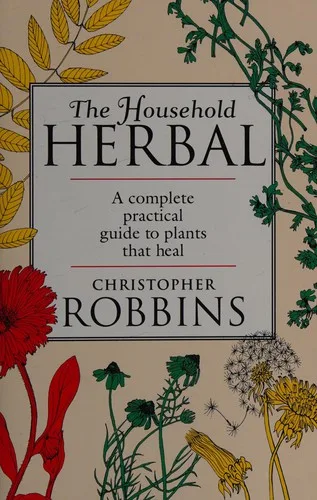
The Household Herbal
 72
72

The Household Herbal
Christopher Robbins' The Household Herbal offers a refreshingly grounded perspective on plant medicine. Unlike many contemporary texts that lean towards the arcane or overly academic, Robbins focuses on the practical, the attainable. The strength lies in its clear, no-nonsense instructions for preparing remedies from common garden herbs. For instance, the section detailing the preparation of a comfrey poultice for sprains is remarkably direct and useful. However, the book's limitation is its brevity in exploring the deeper energetic or spiritual qualities often associated with these plants within esoteric traditions. It remains primarily a materia medica. The 1996 publication date means it predates some modern research, but its fundamental principles hold firm. It serves well as an introductory manual for the aspiring herbalist seeking immediate application.
📝 Description
72
### What It Is The Household Herbal presents a practical approach to plant-based remedies, focusing on accessible herbs commonly found or easily cultivated. Christopher Robbins' work is less an academic treatise and more a guide for self-sufficiency in natural healing. It details the preparation and application of various herbal preparations, from tinctures to poultices, for common ailments. The book emphasizes understanding the properties of each plant and its traditional uses.
### Who It's For This volume is intended for individuals interested in self-reliance and natural health practices, particularly those seeking to integrate botanical knowledge into their daily lives. It appeals to homesteaders, urban gardeners with an interest in medicinal plants, and anyone desiring a foundational understanding of herbalism without complex botanical jargon. Readers looking for straightforward instructions on preparing and using common herbs for household wellness will find it particularly useful.
### Historical Context Published in 1996, The Household Herbal emerged during a period of resurgent interest in natural health and traditional practices. This era saw a growing public curiosity about alternative medicine and a desire to reconnect with pre-industrialized forms of healing. Robbins' work taps into this movement, offering a counterpoint to the increasingly technological and pharmaceutical-driven medical landscape of the late 20th century. Its practical focus aligns with a broader societal shift towards sustainability and personal empowerment in health management.
### Key Concepts The core of The Household Herbal lies in the concept of accessible botanical wisdom. It champions the idea that potent healing agents are readily available in nature, often in one's own backyard. The book breaks down complex herbal preparations into manageable steps, demystifying processes like maceration and infusion. It also implicitly promotes a philosophy of observation and patient understanding of plant cycles and properties, encouraging a deeper connection with the natural world as a source of well-being.
💡 Why Read This Book?
• Learn specific preparation methods for common ailments, such as crafting comfrey poultices for injuries, offering practical, immediate self-care skills not found in generalized wellness guides. • Understand the traditional applications of widely available plants like mint and chamomile, fostering a direct connection to natural remedies rooted in historical usage since at least the early 20th century. • Gain confidence in formulating simple herbal remedies from your own garden or local foraging, empowering you with accessible, cost-effective health solutions distinct from commercial products.
⭐ Reader Reviews
Honest opinions from readers who have explored this book.
❓ Frequently Asked Questions
What kind of herbs does The Household Herbal focus on?
The book primarily focuses on common, easily accessible herbs such as mint, chamomile, comfrey, and calendula. It emphasizes plants that can be grown in a home garden or are readily found, making its advice practical for everyday use.
Is The Household Herbal suitable for beginners?
Yes, it is very suitable for beginners. Christopher Robbins presents information clearly and avoids overly technical jargon, focusing on straightforward preparation methods and applications for common household needs.
When was The Household Herbal first published?
The Household Herbal was first published in 1996, reflecting a resurgence of interest in natural health and traditional herbalism during the late 20th century.
What types of remedies are covered in the book?
The book covers a range of simple herbal remedies, including tinctures, infusions, decoctions, salves, and poultices, for common ailments like minor cuts, bruises, digestive upset, and sleep difficulties.
Does the book discuss foraging for herbs?
While it emphasizes easily grown garden herbs, the principles discussed can be applied to foraged plants. It encourages understanding plant properties and ethical harvesting if one chooses to forage.
What is the author's approach to herbalism?
Christopher Robbins advocates a practical, hands-on approach to herbalism, focusing on self-sufficiency and the use of readily available plants for maintaining everyday health and wellness.
🔮 Key Themes & Symbolism
Accessible Home Apothecary
The central theme is demystifying herbal medicine by focusing on plants readily available in home gardens or easily cultivated. Robbins guides readers through preparing simple yet effective remedies like infusions and salves from familiar botanicals. This approach empowers individuals to create their own natural first-aid kit, fostering self-reliance and a deeper connection to the healing power of common flora. The emphasis is on practical application rather than esoteric theory, making herbalism achievable for anyone interested in natural wellness.
Plant-Based Self-Sufficiency
This work champions a philosophy of self-sufficiency through the cultivation and use of medicinal plants. It posits that individuals can significantly manage common health concerns by understanding and utilizing the properties of herbs they can grow themselves. The book provides the foundational knowledge for this, detailing preparation techniques and applications for various ailments, encouraging a lifestyle that is less dependent on external pharmaceutical solutions and more attuned to natural cycles and resources.
Traditional Herbal Knowledge
The Household Herbal draws upon established, traditional uses of medicinal plants. While not delving into deep historical lineages, it collates practical, time-tested applications of common herbs for everyday health. This compilation serves as a bridge between historical herbal practices and contemporary needs, offering a digestible introduction to a rich body of folk knowledge. It highlights the enduring relevance of plant-based remedies that have been passed down through generations.
Holistic Household Wellness
Beyond treating specific ailments, the book implicitly promotes a holistic approach to household wellness. By encouraging the use of herbs for minor issues and general well-being, it fosters a proactive and nurturing environment. This perspective integrates natural remedies into the fabric of daily life, suggesting that a healthy home is one that is attuned to nature's bounty. It encourages observation and mindful interaction with plants as part of a balanced lifestyle.
💬 Memorable Quotes
“Many common plants in our gardens possess remarkable healing properties.”
— This statement encapsulates the book's core premise: that potent remedies are often overlooked and readily available in familiar surroundings, accessible to anyone willing to learn their uses.
“A simple infusion can soothe an upset stomach.”
— This highlights the practical, accessible nature of the remedies presented. It points to everyday plants and straightforward preparation methods for common discomforts, demystifying herbal healing.
“Comfrey is excellent for bruises and sprains.”
— This is a direct recommendation for a specific herb and its application, illustrating the book's focus on providing actionable advice for tangible physical complaints.
“Understanding how to prepare a plant is as important as knowing its name.”
— This emphasizes the practical 'how-to' aspect of the book, suggesting that successful herbalism requires not just identification but also knowledge of preparation techniques like infusion or salves.
“Natural remedies can be part of a balanced approach to health.”
— This positions herbalism not as an alternative to allopathic medicine but as a complementary practice, advocating for a balanced perspective on personal health management.
🌙 Esoteric Significance
Tradition
While not explicitly tied to a single esoteric lineage, The Household Herbal draws implicitly from the long tradition of folk herbalism and practical magic, which often intersects with Hermetic principles of understanding nature's forces. It aligns with the Hermetic tenet 'As Above, So Below' by seeking correspondences between the terrestrial realm (plants) and human well-being. The work departs from more ceremonial or theoretical magical traditions by focusing solely on the tangible, physical applications of plants, grounding esoteric principles in everyday practice.
Symbolism
The most apparent symbolism lies in the plants themselves, each carrying traditional associations – for example, comfrey representing healing and restoration ('bone-knitter'), and mint symbolizing clarity and purification. The act of preparing remedies like tinctures or salves can be seen as a symbolic process of extracting and concentrating nature's vital essence, a microcosm of alchemical transformation. The garden itself becomes a symbolic space, representing a personal Eden where one cultivates health and connection to the earth’s generative powers.
Modern Relevance
Contemporary interest in sustainable living, permaculture, and DIY health solutions directly echoes the principles found in The Household Herbal. Modern herbalists and wellness practitioners often reference such foundational texts for their emphasis on accessible, plant-based remedies. The book's focus on self-sufficiency and natural approaches continues to resonate with individuals seeking to reduce their reliance on industrial products and reconnect with traditional knowledge systems for personal and environmental well-being.
👥 Who Should Read This Book
• Aspiring home herbalists seeking clear, practical instructions for preparing remedies from common garden plants. • Individuals interested in natural health and self-sufficiency looking for foundational knowledge to manage everyday ailments. • Gardeners who wish to maximize the utility of their plants beyond ornamental or culinary purposes, turning their green spaces into sources of wellness.
📜 Historical Context
Christopher Robbins' The Household Herbal, first published in 1996, arrived during a significant resurgence of interest in natural health and alternative therapies. The late 20th century saw a growing public disillusionment with purely pharmaceutical approaches, leading many to explore traditional remedies and self-sufficiency. This period was marked by the rise of environmental consciousness and a desire to reconnect with nature, making books like Robbins' particularly relevant. While figures like James Duke were publishing comprehensive botanical guides, Robbins’ work focused on a more accessible, home-based application. It offered a practical counterpoint to the increasingly specialized and often inaccessible medical establishment, aligning with a broader cultural movement towards personal empowerment in health and wellness.
📔 Journal Prompts
The properties of mint as described in the text.
Your personal experience preparing a simple infusion or decoction.
The concept of a household apothecary in your current living situation.
How the idea of plant-based self-sufficiency contrasts with your current lifestyle.
Reflections on the symbolism of the garden as presented implicitly.
🗂️ Glossary
Infusion
A tea made by steeping plant material (usually leaves or flowers) in hot water for a short period, typically 5-15 minutes, to extract volatile oils and other soluble compounds.
Decoction
A preparation made by simmering tougher plant parts like roots, bark, or seeds in water for a longer duration (20-60 minutes) to extract medicinal constituents.
Tincture
A concentrated liquid herbal extract made by soaking plant material in alcohol (like vodka or brandy) or glycerin for several weeks, preserving the plant's properties.
Poultice
A soft mass of plant material, often heated or mixed with water or oil, applied directly to the skin over an injury or inflamed area to draw out impurities or reduce swelling.
Salve
A topical preparation made by infusing herbs into oil and then mixing the oil with beeswax to create a semi-solid balm, used for healing skin irritations, cuts, or burns.
Maceration
A process of softening or breaking down a solid substance by soaking it in a liquid. In herbalism, it often refers to soaking herbs in oil or alcohol at room temperature for an extended period.
Materia Medica
A body of knowledge about the medicinal properties, uses, and preparation of substances used for healing, specifically referring to plant-based remedies in this context.