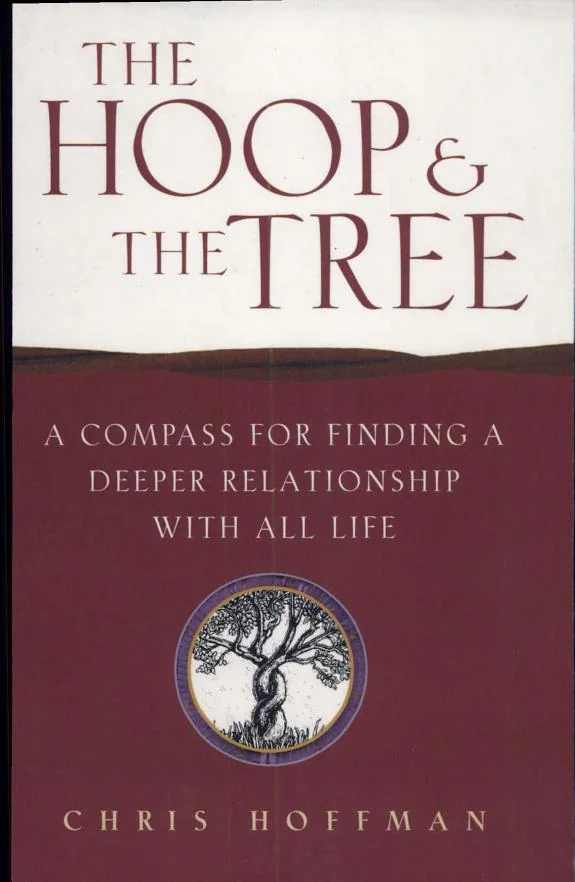
The Hoop & the Tree
 82
82

The Hoop & the Tree
Chris Hoffman's The Hoop & the Tree presents a compelling dichotomy that, while familiar in its archetypal nature, is articulated with a clarity often missing in broader self-help literature. The strength of the book lies in its consistent grounding of abstract concepts in tangible examples, particularly its references to Native American traditions. For instance, the discussion around the "hoop" as a symbol of communal responsibility, contrasted with the "tree's" vertical aspiration, is particularly effective. However, the book's primary limitation is its occasional reliance on generalized interpretations of indigenous practices, which risks essentializing diverse cultural expressions. A more nuanced exploration of the specific cultural contexts from which these examples are drawn would have enhanced its scholarly weight. Despite this, the work's central thesis—that a fulfilling existence requires the harmonious development of both individual growth and communal connection—remains a potent and valuable message for contemporary readers.
📝 Description
82
### What It Is
The Hoop & the Tree, first published in 2000 by Chris Hoffman, offers a framework for holistic personal development. It posits two fundamental symbolic structures: the "tree" representing vertical ascent through individual growth, intellectual pursuit, and spiritual elevation; and the "hoop" symbolizing horizontal connection, encompassing our relationships with community and the natural world. The work draws on diverse ancient traditions to illustrate how balancing these two dimensions leads to a more integrated and fulfilling existence.
### Who It's For
This book is intended for individuals seeking a balanced approach to self-improvement, those interested in comparative mythology, and readers drawn to the wisdom of indigenous cultures. It appeals to anyone feeling a disconnect between personal aspirations and their social or environmental responsibilities. It's for those who want to understand how inner development can inform outer action and vice versa, moving beyond purely individualistic or purely communal models of living.
### Historical Context
Emerging at the turn of the millennium, The Hoop & the Tree arrived during a period of burgeoning interest in indigenous wisdom and holistic psychology. It engaged with a cultural moment where New Age thought was evolving, moving towards more grounded, cross-cultural explorations of spirituality. While the New Age movement often synthesized Eastern philosophies, Hoffman's work specifically foregrounded Native American traditions, distinguishing it from some earlier syncretic trends. It offered an alternative to purely Western psychological models of growth by integrating cosmological and relational perspectives.
### Key Concepts
The central metaphor of the "hoop" and "tree" is explored through various cultural lenses. The "tree" concept encompasses individual striving, learning, and spiritual ascension, often drawing parallels with shamanic journeys or personal enlightenment narratives. The "hoop" emphasizes interconnectedness, community well-being, and ecological awareness, reflecting principles found in many tribal cosmologies. Hoffman argues that neglecting either aspect leads to imbalance, manifesting as either isolated egoism or a loss of individual identity within the collective. The book advocates for conscious cultivation of both dimensions for a complete life.
💡 Why Read This Book?
• You will learn how to integrate personal growth with collective responsibility, using the "hoop" and "tree" metaphor as a practical guide, inspired by Hoffman's 2000 publication. • You will gain a deeper understanding of indigenous symbolic systems, specifically how Native American traditions offer models for balancing individual ascent and community connection. • You will discover actionable approaches to self-development that honor both inner spiritual journeys and outward social and ecological engagement, moving beyond purely individualistic frameworks.
⭐ Reader Reviews
Honest opinions from readers who have explored this book.
❓ Frequently Asked Questions
What is the central metaphor in Chris Hoffman's The Hoop & the Tree?
The book's core metaphor contrasts the "tree," representing individual spiritual and intellectual growth, with the "hoop," symbolizing our connection to humanity and the Earth, advocating for the balance of both.
What ancient traditions does The Hoop & the Tree draw upon?
Chris Hoffman primarily references Native American traditions, but also touches upon other ancient cultural examples to illustrate the universal principles of the hoop and tree symbolism.
When was The Hoop & the Tree first published?
The Hoop & the Tree was first published in the year 2000, marking its emergence at the turn of the millennium.
How does the book aim to help readers lead a more contented existence?
By guiding readers to develop both their "tree" (individual growth) and "hoop" (connection to others and the Earth) aspects, the book proposes a path to a more complete and harmonious life.
Is The Hoop & the Tree a practical guide or a theoretical exploration?
It functions as both. While theoretical in its symbolic framework, it offers practical applications by showing readers how to cultivate both the vertical (tree) and horizontal (hoop) dimensions of their lives.
Who is the author of The Hoop & the Tree?
The author is Chris Hoffman, whose work explores the integration of personal development with communal and environmental responsibility.
🔮 Key Themes & Symbolism
The Vertical Tree of Growth
The "tree" symbolizes the individual's journey of aspiration, intellectual development, and spiritual elevation. This theme explores concepts of personal evolution, the pursuit of knowledge, and the quest for inner enlightenment. Hoffman uses various cultural narratives, including those found in indigenous cosmologies, to illustrate how individuals can cultivate their inner "tree" to reach greater heights of understanding and being, emphasizing that this vertical dimension is crucial for a fully realized self.
The Horizontal Hoop of Connection
Complementing the "tree," the "hoop" represents our interconnectedness with humanity, community, and the natural world. This theme delves into the importance of relationships, social responsibility, and ecological awareness. Hoffman draws parallels with communal structures and the collective consciousness found in ancient traditions, arguing that a robust "hoop" is essential for grounding individual aspirations and fostering a sense of belonging and shared purpose. It highlights the cyclical nature of life and interdependence.
Harmonizing Duality
The central tenet of the book is the necessity of harmonizing the "hoop" and the "tree." This theme addresses the potential pitfalls of overemphasizing one dimension at the expense of the other, such as individualism leading to isolation or collectivism leading to suppression of self. Hoffman provides frameworks, often inspired by cross-cultural wisdom, for achieving a balanced existence where personal growth actively enhances community well-being and vice versa, leading to a more contented and complete life.
Wisdom from Ancient Traditions
Hoffman grounds his concepts in the rich symbolic language of various ancient cultures, most notably Native American traditions. This theme examines how ancestral wisdom offers practical models for living in balance. By referencing specific myths, rituals, and cosmological views, the book demonstrates that the principles of integrating individual journey with communal life are not modern inventions but enduring truths passed down through generations, offering a profound historical and cultural perspective.
💬 Memorable Quotes
“The 'tree' is the vertical dimension of aspiration, individual growth, and intellectual and spiritual development.”
— This highlights the book's core concept of personal upward striving, encompassing all facets of self-improvement from intellectual understanding to spiritual transcendence. It sets the stage for understanding individual potential.
“The 'hoop' is the circular representation of our relationship with humanity and the earth.”
— This defines the counterpoint to the 'tree,' emphasizing the essential role of external connections—social, communal, and environmental. It points to our interconnectedness and responsibilities beyond the self.
“Using examples from Native American and other ancient traditions, Chris Hoffman shows readers how to develop both parts of the whole...”
— This indicates the book's methodology, grounding abstract principles in diverse cultural wisdom. It suggests a practical, comparative approach to achieving holistic development.
“...to help people lead a more contented, complete existence.”
— This states the ultimate goal of the book's teachings: not just self-improvement, but the attainment of a deeper, more integrated form of happiness and fulfillment through balance.
“The work explores how balancing inner development with outer connection leads to wholeness.”
— This is a paraphrased interpretation emphasizing the synthesis of the 'tree' and 'hoop' concepts. It underscores the book's message that true completeness arises from integrating personal journey with relational and ecological engagement.
🌙 Esoteric Significance
Tradition
The Hoop & the Tree draws heavily from indigenous spiritual traditions, particularly Native American cosmologies, positioning itself outside the mainstream Hermetic, Kabbalistic, or Theosophical lineages. It interprets these traditions through a lens of universal psychological and spiritual principles, focusing on the symbolic language of nature and community. It departs from more esoteric systems by emphasizing direct experiential connection to the earth and collective rather than complex metaphysical structures or secret initiations.
Symbolism
The central symbols are the "tree" and the "hoop." The "tree" signifies vertical ascent, personal growth, knowledge, and spiritual connection, echoing world tree motifs found across many cultures (e.g., Yggdrasil in Norse mythology). The "hoop" represents horizontal connection, community, the cycle of life, and the interconnectedness of all beings, reminiscent of medicine wheels or circular dwelling structures in indigenous architecture. Their integration signifies a balanced, holistic life.
Modern Relevance
Contemporary thinkers and practitioners in ecopsychology, trauma-informed care, and community resilience studies find resonance in Hoffman's work. The emphasis on balancing individual needs with collective well-being aligns with current discussions on social justice, environmental stewardship, and the search for meaning beyond consumerism. Its accessible framework makes it relevant for modern spiritual seekers exploring non-dogmatic paths that integrate personal development with a broader sense of belonging and responsibility.
👥 Who Should Read This Book
• Individuals feeling disconnected or overwhelmed by modern life, seeking a balanced approach to personal fulfillment and community engagement. • Students of comparative mythology and indigenous spiritualities, looking for accessible explanations of cross-cultural symbolic systems. • Therapists, counselors, and educators interested in holistic models of human development that integrate psychological, spiritual, and social dimensions.
📜 Historical Context
Published in 2000, Chris Hoffman's The Hoop & the Tree emerged during a period of intensified interest in indigenous psychologies and holistic approaches to well-being. While the preceding decades saw the New Age movement synthesize various Eastern spiritualities, Hoffman’s work distinguished itself by focusing primarily on the wisdom embedded within Native American traditions. This was significant as it offered an alternative framework to the often-individualistic self-help paradigms prevalent in Western psychology and the more eclectic syncretism of earlier New Age thought. The book engaged with a cultural current seeking more grounded, earth-connected spirituality. Its reception occurred within a broader discourse on multiculturalism and the decolonization of knowledge, where voices from non-Western traditions were increasingly being sought out, though often still filtered through Western academic or popular lenses. The work stood apart from contemporary figures like Michael Meade, who also explored archetypal narratives, by specifically centering indigenous cosmological models.
📔 Journal Prompts
The vertical "tree" of personal aspiration and its current state.
Reflecting on the "hoop" of your connections: community, nature, and humanity.
How the "hoop" and "tree" symbols manifest in a specific Native American tradition explored in the book.
Identifying imbalances between your "tree" growth and "hoop" connections.
Developing practices to nurture both individual development and communal well-being.
🗂️ Glossary
The Tree
A central metaphor in the book representing the vertical dimension of individual growth, including intellectual, spiritual, and personal development aspirations.
The Hoop
The symbolic representation of horizontal connection, encompassing relationships with humanity, community, and the Earth, emphasizing interconnectedness.
Holistic Existence
A state of being achieved by consciously cultivating and balancing both the "tree" (individual growth) and the "hoop" (communal/earthly connection).
Vertical Dimension
Refers to the "tree" aspect: the upward movement of personal aspiration, learning, and spiritual evolution.
Horizontal Dimension
Refers to the "hoop" aspect: the outward and encompassing nature of relationships, community, and ecological awareness.
Contented Existence
The outcome proposed by the book: a state of peace and fulfillment derived from integrating personal growth with meaningful connection.
Ancient Traditions
Refers to the source material and examples used by Hoffman, primarily Native American cultures, to illustrate the universal principles of the hoop and tree.