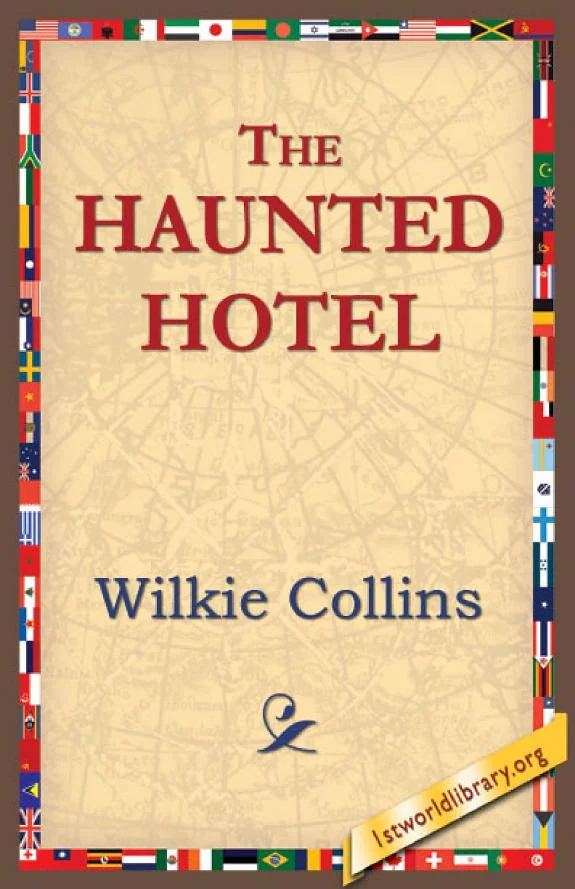
The Haunted Hotel
 79
79

The Haunted Hotel
Collins's "The Haunted Hotel" offers a genuinely unsettling atmosphere, particularly in its depiction of the hotel as a repository of psychic residue. The strength of the work lies in its subtle build-up of dread, relying more on suggestion and psychological unease than overt scares. A particularly effective passage involves the protagonist's growing certainty that the very walls of the hotel are imbued with the secrets of its past occupants. However, the narrative occasionally falters in its pacing, with some sections feeling more expository than suspenseful, slowing the momentum of the unfolding mystery. The resolution, while fitting the Gothic tradition, might feel somewhat conventional to modern readers accustomed to more complex or ambiguous endings. Nevertheless, "The Haunted Hotel" remains a potent exploration of guilt and its spectral manifestations. It is a chilling, if occasionally uneven, piece of Victorian supernatural fiction.
📝 Description
79
Wilkie Collins published "The Haunted Hotel," a Gothic novella, in 1905.
Set in a mysterious Victorian hotel, Wilkie Collins's "The Haunted Hotel" examines the psychological and supernatural anxieties of its inhabitants. The narrative unfolds around unsettling events within the hotel's walls, probing themes of guilt, deception, and the lasting impact of past actions. Collins blurs the distinction between rational explanations and spectral occurrences, creating an atmosphere of unease.
This work appeals to readers who enjoy atmospheric Victorian literature with a supernatural element. Those interested in early psychological horror and the exploration of moral ambiguity will find the story engaging. It shares common ground with authors like Sheridan Le Fanu and Bram Stoker, who used the Gothic tradition to explore societal fears and individual conscience. The novella offers intricate plotting and suspense driven by character development.
Published in 1905, "The Haunted Hotel" appeared during a period of heightened interest in spiritualism and the occult within Victorian society. This fascination permeated the era's literature, and Collins's novella reflects this continued engagement with the supernatural. It emerged from a literary movement that explored the darker aspects of human nature and the unknown, questioning the boundary between internal psychological states and external spectral phenomena.
💡 Why Read This Book?
• Gain insight into the Victorian fascination with spiritualism and psychic phenomena, as depicted in the unsettling events at the hotel, offering a unique perspective on early 20th-century occult interests. • Experience Collins's masterful use of atmosphere to create suspense, particularly through his description of the hotel itself as a character that absorbs and reflects past traumas. • Understand how "The Haunted Hotel" explores the psychological underpinnings of fear, questioning whether hauntings are external specters or internal projections of guilt and trauma.
⭐ Reader Reviews
Honest opinions from readers who have explored this book.
❓ Frequently Asked Questions
What is the primary setting for "The Haunted Hotel"?
The primary setting is a mysterious and unsettling hotel, which becomes a focal point for the novella's supernatural and psychological drama. This isolated location amplifies the characters' anxieties and the unfolding mystery.
When was "The Haunted Hotel" originally published?
While this specific edition is from 2005, Wilkie Collins's "The Haunted Hotel" was originally published in 1905, placing it at the cusp of the 20th century.
What are the main themes explored in the book?
The main themes include guilt, deception, the psychological impact of the past, and the nature of hauntings, which may be supernatural or a manifestation of inner turmoil.
Is "The Haunted Hotel" a ghost story in the traditional sense?
It leans into ghost story elements but also delves deeply into psychological horror, questioning the origin of the 'haunting' and whether it stems from external specters or internal states of mind.
Who were some of Wilkie Collins's contemporaries in literature?
Wilkie Collins was a contemporary of Charles Dickens, and his work shares thematic and stylistic elements with other Victorian and early 20th-century authors like Sheridan Le Fanu and Bram Stoker, who also explored the Gothic and supernatural.
Does the book offer a clear explanation for the supernatural events?
The book deliberately blurs the lines between the supernatural and the psychological, offering interpretations that suggest both external hauntings and internal projections of guilt and fear, rather than a single, definitive explanation.
🔮 Key Themes & Symbolism
The Hotel as a Psychic Vessel
The novella treats the hotel not merely as a setting but as a character imbued with the psychic energy of its past inhabitants. This concept aligns with esoteric ideas of places retaining energetic imprints. Collins explores how the environment can influence and reflect the mental states of those within it, suggesting that unresolved traumas and secrets can manifest physically, creating an atmosphere of dread. The architecture and history of the hotel become integral to the unfolding psychological drama, embodying the collective unconscious of its occupants.
Guilt and Manifestation
A central theme is the externalization of guilt. Characters' internal anxieties and moral failings are depicted as potentially manifesting as spectral phenomena. This resonates with esoteric traditions that view negative emotional states as capable of creating tangible energetic disturbances. The 'haunting' serves as a metaphor for the inescapable nature of one's conscience, where past misdeeds return to torment the present. The narrative probes the idea that what we perceive as supernatural may often be a projection of our own inner turmoil.
The Blurring of Rationality and Supernatural
Collins masterfully blurs the lines between the rational and the supernatural, leaving the reader to question the true nature of the unsettling events. Is the hotel truly haunted, or are the characters experiencing shared delusions or psychological breakdowns? This ambiguity is a hallmark of Gothic literature and touches upon esoteric inquiries into the nature of reality and perception. The work invites contemplation on how belief and expectation can shape our experience of the world, and the potential for unseen forces to influence human affairs.
💬 Memorable Quotes
“The shadows in the room seemed to deepen and shift.”
— This evocative description suggests a palpable sense of unease and a supernatural presence. It highlights how the environment itself appears to react to unseen forces, contributing to the novel's oppressive atmosphere.
“He felt a presence, though none was visible.”
— This captures the essence of psychological horror and the uncanny. The character senses something beyond the ordinary, pointing towards the novel's exploration of non-corporeal influences and subjective experiences of fear.
“The very air of the place felt heavy with unspoken secrets.”
— This paraphrase emphasizes the hotel's role as a repository of past events. It conveys the idea that locations can absorb emotional residue, making the setting itself a source of dread and mystery.
“Was it a ghost, or a figment of a troubled mind?”
— This direct question encapsulates the novella's central ambiguity. It forces the reader to consider whether the phenomena are external supernatural events or internal psychological projections of guilt and fear.
“The past clung to the walls like a persistent mold.”
— This metaphorical statement vividly illustrates the pervasive and inescapable nature of past transgressions. It suggests that history and its consequences are not easily erased and can continue to affect the present.
🌙 Esoteric Significance
Tradition
While not strictly adhering to a single esoteric lineage, "The Haunted Hotel" engages with concepts prevalent in late 19th and early 20th-century occultism, particularly those concerning psychic energy and the influence of thought forms. It touches upon ideas related to psychometry (places retaining impressions) and the potential for strong emotions to imprint themselves onto the environment, a concept explored in Theosophical and broader New Age thought. The work reflects a period where the boundaries between psychology, spirituality, and the supernatural were actively being investigated.
Symbolism
The hotel itself functions as a potent symbol, representing a space where the subconscious is externalized and past traumas manifest. Its architecture and atmosphere become charged with meaning, embodying the characters' hidden guilt and anxieties. The recurring motif of shadows and unseen presences symbolizes the unknown aspects of the psyche and the hidden forces that influence human behavior. The novella also employs the trope of secrets and hidden rooms, symbolizing the repressed elements of the mind that inevitably seek expression.
Modern Relevance
Contemporary explorations of psychological horror and supernatural thrillers often echo "The Haunted Hotel's" thematic concerns. Thinkers and practitioners in fields like ecopsychology and place attachment might find resonance in the idea of environments being imbued with emotional energy. The novel's questioning of the nature of reality and perception also aligns with modern philosophical and psychological debates about consciousness and the subjective experience of the world, making its exploration of fear and guilt still relevant.
👥 Who Should Read This Book
• Students of Victorian literature and Gothic fiction seeking to understand the era's fascination with the supernatural and psychological suspense. • Readers interested in early explorations of psychological horror and the idea of places retaining energetic imprints, offering a precursor to modern haunted house narratives. • Enthusiasts of Wilkie Collins's work who wish to explore a shorter, atmospheric piece that delves into themes of guilt and perceived hauntings.
📜 Historical Context
Wilkie Collins's "The Haunted Hotel," published in 1905, emerged at a time when Victorian and Edwardian England was captivated by spiritualism, séances, and the occult. This era saw a surge in popular and literary interest in ghosts, psychic phenomena, and the exploration of the subconscious. Collins, already a celebrated author known for "The Woman in White" and "The Moonstone," tapped into this zeitgeist. His work existed alongside a rich tradition of Gothic and sensation fiction, engaging with authors like Sheridan Le Fanu, whose "Carmilla" predated it, and Bram Stoker, whose "Dracula" was published in 1897. The novel's exploration of psychic influence and the lingering power of the past reflects a broader cultural fascination with what lay beyond rational understanding. While not overtly controversial, its themes aligned with a growing literary engagement with the psychological and the uncanny, contributing to the era's rich tapestry of supernatural narratives.
📔 Journal Prompts
The hotel's atmosphere as a reflection of inner turmoil.
The manifestation of guilt in spectral phenomena.
The ambiguity between supernatural haunting and psychological projection.
The role of secrets in creating an oppressive environment.
Sensory details that contribute to the feeling of unease within the hotel.
🗂️ Glossary
Gothic Fiction
A literary genre characterized by elements of horror, death, and gloom, as well as romantic elements like nature, individuality, and very high emotion. It often features supernatural events, old castles, and a pervasive sense of mystery and dread.
Sensation Novel
A genre popular in the mid-19th century, known for its thrilling plot, sensational events, and often featuring elements of crime, mystery, and melodrama. Wilkie Collins was a prominent figure in this genre.
Psychic Energy
A concept found in various esoteric traditions referring to a subtle energy associated with consciousness, emotions, and mental states, believed by some to influence the physical world or be retained in locations.
Psychometry
A supposed psychic ability to read the history of an object or place by touching it. In "The Haunted Hotel," the hotel itself seems to exhibit qualities of psychometric resonance.
Thought Forms
In esoteric belief systems, particularly Theosophy, thought forms are visualized or imagined entities created by strong mental or emotional energy, which are believed to have a temporary existence and influence.
The Uncanny
A psychological concept referring to something that is simultaneously familiar and strange, evoking a sense of unease or discomfort. It often relates to repressed fears or anxieties returning in a disguised form.
Victorian Spiritualism
A widespread movement in Victorian England focused on communicating with the spirits of the dead, often through séances and mediums, reflecting a cultural interest in the afterlife and the paranormal.