The Gospel of Thomas
 78
78

The Gospel of Thomas
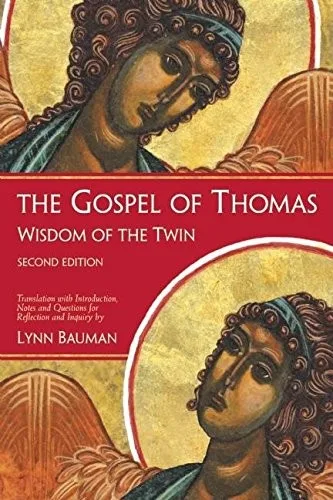
Lynn Bauman's presentation of the Gospel of Thomas offers a clear entry point into this enigmatic text. Bauman’s primary strength lies in making the aphoristic sayings accessible without oversimplifying their profound implications. The work provides essential context for understanding Thomas's place within early Christian Gnosticism. However, the commentary, while helpful, occasionally leans towards a modern, therapeutic interpretation that might not fully capture the original ascetic and radical spiritual framework. A particularly striking passage is saying 112, which suggests the kingdom of God is attainable 'when you strip yourselves naked and have no shame.' Bauman's interpretation here is useful, but the raw, confrontational nature of the original statement deserves even more emphasis on the shedding of ego and societal conditioning. It is a valuable resource for those beginning their exploration of Gnostic Gospels.
📝 Description
78
### What It Is The Gospel of Thomas is a collection of sayings attributed to Jesus, presented without narrative or commentary. Unlike the canonical Gospels, it focuses on Jesus's esoteric teachings, emphasizing inner knowledge and the direct experience of the divine. This text, discovered in 1945 near Nag Hammadi in Egypt, offers a unique perspective on early Christian thought, diverging significantly from the emphasis on salvation through crucifixion and resurrection found in later orthodox traditions.
### Who It's For This work is for individuals interested in the non-canonical sayings of Jesus, particularly those seeking a more mystical or Gnostic interpretation of his teachings. It appeals to scholars of early Christianity, comparative religion enthusiasts, and those exploring alternative spiritual paths that prioritize personal gnosis over institutional dogma. Readers looking for direct, aphoristic wisdom rather than biographical narrative will find it compelling.
### Historical Context The Gospel of Thomas is believed to have been composed in the 2nd century CE, though some scholars date it earlier. Its discovery among the Nag Hammadi library texts in 1945 provided crucial evidence for the diversity of early Christian beliefs. It represents a significant branch of Gnosticism, a movement that emphasized spiritual knowledge (gnosis) as the path to salvation. The orthodox Church eventually suppressed such texts, leading to their obscurity until their rediscovery.
### Key Concepts The central tenet of the Gospel of Thomas is the presence of the divine within every individual. Jesus's sayings often point to a 'kingdom of God' that is not a future event but an immediate, internal reality. The text challenges conventional notions of dualism (good vs. evil, male vs. female) and advocates for a unified perception. It stresses the importance of understanding one's true spiritual nature and realizing that one is a 'living soul' capable of accessing this inner kingdom.
💡 Why Read This Book?
• Gain direct access to Jesus's sayings as understood by early Gnostic Christians, offering a counterpoint to canonical narratives. This allows for a unique perspective on the nature of the divine and the human soul not found in standard biblical accounts. • Understand the concept of the 'Kingdom of God' as an internal, present reality, rather than a future event. This reorientation, central to the Gospel of Thomas, challenges conventional eschatology and emphasizes immediate spiritual experience. • Explore the radical idea of realizing one's true spiritual nature, as highlighted in sayings like 112. This encourages a personal quest for gnosis and self-understanding, distinct from faith-based doctrines.
⭐ Reader Reviews
Honest opinions from readers who have explored this book.
❓ Frequently Asked Questions
When was the Gospel of Thomas discovered?
The Gospel of Thomas was discovered in 1945 near Nag Hammadi, Egypt, as part of a collection of Gnostic texts. Its rediscovery provided invaluable insight into the diversity of early Christian thought.
Who is Lynn Bauman and what is her contribution to the Gospel of Thomas?
Lynn Bauman is an editor and scholar who has presented and interpreted the Gospel of Thomas. Her work aims to make the text accessible to a modern audience interested in esoteric and Gnostic teachings.
How does the Gospel of Thomas differ from the Canonical Gospels?
Unlike the Canonical Gospels, the Gospel of Thomas is a collection of sayings without narrative. It emphasizes inner knowledge (gnosis) and the immanent 'kingdom of God' rather than Jesus's death and resurrection.
What does 'Gnosticism' mean in relation to the Gospel of Thomas?
Gnosticism refers to a diverse set of religious movements in the early centuries CE that emphasized spiritual knowledge (gnosis) as the key to salvation. The Gospel of Thomas is considered a significant Gnostic text.
Is the Gospel of Thomas considered scripture by any major religion today?
No, the Gospel of Thomas is not considered scripture by any mainstream religion. It was excluded from the Christian canon and is studied primarily by scholars and adherents of esoteric or Gnostic traditions.
What is the significance of the Nag Hammadi library?
The Nag Hammadi library, discovered in 1945, is a collection of early Christian and Gnostic texts. It revealed the existence and content of numerous writings, like the Gospel of Thomas, that were previously unknown or only known through hostile accounts.
🔮 Key Themes & Symbolism
The Immanent Kingdom
The Gospel of Thomas radically redefines the 'Kingdom of God' not as a future celestial realm, but as an immediate, internal state of consciousness accessible through gnosis. Sayings like 'The kingdom of the Father is spread upon the earth, and men do not see it' highlight this immanent presence. It suggests that the divine is not external or deferred, but is present within the seeker's own being, waiting to be recognized. This concept shifts the focus from eschatological hope to present spiritual realization, a core tenet of Gnostic thought.
Inner Knowledge (Gnosis)
Central to the Thomasine teachings is the pursuit of direct spiritual knowledge, or gnosis. Jesus is presented as a revealer of hidden truths, guiding disciples to understand their true spiritual identity. The text implies that salvation or enlightenment comes not through external rites or belief in dogma, but through an inner awakening. This understanding liberates the individual from reliance on external authority, emphasizing self-discovery and the direct apprehension of spiritual realities.
The Living Soul
The sayings frequently refer to the 'living soul' (psyche zōsa) and its potential to realize its divine origin. This contrasts with the mortal, earthly existence often perceived as illusory or a trap. The text encourages individuals to 'seek for yourselves the explanation of my life' and to recognize their inherent divinity, often obscured by worldly concerns and conventional understanding. Realizing oneself as a 'living soul' is the first step towards transcending the material realm.
Unity and Non-Dualism
The Gospel of Thomas often challenges dualistic thinking, presenting a vision of ultimate unity. Sayings like 'When you make the two one, and when you make the inner as the outer and the outer as the inner, and the above as the below, and when you make the male and the female one, so that the male is not male and the female is not female...' point towards the dissolution of perceived opposites. This non-dual perspective is crucial for achieving the state of gnosis, where the separation between the divine and the self is overcome.
💬 Memorable Quotes
“Jesus said, 'When you know yourselves, then you will be known, and you will understand that you are children of the living Father. But if you do not know yourselves, then you live in poverty, and you are the poverty.'”
— This saying underscores the Gnostic emphasis on self-knowledge as the ultimate source of liberation and divine recognition. True poverty, in this context, is ignorance of one's own spiritual essence.
“His disciples said to him, 'When will you reveal yourself to us and when shall we see you?' Jesus said, 'When you disrobe without shame and take your garments and cast them at your feet and tread upon them, then will you appear the children of the living one and you will not be afraid.'”
— This profound statement, often interpreted through sayings like 37, suggests shedding societal conditioning and egoic layers. To 'disrobe' is to remove the artificial constructs that obscure one's true, unashamed spiritual nature.
“Jesus said, 'The kingdom of the Father is spread upon the earth, and men do not see it.'”
— This highlights the immanent nature of the divine. The 'kingdom' is not a distant paradise but a present reality, hidden from ordinary perception due to a lack of spiritual awareness or inner vision.
“He said, 'Let him who seeks continue seeking until he finds. When he finds, he will be astonished; when he is astonished, he will rule over the All, and when he rules over the All, it will be peace.'”
— This encapsulates the journey of spiritual seeking. The astonishment of finding is not just intellectual but transformative, leading to a state of mastery and profound peace that arises from realizing one's connection to the All.
“Simon Peter said to him, 'Let Mary go away from us, for women are not worthy of life.' Jesus said, 'Lo, I shall guide her to make her male, in order that she too may become a living spirit like the male.'”
— This saying, particularly controversial, is often interpreted as transcending gender dualism. 'Making her male' likely symbolizes her attainment of spiritual maturity and equality, achieving a state beyond societal gender roles.
🌙 Esoteric Significance
Tradition
The Gospel of Thomas is a foundational text within Gnostic traditions, particularly those that emphasized a radical, interiorized spirituality. It departs from mainstream Christian theology by presenting Jesus as a revealer of hidden knowledge (gnosis) rather than solely a savior through his sacrifice. Its lineage can be traced to early Christian ascetic and mystical movements that sought direct experience of the divine, prioritizing an understanding of the self as inherently divine and distinct from the material world.
Symbolism
The 'Kingdom of God' is a central symbol, representing not an external place but an inner state of consciousness attainable through gnosis. 'Light' and 'darkness' symbolize spiritual awareness versus ignorance. The concept of 'making the two one' symbolizes the Gnostic aim of overcoming dualistic perception—male/female, inner/outer—to realize a fundamental unity with the divine source. The 'living soul' is symbolic of the true, eternal self, distinct from the transient physical body.
Modern Relevance
Contemporary spiritual seekers, particularly those interested in Gnosticism, esoteric Christianity, and consciousness studies, draw heavily from the Gospel of Thomas. Its emphasis on personal gnosis and the immanent divine resonates with modern mindfulness practices, existentialist philosophy, and psychological approaches to self-discovery. Thinkers and practitioners exploring non-dual philosophies and alternative paths to enlightenment often reference its sayings as direct pointers to inner awakening and the realization of one's true nature.
👥 Who Should Read This Book
• Students of early Christianity and Gnosticism seeking primary source material. They will gain direct exposure to a significant non-canonical gospel and its theological implications. • Spiritual seekers interested in mystical interpretations of Jesus's teachings. They will find a focus on inner experience, self-knowledge, and the immanent divine that differs from conventional religious doctrine. • Comparative religion scholars examining diverse spiritual traditions. They will appreciate the text's unique perspective on salvation, the nature of reality, and the path to enlightenment.
📜 Historical Context
The Gospel of Thomas emerged within the vibrant, diverse milieu of 2nd-century CE early Christianity, a period marked by intense theological debate and the proliferation of various interpretations of Jesus's teachings. Its discovery in the Nag Hammadi library in 1945 cemented its status as a key text of Gnosticism, a broad movement that emphasized personal spiritual knowledge (gnosis) as the path to salvation. This stood in stark contrast to the developing orthodox Christian emphasis on faith, sacraments, and the historical events of Jesus's life, death, and resurrection. While the orthodox Church eventually condemned Gnostic texts as heresy, the Gospel of Thomas likely circulated independently for some time. Its unique structure as a collection of sayings, rather than a narrative gospel, and its focus on inner transformation rather than external salvation, set it apart from the developing mainstream. Contemporary scholars like Elaine Pagels have extensively analyzed its significance in understanding the pluralism of early Christian thought.
📔 Journal Prompts
The 'living soul' and its poverty: Reflect on moments where ignorance of your true nature led to a sense of lack.
Exploration of the immanent 'Kingdom of God': Consider where you have perceived the divine present within your own experience.
The concept of 'making the two one': How can you apply this principle to resolve perceived dualities in your daily life?
Jesus's role as a revealer of hidden truths: What personal truths about yourself feel revealed or are waiting to be uncovered?
The significance of 'disrobing without shame': Reflect on what societal or personal 'garments' might obscure your authentic self.
🗂️ Glossary
Gnosis
A Greek term meaning 'knowledge,' central to Gnostic traditions. It refers to a special, intuitive, and direct spiritual knowledge or insight into the divine mysteries and the true nature of reality and the self.
Kingdom of God
In the Gospel of Thomas, this refers to an inner, present spiritual reality accessible through gnosis, rather than a future, external heaven. It is the state of divine consciousness within.
Living Soul
The true, eternal spiritual essence of an individual, as distinct from the mortal, physical body. Realizing oneself as a 'living soul' is key to spiritual liberation in Gnostic thought.
Canonical Gospels
The four books (Matthew, Mark, Luke, John) that are accepted by mainstream Christianity as inspired Scripture, forming the core narrative of Jesus's life and teachings.
Nag Hammadi Library
A collection of early Christian and Gnostic texts discovered in 1945 near Nag Hammadi, Egypt. It includes important works like the Gospel of Thomas, providing vital insight into early religious diversity.
Dualism
A philosophical or religious concept that divides reality into two opposing and often irreconcilable principles, such as good and evil, spirit and matter, or male and female.
Gnostic
Adherent of Gnosticism, a diverse set of religious movements in the early centuries CE that emphasized spiritual knowledge (gnosis) as the means of salvation and liberation from the material world.