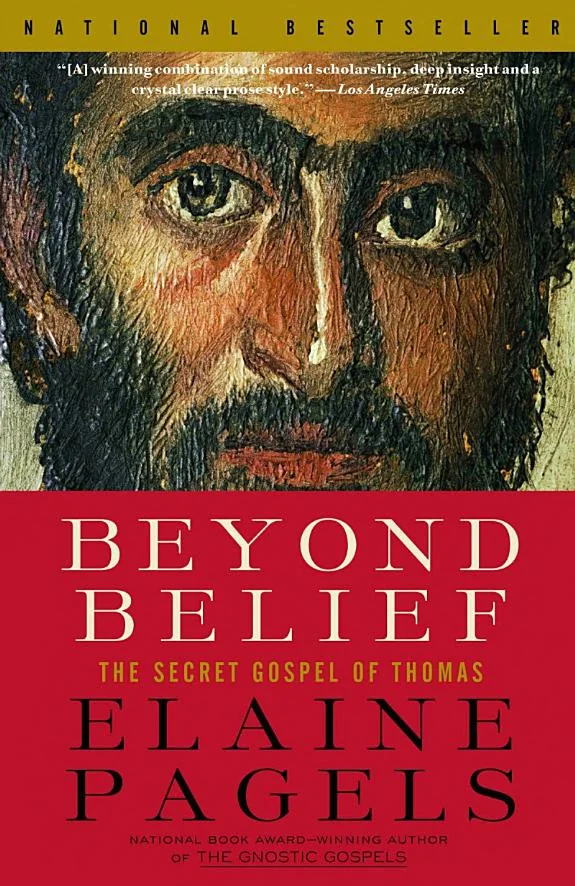
The gnostic Gospels

 81
81

The gnostic Gospels
Pagels's examination of the Nag Hammadi discoveries offers a compelling argument for the fluidity of early Christian belief. Her strength lies in situating these apocryphal texts within their historical milieu, demonstrating how competing interpretations of Jesus's message coexisted. The chapter discussing the Gospel of Mary, particularly Mary Magdalene's role as a favored disciple, is illuminating, presenting her not as a repentant sinner but as a spiritual leader. However, the work occasionally feels overly focused on refuting traditional interpretations rather than fully exploring the internal theological systems of Gnosticism itself. While Pagels provides substantial historical context, a deeper engagement with the philosophical underpinnings of Gnostic cosmology could have further enriched the analysis. Ultimately, "The Gnostic Gospels" remains a crucial text for understanding the multifaceted origins of Christianity.
📝 Description
81
### What It Is Elaine Pagels's "The Gnostic Gospels," first published in 1987, examines a collection of early Christian texts discovered in Nag Hammadi, Egypt, in 1945. These documents, predating or contemporary with the canonical New Testament, offer alternative perspectives on Jesus's teachings and the nature of divinity. The book analyzes the content and context of these scriptures, proposing that early Christianity was far more diverse than commonly understood.
### Who It's For This work is for readers interested in the historical Jesus, the development of early Christian thought, and the broader landscape of ancient religious ideas. It appeals to those who question established narratives and seek to understand the origins of major world religions from a critical, scholarly viewpoint. Students of comparative religion and early church history will find it particularly valuable.
### Historical Context The discovery of the Nag Hammadi library, including texts like the Gospel of Thomas and the Gospel of Mary, provided unprecedented access to Gnostic writings. These materials challenged the prevailing view of Christianity's early centuries, which had largely been shaped by the writings of Church Fathers like Irenaeus of Lyons, who actively suppressed Gnostic interpretations. Pagels's work emerged during a period of renewed scholarly interest in the diversity of early Christian movements.
### Key Concepts The book explores the Gnostic concept of Sophia (Wisdom) and her role in creation, the emphasis on inner knowledge (gnosis) as a path to salvation, and the reinterpretation of familiar biblical figures. It contrasts these ideas with the developing orthodox Christian doctrines concerning Christology, salvation through faith and works, and the structure of the Church.
💡 Why Read This Book?
• Learn how the discovery of the Nag Hammadi library in 1945 revealed a spectrum of early Christian thought previously obscured by later orthodoxies. • Understand the Gnostic emphasis on gnosis, or direct spiritual knowledge, as a primary path to salvation, contrasting with later creedal formulations. • Re-evaluate the role of figures like Mary Magdalene, as presented in texts such as the Gospel of Mary, challenging traditional portrayals.
⭐ Reader Reviews
Honest opinions from readers who have explored this book.
❓ Frequently Asked Questions
What are the Gnostic Gospels?
The Gnostic Gospels are a collection of ancient texts, primarily discovered at Nag Hammadi, Egypt, in 1945. They present alternative accounts of Jesus's teachings and early Christian beliefs, often emphasizing inner spiritual knowledge (gnosis) over orthodox doctrine.
When were the Gnostic Gospels written?
Many of the Gnostic texts analyzed by Pagels, such as the Gospel of Thomas, are believed to have been written in the 2nd century CE, contemporary with or even predating some books of the New Testament canon.
Who was Elaine Pagels?
Elaine Pagels is a distinguished American historian and scholar of religion, renowned for her work on early Christianity and Gnosticism. Her book on the Gnostic Gospels won the National Book Award.
What is Gnosis?
Gnosis, a Greek term, refers to a special kind of spiritual knowledge or insight. In Gnostic traditions, it is considered a direct, intuitive understanding of the divine that leads to salvation or liberation.
How do the Gnostic Gospels differ from the Canonical Gospels?
The Gnostic Gospels often present a different cosmology, a more esoteric interpretation of Jesus's teachings, and a greater emphasis on the divine spark within individuals, contrasting with the canonical emphasis on historical events and faith in Jesus's sacrifice.
Where were the Nag Hammadi texts found?
The Nag Hammadi texts, including many important Gnostic scriptures, were discovered near the town of Nag Hammadi in Upper Egypt in 1945 by local farmers.
🔮 Key Themes & Symbolism
The Diversity of Early Christianity
Pagels challenges the notion of a monolithic early Christianity, highlighting the vibrant and often contradictory interpretations of Jesus's message that flourished before the 4th century. The discovery of texts like the Gospel of Philip and the Gospel of Truth at Nag Hammadi in 1945 provides concrete evidence of these alternative traditions, revealing a landscape where Gnostic, proto-orthodox, and other nascent Christian ideas competed and coexisted, offering different paths to spiritual understanding.
Gnosis and Inner Knowledge
Central to the Gnostic worldview is the concept of gnosis – a direct, intuitive, and often mystical apprehension of the divine. This contrasts sharply with later orthodox emphasis on faith, sacraments, and communal ritual. Pagels explores how texts like the Gospel of Thomas present Jesus as a revealer of secret knowledge, emphasizing the divine spark within each individual as the key to awakening and liberation, rather than relying solely on external authority or historical events.
Reinterpreting Biblical Figures
The Gnostic Gospels often offer radical reinterpretations of figures and narratives familiar from the Old and New Testaments. Pagels examines how figures like Adam, Eve, and even Jesus are understood through a Gnostic lens. For instance, the serpent in Genesis might be seen as a liberator, and Mary Magdalene, as depicted in the Gospel of Mary, emerges as a primary apostle and confidante of Jesus, receiving special revelations that her male counterparts struggle to accept.
The Role of Sophia
A recurring motif in Gnostic cosmology is Sophia, or Wisdom. Pagels discusses how this figure, often depicted as a divine being who fell from grace and subsequently played a role in creation (sometimes inadvertently), is central to understanding the Gnostic view of the material world. Her story provides a framework for explaining the origin of suffering and the longing for the divine, offering a complex mythological narrative distinct from the Genesis creation account.
💬 Memorable Quotes
“The Gospel of Thomas claims that 'Jesus said, "I am not your master..."'”
— This interpretation highlights the Gnostic emphasis on direct experience and equality in spiritual understanding, positioning Jesus as a guide to self-discovery rather than an authoritarian figure demanding obedience.
“The Nag Hammadi library contained texts that interpreted the creation story of Genesis in radically different ways.”
— This points to the Gnostic tendency to subvert and re-examine foundational religious narratives, viewing the material world and its creator differently from mainstream traditions.
“Mary Magdalene is presented as an apostle who received special instruction from Jesus.”
— This challenges traditional portrayals of Mary Magdalene, suggesting her role in early Christianity was far more significant and authoritative than often acknowledged in later orthodox accounts.
“Gnosis is presented as the way to salvation.”
— This encapsulates the core Gnostic tenet: salvation is achieved through a specific kind of spiritual knowledge and insight, an internal awakening rather than an external act of faith or atonement.
“Early Christians debated the nature of Jesus and the path to salvation.”
— This reflects Pagels's central thesis about the pluralism of early Christianity, emphasizing that diverse and often conflicting viewpoints were prevalent before the establishment of a unified orthodoxy.
🌙 Esoteric Significance
Tradition
This work directly engages with the Gnostic tradition, a complex set of early religious ideas often characterized by dualism and the pursuit of spiritual knowledge (gnosis). Pagels situates these texts within the broader context of early esoteric Christianity, examining how they offered alternative cosmologies and soteriologies (theories of salvation) that departed from the emerging orthodox doctrines. It highlights Gnosticism's unique focus on immanent divinity and the awakening of the inner spiritual self.
Symbolism
Key symbols explored include Sophia (Wisdom), often depicted as a divine being whose fall precipitates creation and the entrapment of spirit in matter. The Light-Cross, a symbol found in some Gnostic texts, represents the divine spark within humanity and the path to liberation. The concept of the "aeons"—divine emanations in Gnostic cosmology—also features, illustrating a complex celestial hierarchy distinct from traditional angelology.
Modern Relevance
Contemporary esoteric thinkers and practitioners, particularly those interested in Jungian psychology, Western esotericism, and mystical interpretations of Christianity, continue to draw upon Pagels's research. Her work provides a foundational understanding of Gnostic ideas that inform modern explorations of consciousness, the divine feminine, and alternative spiritual paths, influencing movements seeking deeper, personal spiritual experience beyond institutional dogma.
👥 Who Should Read This Book
• Students of comparative religion and early church history seeking to understand the diversity of formative Christian beliefs beyond the canonical texts. • Readers interested in esoteric traditions and alternative spiritualities who wish to explore the historical roots of mystical thought and the concept of gnosis. • Scholars and enthusiasts of ancient history and archaeology fascinated by the impact of discoveries like the Nag Hammadi library on our understanding of the past.
📜 Historical Context
The 1987 publication of "The Gnostic Gospels" arrived at a pivotal moment in the study of early Christianity. The discovery of the Nag Hammadi library in 1945 had unearthed a wealth of Gnostic texts, challenging the prevailing narrative shaped by the writings of figures like Irenaeus of Lyons, Bishop of Lugdunum (modern Lyon) in the 2nd century, who had actively sought to discredit Gnostic movements. Pagels's work engaged directly with these newly accessible documents, such as the Gospel of Thomas and the Gospel of Philip, offering a scholarly yet accessible interpretation. Her analysis highlighted the existence of diverse Christian communities with varying theological perspectives, a stark contrast to the unified Church doctrine that eventually emerged. The book's reception was significant, sparking widespread public interest in Gnosticism and contributing to a re-evaluation of early Christian history by scholars like Bart D. Ehrman, who later explored similar themes.
📔 Journal Prompts
The concept of Sophia's fall and its implications for the material world.
Reflect on the Gnostic emphasis on gnosis as distinct from faith.
Mary Magdalene's role as presented in the Gospel of Mary.
The contrasting views on Jesus's nature in Gnostic texts versus early orthodoxy.
The significance of the Nag Hammadi discovery for understanding religious history.
🗂️ Glossary
Gnosticism
A diverse set of religious ideas and movements prominent in the first few centuries CE, characterized by an emphasis on gnosis (spiritual knowledge) as the means of salvation and often featuring a dualistic worldview.
Nag Hammadi Library
A collection of thirteen ancient Coptic and Greek books, discovered in 1945 near Nag Hammadi, Egypt, containing numerous Gnostic and early Christian texts.
Gnosis
A Greek term meaning 'knowledge,' specifically referring to intuitive, experiential, or spiritual insight into divine mysteries, considered by Gnostics to be the key to salvation.
Sophia
In Gnostic cosmology, Sophia (Greek for 'Wisdom') is often depicted as a divine being whose actions, sometimes stemming from a desire to know the unknowable, lead to the creation of the material world and the entrapment of spirit.
Canonical Gospels
The four Gospels (Matthew, Mark, Luke, and John) that were officially accepted as authoritative scripture by the mainstream Christian Church.
Apocryphal Texts
Religious writings that are not part of the accepted canon of scripture but are often considered to be of historical or theological interest, such as many Gnostic texts.
Aeons
In Gnostic cosmology, these are divine beings or emanations that exist in the spiritual realm (Pleroma) surrounding the ultimate Godhead.