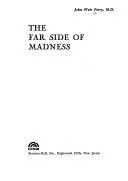
The far side of madness
 83
83

The far side of madness
John Weir Perry's "The Far Side of Madness" offers a compelling re-framing of severe mental distress. Instead of merely cataloging symptoms, Perry, drawing on his extensive clinical experience and deep knowledge of mythology, argues that states often labeled as psychosis can be interpreted as profound, albeit dangerous, spiritual transformations. He meticulously draws parallels between the experiences of individuals in acute crisis and the narratives of shamans and mystics across cultures. A particular strength lies in his detailed case studies, which illustrate the intricate interplay between individual psyche and archaic symbolic patterns. However, the book occasionally risks romanticizing the suffering inherent in these states, and a more explicit engagement with contemporary neurobiological findings could have further enriched its arguments. Despite this, Perry's perspective provides a vital counterpoint to purely reductionist views of mental illness, urging readers to consider the potential for meaning and healing within the deepest psychological disturbances.
📝 Description
83
### What It Is
The Far Side of Madness is John Weir Perry's exploration into the psychological states often labeled as psychosis or severe mental distress. Rather than dismissing these experiences as mere pathology, Perry, a psychiatrist, investigates them as potentially transformative episodes within the human psyche. He examines them through the lens of mythology, shamanism, and comparative religion, suggesting a deeper, often overlooked, spiritual dimension. The book was first published in 2005 and has since become a significant text for those interested in alternative understandings of mental health.
### Who It's For
This work is for individuals grappling with or studying altered states of consciousness, particularly those that manifest as severe psychological upheaval. It appeals to psychiatrists, psychologists, and therapists seeking broader frameworks beyond conventional diagnostic models. Students of comparative mythology, religious studies, and anthropology will find value in Perry's cross-cultural analysis of ecstatic and visionary states. It is also for individuals who have personally experienced or witnessed profound psychological crises and seek meaning or a spiritual interpretation.
### Historical Context
Perry's work emerged in a period where psychiatric discourse was increasingly dominated by biological and pharmacological models, often marginalizing psychological and existential interpretations of severe mental illness. His approach draws from earlier thinkers like Carl Jung, who proposed archetypal patterns in the unconscious and saw psychosis as a potential, albeit perilous, spiritual quest. Perry's research, conducted over decades, predates the 2005 publication, building on a tradition that viewed extreme psychological states as potentially containing sacred or revelatory elements. This perspective stood in contrast to the prevailing medicalization of such experiences.
### Key Concepts
Perry introduces the concept of the "psychotic episode" not solely as illness, but as a potential "spiritual emergency." He posits that these crises can represent a descent into archaic layers of the psyche, mirroring mythological journeys and shamanic initiations. The "far side of madness" refers to the potential for profound healing, insight, and spiritual rebirth that can follow such an ordeal, provided it is understood and navigated rather than suppressed. He emphasizes the importance of cultural and personal meaning-making in the recovery process.
💡 Why Read This Book?
• Understand psychosis as a potential spiritual emergency, drawing on Perry's analysis of symbolic patterns observed in individuals undergoing acute psychological crises. • Gain insight into the shamanic parallels Perry identifies, specifically his comparisons between the initiatory journey of the shaman and the descent into madness. • Explore alternative healing frameworks by examining Perry's emphasis on meaning-making and cultural context in navigating severe psychological upheaval, as detailed in his case studies.
⭐ Reader Reviews
Honest opinions from readers who have explored this book.
❓ Frequently Asked Questions
What is the central thesis of John Weir Perry's "The Far Side of Madness"?
The central thesis posits that severe psychological crises, often labeled as psychosis, can be understood as potential spiritual emergencies or initiatory journeys into archaic dimensions of the psyche, offering a path to healing and transformation.
What is the significance of the 'far side of madness' in Perry's work?
The 'far side of madness' represents the potential for profound healing, insight, and spiritual rebirth that can emerge after successfully navigating a severe psychological crisis, moving beyond the perceived pathology.
What fields of study does John Weir Perry draw upon?
Perry integrates insights from psychiatry, psychology (particularly Jungian analysis), comparative mythology, anthropology, and religious studies to construct his theory.
How does Perry's view differ from conventional psychiatric approaches?
Perry's approach diverges by viewing extreme psychological states not solely as pathology but as potentially meaningful spiritual or initiatory experiences, emphasizing symbolic and mythological dimensions often overlooked in purely biomedical models.
When was 'The Far Side of Madness' first published?
'The Far Side of Madness' was first published in 2005, building on decades of Perry's clinical research and theoretical development.
Are there specific mythological parallels Perry explores?
Yes, Perry frequently draws parallels between the experiences of individuals in acute psychological distress and the archetypal journeys found in shamanism, ancient mystery religions, and various mythologies.
🔮 Key Themes & Symbolism
Psychosis as Spiritual Emergency
Perry reinterprets states commonly diagnosed as psychosis, such as schizophrenia or bipolar disorder, not merely as illness but as potential 'spiritual emergencies.' He suggests these crises can represent a necessary descent into the unconscious, a confrontation with primal psychic material. This perspective draws heavily on Jungian psychology and comparative religion, viewing the experience as a perilous but potentially transformative journey akin to shamanic initiations or the trials faced by mystics. The work posits that understanding these episodes through a mythological or symbolic lens can foster healing rather than simply managing symptoms.
Mythological and Archetypal Frameworks
A cornerstone of Perry's thesis is the application of mythological and archetypal frameworks to understand the content and progression of severe psychological distress. He meticulously details how the visions, delusions, and emotional upheavals experienced by individuals in crisis often mirror ancient myths, shamanic journeys, and Gnostic narratives. By connecting individual experiences to these universal symbolic patterns, Perry argues that a deeper meaning can be found, offering a sense of order and purpose within what appears to be chaos. This approach provides a rich interpretive tool for both the individual experiencing distress and those seeking to understand it.
The Transformative Potential of Crisis
The 'far side of madness' signifies the potential for profound personal transformation that can arise from surviving and integrating a severe psychological crisis. Perry posits that these extreme states, when understood and supported appropriately, can lead to a re-birth of the individual, characterized by expanded consciousness, enhanced creativity, and a deepened sense of spiritual connection. This contrasts sharply with conventional approaches that focus solely on the eradication of symptoms. The book highlights the possibility of emerging from such intense experiences with a greater capacity for life and meaning.
Cross-Cultural Perspectives on Madness
Perry's work is deeply informed by cross-cultural studies, examining how different societies have historically understood and responded to individuals experiencing profound psychological distress. He highlights the roles of shamans, healers, and spiritual guides in various traditions who often interpreted such states as sacred callings or journeys into other realms. By juxtaposing these traditional understandings with modern Western psychiatric practices, Perry underscores the limitations of a purely pathologizing viewpoint and advocates for a more holistic, culturally sensitive approach to mental health crises.
💬 Memorable Quotes
“The breakdown of the ego can be the beginning of a spiritual awakening.”
— This statement encapsulates Perry's core argument: that experiences perceived as mental breakdown might, in fact, represent a necessary dismantling of a rigid ego structure, paving the way for a more profound spiritual or psychological integration.
“The descent into the underworld is a necessary part of the heroic journey.”
— Perry uses this mythological metaphor to describe the process of confronting one's deepest fears and unconscious material during a psychotic episode. He suggests that this difficult 'descent' is not an end, but a crucial stage for eventual rebirth and transformation.
“The symbols appearing in psychosis are often archaic and universal.”
— This points to Perry's reliance on Jungian archetypes and comparative mythology. He observed that the seemingly bizarre imagery and narratives emerging during severe mental distress often correspond to ancient, cross-cultural symbols and myths.
“Madness can be a sacred journey, albeit a dangerous one.”
— This interpretation emphasizes the dual nature of psychotic episodes as presented by Perry. While acknowledging the immense suffering and risk involved, he highlights their potential for profound spiritual insight and personal growth.
“We must learn to understand the language of the soul in crisis.”
— Perry advocates for a shift in perspective within mental health care, urging practitioners and society to listen for the deeper meaning and symbolic communication within psychotic experiences, rather than solely focusing on suppressing symptoms.
🌙 Esoteric Significance
Tradition
Perry's work is deeply rooted in the analytical psychology tradition established by Carl Jung, particularly Jung's exploration of the unconscious, archetypes, and the individuation process. It also aligns with Gnostic and Hermetic ideas that view earthly suffering and crisis as potential pathways to higher consciousness or hidden knowledge. The book engages with shamanic traditions, viewing the severe psychological crisis as analogous to the shaman's journey into the spirit world. Perry's departure lies in his specific focus on applying these frameworks to modern psychiatric phenomena, reframing 'madness' as a potentially sacred, transformative ordeal.
Symbolism
Central to Perry's analysis is the symbolism inherent in psychotic experiences. He frequently references the "descent into the underworld" motif, common in mythology, as a parallel to the individual's immersion in the unconscious during a crisis. Another key symbol is the "hero's journey" or "initiatory journey," where the individual confronts internal demons and archaic forces, mirroring the trials of shamans and ancient heroes. The "Great Mother" archetype, representing both nurturing and devouring aspects of the unconscious, also features prominently as a symbol of overwhelming psychic forces encountered during breakdown.
Modern Relevance
Perry's ideas continue to influence contemporary discussions on mental health, particularly within transpersonal psychology, depth psychology, and alternative healing circles. Thinkers and practitioners exploring "spiritual emergencies," "psychospiritual crises," and non-pathologizing approaches to psychosis draw directly from his research. His work provides a theoretical foundation for therapeutic modalities that integrate symbolic work, mythological exploration, and the search for meaning in severe psychological distress, resonating with those seeking a more holistic understanding of the human psyche beyond conventional diagnostic categories.
👥 Who Should Read This Book
• Individuals studying or experiencing "spiritual emergencies" and seeking a framework to understand these profound psychological upheavals as potentially transformative journeys. • Mental health professionals, particularly those in depth psychology or transpersonal psychology, looking to expand their theoretical models beyond purely biomedical or cognitive-behavioral approaches. • Students of comparative mythology, anthropology, and religious studies interested in the cross-cultural interpretations of altered states of consciousness and their connection to archaic symbolic patterns.
📜 Historical Context
Published in 2005, John Weir Perry's "The Far Side of Madness" arrived in an era increasingly dominated by the DSM-IV and the burgeoning influence of psychopharmacology in psychiatric practice. This context saw a strong emphasis on symptom reduction and biological explanations for mental illness, often marginalizing existential, spiritual, or mythological interpretations. Perry’s work, however, drew heavily on the legacy of Carl Jung and his followers, particularly the concept of archetypes and the collective unconscious, and also connected with the burgeoning field of "spiritual emergency" research pioneered by Stanislav and Christina Grof. Perry's approach offered a counter-narrative to the prevailing medical model by positing that severe psychological disturbances could represent crucial, albeit perilous, initiatory journeys. While his research spanned decades, its formal publication in 2005 positioned it as a significant voice advocating for a more holistic, meaning-centered understanding of mental health crises amidst a largely reductionist landscape.
📔 Journal Prompts
The descent into the underworld motif: Reflect on personal experiences of confronting difficult psychic material.
Archetypal imagery in crisis: Identify and explore the universal symbols that emerge during intense psychological challenges.
The shamanic parallel: Consider the initiatory aspects of navigating profound personal breakdowns.
Meaning-making in suffering: Analyze how finding symbolic meaning can aid in recovery from severe distress.
The far side of madness: Contemplate the potential for growth after enduring significant psychological trials.
🗂️ Glossary
Spiritual Emergency
A term coined by Stanislav and Christina Grof, referring to profound psychological crises that are interpreted not as mere illness but as potentially transformative experiences with spiritual dimensions, often mirroring initiatory processes.
Archetype
In Jungian psychology, a universal, archaic pattern and image that derives from the collective unconscious and is the psychic counterpart of an inherited structure. Examples include the Hero, the Great Mother, and the Shadow.
Collective Unconscious
According to Jung, a layer of the unconscious mind that is shared by all humans, containing archetypes and instincts inherited from our ancestors.
Individuation
The psychological process of integrating the conscious and unconscious aspects of the self to achieve wholeness and become a unique, distinct individual.
Psychosis
A mental state characterized by a loss of contact with reality, often involving hallucinations, delusions, and disorganized thinking. Perry reinterprets this phenomenon.
Shamanism
A religious practice characterized by the belief that shamans can communicate with the spirit world, often through altered states of consciousness, to heal or guide.
Mythological Parallel
A correspondence or similarity between the experiences or narratives of an individual undergoing a psychological crisis and the stories, symbols, or figures found in ancient myths and legends.