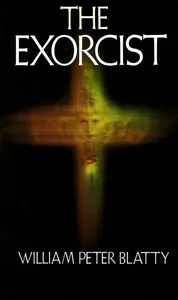
The Exorcist

 80
80

The Exorcist
William Peter Blatty’s The Exorcist remains a potent, if unsettling, exploration of faith’s crucible. The novel’s strength lies in its unflinching depiction of Regan MacNeil’s descent, rendered with a visceral realism that blurs the lines between psychological distress and genuine spiritual violation. Blatty masterfully contrasts the sterile, rational approach of medical professionals with the desperate, faith-driven actions of Father Karras and Father Merrin, highlighting the inherent limitations of science when confronted by phenomena beyond its scope. However, the novel’s didactic interludes, particularly Father Merrin’s philosophical musings on good and evil, occasionally slow the narrative's relentless momentum. The passage describing the ancient demon Pazuzu’s motivations, while crucial to the theological underpinnings, feels somewhat detached from the immediate terror. Despite these moments, the book’s enduring power stems from its stark confrontation with the unknown and the terrifying possibility of divine abandonment. The Exorcist is a chilling examination of spiritual warfare that continues to disturb.
📝 Description
80
### What It Is The Exorcist, first published in 1971, presents a harrowing narrative centered on the possession of a young girl, Regan MacNeil, by a malevolent entity. Blatty’s novel explores the intersection of faith, science, and the inexplicable, detailing the desperate efforts of a Catholic priest and an experienced exorcist to reclaim the child from demonic influence. The story is grounded in a deeply unsettling portrayal of psychological and physical deterioration, forcing characters and readers alike to confront the limits of rational understanding.
### Who It's For This work will appeal to readers interested in psychological horror that probes spiritual and theological questions. Those fascinated by the nature of evil, the efficacy of faith in the face of overwhelming darkness, and the conflict between scientific explanation and supernatural phenomena will find substantial material here. It is also for individuals who appreciate narratives that meticulously build tension and explore the darkest aspects of the human psyche and spiritual warfare.
### Historical Context Published during a period of significant cultural and religious questioning in the late 1960s and early 1970s, The Exorcist arrived as a cultural lightning rod. Its graphic depiction of demonic possession and its challenges to conventional morality sparked widespread debate and considerable controversy. The novel’s success was amplified by its subsequent adaptation into a highly successful and equally controversial film in 1973, which drew both praise for its artistry and condemnation for its explicit content. This period also saw increased interest in paranormal investigations and occult themes in popular culture.
### Key Concepts The narrative engages with concepts of faith versus doubt, the nature of good and evil, and the battle for the human soul. It examines the psychological impact of trauma and the potential for external forces to exploit vulnerabilities. The novel also touches upon the rituals and theology surrounding exorcism within the Catholic Church, presenting a stark contrast between medical diagnosis and spiritual intervention.
💡 Why Read This Book?
• Gain insight into the theological underpinnings of spiritual warfare, as depicted through the struggle for Regan MacNeil’s soul, offering a unique perspective on the conflict between divine grace and malevolent forces. • Understand the profound tension between scientific rationalism and religious faith, exemplified by the clashes between medical diagnoses and the spiritual interventions undertaken by Fathers Karras and Merrin in 1971. • Experience a meticulously crafted descent into psychological and spiritual horror, exploring the symbolic weight of demonic possession as a representation of profound internal and external battles.
⭐ Reader Reviews
Honest opinions from readers who have explored this book.
❓ Frequently Asked Questions
What is the primary religious affiliation of the characters involved in the exorcism?
The primary religious affiliation of the central characters, Father Karras and Father Merrin, is Roman Catholic. The novel meticulously details their faith and the rituals of the Catholic Church's rite of exorcism.
Is The Exorcist based on a true story?
While William Peter Blatty stated he was inspired by a 1949 exorcism case he read about in The Washington Post, the specific events and characters in the novel are fictionalized.
What is the significance of the demon Pazuzu in The Exorcist?
Pazuzu is an ancient Mesopotamian demon, often depicted with monstrous features. In the novel, its presence signifies a primal, malevolent force seeking to corrupt and destroy, representing a direct challenge to divine order.
How does the novel contrast scientific and religious explanations for Regan's condition?
The novel contrasts the sterile, empirical approach of medical doctors and psychiatrists, who attempt to diagnose Regan with psychological or neurological disorders, against the faith-based, spiritual approach of the priests performing the exorcism.
When was The Exorcist first published?
The Exorcist was first published in 1971, a time when paranormal phenomena and spiritual anxieties were gaining significant traction in popular culture.
What role does Father Merrin play in the exorcism?
Father Merrin is an older, experienced Jesuit priest with a history of performing exorcisms. He serves as the primary exorcist, bringing his spiritual wisdom and understanding of ancient evil to confront the entity possessing Regan.
🔮 Key Themes & Symbolism
Faith vs. Doubt
The novel relentlessly probes the tension between unwavering faith and crippling doubt. Father Karras, a psychiatrist wrestling with his vocation, embodies this struggle. His crisis of faith is mirrored by the bewilderment of medical professionals facing Regan MacNeil’s inexplicable affliction. The narrative questions whether faith is a bulwark against the unknown or a delusion when confronted by palpable evil, forcing a re-evaluation of belief systems when faced with phenomena that defy rational explanation.
The Nature of Evil
Blatty presents evil not merely as absence of good, but as an active, intelligent, and ancient force. The entity possessing Regan is depicted as a conscious adversary, Pazuzu, with its own history and motives. This moves beyond simple psychological disturbance to explore theological concepts of spiritual warfare. The novel posits that evil can exploit human weakness and vulnerability, seeking to corrupt and destroy the divine spark within individuals, particularly the innocent.
Science vs. The Supernatural
A central conflict revolves around the clash between empirical science and supernatural reality. Medical diagnoses and psychiatric assessments fail to account for Regan’s physical and behavioral changes, highlighting their limitations. The priests, armed with faith and ancient rites, represent the supernatural’s counterpoint. The narrative challenges the reader to consider whether certain phenomena transcend scientific inquiry, suggesting that a holistic understanding might require acknowledging both material and spiritual dimensions.
The Corruptibility of Innocence
The possession of young Regan MacNeil is particularly disturbing because it targets innocence. Her vulnerability is exploited by the demonic entity, leading to a grotesque transformation that horrifies her mother and the medical community. This theme explores how even the purest can become conduits for profound darkness, raising questions about theodicy and the perceived injustice of suffering inflicted upon the defenseless.
💬 Memorable Quotes
“The Church has always been the adversary of the demon.”
— This statement underscores the novel's central conflict, positioning the Catholic Church, with its doctrines and rituals, as the primary institutional force opposing demonic influence and possession.
“When he was a child, the demon had been a boy like any other.”
— This interpretation suggests that even powerful demonic entities were once something pure or innocent, implying a fall from grace or a corruption of their original state, adding a layer of tragic complexity to evil.
“The demon wanted to possess the boy.”
— This paraphrased concept highlights the active, predatory nature of the entity, emphasizing its deliberate intent to invade and control a human vessel, turning a person into an instrument of its will.
“He did not believe in the devil, but he believed in the pain.”
— This interpretation reflects Father Karras's internal struggle, showing how tangible suffering can force an individual to confront realities, including spiritual ones, even if they struggle with abstract belief.
“The demon was old, very old. And it was bored.”
— This captures the motivation of Pazuzu, portraying ancient evil not just as a force of destruction but also as something with a psychopathic ennui, seeking amusement through torment and corruption.
🌙 Esoteric Significance
Tradition
While not strictly adhering to a single esoteric lineage, The Exorcist engages with themes resonant in Gnostic and Hermetic traditions concerning the nature of malevolent spiritual forces and the battle for the soul. It draws heavily on Catholic demonology and exorcism rites, which themselves contain older, syncretic elements. The narrative can be viewed through the lens of spiritual warfare, a concept present in various mystical paths that posit a cosmic struggle between light and darkness.
Symbolism
The demon Pazuzu, an ancient Mesopotamian deity, symbolizes primordial chaos and destructive power, embodying a force antithetical to divine order. Regan herself, as the possessed child, becomes a symbol of corrupted innocence and a battleground for spiritual forces. The crucifix, used in the rite of exorcism, symbolizes divine power and purity, serving as a weapon against the demonic entity, representing the triumph of faith over perceived evil.
Modern Relevance
Contemporary interest in the novel reflects a persistent cultural fascination with the boundaries of reality and the nature of evil. It continues to inform discussions in comparative religion, psychological horror, and even in certain fringe spiritual communities exploring spiritual warfare and deliverance ministries. Thinkers and practitioners interested in the intersection of psychology, theology, and the paranormal find its detailed exploration of possession compelling.
👥 Who Should Read This Book
• Students of comparative religion and demonology seeking detailed fictional explorations of Catholic exorcism rites and theological concepts surrounding spiritual warfare. • Readers of psychological horror and dark fiction interested in narratives that meticulously build dread and explore the darkest aspects of the human psyche and the unknown. • Individuals intrigued by the historical and cultural impact of controversial literature, particularly works that challenged societal norms and sparked widespread debate upon their release.
📜 Historical Context
William Peter Blatty’s The Exorcist, published in 1971, emerged during a period of profound societal upheaval and questioning of traditional authorities, including religious institutions. The late 1960s and early 1970s saw widespread skepticism regarding established norms and an increased fascination with the occult and paranormal, partly fueled by counterculture movements and a desire for alternative spiritualities. Blatty’s novel tapped into this zeitgeist, presenting a stark, visceral account of demonic possession that shocked and polarized audiences. Its unflinching portrayal of physical and psychological horror, coupled with its theological underpinnings, challenged both secular and religious sensibilities. The book’s immense success, amplified by William Friedkin’s controversial 1973 film adaptation, led to intense public debate and considerable censorship attempts, cementing its status as a cultural phenomenon. It stood in contrast to the more abstract philosophical explorations of evil common in other contemporary literature, offering a direct confrontation with the supernatural.
📔 Journal Prompts
The demon Pazuzu's ancient origins and motivations.
Father Karras's crisis of faith and its resolution.
The symbolic meaning of Regan MacNeil's possession.
The contrast between medical diagnosis and spiritual intervention.
The ethical implications of faith when confronted by undeniable suffering.
🗂️ Glossary
Exorcism
A religious or solemn rite performed to expel a demon or malevolent spirit from a person or place, often involving prayers, rituals, and sacred objects according to specific religious traditions.
Pazuzu
An ancient Mesopotamian demon, king of the demons of the wind, often depicted with a monstrous, composite body. In the novel, it represents a powerful, malevolent entity.
Possession
The state of being controlled or influenced by a supernatural entity or demon, leading to profound changes in behavior, personality, and physical condition.
Faith
Strong belief in God or in the doctrines of a religion, often without logical or empirical evidence, serving as a foundation for spiritual action and resilience.
Doubt
A feeling of uncertainty or lack of conviction, particularly regarding religious beliefs or the efficacy of spiritual interventions, often leading to internal conflict.
Spiritual Warfare
The concept of conflict between spiritual forces, often framed as a battle between good and evil, divine and demonic powers, for the control of human souls or the world.
Theodicy
The attempt to reconcile the existence of evil and suffering in the world with the concept of an omnipotent, benevolent God.