The enchanted garden
 76
76

The enchanted garden
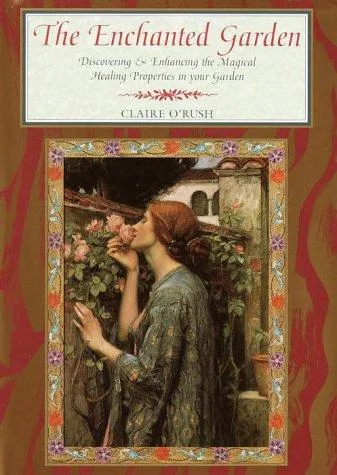
Claire O'Rush's The Enchanted Garden offers a refreshing perspective on the age-old practice of gardening, reframing it as a profound esoteric discipline. The strength of the work lies in its detailed examination of specific flora, imbuing common plants with symbolic weight that speaks to deeper spiritual currents. O'Rush avoids the pitfalls of New Age platitudes, instead grounding her observations in a palpable reverence for the natural world. A particular passage detailing the symbolic correspondence between the wilting of a rose and personal loss is handled with a delicate touch, illustrating the book's potential for introspection. However, the work occasionally suffers from a lack of concrete historical or alchemical references, leaving some of its more ambitious claims feeling somewhat unanchored. Despite this, The Enchanted Garden provides a valuable lens for anyone seeking to deepen their connection with nature's subtle energies.
📝 Description
76
### What It Is The Enchanted Garden, first published in 2000 by Claire O'Rush, presents a unique exploration of botanical symbolism and its connections to esoteric thought. Far from a simple gardening manual, the work delves into the hidden language of plants, positing them as conduits for spiritual understanding and elemental forces. It examines how the cultivation and observation of flora can serve as a practice for inner development and a bridge to perceiving subtle energies. The book synthesizes observations from various traditions, suggesting a universal grammar embedded within the natural world that speaks to the initiated observer.
### Who It's For This text is intended for individuals with a pre-existing interest in the esoteric, particularly those who find resonance in the intersection of nature, magic, and philosophy. It will appeal to practitioners of green witchcraft, herbalists seeking deeper symbolic meaning in their craft, and students of comparative religion or mythology who are interested in the anthropomorphic and spiritual dimensions attributed to the plant kingdom across cultures. Readers who appreciate a more poetic and contemplative approach to spiritual inquiry will find its style engaging.
### Historical Context Published at the turn of the millennium, The Enchanted Garden emerged during a period of renewed interest in nature-based spiritualities and ecological consciousness. While not directly aligned with the Theosophical movement of the late 19th and early 20th centuries, it shares a lineage of thought that sought to find divine order and hidden wisdom within the natural world, a sentiment echoed by figures like Helena Blavatsky. O'Rush's work can be seen as contributing to a broader resurgence of interest in animistic perspectives and earth-centered spirituality that gained traction in the late 20th century, moving away from the more abstract philosophical inquiries dominant in earlier esoteric discourse. It arrived in a landscape where authors like Starhawk were already popularizing earth-based magical practices.
### Key Concepts The book introduces several core concepts, including the idea of 'elemental companions' residing within specific plants, the practice of 'sympathetic botany' where plant properties mirror human conditions, and the 'hortus animi' or garden of the soul, a metaphor for the inner landscape cultivated through interaction with nature. O'Rush explores the concept of plant consciousness, not as a scientific hypothesis, but as a perceived reality accessible through dedicated observation and ritual. The garden itself is presented as a microcosm of the universe, a sacred space where the practitioner can engage directly with the forces of growth, decay, and transformation.
💡 Why Read This Book?
• Gain an esoteric understanding of botanical correspondences, learning how specific plants like the Mandrake are viewed not just for their physical properties but as symbolic allies in spiritual work, as explored in O'Rush's text. • Discover the concept of the 'hortus animi', or garden of the soul, and understand how cultivating an external garden can mirror and influence one's internal spiritual landscape, a central metaphor presented in the book. • Explore the idea of 'elemental companions' within plants, learning to perceive the subtle energies and intelligences attributed to flora, offering a unique perspective beyond conventional botany, as O'Rush suggests.
⭐ Reader Reviews
Honest opinions from readers who have explored this book.
❓ Frequently Asked Questions
What esoteric traditions influence 'The Enchanted Garden'?
The work draws inspiration from various nature-based spiritualities and folk magic traditions, emphasizing a universal language of plants. It echoes themes found in older hermetic and animistic philosophies that perceive inherent spirit in the natural world.
Does 'The Enchanted Garden' offer practical gardening advice?
While it uses gardening as a framework, the book's primary focus is symbolic and spiritual. It offers insights into the esoteric significance of plants rather than horticultural techniques for maximizing yield.
What is the 'hortus animi' as described by Claire O'Rush?
The 'hortus animi' is a key concept in the book, representing the 'garden of the soul'. It suggests that the inner spiritual landscape can be cultivated and understood through one's relationship with the external garden and nature.
Are there specific rituals or practices recommended in the book?
The book encourages contemplative observation and a mindful approach to interacting with plants, framing gardening itself as a ritualistic practice. It implies practices of sympathetic magic and elemental communion.
When was 'The Enchanted Garden' first published?
Claire O'Rush's 'The Enchanted Garden' was first published in the year 2000, marking its emergence at the dawn of the 21st century.
Can 'The Enchanted Garden' be considered a form of nature magic?
Yes, the book strongly aligns with nature magic by exploring the spiritual and symbolic dimensions of plants, suggesting they are imbued with elemental forces and can be worked with for personal and spiritual growth.
🔮 Key Themes & Symbolism
Plant Consciousness and Elemental Companions
O'Rush posits that plants possess a form of consciousness, acting as conduits for elemental forces. The concept of 'elemental companions' suggests that specific plant families or individual specimens can serve as allies or embodiments of particular energies, akin to nature spirits. This perspective elevates the garden from a collection of organisms to a dynamic ecosystem of subtle intelligences, inviting practitioners to engage in dialogue with these forces through focused attention and ritualistic care, moving beyond mere cultivation to a form of interspecies communication.
The Hortus Animi: Cultivating the Soul's Garden
A central metaphor in the book is the 'hortus animi,' or the garden of the soul. O'Rush suggests that the practices of tending an external garden—planting, nurturing, pruning, and observing—directly mirror and influence the development of one's inner spiritual landscape. The challenges and triumphs encountered in the physical garden, such as dealing with pests or celebrating a bloom, are presented as allegories for navigating personal growth, overcoming inner obstacles, and cultivating virtues. This concept encourages a holistic approach to spiritual development, integrating external actions with internal transformation.
Sympathetic Botany and Correspondences
The work explores 'sympathetic botany,' drawing parallels between the characteristics, growth patterns, and perceived properties of plants and human experiences or spiritual states. This involves understanding plant correspondences—how a plant's form, color, or habitat might align with a particular emotion, planet, or element. For instance, the resilience of an oak might symbolize strength, or the ephemeral nature of a bloom could represent impermanence. O'Rush encourages readers to develop their own intuitive understanding of these connections, using plants as a language to interpret and influence life's circumstances.
The Garden as Microcosm
The Enchanted Garden frames the cultivated plot as a microcosm of the universe, a sacred space where the fundamental principles of creation, growth, decay, and renewal can be observed and experienced directly. By engaging with the cycles of the seasons within the garden, practitioners can gain a deeper appreciation for the larger cosmic order and their place within it. This perspective imbues the act of gardening with profound spiritual significance, transforming a mundane activity into a path for understanding universal laws and divine patterns.
💬 Memorable Quotes
“Each bloom is a whispered secret from the earth's heart.”
— This phrase captures the book's core idea that plants are not merely biological entities but possess profound, hidden wisdom. It suggests that observing nature closely, particularly the floral world, can reveal deeper truths about existence.
“The soil remembers the intent of the hand that plants.”
— This highlights the energetic and conscious aspect attributed to the act of gardening in O'Rush's philosophy. It implies that the intention and spirit of the gardener are absorbed by the earth and the plants, influencing the outcome.
“To prune is to understand the shape of growth.”
— This speaks to the active, discerning role of the gardener in shaping not just the plant, but also understanding the underlying principles of development and form. It suggests that deliberate action is key to spiritual evolution.
“The root finds its truth in darkness.”
— This emphasizes the importance of the unseen, the hidden processes, and the foundational aspects of growth. It suggests that development often occurs in quiet, obscure conditions before manifesting externally.
“A garden is a dialogue between stillness and becoming.”
— This succinctly presents the dynamic interplay central to the book: the quiet presence of nature and the ongoing process of transformation. It frames the garden as a space for experiencing both being and change.
🌙 Esoteric Significance
Tradition
The work aligns with animistic and nature-based esoteric traditions, drawing parallels with Hermetic principles of correspondence and the idea of a living, intelligent cosmos. It departs from more abstract Kabbalistic or Gnostic systems by grounding its philosophy firmly in the tangible reality of the botanical world, emphasizing direct experience and observation over complex theoretical frameworks. It can be seen as a modern iteration of green spirituality, echoing older European folk magic and druidic ideals.
Symbolism
Key symbols include the 'seed' representing potential and the origin of all things, the 'root' symbolizing hidden foundations and connection to the underworld or subconscious, and the 'flower' signifying manifestation, beauty, and the ephemeral nature of existence. The 'garden' itself functions as a primary symbol, representing the cultivated self, the microcosm of the universe, and a sacred space for interaction with divine or elemental forces.
Modern Relevance
Contemporary practitioners of green witchcraft, eco-spiritual movements, and those interested in re-enchanting the natural world find resonance in O'Rush's work. Thinkers exploring concepts of plant intelligence, bioregionalism, and deep ecology often cite or echo the book's sentiments. Its approach to the garden as a site of spiritual practice remains relevant for modern mindfulness and nature therapy movements seeking tangible connections to the earth.
👥 Who Should Read This Book
• Aspiring practitioners of green magic and nature spirituality seeking to deepen their understanding of plant symbolism and elemental correspondences. • Gardeners interested in moving beyond horticultural techniques to explore the profound spiritual and energetic dimensions of their craft. • Students of comparative religion and mythology looking for texts that explore the human relationship with the plant kingdom across various cultural and esoteric perspectives.
📜 Historical Context
Published in 2000, Claire O'Rush's 'The Enchanted Garden' emerged during a resurgence of interest in ecological spirituality and nature-based esoteric practices. While distinct from the formal Theosophical movement spearheaded by Helena Blavatsky in the late 19th century, it taps into a similar vein of seeking divine immanence within the natural world. The book reflects a broader cultural shift in the late 20th century, moving towards earth-centered philosophies and an appreciation for animistic viewpoints, partly as a reaction against purely materialistic or disembodied spiritual pursuits. O'Rush's work found a place alongside contemporary authors who were re-popularizing concepts of folk magic and herbalism with a symbolic, rather than purely utilitarian, focus. The reception was generally positive within niche esoteric circles, valuing its poetic approach to plant symbolism, though it did not garner mainstream academic attention or face significant controversy.
📔 Journal Prompts
The symbolism of the root in relation to the 'hortus animi'.
Reflect on a plant you feel an 'elemental companion' connection with.
What does the cycle of bloom and decay in your garden represent in your life?
Consider the 'dialogue between stillness and becoming' in your own inner landscape.
How can the 'whispered secrets' of flora inform your present path?
🗂️ Glossary
Hortus Animi
Latin for 'garden of the soul'. A central concept in the book, representing the inner spiritual landscape that can be cultivated through one's relationship with the external garden and nature.
Elemental Companions
The idea that specific plants or plant families are imbued with and act as conduits for distinct elemental forces or subtle intelligences, serving as allies or guides for the practitioner.
Sympathetic Botany
A practice that explores the correspondences and perceived links between the characteristics of plants (form, growth, habitat) and human experiences, emotions, or spiritual states.
Plant Consciousness
The notion, explored in the book not as scientific fact but as esoteric perception, that plants possess a form of awareness or subtle intelligence accessible through dedicated observation and interaction.
Microcosm
In this context, the garden is viewed as a miniature representation of the larger universe, embodying its principles of creation, growth, and transformation.
Correspondences
The belief that different elements of nature, including plants, have symbolic relationships with celestial bodies, elements, emotions, or spiritual concepts.
Essence
The subtle, energetic, or spiritual quality of a plant, as opposed to its physical or chemical properties, which is believed to hold healing or transformative power.