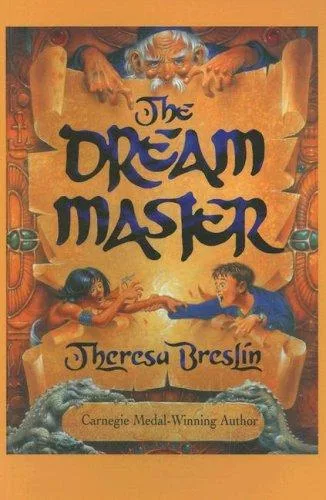
The Dream Master
 82
82

The Dream Master
Theresa Breslin’s *The Dream Master* presents an intriguing premise: the deliberate construction and navigation of dreamscapes. The novel’s strength lies in its imaginative exploration of the subconscious, offering a narrative that challenges conventional perceptions of reality. However, the execution occasionally falters. While the concept of a 'Dream Master' is compelling, the narrative's progression can feel somewhat abstract, demanding significant reader investment to fully grasp the symbolic weight of the dream sequences. The character development, while present, sometimes takes a backseat to the philosophical underpinnings of the dream world. A particularly notable passage involves the description of dream architecture, where the very fabric of the imagined space seems to respond to the dreamer’s intent, highlighting the book's central thesis on the mind's creative power. Despite its occasional narrative opacity, the work serves as a potent reminder of the mind's vast potential. It is a thoughtful, if sometimes demanding, examination of inner worlds.
📝 Description
82
### What It Is
The Dream Master, penned by Theresa Breslin and first published in 2000, presents a narrative that, while ostensibly a work of fiction, engages with profound questions about the nature of consciousness and reality. The story centers on characters who explore the architecture of dreams, blurring the lines between subjective experience and objective truth. It functions as an allegorical exploration of the mind's capacity to construct and inhabit worlds, touching upon themes often considered within esoteric philosophical frameworks. The narrative invites readers to consider the power of imagination and the potential for internal landscapes to influence external perception.
### Who It's For
This book will appeal to readers interested in psychological fiction that probes the boundaries of reality, particularly those fascinated by the science and philosophy of dreams. It is suited for individuals who appreciate narratives that encourage introspection and contemplation on the inner workings of the mind. Readers seeking straightforward plotlines might find its thematic depth requires a more engaged, analytical approach. Those drawn to explorations of consciousness, lucid dreaming, or the creative process will likely find the material particularly resonant.
### Historical Context
Published in 2000, The Dream Master emerged during a period of burgeoning interest in consciousness studies and the popularization of Jungian psychology. The late 20th century saw a resurgence of interest in esoteric thought, moving beyond purely academic circles into broader cultural discourse. While not directly aligned with a specific historical movement, Breslin's work can be seen as contributing to a literary trend that explored subjective reality, influenced by thinkers like Carl Jung whose concepts of archetypes and the collective unconscious provided a framework for understanding shared symbolic experiences. The novel's exploration of dreamscapes aligns with the growing academic and popular fascination with the mind's creative and self-organizing capacities.
### Key Concepts
The central concept revolves around the intentional manipulation and exploration of dream states, positing dreams not merely as random neurological events but as navigable realms. The book delves into the idea of a 'Dream Master,' an entity or consciousness capable of architecting these internal worlds. This concept invites contemplation on the nature of reality itself, questioning whether perceived reality is fundamentally different from the realities constructed within dreams. It touches upon themes of identity, as characters' experiences within dreams can shape their waking selves, and the power of narrative and imagination to manifest or influence perception. The work explores the potential for consciousness to transcend physical limitations through these inner journeys.
💡 Why Read This Book?
• Gain a unique perspective on the construction of reality, understanding how the mind's internal landscapes, as depicted in the 'Dream Master' concept, can mirror or influence external perception. • Explore the symbolic language of dreams, learning to interpret narrative elements that suggest the subconscious mind's capacity for complex world-building, as detailed in the novel's depiction of dream architecture. • Contemplate the nature of consciousness and identity, recognizing how experiences within meticulously crafted dream states, as explored in the book, can shape an individual's waking self.
⭐ Reader Reviews
Honest opinions from readers who have explored this book.
❓ Frequently Asked Questions
What is the primary focus of Theresa Breslin's 'The Dream Master'?
The book's primary focus is on the intentional exploration and manipulation of dream states, treating dreams as navigable realms that can be consciously shaped and experienced.
When was 'The Dream Master' first published?
'The Dream Master' was first published in the year 2000.
Does the book delve into lucid dreaming techniques?
While not a practical guide, the book explores the *concept* of conscious control within dreams, aligning with themes found in lucid dreaming discussions.
Who might find 'The Dream Master' most engaging?
Readers interested in psychological fiction, the philosophy of consciousness, and narratives that question the nature of reality will find the book particularly engaging.
What is the significance of the 'Dream Master' concept?
The 'Dream Master' concept represents the idea of a consciousness capable of architecting and presiding over dream worlds, serving as a central metaphor for the mind's creative power.
Is the book based on any specific psychological theories?
The work's exploration of dreamscapes and the subconscious echoes themes present in Jungian psychology, particularly concerning archetypes and the collective unconscious.
🔮 Key Themes & Symbolism
Architecture of Dreams
The narrative posits dreams not as passive experiences but as structured environments that can be consciously designed and navigated. This theme challenges the reader to consider the mind as an architect of its own reality, capable of constructing intricate worlds. The book suggests that the 'Dream Master' is a metaphor for this inherent creative power within consciousness, capable of building landscapes that possess their own internal logic and substance, influencing the dreamer's perception and sense of self.
Perception vs. Reality
A central tenet of the book is the exploration of the fluid boundary between perceived reality and the reality experienced within dreams. It questions whether the subjective experience of a dream holds less validity than waking life, proposing that the intensity and impact of dream events can be equally formative. The work invites contemplation on how our consensus reality is also a form of shared perception, thus blurring the lines between internal and external worlds.
The Conscious Mind's Power
The novel emphasizes the active role of consciousness in shaping experience. The 'Dream Master' figure embodies the idea that the mind possesses a latent ability to manifest and control its environment, even within the ephemeral space of dreams. This theme encourages readers to reflect on their own imaginative capacities and the potential for focused intention to influence psychological states and, by extension, aspects of their waking lives.
Identity and Self-Creation
Through characters' interactions within dreamscapes, the book examines how identity is constructed and can be redefined. The experiences and choices made within the dream world can profoundly impact a character's sense of self, suggesting that personal growth and self-discovery can occur through exploring the subconscious. This theme highlights the interconnectedness of our inner lives and our outward presentation of self.
💬 Memorable Quotes
“The walls of the dream shifted like sand, obeying a will unseen.”
— This passage captures the core concept of dreams as malleable environments, suggesting that the subconscious mind, or a directing force within it (the 'Dream Master'), actively shapes the dreamscape in response to intention or thought.
“He walked through a landscape born entirely of memory and desire.”
— This highlights the idea that dream worlds are constructed from the dreamer's internal states – their past experiences and their deepest longings – emphasizing the subjective origin of these internal realities.
“Was this world less real than the one he left behind?”
— This direct question probes the philosophical underpinnings of the narrative, challenging the reader to consider the criteria for 'reality' and whether the intensity of experience defines it.
“The architect of slumber drew new horizons.”
— This metaphor refers to the 'Dream Master' figure, personifying the subconscious process that continuously creates and reshapes the dream environment.
“She learned to sculpt the mist, to give form to the formless.”
— This illustrates the active, creative power attributed to consciousness within the dream state, portraying the ability to manifest tangible experiences from ephemeral mental content.
🌙 Esoteric Significance
Tradition
While not explicitly aligned with a single esoteric tradition, *The Dream Master* draws upon themes common in Gnostic and Hermetic thought, particularly concerning the creation of realities and the power of the mind. It resonates with the idea that the perceived world can be a construct, and that gnosis (knowledge) of the inner self can lead to a deeper understanding of existence. The work explores the concept of inner planes of existence accessible through consciousness, a recurring motif in various mystical traditions.
Symbolism
The 'Dream Master' itself functions as a powerful symbol, representing the higher self, the unconscious mind, or a guiding principle within the psyche responsible for orchestrating inner experiences. Dreamscapes, as depicted, symbolize the vast, often chaotic, potential of the subconscious. Specific motifs within the dreams, such as shifting architecture or symbolic figures, can be interpreted as archetypal representations of internal psychological states or challenges that the dreamer must confront.
Modern Relevance
Contemporary practitioners of lucid dreaming and consciousness exploration often find resonance in *The Dream Master*'s portrayal of intentional dream navigation. Thinkers in transpersonal psychology and those exploring virtual reality and simulated consciousness may also find the book's exploration of constructed realities relevant. The work continues to inform discussions on the power of imagination and the potential for subjective experience to hold profound significance.
👥 Who Should Read This Book
['• Aspiring dream explorers and practitioners of lucid dreaming who seek narrative inspiration for navigating altered states of consciousness.', '• Students of Jungian psychology and comparative mythology interested in fictional explorations of archetypes and the collective unconscious within dream narratives.', '• Readers of philosophical fiction who enjoy works that question the nature of reality and the power of the human mind to construct subjective worlds.']
📜 Historical Context
Published in 2000, *The Dream Master* emerged at a time when interest in consciousness, psychology, and subjective experience was gaining traction in popular culture, influenced by figures like Carl Jung. The late 20th century saw a resurgence of esoteric thought making its way into mainstream literature, moving beyond strictly academic circles. While Breslin’s work isn't tied to a specific esoteric school, it taps into a broader cultural fascination with the mind's potential, echoing themes explored by thinkers who investigated altered states of consciousness. Contemporaries like Oliver Sacks, whose neurological case studies often touched upon the subjective experience of reality, were also active, contributing to a discourse where the internal world was increasingly seen as a valid subject of exploration. The novel's exploration of dream architecture can be seen as a fictional counterpart to growing scientific and philosophical inquiries into the nature of consciousness and reality construction.
📔 Journal Prompts
The architecture of a dreamscape as described in the book.
The concept of the 'Dream Master' as a creator of inner worlds.
A memory or desire that could form the basis of a personal dream landscape.
The boundary between dream reality and waking reality.
How the sculpted mist in the novel relates to shaping one's own perceptions.
🗂️ Glossary
Dream Master
A conceptual entity or consciousness within the narrative that possesses the ability to architect, control, and preside over dream states, representing the mind's creative power.
Dreamscape
The internal landscape or environment constructed and experienced within a dream, characterized by its malleability and potential to be consciously shaped.
Consciousness Architecture
The idea that consciousness, particularly within dreams, can actively build and structure its own reality, akin to an architect designing a physical space.
Perceived Reality
The subjective experience of reality as interpreted by an individual, contrasted with objective or consensus reality, highlighting the role of internal states.
Formless
Referring to the ephemeral, undefined, or intangible nature of mental content or dream elements that can nevertheless be given shape and substance.
Slumber Architect
A metaphorical term for the force or consciousness responsible for designing and creating the environments experienced during sleep and dreaming.
Internal Worlds
The subjective realms of experience, imagination, and consciousness that exist within an individual's mind, particularly emphasized in the context of dreams.