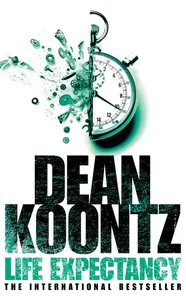
The Door to December

 83
83

The Door to December
Dean Koontz’s “The Door to December” offers a familiar Koontzian blend of suspense and the supernatural, this time focusing on the enduring power of a father’s grief and the strange ways memory can manifest. The protagonist, a successful author named Christopher Snow, is relentlessly pursued by specters of his past, particularly the unsolved disappearance of his daughter, a trauma that fuels much of the narrative's tension. Koontz excels at crafting an atmosphere of unease, slowly ratcheting up the psychological pressure on Snow as he confronts increasingly bizarre circumstances. The narrative's strength lies in its exploration of how profound loss can warp perception, blurring the lines between reality and delusion. However, the plot occasionally strains credulity, with some coincidences feeling overly convenient and certain supernatural elements introduced more for shock value than organic thematic development. A particularly striking passage involves Snow’s encounter with a mysterious figure who seems to embody his deepest fears, a moment that exemplifies the novel's more unsettling, esoteric inclinations. Ultimately, it's a competent thriller that uses its supernatural elements to probe the darker corners of the human psyche, even if it doesn't entirely escape genre conventions.
📝 Description
83
### What It Is
"The Door to December" is a 2017 novel by Dean Koontz, a prolific author known for his suspense and horror. While primarily categorized as thriller fiction, the narrative's engagement with themes of memory, identity, and the uncanny places it within an esoteric context. The story centers on a renowned writer, a father haunted by the mysterious disappearance of his daughter years prior, who finds himself drawn into a labyrinth of unsettling events and a confrontation with his past.
### Who It's For
Readers who appreciate suspenseful narratives that also explore deeper psychological and metaphysical questions will find "The Door to December" compelling. It appeals to those interested in the nature of reality, the persistence of memory, and the ways in which trauma can manifest in seemingly supernatural ways. Fans of Koontz's earlier works that often blend genre thrills with philosophical underpinnings are likely to connect with this novel.
### Historical Context
Published in 2017, "The Door to December" emerged during a period of heightened interest in psychological thrillers that blurred genre lines. Koontz, already an established figure since the 1970s, continued to engage with contemporary anxieties surrounding technology, isolation, and the fragility of personal narrative. The literary landscape of 2017 saw authors like Gillian Flynn and Paula Hawkins also exploring dark psychological themes, though Koontz's work often leans more explicitly into the supernatural or uncanny.
### Key Concepts
The novel frequently touches upon the concept of the uncanny, a term popularized by Sigmund Freud, where something familiar becomes strange and unsettling. It also explores the idea of fractured memory and its impact on identity, suggesting that our understanding of ourselves is intrinsically tied to our recollections, however unreliable they may be. The narrative also delves into the persistent influence of the past on the present, hinting at a connection between emotional states and external, perhaps even supernatural, events.
💡 Why Read This Book?
• Gain insight into the nature of psychological haunting as depicted through Christopher Snow's experiences with his daughter's disappearance, exploring how profound loss can distort reality. • Understand the uncanny as a literary device, examining how familiar elements in the novel become unsettling, mirroring Freudian concepts of the uncanny. • Explore the theme of fractured memory and its impact on identity, considering how Koontz presents the unreliability of recollections and their influence on the present narrative.
⭐ Reader Reviews
Honest opinions from readers who have explored this book.
❓ Frequently Asked Questions
What is the main plot of Dean Koontz's "The Door to December"?
"The Door to December" follows Christopher Snow, a writer haunted by his daughter's disappearance. He becomes entangled in a series of unsettling events that force him to confront his past and the nature of reality itself.
When was "The Door to December" by Dean Koontz first published?
Dean Koontz's novel "The Door to December" was first published in 2017.
Does "The Door to December" have supernatural elements?
Yes, the novel incorporates elements of the uncanny and the supernatural, exploring how psychological trauma and memory can manifest in unsettling, potentially otherworldly ways.
What themes does "The Door to December" explore?
The book delves into themes of grief, memory, identity, the uncanny, and the persistent influence of the past on the present.
Is "The Door to December" part of a series?
No, "The Door to December" is a standalone novel and is not part of a larger series.
Who is the protagonist in "The Door to December"?
The protagonist is Christopher Snow, a successful writer grappling with the unresolved disappearance of his daughter.
🔮 Key Themes & Symbolism
Fractured Memory and Identity
The novel intricately examines how fragmented memories and unresolved trauma can fundamentally alter an individual's sense of self. Christopher Snow's identity is deeply entwined with the disappearance of his daughter, and the narrative suggests that our past recollections, however unreliable, form the bedrock of who we believe ourselves to be. The book explores the psychological landscape where memory itself becomes a source of uncanny dread, blurring the lines of personal history and present reality.
The Uncanny and Psychological Dread
Koontz masterfully employs the concept of the uncanny, where the familiar becomes disturbingly strange. This is achieved through unsettling encounters and a pervasive atmosphere of unease that permeates Christopher Snow's world. The narrative plays on the fear of what lies just beneath the surface of normalcy, suggesting that psychological distress can manifest external phenomena that feel both deeply personal and alien, echoing Freudian theories on the uncanny.
Grief as a Supernatural Force
The profound grief experienced by Christopher Snow over his lost daughter is depicted not merely as an emotional state but as an active, almost supernatural force that shapes his reality. The novel suggests that intense emotional pain can create psychic fissures, allowing for the intrusion of phenomena that defy rational explanation. This elevates the theme of loss beyond personal tragedy into a cosmic or metaphysical disturbance.
The Persistence of the Past
"The Door to December" illustrates how the past is never truly gone, but rather lingers and exerts influence on the present. Events and unresolved issues from years prior resurface, demanding confrontation. The narrative posits that certain traumas create echoes that can manifest in tangible, albeit mysterious, ways, forcing characters to reckon with historical burdens that refuse to remain buried.
💬 Memorable Quotes
“The past is never dead. It's not even past.”
— This concept, often attributed to William Faulkner, is central to the novel's exploration of how unresolved trauma and historical events continue to actively influence the present, shaping characters' realities and driving the narrative forward.
“Sometimes the most frightening things are those we cannot name.”
— This highlights the novel's use of the uncanny, where the unknown and inexplicable generate a deeper sense of dread than tangible threats, playing on primal fears of the unseen.
“Memory is a treacherous landscape.”
— This interpretation speaks to the unreliability of recollection within the narrative, suggesting that personal history can be distorted, manipulated, or incomplete, thus impacting one's sense of self.
“Grief can open doors we never knew existed.”
— This paraphrased concept suggests that profound emotional experiences, like grief, can unlock new perceptions or lead individuals into unexpected, often unsettling, circumstances and states of being.
“What if the things we fear most are reflections of ourselves?”
— This notion questions the external nature of perceived threats, positing that external manifestations of fear might be projections of internal psychological states or unresolved personal issues.
🌙 Esoteric Significance
Tradition
While not explicitly tied to a single esoteric lineage, "The Door to December" draws heavily on themes common in Western esotericism, particularly concerning the nature of consciousness, the influence of the subconscious, and the porous boundary between the material and immaterial worlds. It resonates with concepts found in Jungian psychology regarding archetypes and the collective unconscious, and with Gnostic ideas about hidden realities and the struggle against illusion. The narrative explores how inner turmoil can manifest externally, a theme explored across many mystical traditions.
Symbolism
The titular 'Door to December' itself functions as a potent symbol, representing a threshold into a state of profound emotional or psychological darkness, a liminal space of memory, grief, or confrontation. The motif of fractured or unreliable memory serves as a symbol for the illusory nature of perceived reality, suggesting that our understanding of ourselves and the world is a construct. Furthermore, the recurring presence of shadows or spectral figures can symbolize repressed traumas or aspects of the self that refuse to be acknowledged.
Modern Relevance
Contemporary thinkers and practitioners interested in the intersection of psychology and spirituality, particularly those exploring Jungian archetypes or the manifestation of inner states, find relevance in Koontz's depiction of the uncanny. The novel’s exploration of how intense emotional states can seemingly influence external reality speaks to modern fascination with concepts like quantum entanglement or the power of intention, albeit presented through a fictional, suspenseful lens. It provides a narrative exploration of themes relevant to contemporary discussions on trauma, consciousness, and the subjective experience of reality.
👥 Who Should Read This Book
• Readers interested in psychological thrillers with a speculative or uncanny edge, who enjoy narratives that blur the lines between internal states and external events. • Students of literary themes such as the uncanny, fractured memory, and the persistence of trauma, seeking fictional examples that explore these concepts. • Fans of Dean Koontz's work who appreciate his signature blend of suspense, character-driven drama, and encounters with the inexplicable.
📜 Historical Context
Published in 2017, Dean Koontz's "The Door to December" arrived in a literary milieu saturated with psychological thrillers and narratives exploring the darker aspects of the human psyche. Koontz, a veteran author whose career began in the 1970s, continued to tap into contemporary anxieties, often blending genre conventions with explorations of the uncanny and the supernatural. The year 2017 saw continued success for authors like Gillian Flynn, whose work also delved into unreliable narrators and twisted realities, though Koontz’s approach often leaned more overtly into the inexplicable. Unlike the more grounded psychological suspense prevalent at the time, Koontz’s work in "The Door to December" engages with elements that suggest a reality beyond the purely rational, a characteristic that sometimes placed him in dialogue with, rather than direct competition with, authors focused solely on realistic suspense. The novel’s reception, while part of Koontz’s consistent sales, would have been viewed within a broader trend of speculative fiction and thrillers that pushed boundaries.
📔 Journal Prompts
The symbolic significance of the 'Door to December' as a threshold into confronting unresolved grief.
Christopher Snow's experience with fractured memory and its impact on his identity.
The uncanny elements in the narrative and their connection to psychological dread.
How the novel portrays grief as a force that can alter one's perception of reality.
Reflecting on the past's influence on the present, as depicted through the novel's characters and events.
🗂️ Glossary
The Uncanny
A concept, notably explored by Sigmund Freud, describing the feeling of unease, strangeness, or creepiness evoked by something that is simultaneously familiar and unfamiliar. It often arises from repressed fears or desires resurfacing.
Fractured Memory
Refers to memories that are incomplete, distorted, unreliable, or fragmented, often as a result of trauma, psychological distress, or the passage of time. This concept is central to understanding character identity in the novel.
Psychological Thriller
A genre of fiction that emphasizes the mental and emotional states of its characters, often involving suspense, psychological tension, and a focus on the protagonist's internal struggles rather than external action.
Liminal Space
A transitional or in-between state or place, often characterized by ambiguity, uncertainty, and a sense of being on the threshold of something new or unknown. In the novel, this can relate to emotional states or conceptual passages.
Archetype
In Jungian psychology, a universally understood symbol, character, or theme that appears in myths, stories, and dreams across cultures. The novel may feature characters or situations that embody archetypal patterns.
Manifestation
The act of showing or embodying something, especially a feeling, idea, or quality. In the context of the novel, it refers to how inner psychological states or abstract concepts appear in tangible or observable ways.
Grief
Deep sorrow, especially that caused by someone's death. The novel explores grief not just as an emotion but as a powerful force that can shape reality and perception.