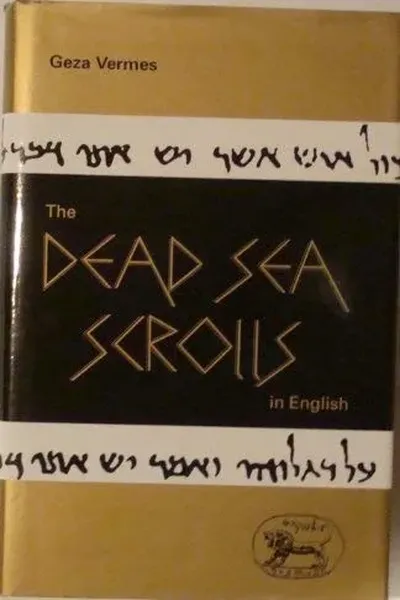
The Dead Sea Scrolls in English

 79
79

The Dead Sea Scrolls in English
Géza Vermès's English translation of the Dead Sea Scrolls offers a vital, if sometimes stark, window into a pivotal era of religious thought. The sheer scope of the translated material is its primary strength, presenting a panorama of Jewish belief systems from the late Second Temple period. Vermès’s scholarship grounds the texts, presenting them without undue speculative overlay. However, the edition's 1975 publication date means it predates some later archaeological and textual scholarship, and the lack of extensive original commentary can leave the uninitiated reader adrift without supplementary guides. A notable passage for its clarity is the rendering of the War Scroll, depicting a stark, apocalyptic vision of cosmic conflict, which Vermès presents with scholarly precision. It is an essential, if demanding, resource for serious study.
📝 Description
79
### What It Is This volume presents the Dead Sea Scrolls translated into English, specifically focusing on the edition established by Géza Vermès. Originally published in 1975, it offers access to a collection of ancient Jewish manuscripts discovered near the Dead Sea, primarily dating from the 3rd century BCE to the 1st century CE. The collection includes biblical texts, apocryphal writings, and sectarian documents that shed light on the religious landscape of Second Temple Judaism.
### Who It's For Scholars of ancient history, religious studies, and textual criticism will find this translation indispensable for direct engagement with primary sources. Those interested in the origins of early Christianity and Rabbinic Judaism, as well as individuals exploring esoteric interpretations of biblical texts, will also benefit. It is for anyone seeking to understand the diverse theological currents present in Judea during the Hellenistic and Roman periods.
### Historical Context The discovery of the Dead Sea Scrolls, beginning in 1947, revolutionized the study of ancient Judaism and early Christianity. These manuscripts, found in caves near Qumran, provided a textual baseline previously unavailable. Vermès's work, first appearing in 1975, aimed to make these crucial texts accessible to a wider audience beyond specialized academic circles. It contextualizes them within the broader spectrum of Jewish thought, challenging earlier assumptions about the homogeneity of religious practice at the time.
### Key Concepts The scrolls reveal a spectrum of Jewish belief systems, from orthodox biblical interpretations to the unique doctrines of sectarian groups, most notably the Essenes. Concepts such as messianic expectation, purity laws, angelology, and dualistic worldviews are prominent. The texts also illuminate the development of Hebrew and Aramaic literature and the textual transmission of biblical books, offering insights into the religious ferment that preceded and accompanied the rise of Christianity.
💡 Why Read This Book?
• Gain direct access to ancient Jewish texts, moving beyond secondary interpretations, through Vermès’s 1975 English rendering of the Dead Sea Scrolls. • Understand the diverse religious milieu of Second Temple Judaism, including the doctrines of groups like the Essenes, as presented in the translated sectarian documents. • Grasp the historical context of early Christianity and Rabbinic Judaism by examining primary source materials that were instrumental in shaping these traditions.
⭐ Reader Reviews
Honest opinions from readers who have explored this book.
❓ Frequently Asked Questions
When were the Dead Sea Scrolls discovered and when do they date from?
The Dead Sea Scrolls were discovered starting in 1947, with most finds occurring between 1947 and 1956. The manuscripts themselves date from approximately the 3rd century BCE to the 1st century CE, offering a crucial glimpse into the Second Temple period.
Who was Géza Vermès and why is his translation significant?
Géza Vermès was a Hungarian-born Israeli scholar of Judaism and early Christianity. His 1975 English translation is significant for making these complex texts accessible to a broader audience and for his scholarly approach to contextualizing them within their historical and religious milieu.
What kind of texts are included in the Dead Sea Scrolls?
The collection includes biblical manuscripts (copies of books from the Hebrew Bible), pseudepigraphal texts (writings attributed to biblical figures), and sectarian documents detailing the beliefs and practices of specific Jewish groups, such as the Essenes.
How do the Dead Sea Scrolls relate to early Christianity?
The scrolls provide invaluable context for understanding the Jewish world from which Christianity emerged. They reveal shared concepts, terminology, and expectations (like messianism) that help illuminate the background of Jesus and the early Christian movement.
Are these scrolls considered esoteric texts?
While not exclusively 'esoteric' in the modern sense, many scrolls explore mystical themes, angelology, apocalyptic visions, and unique interpretations of scripture that resonate with esoteric traditions and provide raw material for such studies.
Where were the Dead Sea Scrolls found?
The majority of the Dead Sea Scrolls were discovered in caves near the ancient settlement of Qumran, on the northwest shores of the Dead Sea, in the Judaean Desert.
🔮 Key Themes & Symbolism
Messianic Expectations
The scrolls reveal a complex and varied landscape of messianic hopes prevalent in Second Temple Judaism. Unlike a singular, monolithic expectation, texts like the 'Messianic Rule' suggest multiple figures, including priestly and royal messiahs. This diversity challenges the notion of a single, pre-Christian messianic concept and provides a richer context for understanding the claims made about Jesus. The fervent anticipation of divine intervention and a coming redeemer figure is a recurring motif, central to many sectarian interpretations of scripture and history.
Sectarianism and Purity
A significant portion of the scrolls illuminate the lives and beliefs of distinct Jewish sects, most notably the Essenes, associated with the Qumran community. Their emphasis on ritual purity, communal living, and strict adherence to their interpretation of the Law distinguishes them from broader Pharisaic or Sadducean traditions. Texts detailing their community rules, such as the 'Community Rule' (Serekh ha-Yahad), outline their distinct practices regarding entry, communal meals, and spiritual discipline, offering a profound look into the radical commitment of these groups.
Apocalyptic Worldviews
Many scrolls, particularly the 'War Scroll' (1QM) and parts of Daniel, exhibit strong apocalyptic themes. These texts often depict a cosmic struggle between forces of good and evil, light and darkness, culminating in divine intervention and the establishment of a new, righteous order. This dualistic perspective, prevalent in texts from the period, influenced both Jewish and early Christian eschatology, providing a framework for understanding suffering and injustice within a divine plan leading to ultimate vindication.
Biblical Interpretation and Transmission
The Dead Sea Scrolls contain the oldest known manuscripts of books from the Hebrew Bible, predating previously known copies by centuries. Their textual variations offer critical insights into the transmission of scripture before the standardization of the Masoretic Text. Furthermore, texts like 'Pesharim' demonstrate how ancient Jews interpreted biblical prophecies as directly applicable to their own time and community, revealing dynamic exegetical methods that shaped religious understanding.
💬 Memorable Quotes
“The Community Rule (Serekh ha-Yahad) outlines the strict entry process and communal life.”
— This highlights the disciplined, often exclusive nature of the Qumran sect, emphasizing their commitment to a specific covenant and way of life separate from mainstream society.
“The War Scroll depicts a final, cosmic battle between the 'Sons of Light' and the 'Sons of Darkness'.”
— This illustrates the intense dualistic worldview and apocalyptic expectations present in some Jewish communities, envisioning a divinely orchestrated victory over evil.
“Interpretations of biblical texts (Pesharim) connect ancient prophecies to contemporary events.”
— This demonstrates the living, dynamic nature of scripture for these communities, viewing historical occurrences as direct fulfillments of divine prophecy.
“Texts reveal varied messianic expectations, including priestly and royal figures.”
— This points to the complexity of messianic belief in Second Temple Judaism, moving beyond a single, simple expectation and enriching the context for later messianic claims.
“Emphasis on ritual purity and separation from 'sinners'.”
— This underscores the sectarian identity of groups like the Essenes, who sought to maintain a state of spiritual and physical cleanness distinct from others.
🌙 Esoteric Significance
Tradition
While not fitting neatly into established Western esoteric lineages like Hermeticism or Kabbalah, the Dead Sea Scrolls offer crucial source material for understanding the mystical and visionary currents within ancient Judaism that influenced later esoteric traditions. They represent a pre-Kabbalistic exploration of divine mysteries, angelology, and cosmology that resonates with Gnostic and Neoplatonic thought, albeit from a distinctly Jewish perspective. Their emphasis on hidden knowledge, angelic intermediaries, and a cosmic battle between light and darkness provides a foundational layer for subsequent esoteric developments.
Symbolism
Key symbols include the 'Sons of Light' versus 'Sons of Darkness,' representing a fundamental dualism and the ongoing cosmic struggle between divine order and chaos or evil. Angelic beings, such as Michael, are prominent, functioning as divine messengers and combatants, reflecting a rich angelology. The concept of a 'New Covenant' or a purified community also symbolizes a return to divine favor and a distinct, elect status, central to sectarian identity and eschatological hope.
Modern Relevance
Contemporary esoteric practitioners and scholars of mysticism often turn to the Dead Sea Scrolls for deeper context on Jewish roots of spiritual practices. Thinkers exploring early Christian mysticism, Gnosticism, and the origins of angel veneration find direct textual evidence. Furthermore, the scrolls' exploration of apocalyptic thought and dualistic frameworks continue to inform discussions in comparative religion and contemporary spiritual movements interested in cosmic battles and divine intervention narratives.
👥 Who Should Read This Book
• Students of comparative religion and ancient history: To gain direct textual evidence of the diverse religious landscape of Second Temple Judaism, moving beyond secondary interpretations. • Researchers into the origins of esoteric traditions: To explore pre-Kabbalistic angelology, dualistic cosmologies, and messianic expectations present in 3rd century BCE to 1st century CE Jewish texts. • Individuals interested in the historical context of early Christianity: To understand the Jewish milieu, religious concepts, and textual background from which Christianity emerged.
📜 Historical Context
The mid-20th century, particularly the period following 1947, was a watershed moment for biblical and historical studies due to the discovery of the Dead Sea Scrolls. This era saw intense scholarly debate regarding the origins of Christianity and Rabbinic Judaism, with scholars like Cecil Roth championing the Essene connection to Qumran. The scrolls emerged from a landscape rich with diverse Jewish movements – Sadducees, Pharisees, Zealots, and various mystical or apocalyptic groups – offering primary evidence previously unavailable. Vermès's 1975 translation aimed to bridge the gap between these nascent discoveries and the wider academic and public sphere. Reception was initially cautious, with debates over dating and attribution, but the scrolls' significance was quickly recognized, fundamentally altering understandings of Second Temple Judaism and its relationship to nascent Christianity.
📔 Journal Prompts
The 'Sons of Light' versus 'Sons of Darkness' dichotomy in the War Scroll.
The concept of ritual purity as detailed in the Community Rule (Serekh ha-Yahad).
The varied interpretations of messianic figures across different scrolls.
The role of angelic beings as described in texts like the Book of Enoch fragments.
The application of biblical prophecy to contemporary events in the Pesharim.
🗂️ Glossary
Second Temple Period
The era of Jewish history from the rebuilding of the Second Temple in Jerusalem (c. 516 BCE) until its destruction by the Romans in 70 CE. This period saw significant religious and political development.
Sectarian Documents
Texts originating from specific Jewish religious groups (sects) during the Second Temple Period, detailing their unique beliefs, rules, and interpretations of scripture, such as those attributed to the Essenes.
Messianism
Belief in a future anointed leader or deliverer (Messiah) who will restore the Jewish people and kingdom. The scrolls reveal diverse expectations regarding the nature and role of such figures.
Apocalyptic Literature
A genre of literature characterized by visions, divine revelation, cosmic struggles, and prophecies of end times. Often features dualism and the intervention of supernatural forces.
Pesher
A specific type of commentary found in the Dead Sea Scrolls, interpreting biblical prophecies as directly fulfilled in the history and experiences of the Qumran community.
Angelology
The study or belief concerning angels. Many Dead Sea Scrolls texts feature detailed descriptions of angelic hierarchies, roles, and interactions with humans.
Masoretic Text
The authoritative Hebrew and Aramaic text of the Jewish Bible (Tanakh), established by Jewish scribes and scholars in the 10th century CE. The Dead Sea Scrolls provide earlier textual variants.