The Dead Sea scrolls
 79
79

The Dead Sea scrolls
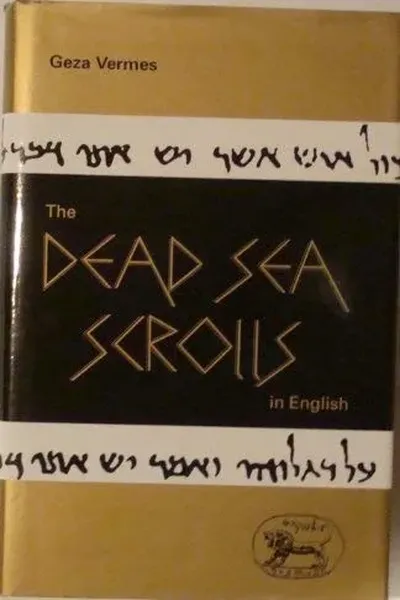
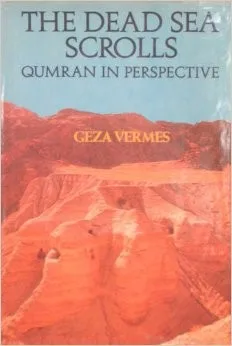
Géza Vermès's *The Dead Sea Scrolls* provides a robust, scholarly survey that has long served as a cornerstone for understanding these enigmatic texts. Its primary strength lies in Vermès's meticulous textual analysis and his persistent effort to situate the scrolls within the context of Second Temple Judaism, moving away from premature connections to early Christianity. A notable limitation, however, is that the 1977 publication date means it predates many subsequent discoveries and the ongoing re-evaluation of certain paleographic and textual evidence, which have shifted some scholarly consensus. For instance, Vermès's detailed discussion of the community's self-designation and its precise relationship to known Jewish sects remains a central, though evolving, point of contention. Despite its age, the work remains a vital reference for its foundational scholarship.
📝 Description
79
### What It Is Vermès's *The Dead Sea Scrolls* offers a comprehensive examination of the ancient manuscripts discovered near the Dead Sea, presenting critical analysis alongside textual evidence. It moves beyond mere cataloging to interpret the scrolls' significance within their original historical and religious milieu. The work scrutinizes the origins, content, and sectarian affiliations of the Qumran community, providing a foundational text for understanding these pivotal historical documents.
### Who It's For This book is essential for scholars of early Judaism and Christianity, students of religious history, and anyone interested in the textual foundations of Western religious thought. It appeals to those seeking an authoritative, scholarly perspective on the scrolls, moving past sensationalism to engage with the academic consensus and ongoing debates surrounding their interpretation. Readers will find detailed textual analysis and historical context.
### Historical Context Published in 1977, Vermès's work emerged during a period of intense scholarly activity surrounding the scrolls, which began with their discovery in 1947. The intervening decades saw a race to decipher and publish these texts, often amidst controversy and restricted access. Vermès's scholarship contributed significantly to establishing a scholarly framework for understanding the scrolls, particularly their relationship to Second Temple Judaism and the emergence of Christianity, distinguishing them from earlier, more speculative theories. His work engaged with scholars like Frank Moore Cross.
### Key Concepts The book systematically addresses the linguistic features of the scrolls, the precise dating of the manuscripts, and the identification of the Qumran sect. It explores the theological landscape of the Second Temple period, highlighting the diversity of Jewish thought before the Roman destruction of Jerusalem in 70 CE. Vermès's analysis clarifies the distinct doctrines and practices attributed to the Qumran community, offering insights into their eschatological beliefs and communal organization.
💡 Why Read This Book?
• Gain a scholarly perspective on the discovery and initial interpretation of the Dead Sea Scrolls, understanding the context of their 1947 discovery and the subsequent decades of research. • Grasp Vermès's key arguments regarding the Qumran community's distinct identity within Second Temple Judaism, including their unique interpretations of scripture and law. • Understand the scholarly debates surrounding the scrolls' origins and their relationship to contemporaneous Jewish sects and early Christian movements, as presented in the pre-1977 academic landscape.
⭐ Reader Reviews
Honest opinions from readers who have explored this book.
❓ Frequently Asked Questions
When were the Dead Sea Scrolls discovered, and when was Géza Vermès's book first published?
The Dead Sea Scrolls were discovered between 1947 and 1956. Géza Vermès's seminal work on them was first published in 1977, providing a comprehensive scholarly overview based on the findings available at that time.
What is the Qumran community, and how does Vermès's book discuss it?
Vermès's book extensively discusses the Qumran community, theorized to be the authors or custodians of many of the Dead Sea Scrolls. He analyzes their beliefs, practices, and sectarian identity within the broader context of Second Temple Judaism.
Does Vermès's book connect the Dead Sea Scrolls directly to early Christianity?
While Vermès explores the religious milieu from which both the scrolls and early Christianity emerged, his work emphasizes the distinct Jewish character of the Qumran sect, distinguishing it from direct Christian origins.
What kind of scholarly approach does Géza Vermès take in his book?
Vermès employs a critical, historical, and philological approach, focusing on textual analysis, paleography, and the historical context of the Second Temple period to interpret the scrolls and their significance.
Is this book suitable for someone new to the Dead Sea Scrolls?
Yes, Vermès's *The Dead Sea Scrolls* is considered a foundational text. While scholarly, it provides the essential historical and textual background for understanding the scrolls' importance for those beginning their study.
What makes Vermès's 1977 publication significant in Dead Sea Scrolls scholarship?
Published in 1977, Vermès's book synthesized years of research and debate, offering a coherent scholarly interpretation of the scrolls when access and publication were still contentious, shaping subsequent academic discourse.
🔮 Key Themes & Symbolism
Qumran Sectarianism
Vermès meticulously examines the evidence for a distinct Qumran sect, analyzing texts like the Community Rule to reconstruct their unique ideology. He differentiates them from other Jewish groups of the Second Temple period, exploring their communal structure, purity laws, and eschatological expectations. This deep dive into sectarian life provides crucial context for understanding the scrolls' production and preservation, moving beyond simplistic attributions to a singular Jewish or proto-Christian movement.
Textual Criticism and Interpretation
A core focus is the rigorous textual criticism applied to the scrolls. Vermès addresses issues of manuscript dating, scribal practices, and linguistic analysis to establish the most accurate readings and understand the evolution of Hebrew and Aramaic. His approach prioritizes the scrolls' internal evidence and historical milieu, offering a scholarly framework for interpreting their content, from biblical commentaries to apocalyptic visions.
Second Temple Judaism Landscape
The book situates the Dead Sea Scrolls within the complex religious and political environment of Judea during the Second Temple period (c. 516 BCE – 70 CE). Vermès highlights the diversity of Jewish thought, including the Pharisees, Sadducees, and Essenes, and explores how the Qumran community’s beliefs both aligned with and diverged from these broader currents. This contextualization is vital for understanding the scrolls' historical impact.
Messianic Expectations
Vermès scrutinizes the various messianic figures and expectations present in the scrolls. He analyzes texts that speak of priestly and royal messiahs, as well as communal leadership roles, and discusses how these concepts relate to contemporary Jewish beliefs and later Christian interpretations. The work clarifies the nuanced and often varied eschatological hopes found within the Qumran library.
💬 Memorable Quotes
“The scrolls are Jewish documents.”
— This concise statement encapsulates Vermès's central thesis, emphasizing their origin within the diverse landscape of Second Temple Judaism rather than as Christian texts, a crucial distinction for scholarly understanding.
“The Community Rule reveals a highly organized, disciplined sect.”
— This highlights Vermès's interpretation of foundational Qumran texts, underscoring the structured nature of the community and its emphasis on adherence to specific rules and regulations.
“Dating the manuscripts involves paleographic and textual analysis.”
— This points to the rigorous methodology Vermès employs, focusing on the scientific study of ancient handwriting and textual variations to establish the historical timeline of the scrolls.
“Messianic hopes were varied in Second Temple Judaism.”
— This reflects Vermès's analysis of the diverse expectations for a future redeemer found within the scrolls, showcasing a spectrum of beliefs that predated and informed later religious developments.
“Understanding the Essenes is key to understanding the scrolls.”
— This interpretation suggests Vermès’s strong alignment between the Qumran community and the historical Essenes, viewing their shared characteristics as essential for deciphering the scrolls' provenance.
🌙 Esoteric Significance
Tradition
While not strictly esoteric in the vein of Hermeticism or Kabbalah, Vermès's work is foundational for understanding the historical milieu from which many esoteric traditions later drew. It illuminates the Jewish roots of concepts that would become significant in Gnosticism and early Christian mysticism, particularly concerning dualism, ritual purity, and messianic timelines. His rigorous historical approach provides the bedrock upon which later esoteric interpretations of these ancient texts are built, offering a critical counterpoint to purely speculative readings.
Symbolism
The scrolls reveal potent symbols relevant to esoteric thought, such as the 'Sons of Light' versus the 'Sons of Darkness,' representing a fundamental cosmic dualism that echoes in Gnostic and Manichaean systems. The emphasis on ritual purity and communal initiation ceremonies points to symbolic acts of separation and transformation. Furthermore, the concept of a 'Teacher of Righteousness' can be seen as an archetypal figure of spiritual authority, a recurring motif in various mystical lineages.
Modern Relevance
Contemporary scholars and practitioners of Western esotericism continue to engage with Vermès's foundational work. Mystics and historians studying the origins of Christian Gnosticism, the development of Kabbalistic thought, or the historical Jesus often reference his analysis of the Qumran community's beliefs. His meticulous scholarship provides essential context for understanding the textual and historical landscape that informed later esoteric developments, allowing for more informed study of ancient mysticism and its enduring impact.
👥 Who Should Read This Book
• Students of early Judaism and Christianity: Gain a comprehensive, scholarly overview of the scrolls' historical and religious context, crucial for understanding the formative period of Western religions. • Researchers in textual criticism and ancient history: Benefit from Vermès's rigorous analysis of manuscript dating, paleography, and linguistic features, providing a benchmark for critical study. • Those interested in the origins of esoteric thought: Understand the historical and textual roots of concepts like dualism, messianism, and communal spiritual practice that would later influence esoteric traditions.
📜 Historical Context
Géza Vermès's *The Dead Sea Scrolls*, first published in 1977, emerged during a pivotal era in biblical and historical scholarship. The initial discovery of the scrolls began in 1947, sparking decades of intense, often competitive, research and publication. By the late 1970s, many key texts had been translated and analyzed, but debates raged regarding their precise dating, authorship, and theological significance. Vermès’s work contributed significantly to consolidating a scholarly consensus that firmly rooted the scrolls within the diverse spectrum of Second Temple Judaism, distinguishing them from speculative theories that linked them more directly to early Christianity or other fringe groups. His scholarship engaged directly with the ongoing academic discourse, offering a reasoned, evidence-based perspective that helped shape the field, particularly in contrast to more sensationalist or ideologically driven interpretations that were prevalent at the time. He notably engaged with contemporary scholars like Frank Moore Cross, whose work also critically examined these texts.
📔 Journal Prompts
The concept of the 'Sons of Light' and 'Sons of Darkness' as presented in the scrolls.
Vermès's analysis of the Qumran community's unique scriptural interpretations.
The role of messianic expectations within the diverse landscape of Second Temple Judaism.
The implications of the scrolls' discovery for understanding the historical Jesus.
Reflect on the challenges Vermès faced in dating and interpreting these ancient texts.
🗂️ Glossary
Second Temple Period
The era of Jewish history from the rebuilding of the Second Temple in Jerusalem (c. 516 BCE) until its destruction by the Romans in 70 CE. This period saw significant religious and political developments.
Qumran
An archaeological site near the Dead Sea, believed to be the settlement of a Jewish sect that produced or preserved many of the Dead Sea Scrolls. The nature of this sect is heavily debated.
Paleography
The study of ancient handwriting. In the context of the scrolls, paleography is crucial for dating the manuscripts based on the style of script used.
Community Rule (Serekh ha-Yahad)
A key sectarian document found among the Dead Sea Scrolls, detailing the rules, organization, and beliefs of the Qumran community.
Messiah
In Jewish tradition, a divinely appointed leader or savior. The scrolls reveal diverse and complex messianic expectations, including priestly and royal figures.
Essenes
One of the Jewish sects described by ancient historians like Josephus, Philo, and Pliny the Elder. Many scholars associate the Essenes with the Qumran community.
Apocalyptic Literature
A genre of literature, prominent in the Second Temple period, that deals with revelations about the end times, cosmic battles between good and evil, and divine judgment.