The Dead Sea scrolls
 74
74

The Dead Sea scrolls
Géza Vermès’s 1994 study of the Dead Sea Scrolls offers a sharp, if sometimes polemical, scholarly lens. His assertion that the scrolls primarily represent the library of the Essene sect, a view he championed for decades, forms the bedrock of his analysis. This conviction, while providing a coherent narrative, can occasionally lead to an interpretative framework that seems to fit the evidence rather than emerge organically from it. A particular strength lies in Vermès's nuanced discussion of the scrolls’ linguistic features, differentiating them from later Jewish texts and illuminating the specific milieu of their creation. However, his firm stance on the Essene authorship, particularly regarding texts like the Community Rule, may leave readers wanting a more open-ended consideration of alternative scholarly positions. The examination of the scrolls' eschatological themes, especially their connection to figures like John the Baptist, remains compelling. Ultimately, Vermès’s work is a vital, albeit opinionated, contribution to understanding these pivotal ancient documents.
📝 Description
74
### What It Is
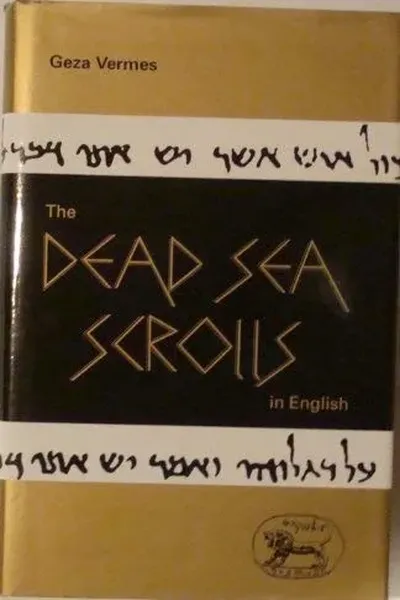
The Dead Sea Scrolls, first published in 1994 by Géza Vermès, offers a critical examination of the ancient manuscripts discovered in the Qumran caves. This work is not a simple translation but an in-depth analysis of their historical, religious, and linguistic significance. Vermès situates these texts within their original 2nd-century BCE to 1st-century CE context, exploring the diverse Jewish sects and beliefs that produced them. The book investigates the scrolls' relationship to early Christianity and Rabbinic Judaism, challenging previous interpretations and providing a scholarly framework for understanding their content.
### Who It's For
This volume is intended for readers who seek a rigorous, scholarly approach to the Dead Sea Scrolls, moving beyond sensationalism to engage with the primary evidence and academic debate. It is suitable for students of ancient history, comparative religion, biblical studies, and those interested in the development of early Jewish and Christian thought. Readers should possess a willingness to grapple with complex textual analysis and historical reconstruction. Those seeking a foundational text for understanding the Qumran community and its literary output will find this an essential resource.
### Historical Context
The discovery of the Dead Sea Scrolls, beginning in 1947, revolutionized the study of Second Temple Judaism. These manuscripts, predating the earliest known complete Hebrew Bible codices by a millennium, provided unprecedented access to the religious landscape of Judea. Vermès's 1994 publication emerged at a time of intense scholarly activity and public fascination, following decades of debate over the scrolls' authenticity, dating, and interpretation. His work engaged directly with the ongoing scholarly discourse, particularly concerning the scrolls' connection to the Essenes and their role in shaping nascent Christian and rabbinic traditions.
### Key Concepts
Vermès's analysis centers on several pivotal concepts. He meticulously examines the sectarian nature of many scrolls, proposing that they represent the library of a specific Jewish group, likely the Essenes, who inhabited Qumran. The book scrutinizes the scrolls' unique interpretations of biblical law and prophecy, highlighting their eschatological fervor and messianic expectations. Furthermore, Vermès explores the linguistic distinctiveness of the Qumran Hebrew and Aramaic, distinguishing it from later biblical and Mishnaic Hebrew. The concept of *dualism*, prevalent in some Qumran texts, is also a significant focus, reflecting a worldview sharply divided between forces of light and darkness.
💡 Why Read This Book?
• Gain a scholarly perspective on the Essene hypothesis regarding the Qumran community, a central argument presented by Vermès, which challenges prevailing views on early Jewish sects. • Understand the linguistic distinctiveness of Qumran Hebrew and Aramaic as detailed by Vermès, allowing for a deeper appreciation of the scrolls' original context and separating them from later biblical Hebrew. • Explore the eschatological and messianic expectations present in the scrolls, as analyzed by Vermès, providing concrete examples of how these texts foreshadowed later religious developments.
⭐ Reader Reviews
Honest opinions from readers who have explored this book.
❓ Frequently Asked Questions
What is the significance of the Qumran caves in relation to the Dead Sea Scrolls?
The Qumran caves, located near the Dead Sea, served as the primary discovery sites for the Dead Sea Scrolls between 1947 and 1956. These caves, along with nearby ruins, are believed to have been associated with a Jewish sect, likely the Essenes, who may have stored their library there for safekeeping.
Who was Géza Vermès and what was his contribution to Dead Sea Scrolls scholarship?
Géza Vermès was a Hungarian-born scholar of Jewish history and religion, renowned for his work on the Dead Sea Scrolls. His 1994 book, among other influential publications, strongly advocated for the identification of the scrolls with the Essene sect and offered critical translations and interpretations.
When were the Dead Sea Scrolls discovered?
The initial discovery of the Dead Sea Scrolls occurred in 1947 when a Bedouin shepherd stumbled upon several scrolls in a cave near Qumran. Further significant discoveries were made in subsequent years, continuing into the mid-1950s.
What is the historical period most associated with the Dead Sea Scrolls?
The Dead Sea Scrolls primarily date from the 3rd century BCE to the 1st century CE, a period known as the Second Temple period. This era encompasses the time leading up to and during the Roman destruction of the Second Temple in 70 CE.
What is the Essene hypothesis regarding the Dead Sea Scrolls?
The Essene hypothesis, strongly supported by Géza Vermès, posits that the Dead Sea Scrolls were the library of the Essenes, an ascetic Jewish sect living at Qumran during the Second Temple period. This theory explains the sectarian nature and unique theological themes found in many of the scrolls.
How do the Dead Sea Scrolls relate to early Christianity?
The Dead Sea Scrolls provide crucial context for understanding the Jewish environment from which Christianity emerged. They reveal shared concepts, terminology, and eschatological expectations, helping scholars to better situate the teachings of figures like John the Baptist and Jesus within their original Jewish milieu.
🔮 Key Themes & Symbolism
Sectarianism and Qumran
Vermès's analysis heavily emphasizes the sectarian nature of the Dead Sea Scrolls, arguing predominantly for their origin within the Essene community. This perspective highlights the distinct practices, laws, and theological outlook of this specific Jewish group active during the Second Temple period. The texts are presented not as a general collection of Jewish writings, but as the curated library of a community with a unique identity, particularly evident in texts like the Community Rule (Serekh Hayahad). Understanding this sectarian context is crucial for interpreting the scrolls' esoteric interpretations of scripture and their communal living principles.
Eschatology and Messianism
A significant thread running through the Dead Sea Scrolls, and explored by Vermès, is their pronounced eschatological focus and anticipation of messianic figures. Many texts reveal a fervent belief in an imminent end-times scenario, the coming of divine judgment, and the arrival of one or more messianic deliverers. This theme underscores the intense spiritual and apocalyptic atmosphere of the period. Vermès connects these expectations to the broader religious currents of Second Temple Judaism, offering insights into how such beliefs shaped the worldview of the Qumran community and potentially influenced nascent Christian thought.
Biblical Interpretation and Law
The scrolls offer a fascinating glimpse into how ancient Jews interpreted their sacred scriptures and applied the Law. Vermès details how the Qumran community engaged in unique forms of biblical exegesis, often reinterpreting prophetic texts to apply to their own time and circumstances. This includes detailed legal interpretations (Halakha) that differed from those of other Jewish groups, such as the Pharisees. The scrolls reveal a rigorous adherence to perceived divine law and a deep engagement with biblical narratives, viewed through the lens of their specific community's covenantal relationship with God.
Dualistic Worldview
Several texts from Qumran, as discussed by Vermès, exhibit a pronounced dualistic cosmology, positing a fundamental struggle between forces of light and darkness, good and evil, God and Belial. This Manichean-like worldview permeates their understanding of human nature, the community's election, and the unfolding of history. This dualism is not merely a philosophical concept but informs their ethical framework and their perception of the community's role as God's chosen people in a corrupted world. Understanding this dualistic lens is key to deciphering the spiritual intensity and unique theology of the Qumran sect.
💬 Memorable Quotes
“The scrolls are not the work of scholars but of a community.”
— This interpretation highlights Vermès's central thesis that the Dead Sea Scrolls are primarily the product of a specific religious community (likely the Essenes) rather than a neutral academic archive, emphasizing their sectarian and devotional character.
“Qumran Hebrew is distinct from later biblical and Mishnaic Hebrew.”
— This points to the linguistic analysis Vermès employs, differentiating the language of the scrolls from later forms of Hebrew. It underscores the texts' antiquity and the unique linguistic environment of their origin.
“The scrolls reveal intense messianic and eschatological expectations.”
— This paraphrased concept captures the fervent anticipation of future divine intervention and the coming of messianic figures evident in many Qumran texts, a key theme in Vermès's scholarly examination.
“The Community Rule outlines the strict entry requirements and life of the sect.”
— This refers to a specific text (Serekh Hayahad) and its content, illustrating how Vermès uses such documents to reconstruct the social and religious organization of the Qumran community.
“The scrolls offer insights into the Jewish roots of Christianity.”
— This interpretation emphasizes the book's contribution to understanding the historical and religious context from which early Christianity emerged, by examining shared themes and ideas with the Qumran sect.
🌙 Esoteric Significance
Tradition
While not strictly belonging to a single named esoteric lineage like Kabbalah or Theosophy, Vermès's work on the Dead Sea Scrolls illuminates a crucial, often overlooked, stream within ancient Jewish mysticism and proto-Gnosticism. The scrolls reveal a sophisticated theological system with dualistic tendencies, intricate angelology, and apocalyptic visions that prefigure later esoteric developments. They represent a vital link in understanding the evolution of mystical thought within Judaism, bridging biblical prophecy with later Kabbalistic concepts and Gnostic cosmologies, particularly in their emphasis on hidden knowledge and spiritual purity.
Symbolism
Key symbols in the Dead Sea Scrolls, as interpreted through Vermès's work, include the stark dualism of Light versus Darkness, representing the cosmic struggle between good and evil and the community's perceived role as bearers of divine truth. Another significant motif is the concept of the 'New Covenant,' signifying a purified, elect community chosen by God for a special relationship and a role in the end times. Angelic beings and the detailed purity laws also function symbolically, representing a striving for divine proximity and a separation from the perceived corruption of the external world.
Modern Relevance
Contemporary esoteric practitioners and scholars of mysticism frequently draw upon the Dead Sea Scrolls for their insights into ancient Jewish spiritual practices and beliefs. Movements interested in early Christian origins, Jewish mysticism, and comparative religion find the scrolls indispensable for understanding the pre-Christian and early-Christian milieu. Thinkers exploring themes of apocalypticism, dualistic worldviews, and the search for hidden spiritual knowledge often reference the Qumran texts and Vermès's analyses as foundational material for contemporary esoteric discourse and practice.
👥 Who Should Read This Book
• Students of Second Temple Judaism: Readers seeking a scholarly yet accessible examination of the diverse Jewish sects and beliefs prevalent before the destruction of the Jerusalem Temple. • Comparative religion scholars: Those interested in the historical and theological connections between Judaism, early Christianity, and other ancient Near Eastern religious traditions will find rich comparative material. • Esoteric and mystical studies enthusiasts: Individuals exploring the roots of Western mysticism, angelology, apocalyptic thought, and dualistic cosmologies will discover foundational texts and interpretations.
📜 Historical Context
The mid-20th century witnessed a profound shift in biblical and religious studies with the discovery of the Dead Sea Scrolls, commencing in 1947. Géza Vermès's 1994 publication, *The Dead Sea Scrolls*, arrived after decades of intense scholarly debate and public fascination. The scrolls provided the earliest extant manuscripts of the Hebrew Bible and numerous other Jewish texts, dating primarily from the 3rd century BCE to the 1st century CE. This era, the Second Temple period, was characterized by diverse Jewish movements, including Pharisees, Sadducees, and Zealots, alongside the Essenes, whom Vermès strongly identified with the Qumran community. The reception of the scrolls was initially hampered by political turmoil and access issues, but by the 1990s, scholarship had advanced considerably. Vermès’s work engaged directly with the ongoing efforts to understand the scrolls’ origins, authorship, and theological significance, particularly their relationship to the Essenes and their potential connections to early Christian thought, a subject frequently debated with scholars like E.P. Sanders.
📔 Journal Prompts
The dualistic worldview presented in the scrolls, contrasting Light and Darkness.
Interpretations of biblical law found within the Qumran texts.
The role of messianic expectations in the community's daily life.
The concept of the 'New Covenant' as understood by the Qumran sect.
Linguistic markers that distinguish Qumran Hebrew from other Hebrew dialects.
🗂️ Glossary
Second Temple Period
The historical era in Judea from the rebuilding of the Second Temple in Jerusalem (circa 516 BCE) until its destruction by the Romans in 70 CE. This period saw significant religious and political developments, including the emergence of various Jewish sects.
Essenes
A distinct Jewish sect during the Second Temple period, known for its asceticism, communal living, and strict adherence to purity laws. Géza Vermès strongly argued they were responsible for the Dead Sea Scrolls.
Qumran
An archaeological site on the northwest shore of the Dead Sea, associated with the discovery of the Dead Sea Scrolls. It is widely believed to have been a settlement of the Essene community.
Halakha
The collective body of Jewish religious laws derived from the Written and Oral Torah. The scrolls contain unique interpretations and applications of Halakha by the Qumran sect.
Eschatology
A branch of theology concerned with the final destiny of the soul and the world. The Dead Sea Scrolls are rich in eschatological themes, predicting end-times events and divine judgment.
Messianism
Belief in the coming of a messiah or messiahs. The scrolls reveal complex messianic expectations, referring to priestly and royal figures who would usher in a new era.
Dualism
A philosophical or theological concept that posits two fundamental, often opposing, principles. In the scrolls, this is often seen as the struggle between forces of Light and Darkness.