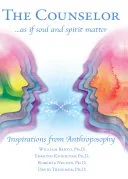
The Counselor . . . as if Soul and Spirit Matter
 75
75

The Counselor . . . as if Soul and Spirit Matter
William Bento and Edmond Knighton's "The Counselor . . . as if Soul and Spirit Matter" offers a compelling, albeit niche, expansion of therapeutic theory. Its strength lies in its earnest attempt to synthesize Rudolf Steiner's spiritual science with contemporary counseling. The integration of the body-soul-spirit paradigm provides a valuable lens for practitioners feeling constrained by purely materialist psychological models. However, the work's reliance on anthroposophical terminology can present a steep learning curve for those unfamiliar with Steiner's extensive writings. A particular passage discussing the 'etheric body' as a mediator of spiritual forces in therapy, while central to the anthroposophic view, might feel abstract or unconvincing to skeptics. Despite this potential barrier, the book serves as a vital bridge for those seeking to explore the spiritual dimensions of healing. It successfully argues for a more holistic human understanding within psychotherapy.
📝 Description
75
### What It Is "The Counselor . . . as if Soul and Spirit Matter" presents an anthroposophic framework for counseling and psychotherapy. The work seeks to integrate Rudolf Steiner's spiritual science into contemporary psychological models. It proposes a comprehensive approach that acknowledges and incorporates the dimensions of body, soul, and spirit within the therapeutic process. This perspective challenges purely materialistic understandings of human consciousness and well-being.
### Who It's For This book is intended for psychotherapists, counselors, and mental health professionals interested in expanding their theoretical and practical tools beyond conventional psychological paradigms. It will also appeal to students of anthroposophy, spiritual science, and alternative approaches to healing and personal development. Individuals seeking a deeper, more holistic understanding of the human psyche, and those who feel contemporary psychology overlooks essential spiritual aspects of human experience, will find value here.
### Historical Context The book emerges from a lineage of thought influenced by Rudolf Steiner and the spiritual science movement, which gained traction in the early 20th century. Anthroposophy, as a philosophical and scientific endeavor, sought to bridge the empirical and the spiritual. This work situates itself within this tradition, aiming to bridge it with modern psychological practice. It implicitly engages with the limitations of purely materialistic psychology, a dominant force since the mid-20th century, by reintroducing spiritual-scientific perspectives.
### Key Concepts The core of the work lies in the re-formulation of psychology to be inclusive of body, soul, and spirit. It posits that a complete understanding of human experience and distress requires addressing these interconnected levels. The book explores how spiritual-scientific insights can inform therapeutic interventions, moving beyond symptom management to address deeper existential and spiritual needs. The authors advocate for a paradigm shift that recognizes the human being as a multi-faceted spiritual entity.
💡 Why Read This Book?
• Gain a holistic counseling model that explicitly includes soul and spirit, moving beyond purely materialistic psychological frameworks, as discussed in the book's core proposition of re-formulating psychology. • Understand the application of Rudolf Steiner's spiritual science principles within psychotherapy, providing a unique perspective for practitioners and students of esoteric psychology first introduced in the early 20th century. • Explore therapeutic interventions that address the spiritual needs of the individual, offering a path to healing that encompasses the whole human being, a central theme for counselors seeking deeper efficacy.
⭐ Reader Reviews
Honest opinions from readers who have explored this book.
❓ Frequently Asked Questions
What is the primary philosophical approach of "The Counselor . . . as if Soul and Spirit Matter"?
The book's primary philosophical approach is anthroposophy, a spiritual science developed by Rudolf Steiner. It seeks to integrate this spiritual perspective with contemporary psychology, emphasizing the importance of body, soul, and spirit in counseling.
Who are the authors and what is their background related to this work?
William Bento, Executive Director of Anthroposophic Psychology Associates of North America (APANA), and Edmond Knighton are the authors. Their backgrounds are rooted in anthroposophical psychology, bringing direct experience to the integration of spiritual science and therapy.
When was "The Counselor . . . as if Soul and Spirit Matter" first published?
The book was first published on March 1, 2015, making its approach a more recent contribution to the field of spiritual psychology.
What does the book mean by 'soul and spirit matter' in counseling?
It signifies that effective counseling requires acknowledging and working with the non-physical aspects of a person—their soul (emotions, consciousness) and spirit (essential being, individuality)—not just their physical or mental states.
Is this book suitable for someone new to anthroposophy?
While the book aims to integrate spiritual science into psychology, readers new to anthroposophy may find some concepts challenging without prior familiarity with Rudolf Steiner's work. However, it serves as an introduction to these ideas within a therapeutic context.
What kind of psychology does this book contrast with?
The book implicitly contrasts with contemporary, often materialistic or reductionist, schools of psychology that may not fully account for spiritual dimensions of human experience. It offers an alternative to paradigms solely focused on the physical and psychological.
🔮 Key Themes & Symbolism
Body-Soul-Spirit Integration
The central theme is the necessity of viewing the human being as an integrated whole of body, soul, and spirit. The work argues that contemporary psychology often neglects the soul and spirit, leading to incomplete therapeutic outcomes. By re-introducing spiritual science, it seeks to provide a more comprehensive understanding of human consciousness, suffering, and healing, treating these three aspects as inseparable and vital for well-being.
Spiritual Science in Practice
This theme focuses on the practical application of Rudolf Steiner's spiritual scientific insights within the context of counseling and psychotherapy. It moves beyond theoretical discussion to offer potential methods and perspectives for therapists. The book explores how understanding the spiritual nature of the human being can inform diagnostic approaches and therapeutic interventions, aiming to facilitate deeper transformation.
Anthroposophic Psychology
The book is firmly rooted in anthroposophic psychology, a specific branch of psychology derived from the work of Rudolf Steiner. It defines and applies concepts unique to this tradition, such as the different bodies (physical, etheric, astral, ego) and their roles in human health and illness. This theme establishes the book's distinct lineage and theoretical foundation within esoteric studies.
Holistic Healing Paradigm
This theme presents the book's contribution as a holistic paradigm for healing that transcends purely material or psychological explanations. It champions an approach where spiritual well-being is as crucial as mental or physical health. The work suggests that by attending to the spiritual dimensions, counselors can facilitate more profound and lasting changes in their clients.
💬 Memorable Quotes
“We integrate the whole paradigm of spiritual science into the contemporary forms of psychology, thereby re-formulating a psychology inclusive of body, soul, and spirit.”
— This statement encapsulates the book's core mission: to bridge the gap between esoteric spiritual knowledge and established psychological practice. It highlights the ambition to create a more complete model of human experience that honors our spiritual nature.
“The art of counseling is practiced in many settings.”
— This observation sets a broad context, suggesting that the principles discussed are relevant across various forms of guidance, from informal familial support to professional therapeutic work, underscoring the universal human need for understanding and help.
“An anthroposophic approach to counseling and psychotherapy.”
— This phrase clearly identifies the specific theoretical lens through which the authors examine therapeutic practice. It signals to readers that the content will be grounded in the specific worldview and methodologies of anthroposophy.
“re-formulating a psychology inclusive of body, soul, and spirit.”
— This highlights the book's objective to revise and expand existing psychological frameworks. It emphasizes a move away from reductionist views towards a more comprehensive understanding of the human being.
“Dr. William Bento, Executive Director of Anthroposophic Psychology Associates of North America (APANA).”
— This attribution provides credibility and context, positioning Dr. Bento as a leading figure in the specific field of anthroposophic psychology in North America, thereby lending weight to the book's assertions.
🌙 Esoteric Significance
Tradition
This work belongs to the esoteric tradition of Anthroposophy, founded by Rudolf Steiner. It extends Steiner's spiritual science into the practical realm of psychotherapy, positioning itself as a contemporary evolution of Theosophical and spiritual-scientific thought. It aims to re-integrate spiritual understanding into a field that, since the mid-20th century, has often leaned towards materialism, thereby reclaiming a holistic view of the human being.
Symbolism
While not heavily reliant on overt symbolism in the way some traditions are, the core 'symbol' is the tripartite human being: body, soul, and spirit. The body represents the physical form, the soul encompasses consciousness, emotions, and life forces, and the spirit represents the individual, eternal essence. The integration of these three is the central symbolic and conceptual aim of the work.
Modern Relevance
Contemporary practitioners in fields like developmental psychology, somatic experiencing, and transpersonal psychology who seek to incorporate consciousness and spiritual development into their work may find resonance. Thinkers exploring the integration of mind-body-spirit modalities, particularly those influenced by Eastern philosophies or alternative spiritual paths, can find parallels and a distinct Western esoteric perspective here.
👥 Who Should Read This Book
• Therapists and counselors seeking to expand their theoretical frameworks beyond conventional psychology, particularly those interested in holistic or spiritual approaches to healing. • Students of anthroposophy and Rudolf Steiner's spiritual science who wish to see its application in a practical, humanistic field like psychotherapy. • Individuals interested in comparative psychology and the history of esoteric thought, offering insight into how spiritual traditions engage with mental and emotional well-being.
📜 Historical Context
Published in 2015, "The Counselor . . . as if Soul and Spirit Matter" emerged into a psychological landscape largely dominated by empirical, cognitive, and neurobiological approaches. Its foundation in anthroposophy places it within a lineage tracing back to Rudolf Steiner's spiritual science, a movement that flourished in the early 20th century, offering a counterpoint to purely materialistic worldviews. This work sought to bridge the esoteric insights of Steiner's era with the practical demands of contemporary psychotherapy. While figures like Carl Jung explored the spiritual dimensions of the psyche, his analytical psychology often remained within a more psychological, rather than explicitly spiritual-scientific, framework. Bento and Knighton's book champions a return to a more overtly spiritual understanding of human consciousness, implicitly critiquing the limitations of secular psychologies that emerged and solidified throughout the 20th century. It stands as an effort to revitalize a spiritual perspective within a field increasingly focused on quantifiable data and observable behavior.
📔 Journal Prompts
The concept of the body, soul, and spirit integration: how does this triad manifest in your own experience?
Reflect on the re-formulation of psychology proposed by Bento and Knighton. What would a truly inclusive psychology look like?
Consider the role of spiritual science in contemporary therapeutic practice. What challenges and opportunities does it present?
The anthroposophic approach to counseling: how might this perspective shift your understanding of a client's struggles?
The spiritual needs of the individual: identify one such need and explore how it might be addressed therapeutically.
🗂️ Glossary
Anthroposophy
A spiritual philosophy and practice founded by Rudolf Steiner, seeking to understand the spiritual nature of the human being and the cosmos through 'spiritual science'.
Spiritual Science
The term used by Rudolf Steiner to describe his method of investigating the spiritual world, presented as a rigorous, observational science accessible to human consciousness.
Body, Soul, and Spirit
The fundamental threefold constitution of the human being in anthroposophy. The body is the physical organism, the soul includes consciousness and life forces, and the spirit is the true individuality or ego.
Psychotherapy
A form of treatment for mental and emotional disorders, involving communication between a trained therapist and a client, aiming to foster understanding and change.
Counseling
Providing guidance and support, often in a professional capacity, to help individuals address personal, social, or psychological challenges.
APANA
An acronym for Anthroposophic Psychology Associates of North America, an organization dedicated to the study and practice of psychology based on anthroposophy.
Materialistic Psychology
Psychological approaches that explain human behavior and consciousness solely in terms of physical matter and biological processes, excluding spiritual or non-physical factors.