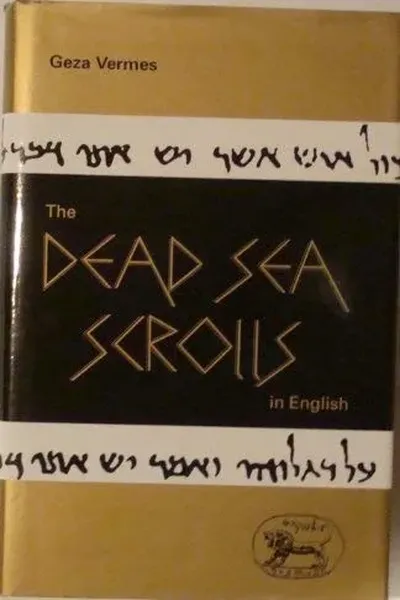
The Complete Dead Sea Scrolls in English

 82
82

The Complete Dead Sea Scrolls in English
Géza Vermès's translation of the Dead Sea Scrolls is a formidable scholarly achievement, bringing together a vast corpus of fragmented texts into a coherent English presentation. Its strength lies in its meticulous scholarship and the inclusion of Vermès's extensive, often insightful, commentary, which situates the scrolls within their historical and theological milieu. However, the sheer volume and the dense nature of some sectarian texts can make direct engagement challenging for the uninitiated, requiring significant prior knowledge or a dedicated effort. A particular passage that highlights the scrolls' unique perspective is the depiction of the Qumran community's strict adherence to purity laws, a stark contrast to other contemporary Jewish groups. Vermès's work remains a foundational resource for anyone serious about understanding this critical period of religious history.
📝 Description
82
### What It Is
The Complete Dead Sea Scrolls in English presents a singular, authoritative compilation of the ancient Jewish texts discovered in caves near Qumran beginning in 1947. Géza Vermès's translation, first published in its comprehensive form in 2010, offers scholars and general readers access to a pivotal collection of biblical and non-biblical writings. These documents offer an unparalleled window into Jewish thought and practice in the Second Temple period, a critical era that shaped both Rabbinic Judaism and early Christianity.
### Who It's For
This volume is indispensable for anyone studying the origins of Abrahamic religions, early Jewish sectarianism, or the historical context of the New Testament. It appeals to academics in religious studies, history, and ancient languages, as well as to autodidacts with a serious interest in textual criticism and the history of religious ideas. Those exploring the development of messianic expectations and apocalyptic literature will find extensive material here.
### Historical Context
The Dead Sea Scrolls emerged from a period of intense religious and political ferment in Judea under Hellenistic and Roman rule. The discovery, beginning with Bedouin shepherds finding the first scrolls in caves near the Dead Sea, sparked global academic and public interest. These texts are primarily associated with the Essenes, a Jewish sect whose beliefs and practices are detailed within the scrolls themselves, though debates continue regarding the precise identity of the Qumran community. The scrolls date from the 3rd century BCE to the 1st century CE, providing a contemporaneous view of Judaism alongside the Pharisees and Sadducees.
### Key Concepts
The scrolls illuminate concepts such as dualism (light vs. darkness), the Teacher of Righteousness, communal living, ritual purity, and the anticipation of a messianic age. They include biblical manuscripts, apocryphal works, and unique sectarian documents like the Community Rule (Serekh ha-Yahad) and the War Scroll (Milhamah). The texts reveal a spectrum of Jewish observance and theological interpretation that existed before the destruction of the Second Temple in 70 CE, challenging monolithic views of ancient Judaism.
💡 Why Read This Book?
• Learn about the sectarian beliefs of groups like the Essenes, as detailed in texts such as the Community Rule (Serekh ha-Yahad), offering a counterpoint to mainstream Second Temple Judaism. • Understand the historical and linguistic context of biblical texts through manuscripts dating as early as the 3rd century BCE, providing crucial textual variants and interpretations. • Grasp the development of messianic and apocalyptic thought prevalent in the 1st century CE, influencing both Rabbinic Judaism and early Christian theology.
⭐ Reader Reviews
Honest opinions from readers who have explored this book.
❓ Frequently Asked Questions
When were the Dead Sea Scrolls discovered and by whom?
The Dead Sea Scrolls were discovered by Bedouin shepherds in caves near Qumran, beginning in 1947. This serendipitous find initiated decades of archaeological excavation and scholarly analysis of these ancient Jewish texts.
What is the historical period covered by the Dead Sea Scrolls?
The scrolls generally date from the 3rd century BCE to the 1st century CE, a period encompassing the late Second Temple era, crucial for understanding the development of Judaism and the emergence of Christianity.
Who were the Essenes, and what is their connection to the scrolls?
The Essenes were a Jewish ascetic sect active during the Second Temple period. Many scholars associate the Qumran community, where the scrolls were found, with the Essenes, believing the texts reflect their beliefs and practices.
What kind of texts are included in the Dead Sea Scrolls?
The collection comprises biblical manuscripts (copies of books from the Hebrew Bible), apocryphal and pseudepigraphical works, and sectarian documents detailing the specific rules, beliefs, and theology of the community that preserved them.
How does Géza Vermès's translation differ from others?
Vermès's translation is renowned for its scholarly rigor, accompanying commentary, and comprehensive inclusion of all major scrolls. It aims to present the texts in their historical context, often offering interpretations that challenge traditional views.
What is the significance of the War Scroll (Milhamah)?
The War Scroll describes an apocalyptic battle between the 'Sons of Light' and the 'Sons of Darkness,' offering insights into the Qumran community's eschatological expectations and their perception of cosmic conflict.
🔮 Key Themes & Symbolism
Messianic Expectations
The scrolls reveal a complex landscape of messianic anticipation, with various texts hinting at multiple figures or roles, including priestly and Davidic messiahs. This contrasts with later, more unified Rabbinic views and provides a crucial backdrop for understanding the messianic claims within early Christianity. The anticipation of a coming age and divine intervention is a pervasive theme, reflecting the anxieties and hopes of Judea during Roman occupation.
Dualism and Purity
A strong dualistic worldview, pitting forces of light against darkness, is evident in many sectarian texts, notably the Community Rule. This cosmic struggle is mirrored in the community's stringent emphasis on ritual purity and separation from the perceived corruption of mainstream Jewish society and the surrounding world. Their meticulous laws regarding impurity and communal meals underscore this focus on maintaining spiritual and physical cleanliness.
Sectarian Life and Organization
The scrolls provide unparalleled detail on the organizational structure, rules, and daily life of a specific Jewish sect, widely believed to be the Essenes. Documents like the Community Rule outline initiation rites, communal property, governance, and judicial procedures, offering a vivid portrayal of disciplined, communal living aimed at spiritual perfection and adherence to divine law outside the established Temple hierarchy.
Apocalyptic Vision
The apocalyptic genre flourishes within the Dead Sea Scrolls, with texts like the War Scroll detailing visions of end-times battles, divine judgment, and the establishment of a new covenant. These visions reflect a deep concern with the political and spiritual turmoil of the era, projecting hope for ultimate divine victory and restoration onto a future, divinely ordained event.
💬 Memorable Quotes
“The Spirit of Truth is to guide them in the ways of righteousness.”
— This reflects the Qumran community's belief in divine guidance and a strict moral code, contrasting with the perceived 'Spirit of Error' that led others astray. It highlights their pursuit of an exclusive path to righteousness.
“For God is just and provides the strength for righteous deeds.”
— This statement underscores the community's theological conviction that divine power underpins their adherence to law and their struggle against iniquity. It asserts a direct link between divine will and human action.
“The Community Rule outlines the order of the community and its laws.”
— Interpretation: This paraphrased concept highlights the foundational nature of the Serekh ha-Yahad, detailing the organizational structure and strict adherence to regulations that defined the Qumran sect's unique way of life.
“Let none enter the council of the community who is lame or blind.”
— This quote exemplifies the strict purity laws and physical requirements for membership, revealing the community's exclusive and often harsh criteria for participation in their sacred collective.
“The War Scroll depicts the final conflict between the Sons of Light and Sons of Darkness.”
— This paraphrased concept points to the eschatological and highly dualistic worldview presented in the Milhamah, illustrating the community's belief in an ultimate, divinely ordained cosmic battle.
🌙 Esoteric Significance
Tradition
The Dead Sea Scrolls are foundational to understanding the esoteric currents within Second Temple Judaism, particularly the ascetic and mystical inclinations of groups like the Essenes. They represent a significant branch of Jewish mysticism that predates and potentially influenced later Kabbalistic traditions, as well as Gnostic and early Christian mystical thought. The emphasis on hidden knowledge, divine illumination, and communal spiritual practice aligns with broader esoteric aims.
Symbolism
Key symbols include the stark dualism of light and darkness, representing cosmic and moral opposition, and the figure of the Teacher of Righteousness, an enigmatic spiritual leader central to the community's identity. Water purity rituals also carry symbolic weight, signifying spiritual cleansing and separation from a corrupt world, essential for maintaining covenantal relationship with the divine.
Modern Relevance
Contemporary esoteric practitioners and scholars of Western esotericism often revisit the Dead Sea Scrolls for insights into ancient mystical practices, dualistic cosmologies, and early messianic fervor. Movements focused on communal living, ritual purity, and the interpretation of apocalyptic prophecies can find direct lineage or parallels within the Qumran texts. The scrolls continue to inform discussions on the historical roots of mystical experience and esoteric interpretation.
👥 Who Should Read This Book
• Students of comparative religion and ancient history seeking primary source material on Jewish life and belief during the Second Temple period. • Scholars of biblical studies and textual criticism interested in the earliest extant manuscripts of the Hebrew Bible and related literature. • Individuals exploring the origins of Western mystical traditions, Gnosticism, and early Christian thought, looking for pre-Christian Jewish esoteric perspectives.
📜 Historical Context
The Dead Sea Scrolls emerged from the turbulent intellectual and political landscape of Judea during the Second Temple period, roughly from the 3rd century BCE to the 1st century CE. This era witnessed significant Hellenistic influence, internal Jewish religious divisions, and Roman domination. The discovery of these scrolls, beginning in 1947, provided unprecedented access to the diversity of Jewish thought prior to the destruction of the Temple in 70 CE. The texts are largely attributed to the Essenes, a separatist Jewish movement, offering a stark contrast to the Pharisaic and Sadducean traditions that would later dominate Rabbinic Judaism. While the scrolls were met with immense academic enthusiasm, their interpretation has been subject to considerable scholarly debate, with figures like Yigael Yadin playing a crucial role in their initial analysis and publication.
📔 Journal Prompts
The dualistic concept of light versus darkness in the Community Rule.
The role and identity of the Teacher of Righteousness.
The strict purity laws observed by the Qumran community.
Messianic expectations as described in the scrolls.
The War Scroll's depiction of the Sons of Light versus Sons of Darkness.
🗂️ Glossary
Second Temple Period
The era of Jewish history from the rebuilding of the Second Temple in Jerusalem (c. 516 BCE) until its destruction by the Romans in 70 CE. This period saw significant religious and political developments.
Essenes
A Jewish ascetic sect prominent during the Second Temple period. Many scholars believe they were responsible for writing or collecting the Dead Sea Scrolls found at Qumran.
Community Rule (Serekh ha-Yahad)
A key sectarian document found among the Dead Sea Scrolls, detailing the laws, organization, and beliefs of the Qumran community.
Teacher of Righteousness
An influential, possibly priestly, figure central to the Qumran community's theology and history, often seen as a divinely appointed leader and interpreter of scripture.
Apocalyptic Literature
Writings that typically describe visions of the end times, divine judgment, and the establishment of a new, righteous order, often involving cosmic battles and symbolic imagery.
Dualism
A philosophical or theological concept that posits the existence of two fundamental, often opposing, principles (e.g., good vs. evil, light vs. darkness). Prominent in some Qumran texts.
Qumran
An archaeological site near the Dead Sea where the Dead Sea Scrolls were discovered, believed to be the location of the community that produced or preserved them.