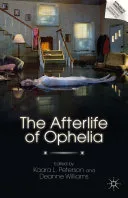
The Afterlife of Ophelia
 78
78

The Afterlife of Ophelia
Deanne Williams's edited collection, *The Afterlife of Ophelia*, offers a compelling, if sometimes uneven, exploration of a character whose cultural resonance far exceeds her stage time. The strength lies in its breadth, tracing Ophelia's legacy through diverse lenses, from Victorian painting to modern performance art. One particular essay, examining Ophelia's reception in early 20th-century psychiatry, provides a fascinating, albeit disturbing, look at how her perceived "madness" was pathologized. A limitation, however, is the occasional dense academic prose that can obscure the central arguments for a less specialized reader. While the collection successfully expands the critical discourse beyond conventional Shakespearean analysis, its focus remains firmly on academic interpretation rather than accessible narrative. It is a valuable scholarly resource for those deeply invested in Ophelia's post-Elizabethan journey.
📝 Description
78
Published in 2012, this collection gathers new essays on Ophelia's extensive cultural afterlife.
This 2012 collection examines the enduring presence of Shakespeare's Ophelia beyond the play *Hamlet*. The essays analyze how this character has been reinterpreted and adapted across different media and intellectual traditions since her inception. The volume moves past traditional literary analysis to consider Ophelia's reception in wider cultural contexts.
It is aimed at scholars and advanced students in literature, performance studies, feminist theory, and cultural history. The book is relevant for those studying the reception of classic texts, the development of character archetypes, and the connections between literature, art, psychology, and philosophy. The collection builds on earlier feminist interpretations of Ophelia from the 1980s but also charts new territory away from solely textual Shakespearean studies.
The book engages with the concept of literary "afterlives," a topic that gained traction in academic discourse around the early 2010s. It acknowledges the historical weight of critical interpretations, particularly feminist readings that gained prominence from the 1980s onward. While rooted in literary studies, the collection broadens its scope to consider how archetypal figures like Ophelia become sites for ongoing cultural negotiation, touching on themes of madness, symbolism, and representation that resonate within certain spiritual and psychological traditions.
💡 Why Read This Book?
• Gain a nuanced understanding of how Ophelia, a character from Shakespeare's *Hamlet* (c. 1600), has been reinterpreted across centuries, moving beyond her original dramatic context. • Explore specific artistic and critical "afterlives," such as her representation in Pre-Raphaelite art or psychoanalytic interpretations, offering unique visual and theoretical perspectives. • Engage with scholarly discussions that challenge traditional readings, providing frameworks for analyzing literary characters as evolving cultural symbols rather than static figures.
⭐ Reader Reviews
Honest opinions from readers who have explored this book.
❓ Frequently Asked Questions
What is the primary focus of 'The Afterlife of Ophelia'?
This collection of essays investigates the enduring cultural legacy and reinterpretations of Shakespeare's character Ophelia across various artistic and academic fields since the original play's performance.
Who are the contributors to this volume?
The book features contributions from an international group of established and emerging scholars, presenting diverse perspectives on Ophelia's posthumous presence in culture.
Does the book only discuss Shakespearean scholarship?
No, *The Afterlife of Ophelia* explicitly aims to move beyond traditional Shakespeare studies, forging new lines of inquiry into fields like art history, performance studies, and cultural theory.
When was 'The Afterlife of Ophelia' first published?
The collection was first published on April 9, 2012, reflecting scholarly interests and critical approaches prevalent in the early 2010s.
What makes this collection unique compared to other Ophelia studies?
Its uniqueness lies in its singular focus on Ophelia's reception and "afterlife" across a wide array of media and disciplines, rather than solely analyzing her role within *Hamlet*.
What kind of new scholarly inquiries does the book propose?
It proposes inquiries that extend beyond literary criticism, examining Ophelia's symbolic weight in visual arts, feminist discourse, and psychological interpretations.
🔮 Key Themes & Symbolism
Ophelia as Cultural Symbol
This theme examines how Ophelia transcends her origins in Shakespeare's *Hamlet* to become a potent, malleable symbol. Essays trace her evolution from a tragic figure to an icon of madness, innocence lost, and female victimhood, reinterpreted across different eras and artistic movements. The collection highlights how subsequent generations have projected their own anxieties and ideals onto her character, demonstrating her persistent symbolic power in Western culture since the play's initial performance.
The Performance of Madness
A central focus is the concept of Ophelia's "madness" not merely as a psychological state but as a form of performance and cultural interpretation. The essays explore how her fragmented speech and behavior have been staged, depicted, and understood, often reflecting contemporary societal views on female hysteria and mental illness. This theme scrutinizes the theatricality of her breakdown and its subsequent adaptation in visual arts and critical discourse, particularly from the Victorian era onwards.
Feminist Reinterpretations
The collection critically engages with Ophelia's character through a feminist lens, analyzing how her portrayal has been challenged and re-envisioned by feminist scholars and artists. It investigates how Ophelia, often seen as a passive victim, has been reclaimed as a figure whose experiences speak to broader issues of patriarchal oppression, agency (or lack thereof), and the silencing of women. This perspective re-examines her narrative within *Hamlet* and her subsequent "afterlife" as sites of feminist critique.
Visual and Artistic Legacies
This theme examines Ophelia's significant presence in the visual arts, particularly in 19th-century painting (e.g., Pre-Raphaelite works) and later media. Essays analyze how painters and other artists have interpreted her story, often focusing on her drowning or her moments of supposed madness. The collection explores how visual representations have shaped public perception of Ophelia, sometimes emphasizing romantic tragedy, other times exploring darker psychological dimensions, extending her presence beyond the theatrical stage.
💬 Memorable Quotes
Direct passages from the work, attributed to the author.
“Ophelia's "madness" is often understood as a performative response to patriarchal constraints.”
— This interpretation suggests that Ophelia's fragmented speech and actions, typically labeled as insanity, can be viewed as a theatrical, albeit tragic, expression of her inability to navigate or escape the restrictive social and familial expectations placed upon her.
“The character's "afterlife" extends far beyond the confines of Shakespeare's text.”
— This signifies that Ophelia's cultural impact and the ways she has been reinterpreted, depicted, and analyzed by subsequent generations are more significant and diverse than her original role in the play *Hamlet* would suggest.
“Victorian painters frequently depicted Ophelia in ways that idealized or pathologized her suffering.”
— This points to a specific historical trend where artists in the 19th century often chose to represent Ophelia's tragic fate through imagery that either romanticized her plight or focused intensely on her perceived mental distress, reflecting contemporary artistic and social preoccupations.
“Feminist scholarship has sought to reclaim Ophelia as a figure of resistance.”
— This highlights how feminist critics have re-evaluated Ophelia, attempting to find agency or proto-feminist critique within her character, viewing her "madness" or death not solely as passive victimhood but as a potential, albeit desperate, form of protest against her circumstances.
“Ophelia's symbolic weight has been deployed across disparate academic disciplines.”
— This interpretation underscores that Ophelia's significance is not confined to literary studies but has been adopted and utilized within various fields, such as psychology, art history, and gender studies, to explore different theoretical concerns.
🌙 Esoteric Significance
Tradition
While not strictly within a defined esoteric lineage like Hermeticism or Kabbalah, this work engages with themes of "madness" and "suffering" that resonate with certain Gnostic or Neoplatonic ideas concerning the soul's entanglement with the material world or the corrupting influence of external forces. Ophelia's descent can be viewed through a lens of spiritual or psychological disarray, where the external world's corruption leads to inner fragmentation, a concept explored in various mystical traditions.
Symbolism
The "water" associated with Ophelia's death is a potent symbol across many traditions, representing the subconscious, the dissolution of ego, and the return to a primordial state. Her "flowers," often associated with innocence and transience, can also carry alchemical or folk-magic meanings, symbolizing purity, love, or even specific virtues and vices depending on the bloom. Her "madness" itself can be interpreted esoterically as a form of altered consciousness, a breakdown of ordinary perception allowing for glimpses into other realities.
Modern Relevance
Contemporary thinkers in fields like ecofeminism and trauma studies find resonance in Ophelia's narrative, viewing her destruction as a consequence of environmental and societal breakdown. Performance artists and experimental theatre practitioners continue to draw on her archetypal figure to explore themes of mental health, female agency, and the critique of patriarchal structures. The collection's interdisciplinary approach also appeals to scholars interested in the intersection of literature, psychology, and art, reflecting a modern tendency to synthesize knowledge across traditional academic boundaries.
👥 Who Should Read This Book
• Scholars of Shakespearean reception and literary "afterlives" seeking to understand how canonical figures evolve beyond their original texts. • Art historians and critics interested in the visual representation of Ophelia, particularly from the Victorian era through modern interpretations. • Students and practitioners of feminist theory and gender studies looking to analyze Ophelia as a symbol of female experience and oppression within patriarchal societies.
📜 Historical Context
Published in 2012, *The Afterlife of Ophelia* emerged during a period when "reception studies" and the analysis of literary "afterlives" were gaining significant traction in academia. It built upon decades of feminist critical engagement with Shakespeare, particularly the readings of Ophelia that gained prominence from the 1980s onward, challenging earlier interpretations that often focused on her passivity or inherent madness. This collection distinguishes itself by actively moving beyond the traditional boundaries of Shakespeare scholarship, seeking connections with art history, performance studies, and cultural theory. While contemporaries like Stephen Greenblatt were exploring "wonder" and "self-fashioning" in Renaissance literature, Williams's volume focused specifically on the enduring, evolving presence of a single character. The book's approach reflects a broader academic trend toward interdisciplinary analysis and the study of how canonical figures are continually re-made and re-understood in new contexts.
📔 Journal Prompts
Ophelia's symbolic journey from Shakespeare's play to contemporary interpretation.
The representation of "madness" as a performance versus a psychological state.
Reflecting on the specific flowers Ophelia distributes and their potential symbolic meanings.
The impact of patriarchal structures on Ophelia's narrative and "afterlife."
How Ophelia's drowning in the water symbolizes broader themes of dissolution or transformation.
🗂️ Glossary
Afterlife (of a character)
Refers to the ongoing existence, interpretation, and influence of a literary character in subsequent cultural works, critical analyses, and popular imagination beyond the original text.
Reception Studies
An academic field that examines how literary works, characters, or ideas are received, interpreted, and understood by audiences and critics across different historical periods and cultural contexts.
Patriarchal Structures
Social, political, and cultural systems in which men hold primary power and authority, often leading to the subordination of women and the reinforcement of gender-based inequalities.
Archetype
A recurrent symbol or motif, a primordial image, or a typical example of a person or thing that is seen as a universally understood model or pattern.
Pre-Raphaelite Brotherhood
A 19th-century British art movement that sought to reform art by returning to the qualities of art and literature of the Italian Renaissance before Raphael.
Feminist Critique
An analytical approach that examines literature and culture through the lens of feminist theory, focusing on gender roles, power dynamics, and the representation of women.
Performance Studies
An interdisciplinary field that analyzes performance in various contexts, including theatre, ritual, everyday life, and media, examining its social, cultural, and political significance.