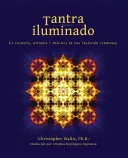
Tantra Iluminado
 82
82

Tantra Iluminado
Christopher D. Wallis's Tantra Iluminado makes a significant contribution by demystifying a tradition frequently obscured by sensationalism and academic neglect. The author commendably prioritizes clarity and textual accuracy, a welcome departure from many popular Western accounts of Tantra that emerged in the mid-20th century. Wallis excels in situating Tantric practices within their rich philosophical and historical milieu, presenting a nuanced picture that respects the tradition's complexity. For instance, his discussion distinguishing the various schools of Shaivism and their respective cosmological views offers a much-needed academic rigor. A potential limitation, however, might be the sheer density of information for absolute beginners; while accessible, it demands focused attention. The section detailing the various lineages of teachers and transmission provides concrete historical grounding that is often missing. Ultimately, Tantra Iluminado serves as a vital resource for serious students seeking an informed perspective on this profound spiritual path.
📝 Description
82
### What It Is Tantra Iluminado offers a comprehensive exploration into the heart of Tantra, moving beyond common Western misconceptions. It systematically unpacks the tradition's core teachings, tracing the foundational lineages that shape its diverse expressions. The work details transformative practices, presenting them not as isolated techniques but as integral components of a sophisticated spiritual system. It aims to provide clarity on a subject often shrouded in speculation and misunderstanding, drawing from original Sanskrit sources to present an authentic view.
### Who It's For This text is designed for individuals seeking an authentic understanding of Tantra, particularly those disillusioned by superficial or sensationalized interpretations. It serves students of comparative religion, scholars of Indian philosophy, and practitioners of yoga and meditation who wish to engage with the deeper philosophical and spiritual underpinnings of the Tantric traditions. It is also for anyone curious about the historical development and genuine scope of this ancient path.
### Historical Context The study of Tantra in the West gained momentum in the early 20th century, often filtered through colonial lenses and Orientalist perspectives. This period saw a surge of interest in Eastern spirituality, leading to both genuine scholarship and widespread misrepresentation. Christopher D. Wallis's work emerges in a contemporary landscape where the need for accurate, source-based scholarship is paramount. It addresses a gap left by earlier, often less critical, Western engagements with South Asian traditions, providing a much-needed corrective to popular narratives that have simplified or exoticized Tantric philosophy and practice.
### Key Concepts The book meticulously examines concepts central to Tantric thought, such as the nature of consciousness, the role of the body as a vehicle for liberation, and the intricate relationship between the divine and the mundane. It distinguishes between various schools of Tantra, highlighting their unique philosophical frameworks and practical methodologies. Specific attention is given to the liberation of energy (kundalini) and the sophisticated yogic techniques employed to achieve spiritual awakening, grounding these discussions in textual evidence and historical lineage.
💡 Why Read This Book?
• Learn the foundational philosophical distinctions between various Tantric schools, moving beyond monolithic interpretations that emerged in Western discourse around the 1960s. • Understand the specific role of the body and subtle energies, like Kundalini, as central to Tantric liberation, as detailed in chapters discussing yogic techniques. • Gain insight into the historical lineages and transmission of Tantric knowledge, as illuminated by Wallis's research into pre-20th-century South Asian texts.
⭐ Reader Reviews
Honest opinions from readers who have explored this book.
❓ Frequently Asked Questions
What is the primary goal of Tantra as explained in Tantra Iluminado?
Tantra Iluminado explains that the primary goal of Tantra is liberation (moksha) through the recognition of the non-dual nature of reality and the transformation of individual consciousness, often involving the awakening of Kundalini.
How does this book differ from common Western portrayals of Tantra?
This book offers an academic, source-based approach, distinguishing between various traditions and practices, unlike many Western portrayals from the mid-20th century that focused narrowly on sexual aspects or exoticism.
Which historical periods or movements does Tantra Iluminado cover?
The book covers the historical development of Tantra from its early roots, discussing its evolution through various philosophical and religious movements in India, particularly focusing on post-classical Shaivism.
Are specific Tantric practices detailed in the book?
Yes, Tantra Iluminado details transformative practices, including specific yogic techniques and meditations, explaining their philosophical underpinnings and their role within different Tantric lineages.
What are the main philosophical concepts discussed?
Key concepts include non-duality (advaita), the nature of consciousness (chit), the role of the body, the awakening of subtle energy (Kundalini), and the relationship between Shiva and Shakti.
Is this book suitable for beginners interested in Tantra?
The book provides an accessible introduction for those seeking authentic knowledge, but its depth and scholarly approach make it particularly valuable for serious students and practitioners aiming for a nuanced understanding.
🔮 Key Themes & Symbolism
Authentic Tantric Lineages
The work meticulously traces the historical development and philosophical underpinnings of various Tantric traditions, moving beyond generalized Western notions. It emphasizes the importance of lineage transmission, detailing how knowledge and practice were passed down through specific schools, particularly within Shaivism. By grounding its exposition in textual evidence and scholarly research, it aims to correct popular misconceptions that often arose from less rigorous Western engagements with these traditions in the 20th century.
Consciousness and Non-Duality
A central theme is the exploration of consciousness (chit) as the fundamental reality, a core tenet of non-dual (advaita) Tantric philosophy. The book elucidates how Tantric paths aim for the recognition of this inherent oneness, dissolving the perceived separation between the individual self and the divine. This understanding informs the transformative practices presented, which are designed to realize this non-dual state directly.
The Body as a Sacred Vehicle
Contrary to ascetic traditions, Tantra Iluminado highlights the pivotal role of the physical body as a sacred instrument for spiritual realization. It details sophisticated yogic practices focused on purifying and awakening subtle energies, most notably Kundalini, which resides within the body's energetic system. This perspective views the body not as an obstacle but as a vital locus for divine manifestation and liberation.
Transformative Practices
The book provides detailed insights into the practical aspects of Tantra, moving beyond mere theory. It discusses various meditations, visualizations, and yogic techniques (kriyas) employed by practitioners to achieve spiritual awakening and liberation. These practices are presented within their specific philosophical contexts, explaining their intended effects and how they contribute to the overall Tantric path toward self-realization.
💬 Memorable Quotes
“Tantra is a path of liberation through recognition, not denial, of the world.”
— This statement captures a core Tantric principle: embracing the manifest world as a divine expression rather than renouncing it. It suggests that spiritual realization is found within, not separate from, everyday existence.
“The awakening of Kundalini is the activation of the universe within.”
— This highlights the profound significance of Kundalini energy in Tantra. It's presented not just as personal psychic energy but as a microcosmic representation of cosmic forces, vital for spiritual transformation.
“Distinguishing between the various schools of Tantra is crucial for accurate understanding.”
— This emphasizes the diversity within Tantra, cautioning against oversimplification. It suggests that to truly grasp the tradition, one must appreciate the distinct philosophies and practices of its different branches.
“The body is the temple where the divine is realized.”
— This paraphrased concept underlines Tantra's positive view of embodiment. It asserts that the physical form is not an impediment to spiritual goals but a primary site for divine experience and awakening.
“Recognition of non-duality dissolves the illusion of separation.”
— This concisely explains the ultimate goal of many Tantric paths. It suggests that true liberation comes from understanding that the perceived boundaries between oneself, others, and the divine are ultimately illusory.
🌙 Esoteric Significance
Tradition
Tantra Iluminado engages deeply with the Shaiva Tantric traditions, particularly those originating from South Asia, which form a significant branch of esoteric Indian spirituality. It situates itself within the lineage of scholars and practitioners seeking to present these complex systems accurately, moving away from the often-simplified or misinterpreted versions that circulated in the West following early 20th-century introductions. The work adheres to a view of Tantra as a sophisticated philosophical and spiritual path aimed at liberation through non-dual realization.
Symbolism
Central symbols explored include Shiva and Shakti, representing the divine masculine and feminine principles, often seen as inseparable aspects of a unified cosmic consciousness. The awakening of Kundalini, depicted as a coiled serpent at the base of the spine, symbolizes the dormant spiritual potential within the individual that, when awakened, leads to profound transformation and union with the divine. The mandala is also a recurring motif, representing the cosmos and the ordered structure of reality.
Modern Relevance
Contemporary thinkers and practitioners in fields ranging from comparative philosophy to advanced yoga studies draw upon the clarified understanding of Tantra that works like this provide. It informs modern interpretations of meditation, consciousness studies, and embodied spiritual practices, offering a more nuanced alternative to the often-misunderstood popular Tantra that gained traction in the late 20th century. The emphasis on non-duality and the sacredness of existence continues to resonate with those seeking integrated spiritual paths.
👥 Who Should Read This Book
• Serious students of comparative religion and Indian philosophy seeking an academically rigorous introduction to Tantric traditions. • Yoga and meditation practitioners aiming to deepen their understanding beyond basic techniques and explore the philosophical underpinnings of their practice. • Readers interested in the history of esoteric thought and correcting common Western misconceptions about Eastern spiritual paths, particularly those prevalent from the mid-20th century onwards.
📜 Historical Context
The Western encounter with Tantra intensified in the early to mid-20th century, often influenced by colonial perspectives and a fascination with the exotic. Figures like Sir John Woodroffe (Advaita) played a role in introducing Tantric texts, but their interpretations were sometimes shaped by prevailing Orientalist narratives. Christopher D. Wallis's work emerges in a contemporary academic climate that seeks to rectify these earlier, often less critical, engagements. It provides a scholarly counterpoint to the popularization of Tantra that surged in the 1960s and 70s, which frequently focused on sensationalized or sexualized aspects, neglecting the philosophical depth and diverse practices found in traditions like Kashmir Shaivism. This book offers a much-needed corrective, grounding its analysis in primary sources and historical lineage.
📔 Journal Prompts
The concept of non-duality as presented in the core teachings.
Recognizing the body as a sacred vehicle for spiritual practice.
The distinction between various Tantric schools and their lineages.
The role of consciousness (chit) in realizing liberation.
The practical application of yogic techniques for spiritual awakening.
🗂️ Glossary
Advaita
A Sanskrit term meaning 'non-duality.' It refers to philosophical systems that posit the ultimate oneness of reality, asserting that there is no fundamental distinction between the individual self and the ultimate divine or absolute.
Chit
In Indian philosophy, particularly Tantra, 'chit' refers to pure consciousness or awareness. It is often seen as the fundamental essence of reality and the divine, the underlying ground of all existence.
Kundalini
A Sanskrit term referring to a primordial cosmic energy, often depicted as a coiled serpent, believed to reside at the base of the spine. Its awakening is central to many Tantric practices, leading to spiritual transformation.
Moksha
The Sanskrit word for liberation or release from the cycle of birth and death (samsara). In Tantric contexts, it signifies the ultimate spiritual goal of realizing one's true nature and oneness with the divine.
Shakti
The divine feminine energy, often personified as a goddess. In Tantra, Shakti is considered the active, creative force of the universe, inseparable from the passive, pure consciousness represented by Shiva.
Shaivism
A major tradition within Hinduism that worships Shiva as the supreme being. Tantric Shaivism, in particular, developed complex philosophical systems and practices focused on liberation and divine realization.
Samsara
The cycle of birth, death, and rebirth, governed by karma. Many Indian spiritual traditions, including Tantra, aim to provide a path to liberation from this cycle.