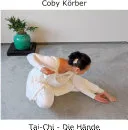
Tai-Chi - Die Hände
 78
78

Tai-Chi - Die Hände
Coby Körber's "Tai-Chi - Die Hände" offers a mature perspective from a practitioner of considerable experience. The author's evident dedication, spanning over fifty years, imbues the text with a genuine authority. Körber articulates his philosophy with a clarity that suggests a deep, lived understanding of the subject. A notable strength is the personal, reflective tone, positioning the book as a lifetime's summation rather than a rote instruction. However, for readers new to Tai-Chi, the philosophical depth might prove challenging without foundational knowledge. The emphasis on internal states and personal interpretation, while authentic to Körber's journey, may require readers to actively bridge his insights with their own practice. The book serves as a valuable companion piece for those already acquainted with the art, offering a nuanced view on its practice. Körber's work is a personal testament to the enduring power of dedicated practice.
📝 Description
78
### What It Is "Tai-Chi - Die Hände" presents Coby Körber's personal philosophy of Tai-Chi practice, building upon his 2012 work. At 73 years old with over five decades of dedicated practice, Körber offers this book as a culmination of his lifelong engagement with the art. It is not merely an instructional manual but a philosophical exposition rooted in the ancient Chinese principles of balance, energy flow, and internal harmony that define Tai-Chi.
### Who It's For This volume is suited for dedicated practitioners of Tai-Chi seeking to deepen their understanding beyond basic forms. It will appeal to those interested in the philosophical underpinnings of martial arts and meditative movement practices. Readers who appreciate a seasoned master’s perspective, informed by extensive personal experience and a desire to transmit wisdom, will find value here. It is for individuals who see Tai-Chi as a path to internal cultivation.
### Historical Context Tai-Chi, originating in China, is a centuries-old discipline that blends martial arts techniques with principles of Taoist philosophy. Its development is intertwined with Chinese history, evolving from ancient combat methods into a practice emphasizing health, longevity, and spiritual development. Key principles such as the cultivation of Qi (vital energy) and the concept of Yin and Yang are central to its methodology. The work explores the lineage and evolution of Tai-Chi, situating it within the broader landscape of Chinese esoteric traditions and health practices.
### Key Concepts The book centers on the philosophical interpretation of Tai-Chi practice, focusing on the mastery of movement and energy. Körber emphasizes the integration of the body, mind, and spirit, viewing Tai-Chi as a vehicle for self-discovery and internal alignment. The "hands" in the title likely refer to the physical expression of these internal principles, the way practitioners manifest their understanding through precise, flowing movements. The work explores the concept of "Wu Wei" (effortless action) as applied to Tai-Chi, advocating for a practice that arises organically from a state of inner balance and harmonious energy flow.
💡 Why Read This Book?
• Gain a unique philosophical perspective on Tai-Chi from a practitioner with over 50 years of experience, as detailed in "Tai-Chi - Die Hände" (2023). • Understand the integration of internal harmony and energy flow (Qi) in movement, drawing from Körber's personal summation of his lifelong practice. • Explore the application of Taoist principles like "Wu Wei" within the context of Tai-Chi, as presented through Körber's seasoned interpretation.
⭐ Reader Reviews
Honest opinions from readers who have explored this book.
❓ Frequently Asked Questions
When was "Tai-Chi - Die Hände" first published?
"Tai-Chi - Die Hände" by Coby Körber was first published on December 14, 2023. This work represents a continuation of his earlier writings on the subject from 2012.
What is the author's background with Tai-Chi?
The author, Coby Körber, has over 50 years of dedicated practice in Tai-Chi. He is 73 years old and presents this book as a culmination of his lifelong engagement with the art.
Is "Tai-Chi - Die Hände" a beginner's guide to Tai-Chi?
While the book discusses foundational principles like balance and energy flow, it is more of a philosophical exposition from an experienced practitioner. It builds on his 2012 work and is best suited for those with some existing familiarity with Tai-Chi.
What are the core principles discussed in the book?
The book focuses on the philosophical aspects of Tai-Chi, emphasizing balance, energy flow (Qi), internal harmony, and the integration of body, mind, and spirit. It explores how these principles manifest in practice.
Does the book cover specific Tai-Chi forms or techniques?
The book's primary focus is on the philosophy and personal interpretation of Tai-Chi practice, rather than a step-by-step guide to specific forms. The 'hands' in the title refer to the embodiment of these principles through movement.
What is the relationship between this book and Coby Körber's 2012 publication?
"Tai-Chi - Die Hände" is a direct continuation and expansion of Coby Körber's earlier "little Tai-Chi booklet" from 2012, offering a more mature perspective from his advanced age and extensive practice.
🔮 Key Themes & Symbolism
Philosophy of Practice
This theme explores Tai-Chi not merely as a physical discipline but as a profound philosophical path. Körber, with over five decades of practice, presents his personal summation, emphasizing the internal cultivation that underpins external movement. The work delves into how consistent practice, especially as articulated in his 2023 book "Die Hände," transforms one's understanding of balance, energy, and self. It's a reflection on how long-term dedication shapes a unique perspective on this ancient art, moving beyond technique to essence.
Energy Flow and Harmony
Central to Körber's philosophy is the concept of Qi, or vital energy, and its harmonious flow within the practitioner. "Tai-Chi - Die Hände" elucidates how achieving internal balance is paramount to cultivating and directing this energy effectively. This theme examines the intricate relationship between breath, intention, and movement, illustrating how mastering the 'hands'—the physical expression—is a direct result of cultivating internal equilibrium. It positions Tai-Chi as a method for aligning one's energetic state with the natural rhythms of existence.
The Master's Perspective
This theme highlights the unique value derived from Coby Körber's extensive personal experience. At 73, and with over 50 years dedicated to Tai-Chi, his insights in "Die Hände" offer a seasoned view, distinct from introductory texts. The book functions as a personal chronicle and a transmission of wisdom, reflecting a lifetime's engagement. It underscores the importance of mentorship and the deep understanding that emerges from decades of consistent, mindful practice, offering a contemplative look at the martial art's deeper dimensions.
Continuity and Evolution
The book's nature as a follow-up to Körber's 2012 publication signifies a journey of continued learning and refinement. "Tai-Chi - Die Hände" showcases how a practitioner's understanding evolves over time, particularly across significant life stages like reaching one's seventies. This theme explores the concept of practice as a lifelong endeavor, where insights deepen and perspectives mature. It demonstrates how established disciplines like Tai-Chi can remain dynamic, offering new layers of meaning and application throughout a practitioner's life.
💬 Memorable Quotes
“Tai-Chi is a centuries-old Chinese martial art and movement form based on principles of balance, energy flow, and inner harmony.”
— This foundational statement encapsulates the essence of Tai-Chi as presented by Körber. It grounds the practice in its historical and philosophical roots, highlighting the interconnectedness of physical form, vital energy, and mental equilibrium, setting the stage for a deeper exploration.
“This book is a continuation of my small Tai-Chi booklet from 2012.”
— This simple declaration frames the work as an evolving dialogue with the author's own past teachings. It suggests a progression of thought and experience, inviting readers to see the development of his philosophy over a significant period, building upon established foundations.
“With now 73 years and over 50 years of Tai-Chi practice, this is a project close to my heart.”
— This personal reflection underscores the author's deep commitment and the book's significance as a life's work. It conveys the passion and dedication behind the text, positioning it as a heartfelt offering of accumulated wisdom from extensive, long-term engagement.
“It is a great joy and honor to present my philosophy of Tai-Chi practice in this book.”
— This sentiment expresses the author's profound respect for the art and his eagerness to share his personal insights. It signals a tone of reverence and generosity, indicating that the book offers not just information but a deeply personal philosophical perspective cultivated over decades.
“Tai-Chi is based on the principles of balance, energy flow, and inner harmony.”
— This core statement emphasizes the interconnected triad that defines Tai-Chi practice according to Körber. It suggests that true mastery lies in the harmonious integration of these three elements, forming the bedrock of his philosophical approach to the art.
🌙 Esoteric Significance
Tradition
Tai-Chi's esoteric roots lie deeply within Taoism, a major Chinese philosophical and religious tradition. Its emphasis on Qi cultivation, internal alchemy (Neidan), and achieving harmony with the Tao aligns it with broader esoteric currents focused on spiritual transformation through mind-body practices. Körber's work, by presenting his personal philosophy, likely positions Tai-Chi as a path toward inner balance and energetic integration, reflecting Taoist ideals of living in accordance with natural principles.
Symbolism
Key symbols in Tai-Chi include the Yin-Yang symbol, representing the dynamic interplay of complementary forces fundamental to the practice. The concept of Qi itself is symbolic of the vital life force that practitioners aim to cultivate and circulate. The flowing, circular movements of the Tai-Chi forms can symbolize the cycles of nature and the universe, embodying principles of continuous change and adaptation. Körber's focus on the 'hands' likely symbolizes the manifested expression of internal states and energetic control.
Modern Relevance
In contemporary Esotericism, Tai-Chi is recognized as a potent somatic practice that bridges physical well-being with spiritual development. Practices like Qigong, which shares many roots with Tai-Chi, are widely explored in circles interested in energy work, healing arts, and mindfulness. Thinkers and practitioners in fields ranging from transpersonal psychology to modern Taoist studies often incorporate Tai-Chi principles into their work, viewing it as a practical application of ancient wisdom for achieving balance and vitality in a fast-paced world.
👥 Who Should Read This Book
• Dedicated Tai-Chi practitioners aged 40+ seeking to deepen their philosophical understanding beyond basic forms and techniques. • Students of Taoism and Chinese esoteric traditions interested in the practical application of principles like Qi flow and inner harmony. • Mature individuals exploring mind-body disciplines for personal growth, self-cultivation, and a contemplative approach to movement.
📜 Historical Context
Tai-Chi Chuan emerged in China, with its precise origins debated but generally traced to Taoist monasteries in the Henan province during the Ming dynasty. Its development was influenced by traditional Chinese medicine, concepts of Qi (vital energy), and Taoist philosophy, particularly the principles of Yin and Yang and Wu Wei (effortless action). Early forms were often integrated into martial arts training, emphasizing self-defense through yielding and redirecting an opponent's force. By the 20th century, particularly after the establishment of the People's Republic of China, Tai-Chi began to be widely promoted for its health benefits, leading to standardized forms and a broader public practice. Contemporary schools often focus on either the martial aspects or the health and meditative qualities. Coby Körber's work, first published in 2012 and continued in 2023, engages with this rich lineage, offering a personal interpretation rooted in decades of practice, likely drawing from established lineages while infusing it with his individual philosophical conclusions.
📔 Journal Prompts
Reflect on the integration of balance and energy flow in your personal practice.
Consider the concept of 'Wu Wei' as it applies to the movements of Tai-Chi.
Analyze the significance of the 'hands' in manifesting Tai-Chi's internal principles.
Explore the personal philosophy of practice presented by Coby Körber.
Connect the principles of inner harmony to your daily life outside of practice.
🗂️ Glossary
Tai-Chi (Taijiquan)
An ancient Chinese martial art and movement practice emphasizing balance, energy flow (Qi), and internal harmony. It is often practiced for health, meditation, and self-defense.
Qi (Chi)
The vital life force or energy believed to permeate all things in Chinese philosophy and traditional medicine. Tai-Chi practice aims to cultivate and harmonize the flow of Qi within the body.
Balance
In Tai-Chi, balance refers to both physical stability and internal equilibrium. It is a core principle achieved through proper posture, weight distribution, and the harmonious integration of opposing forces (Yin and Yang).
Inner Harmony
A state of mental, emotional, and energetic equilibrium achieved through practice. It involves aligning one's internal state with the external movements and the principles of the art.
Wu Wei
A Taoist concept often translated as 'non-action' or 'effortless action.' In Tai-Chi, it relates to acting spontaneously and effectively in accordance with natural principles, without force or resistance.
Philosophy of Practice
The underlying beliefs, principles, and personal understanding that guide an individual's approach to a discipline. In this context, it refers to Körber's unique perspective on Tai-Chi cultivation.
Die Hände
German for 'The Hands.' In the context of the book title, it likely refers to the physical manifestation and expression of Tai-Chi principles through the practitioner's movements.