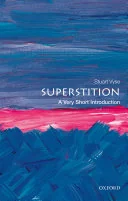
Superstition
 71
71

Superstition
Stuart Vyse’s *Superstition* offers a dispassionate, almost clinical, dissection of why humans cling to beliefs science has long disproven. Instead of dismissing superstition as mere ignorance, Vyse frames it as a fundamental aspect of human cognition, a byproduct of our pattern-seeking brains grappling with uncertainty. He meticulously details experiments and surveys, such as the finding that 33 percent of US adults believe finding a penny brings good luck, illustrating the pervasive nature of these convictions. A notable strength is Vyse’s ability to explain complex psychological phenomena like illusory correlation with clarity. However, the book’s relentless focus on empirical evidence occasionally risks flattening the rich, often emotional, significance superstitions hold for individuals. While it effectively explains *why* we are superstitious, it sometimes feels detached from the lived experience of those who are. The exploration of the black cat crossing one's path serves as a potent example of how deeply ingrained these symbols are, irrespective of their logical foundation. Ultimately, *Superstition* provides a valuable, if somewhat dry, account of a fascinating human trait.
📝 Description
71
Stuart Vyse's 1997 book, Superstition, examines why humans cling to irrational beliefs.
Published in 1997, Stuart Vyse's *Superstition* investigates the persistent human tendency to believe in and practice irrational ideas, even when confronted with scientific evidence. The book looks at the psychological and social reasons why superstitions continue to flourish, covering everything from ancient omens to modern daily rituals. Vyse analyzes how these beliefs, often an attempt to gain control over uncertain events, still influence actions and perceptions in many different cultures.
This book is for anyone interested in the lasting impact of non-rational thought in a world that claims to be rational. It will appeal to readers of psychology, anthropology, sociology, and the history of belief systems. Those who want to understand the human mind's drive to find patterns and meaning, even when objective evidence is lacking, will find it especially relevant. It is also useful for students and scholars of cultural studies and cognitive science.
Vyse places the study of superstition within a larger intellectual history. He traces its roots back to early anthropological studies of what were then called 'primitive' beliefs. He then moves through psychological explanations, including B.F. Skinner's work on operant conditioning and its link to non-rational behaviors. Vyse contrasts these views with the growth of scientific empiricism, noting the ongoing tension between knowledge based on evidence and deeply held cultural or personal convictions. The work addresses the continuing discussion about the role and spread of superstition in today's society.
While not strictly an esoteric text, *Superstition* engages with traditions that often fall into that category by examining the human need for meaning and control beyond empirical explanation. It touches upon how rituals and beliefs, even when lacking scientific basis, serve psychological and social functions. This connects to broader discussions in esoteric studies about symbolic thought, the power of belief, and the human impulse to find order and agency in a complex world, often through practices that transcend rational understanding.
⭐ Reader Reviews
Honest opinions from readers who have explored this book.
❓ Frequently Asked Questions
What is the primary argument of Stuart Vyse's book 'Superstition'?
The book argues that superstition is a natural consequence of human cognitive processes, particularly our tendency to seek patterns and exert control in uncertain environments, and remains prevalent despite scientific advancements.
When was Stuart Vyse's 'Superstition' first published?
Stuart Vyse's *Superstition* was first published on January 23, 2020.
Does the book discuss specific examples of superstitions?
Yes, the book discusses numerous examples, including avoiding floor thirteen, the belief that black cats bring bad luck, breaking mirrors, and the perceived good luck associated with finding a penny.
What academic fields does 'Superstition' draw from?
The book draws from psychology, anthropology, sociology, and cognitive science to explain the origins and persistence of superstitious beliefs and behaviors.
Is 'Superstition' an academic text or for a general audience?
While based on academic research, *Superstition* is written for a general audience, making complex psychological and sociological concepts accessible and engaging for interested readers.
What percentage of US adults believed finding a penny was good luck, according to a survey mentioned in the book?
According to a survey cited in the book, 33 percent of adults in the United States believed that finding a penny was good luck.
🔮 Key Themes & Symbolism
Cognitive Roots of Belief
The work meticulously details how the human brain's inherent drive to detect patterns, even in random events, forms the bedrock of superstitious thinking. Vyse explains concepts like illusory correlation, where unrelated phenomena are perceived as causally linked, and the illusion of control, our innate desire to influence outcomes beyond our actual capacity. This perspective reframes superstitions not as irrational deviations but as predictable byproducts of normal cognitive functioning, as evidenced by research into operant conditioning and human decision-making.
The Social Transmission of Superstition
Beyond individual psychology, the book examines how superstitions are perpetuated through cultural norms and social learning. Traditions like avoiding the number thirteen or touching wood are passed down through generations, becoming ingrained in societal consciousness. Vyse illustrates how collective belief systems, even when lacking empirical support, provide a shared framework for understanding and reading through the world, offering comfort and a sense of community through shared rituals and anxieties.
Superstition vs. Science
A central tension explored is the ongoing coexistence of scientific rationality and superstitious belief. Vyse analyzes why, despite the dominance of empirical evidence and scientific explanation, non-rational beliefs continue to flourish. The book highlights how superstitions often address emotional needs—such as reducing anxiety or providing hope—that science may not fully satisfy, demonstrating that belief systems are not solely governed by logic or factual accuracy.
The Search for Agency
Fundamentally, superstition represents a human quest for agency and predictability in an often chaotic world. The book demonstrates how rituals and charms, whether ancient or modern, serve as psychological tools to cope with uncertainty and perceived threats. By performing these actions, individuals feel they are actively participating in shaping their destiny, even when the connection is purely symbolic or coincidental, thereby mitigating feelings of helplessness.
💬 Memorable Quotes
Direct passages from the work, attributed to the author.
“33 percent believed that finding a penny was good luck, and 23 percent believed that the”
— This statistic underscores the pervasive nature of even seemingly minor superstitions within the modern United States, illustrating how deeply ingrained these non-rational beliefs are in everyday life, irrespective of scientific understanding.
“Despite the dominance of science today, superstitious beliefs... remain surprisingly popular.”
— This observation highlights the enduring human need for meaning and control that often transcends purely logical or scientific explanations, suggesting that belief systems fulfill psychological roles that empirical data alone cannot address.
“Would you cross the path of a black cat, or step under a ladder?”
— These rhetorical questions immediately engage the reader by referencing common, widely recognized superstitions, prompting personal reflection on ingrained cultural responses and the underlying anxieties they address.
“Is breaking a mirror just an expensive waste of glass, or something rather more sinister?”
— This framing vividly captures the conflict between a purely materialistic view and the enduring belief in the symbolic power of objects, demonstrating how cultural lore imbues everyday items with potent, often negative, significance.
“Superstitious beliefs - both traditional and new - remain surprisingly popular.”
— This statement emphasizes the dynamic nature of superstition, acknowledging that while ancient beliefs persist, new forms continue to emerge, reflecting ongoing human adaptation and the persistent search for order and meaning.
🌙 Esoteric Significance
Tradition
While *Superstition* is primarily a work of psychology and sociology rather than a text of a specific esoteric tradition, it touches upon themes resonant with Hermeticism and folk magic. The book's examination of rituals aimed at controlling outcomes and warding off negative influences aligns with practical magical endeavors. By analyzing the psychological mechanisms behind these practices, Vyse offers a secular framework that can be understood by practitioners seeking to explain their own belief systems or by scholars observing the psychological underpinnings of ritualistic behavior across cultures.
Symbolism
The book frequently references symbols deeply embedded in Western consciousness, such as the black cat, breaking a mirror, or touching wood. While Vyse analyzes these through a psychological lens—as triggers for learned anxieties or associations—they also hold potent symbolic weight in various folk magical and occult traditions. The black cat, for instance, is often associated with witchcraft and liminal states, while breaking a mirror traditionally signifies seven years of bad luck, a symbolic representation of shattered fortune or self.
Modern Relevance
Vyse’s work is highly relevant to contemporary thinkers in fields like cognitive psychology, behavioral economics, and even marketing, where understanding irrational decision-making is crucial. For those interested in the intersection of psychology and spirituality, the book provides a foundation for understanding the mental processes that support belief in less conventional systems. Modern proponents of evidence-based magic or ritualistic practice might draw upon Vyse’s insights to refine their understanding of the psychological impact of their actions, separating belief from empirical validation.
👥 Who Should Read This Book
['Psychology students and researchers interested in cognitive biases and the formation of belief systems.', 'Anthropologists and cultural historians examining the persistence of traditional practices in modern societies.', "General readers curious about the human mind's tendency towards irrationality and the enduring appeal of superstition."]
📜 Historical Context
Stuart Vyse's *Superstition*, first published in 2020, arrives at a moment when interest in the psychological and sociological roots of belief is high, yet the study itself builds upon a long academic lineage. Early anthropological investigations in the late 19th and early 20th centuries, such as those by Sir James Frazer, sought to categorize and explain 'primitive' beliefs. Later, psychologists like B.F. Skinner explored behavioral conditioning, offering explanations for how non-rational actions might be reinforced. Vyse’s work engages with this history, contrasting scientific empiricism with the persistent cultural prevalence of superstitions. It implicitly addresses a continuing debate within cognitive science and psychology regarding the adaptive functions of belief systems. While not explicitly censored, the academic reception of such works often involves discussions about the perceived 'irrationality' of human behavior, placing Vyse in dialogue with thinkers who grapple with the tension between scientific understanding and lived experience.
📔 Journal Prompts
The perceived luck associated with finding a penny and its prevalence.
Stepping under a ladder and the associated anxieties.
The psychological function of rituals in managing uncertainty.
The contrast between scientific explanation and persistent superstitious belief.
The concept of illusory correlation in everyday observations.
🗂️ Glossary
Illusory Correlation
A cognitive bias where individuals perceive a relationship between two variables (events, actions, or characteristics) even when no such relationship exists or it is much weaker than perceived.
Illusion of Control
A cognitive bias whereby people overestimate their ability to influence events, particularly those that are determined by chance, leading to superstitious behaviors aimed at exerting influence.
Operant Conditioning
A type of learning where behavior is controlled by consequences, such as rewards or punishments. This can explain how superstitious behaviors, if accidentally reinforced, become established.
Cognitive Bias
A systematic pattern of deviation from norm or rationality in judgment. Examples include confirmation bias and availability heuristic, which contribute to superstitious beliefs.
Ritual
A sequence of activities involving gestures, words, actions, or objects, performed according to a set sequence. In superstition, rituals are often performed to achieve a desired outcome or prevent an undesired one.
Empirical Evidence
Information acquired through observation and experimentation, forming the basis of scientific inquiry and often contrasting with anecdotal or superstitious beliefs.
Folk Magic
A category of magical beliefs and practices based on superstition, often passed down through oral tradition within a community or culture.