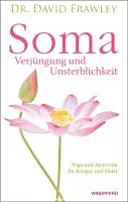
Soma - Verjüngung und Unsterblichkeit
 81
81

Soma - Verjüngung und Unsterblichkeit
David Frawley’s "Soma - Verjüngung und Unsterblichkeit" attempts to distill the complex Vedic Soma ritual into a relatable paradigm for modern seekers of vitality and spiritual attainment. Frawley rightly points to the symbolic weight Soma carries, extending beyond mere intoxication to represent a vital force and a pathway to expanded awareness. His interpretation of Soma as an internal yogic process, particularly referencing the concept of *amrita* or nectar of immortality, offers a compelling angle. However, the work sometimes struggles to clearly differentiate between historical ritualistic practice and its metaphorical extrapolation, occasionally blurring the lines. A notable strength lies in Frawley's accessible prose when explaining intricate concepts like the connection between Soma and *prana*. Despite its ambition, the book could benefit from a more rigorous engagement with the historical linguistic and archaeological evidence surrounding the Soma plant itself. It serves as a stimulating, if occasionally speculative, introduction to the profound symbolism of Vedic immortality.
📝 Description
81
### The Essence of Soma David Frawley's "Soma - Verjüngung und Unsterblichkeit," first published in 2012, delves into the profound concept of Soma, often understood as a divine elixir or intoxicating substance central to Vedic traditions. This work examines Soma not merely as a ritualistic element but as a potent symbol for rejuvenation, expanded consciousness, and even a form of immortality sought through spiritual practice.
### Who Will Benefit This book is tailored for students of comparative religion, Vedic studies, and esoteric philosophy. It appeals to those interested in the deeper symbolic meanings behind ancient rituals and the quest for longevity and spiritual transcendence. Individuals exploring the intersection of ancient Indian wisdom and modern self-development will find significant value here.
### Historical Roots of Soma The concept of Soma is deeply embedded in the Rigveda, one of the oldest sacred texts of Hinduism, dating back to approximately 1500 BCE. The Rigvedic hymns extensively describe the Soma sacrifice, where the plant's juice was extracted, fermented, and offered to the deities, particularly Indra. The ritualistic use and the deity associated with it form a crucial part of early Brahmanical traditions.
### Core Concepts Explored Frawley's exploration centers on the multifaceted nature of Soma. It's presented as a psychoactive substance that facilitates divine connection, a metaphor for vital energy (prana) and consciousness itself, and a symbol of the immortal essence within. The book investigates how the pursuit of Soma's properties—vitality, clarity, and spiritual insight—can be understood as an internal, yogic practice rather than solely an external ritual.
💡 Why Read This Book?
• Gain a nuanced understanding of the Vedic Soma ritual beyond its literal interpretation, focusing on its symbolic connection to vital energy and consciousness, as explored in the context of the Rigveda. • Discover how the ancient pursuit of Soma can be reframed as an internal yogic practice for rejuvenation and expanded awareness, a central theme discussed by Frawley. • Explore the concept of immortality within Vedic thought, understanding Soma as a symbol for the divine elixir or *amrita* that grants longevity and spiritual insight.
⭐ Reader Reviews
Honest opinions from readers who have explored this book.
❓ Frequently Asked Questions
What is Soma in the context of David Frawley's book?
Frawley's "Soma - Verjüngung und Unsterblichkeit" interprets Soma as a potent symbol of rejuvenation and immortality within Vedic traditions, extending beyond its literal meaning as a ritualistic elixir or plant.
When was David Frawley's book on Soma first published?
The book "Soma - Verjüngung und Unsterblichkeit" by David Frawley was first published in December 2012.
What are the primary subjects covered in "Soma - Verjüngung und Unsterblichkeit"?
The book primarily covers esoteric interpretations of Soma, focusing on its role in Vedic traditions concerning rejuvenation, immortality, consciousness, and spiritual practice.
Is this book about the historical Soma plant?
While referencing the historical Soma ritual and plant found in texts like the Rigveda, Frawley's work emphasizes the symbolic and yogic interpretations of Soma for modern spiritual seeking.
Who is David Frawley?
David Frawley, also known as Vamadeva Shastri, is a prominent Western-born scholar and practitioner of Ayurveda, Yoga, and Vedic traditions, authoring numerous books on these subjects since the late 20th century.
What does 'Verjüngung und Unsterblichkeit' mean?
'Verjüngung und Unsterblichkeit' is German for 'Rejuvenation and Immortality,' indicating the book's focus on these themes related to Soma.
🔮 Key Themes & Symbolism
Soma as Vital Elixir
Frawley posits Soma not just as a fermented drink from antiquity but as a universal symbol for life force, or *prana*. The book explores how the ancient rituals surrounding Soma extract can be understood as a metaphor for cultivating internal vitality. This perspective links the Vedic concept to broader yogic practices aimed at enhancing physical health, mental clarity, and spiritual potency, suggesting a path toward sustained well-being and longevity intrinsic to the human condition.
The Path to Immortality
Central to the book is the idea that Soma represents a form of immortality, not necessarily physical perpetuity, but an enduring spiritual essence. Frawley connects this to the Vedic concept of *amrita*, the nectar of immortality. The work examines how the pursuit of Soma's transformative properties—its ability to elevate consciousness and grant divine connection—can be seen as a method for transcending the limitations of ordinary existence and attaining a state of lasting spiritual awareness.
Symbolic Interpretation of Ritual
The book advocates for a symbolic reading of the ancient Soma sacrifices described in the Rigveda. Frawley suggests that the complex rituals, the pressing of the plant, and its offering to deities like Indra, hold deeper meanings related to inner transformation. This approach encourages readers to look beyond the literal historical practice and find parallels in contemporary practices of meditation, pranayama, and consciousness exploration, viewing them as modern expressions of the same ancient quest.
Consciousness and Divine Connection
Frawley delves into Soma's role in facilitating altered states of consciousness and direct communion with the divine. The work proposes that the psychoactive or ecstatic effects associated with Soma in ancient texts are symbolic of the profound shifts in perception achievable through dedicated spiritual discipline. This interpretation suggests that Soma is a key to unlocking higher states of awareness and experiencing a more profound connection to the sacred.
💬 Memorable Quotes
“Soma is the divine nectar of immortality.”
— This statement encapsulates Frawley's core argument: Soma is not merely a ritualistic substance but a potent symbol for the eternal life force and spiritual awakening sought in Vedic traditions.
“The true Soma is within us.”
— This paraphrase highlights the book's emphasis on internal spiritual practice. It suggests that the rejuvenating and immortalizing qualities attributed to Soma are accessible through inner work, such as yoga and meditation.
“Soma awakens consciousness.”
— This brief interpretation points to Soma's function in expanding awareness. Frawley explores how the ancient elixir, and its symbolic representation, is linked to achieving higher states of consciousness and spiritual insight.
“The Rigveda speaks extensively of Soma.”
— This verifiable fact underscores the historical grounding of Frawley's discussion. It points to the foundational role of Soma within the earliest layer of Vedic literature, the Rigveda, dating to the second millennium BCE.
“Soma represents the vital energy, prana.”
— This interpretation connects Soma to a fundamental concept in yogic philosophy. Frawley suggests that Soma symbolizes the life force that animates all beings and can be cultivated through specific practices.
🌙 Esoteric Significance
Tradition
Frawley's work is firmly rooted in the Vedic and Yogic traditions of India. It interprets ancient scriptures through a lens that emphasizes inner spiritual realization over purely ritualistic or historical exegesis. This approach aligns with certain strands of modern Vedanta and Tantra, which seek to extract universal principles from ancient texts applicable to contemporary spiritual practice. The book fits within a lineage of esoteric thinkers who see the external forms of religion as symbolic representations of internal states of being.
Symbolism
The primary symbol is Soma itself, interpreted as the 'nectar of immortality' (*amrita*) and the vital life force (*prana*). Other key symbols include the divine intoxicating effect, representing expanded consciousness and direct communion with the sacred, and the process of extraction and offering, symbolizing the purification and channeling of inner energies. The Rigvedic deity Indra, often associated with Soma, can be seen as representing the awakened, powerful consciousness that results from this process.
Modern Relevance
Contemporary practitioners of Yoga, Ayurveda, and mindfulness often draw on Frawley's work to understand the deeper symbolic layers of their practices. His interpretation of Soma as an internal source of vitality and consciousness speaks to modern desires for holistic health and spiritual growth. Thinkers and practitioners interested in the psycho-spiritual dimensions of ancient traditions, and those exploring the use of altered states for personal transformation, find resonance in his symbolic readings of Vedic lore.
👥 Who Should Read This Book
• Students of Vedic and Hindu traditions seeking a symbolic interpretation of Soma beyond its historical ritualistic context. • Practitioners of Yoga and Ayurveda interested in understanding the energetic and consciousness-expanding aspects of ancient Indian wisdom. • Esoteric scholars and spiritual explorers looking for connections between ancient concepts of immortality and modern paths to vitality and expanded awareness.
📜 Historical Context
David Frawley's work on Soma emerges from a fertile ground of late 20th and early 21st-century scholarship that re-examined Vedic texts through esoteric and comparative spiritual lenses. While scholars like Wendy Doniger O'Flaherty and R. Gordon Wasson debated the botanical identity of Soma, Frawley shifted focus towards its symbolic and psychological dimensions. The book implicitly engages with the broader Hindu Renaissance movement, which sought to reinterpret ancient traditions for modern relevance. Published in 2012, it follows decades of Western exploration into Yoga and Ayurveda, areas Frawley himself has significantly contributed to. Unlike purely academic historical analyses, Frawley's approach aligns with a more spiritualist interpretation, positioning Soma as a key to inner transformation rather than solely a historical ritualistic artifact. His work resonates with contemporary interests in consciousness studies and alternative paths to well-being, contrasting with more literal or anthropological readings of the Vedic corpus.
📔 Journal Prompts
The Rigvedic hymns' description of Soma extraction and its effects.
The concept of Soma as an internal elixir for rejuvenation.
Connecting the ancient Soma ritual to modern yogic practices.
Soma's role in achieving altered states of consciousness.
Interpreting immortality through the lens of Vedic traditions and Soma.
🗂️ Glossary
Soma
In Vedic tradition, a divine plant, elixir, or ritual offering believed to grant divine favor, heightened consciousness, and longevity; interpreted by Frawley as a symbol of vital energy and spiritual immortality.
Amrita
Literally 'immortality' or 'deathless,' often referred to as the nectar of immortality in Hindu mythology, which grants divine status or eternal life to those who consume it.
Prana
The vital life force or energy that permeates all living beings, often associated with breath and central to yogic philosophy and practice for maintaining health and consciousness.
Rigveda
One of the oldest sacred texts of Hinduism, composed in Vedic Sanskrit, containing hymns dedicated to various deities, including extensive references to the Soma ritual.
Vedic traditions
The religious and cultural practices, beliefs, and scriptures originating from the ancient Indo-Aryan civilization of the Vedic period (c. 1500–500 BCE), forming the foundation of Hinduism.
Yogic practice
The array of physical postures (asanas), breathing techniques (pranayama), meditation, and ethical principles aimed at achieving spiritual enlightenment, mental clarity, and physical well-being.
Consciousness
The state of being aware of and responsive to one's surroundings; in esoteric contexts, it can refer to higher states of awareness, spiritual insight, and subjective experience.