Secret Societies
 78
78

Secret Societies
Barrett’s survey of secret societies is commendably broad, attempting to map a territory often obscured by myth and deliberate obfuscation. His strength lies in presenting a structured overview of disparate groups, from the Knights Templar to Bohemian Grove, providing historical context for their emergence and alleged operations. A notable passage details the early 19th-century rise of various fraternal orders in the United States, illustrating how societal anxieties fueled their growth. However, the sheer scope sometimes leads to a lack of depth on individual organizations; the analysis of the Ordo Templi Orientis, for instance, feels somewhat superficial. Despite this, the work serves as a valuable primer for those seeking to understand the historical presence and societal impact of clandestine associations. It is a solid reference for the curious, if not a definitive exposé.
📝 Description
78
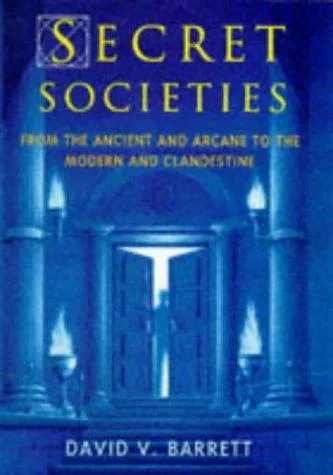
David V. Barrett's 1997 book examines clandestine organizations from their origins to their influence.
Published in 1997, David V. Barrett's 'Secret Societies' investigates groups that have operated outside mainstream historical accounts. The book details their structures, philosophies, and alleged activities, offering a view of hidden currents in human history. Barrett's work appeared as interest in conspiracy theories and alternative histories grew following the Cold War. It surveys these phenomena within a historical and sociological framework, tracing their evolution from medieval guilds to modern fraternal orders.
The book covers concepts like initiation rituals, secret knowledge transmission, and the formation of elite networks. It analyzes organizational models, from cellular structures to hierarchies. Barrett also differentiates historical fact from legend regarding groups such as the Illuminati and Freemasons. A central theme is the shared symbolism and coded language found across different societies.
Barrett's work engages with a long tradition of studying hidden orders, a field that often intersects with both historical inquiry and esoteric thought. The book places groups like Freemasonry and earlier fraternal organizations within a continuum of structured, often secretive, human association. It acknowledges the persistent public fascination with these groups, which often stems from their association with mystery, ritual, and alternative forms of knowledge, distinguishing historical reality from enduring legend.
💡 Why Read This Book?
• Understand the historical evolution of clandestine organizations, tracing their roots from medieval orders to modern networks, as detailed in the book's exploration of groups active in the 18th century. • Gain insight into the organizational structures and philosophies that define secret societies, learning about concepts like initiation and hidden knowledge transmission. • Differentiate between historical facts and persistent myths surrounding prominent societies like the Freemasons, a distinction Barrett carefully outlines.
⭐ Reader Reviews
Honest opinions from readers who have explored this book.
❓ Frequently Asked Questions
What is the earliest historical period covered by David V. Barrett's 'Secret Societies'?
The book delves into historical periods reaching back to antiquity and the early medieval era, examining organizations like the Knights Templar, whose origins date to the early 12th century.
Does 'Secret Societies' by David V. Barrett discuss modern organizations?
Yes, the work published in 1997 addresses contemporary (as of the publication date) organizations and the enduring influence of historical groups on modern society.
Are the Illuminati featured in David V. Barrett's 'Secret Societies'?
The book explores the historical context and enduring mythology surrounding the Bavarian Illuminati, a group founded in 1776, distinguishing factual accounts from later speculative narratives.
What kind of evidence does Barrett present for the existence and activities of secret societies?
Barrett relies on historical documents, scholarly research, and documented accounts of organizational structures and public records where available, while also acknowledging the speculative nature of some claims.
Is 'Secret Societies' by David V. Barrett suitable for beginners in esoteric studies?
Yes, its comprehensive overview and clear presentation make it an accessible starting point for individuals new to the study of clandestine groups and esoteric history.
What is the primary focus of David V. Barrett's 'Secret Societies'?
The book's primary focus is the historical analysis and sociological examination of various secret societies throughout history, exploring their origins, structures, and societal impact.
🔮 Key Themes & Symbolism
Organizational Structures
Barrett meticulously outlines the diverse ways secret societies organize themselves, moving beyond simplistic notions of a singular model. He details the hierarchical frameworks seen in orders like the Freemasons, the more fluid, network-based structures that emerge in certain revolutionary cells, and the ritualistic progression often found in initiatory groups. The book examines how these structures facilitate secrecy, maintain discipline, and ensure the transmission of knowledge across generations. This focus on internal mechanics provides a crucial lens for understanding their enduring appeal and operational effectiveness, even when their ultimate goals remain obscure to outsiders.
Historical Manifestations
The work provides a sweeping historical survey, charting the lineage of secret societies from ancient mystery cults and medieval military-religious orders like the Knights Templar, through the Enlightenment era societies such as the Bavarian Illuminati (founded 1776), to fraternal organizations that flourished in the 19th century. Barrett contextualizes their emergence within specific socio-political climates, illustrating how periods of upheaval, religious schism, or burgeoning scientific inquiry often served as fertile ground for their formation and proliferation. This historical grounding situates these groups not as isolated phenomena but as integral, albeit hidden, threads in the fabric of human civilization.
Mythology vs. Reality
A significant aspect of Barrett's analysis involves dissecting the often-fantastical narratives that surround secret societies. He confronts popular myths concerning groups like the Rosicrucians or alleged conspiracies reaching into modern governments, contrasting them with verifiable historical evidence and scholarly consensus. The book highlights how the very nature of secrecy breeds speculation, leading to the creation of elaborate mythologies that often overshadow the mundane or more complex realities of these organizations. By separating fact from fiction, Barrett offers a more grounded understanding of their historical impact and the psychology behind their enduring mystique.
Symbolism and Ritual
Barrett acknowledges the importance of shared symbols, coded language, and initiation rites in binding members of secret societies and conveying their unique worldviews. He explores how standardized symbols, often drawn from hermeticism, alchemy, or religious iconography, serve as markers of identity and communication within the group. The process of initiation is presented not merely as a procedural step but as a transformative experience designed to impart specific teachings and foster a deep sense of belonging and loyalty. This focus on symbolic language and ritualistic practice underscores the psychological and spiritual dimensions that contribute to the longevity and allure of these associations.
💬 Memorable Quotes
Direct passages from the work, attributed to the author.
“The allure of the secret society often lies not in what it *does*, but in what it *is* believed to do.”
— This observation highlights how the perceived power and hidden agenda of clandestine groups, often amplified by rumor and speculation, are central to their mystique and public fascination, sometimes more so than their actual historical activities.
“Many societies that began with grand philosophical aims eventually succumbed to internal politics or dissolved into mere social clubs.”
— This interpretation suggests that the grand ideals and esoteric purposes that often characterize the founding of secret societies can be eroded over time by mundane organizational challenges, power struggles, or a dilution of their original mission.
“The enduring power of these groups stems from their ability to offer belonging and purpose in a fragmented world.”
— This interpretation points to the psychological appeal of secret societies, suggesting that their success is rooted in providing members with a strong sense of community, shared identity, and a defined role or mission, which can be particularly attractive in times of social change.
💡 Key Ideas
Editorial paraphrase of the work's core concepts — not direct quotes.
Initiation is the threshold between the profane world and the sacred knowledge held within.
This paraphrased concept emphasizes the transformative nature of joining a secret society, where the ritualistic entry marks a symbolic death and rebirth, opening the initiate to esoteric teachings and a new understanding of reality.
Distinguishing historical fact from the elaborate mythology surrounding groups like the Rosicrucians requires careful scrutiny of available evidence.
This paraphrased concept underscores the critical approach needed when studying secret societies, emphasizing the challenge of separating documented historical events and verifiable organizational practices from centuries of legend, speculation, and deliberate obfuscation.
🌙 Esoteric Significance
Tradition
While 'Secret Societies' is primarily a historical and sociological survey, it touches upon Western Esotericism by examining groups that often claim lineage from or are associated with traditions like Hermeticism, Gnosticism, and Renaissance occultism. Barrett's work provides a crucial overview of organizations such as the Rosicrucians and certain Masonic rites, which have historically served as vehicles for esoteric knowledge. It situates these traditions within their historical development, acknowledging their role in preserving and transmitting non-mainstream spiritual and philosophical teachings across centuries.
Symbolism
The book frequently references symbolic systems central to esoteric traditions. For instance, it explores the use of Masonic symbols like the Square and Compasses, which in esoteric interpretation relate to the ordering of the material world and the alignment of human will with divine principles. It also touches upon alchemical and Hermetic symbolism that may have been incorporated into the teachings of various orders, suggesting these visual languages served not only as identifiers but as mnemonic devices for complex metaphysical concepts and spiritual pathways.
Modern Relevance
Barrett's analysis of organizational structures and the enduring appeal of clandestine groups remains relevant to contemporary discussions on power, influence, and alternative communities. Thinkers and practitioners interested in the sociology of secret societies, the psychology of belonging, and the historical transmission of esoteric knowledge find his work a foundational text. It informs modern studies in comparative religion and the history of ideas, offering a framework for understanding how groups persist and adapt, influencing contemporary subcultures and online communities that explore similar themes of hidden knowledge and collective identity.
👥 Who Should Read This Book
• Students of Western Esotericism and Comparative Religion: Those seeking to understand the historical vehicles and organizational structures through which esoteric philosophies and practices have been transmitted over centuries. • History Enthusiasts interested in Non-Mainstream Narratives: Readers who want to explore the documented presence and societal impact of clandestine organizations beyond sensationalized accounts. • Sociologists and Political Scientists: Individuals analyzing patterns of group formation, power dynamics, and the role of secrecy in social and political movements throughout history.
📜 Historical Context
David V. Barrett's 'Secret Societies,' first published in 1997, emerged during a period of burgeoning interest in conspiracy theories and alternative histories, fueled by the collapse of the Soviet Union and the rise of the internet. This era saw a proliferation of works examining hidden influences, building upon earlier explorations by figures like William Guy Carr and Nesta Webster. Barrett's book offered a structured survey, placing phenomena like the Freemasons and the Illuminati (founded in 1776) within broader historical and sociological contexts. It engaged with a popular culture increasingly fascinated by clandestine networks, providing a counterpoint to purely speculative accounts. While not a direct academic intervention, it served as a comprehensive primer for a public keen to understand the historical underpinnings of perceived hidden powers, contrasting with the more esoteric, less historically grounded claims prevalent in some occult circles of the time.
📔 Journal Prompts
The organizational structures of groups like the Knights Templar: how did their military and religious roles shape their secrecy?
Barrett's distinction between Illuminati mythology and historical reality: what does this reveal about the power of narrative?
The role of initiation rituals: how might they function to create group cohesion and transmit specific worldviews?
Analyze a modern-day group's public persona versus its alleged inner workings, drawing parallels to concepts discussed regarding 18th-century societies.
Reflect on the concept of 'hidden knowledge': how is it defined and preserved within the societies Barrett examines?
🗂️ Glossary
Bavarian Illuminati
A secret society founded in Bavaria in 1776 by Adam Weishaupt. It aimed to promote Enlightenment ideals and oppose superstition and state control, eventually being suppressed by the Bavarian government.
Knights Templar
A Catholic military order founded around 1119 to protect Christian pilgrims in the Holy Land. They amassed significant wealth and power before being suppressed in the early 14th century.
Freemasonry
A fraternal organization that emerged in the late 16th to early 17th centuries. Its members are united by moral and spiritual values, using allegory and symbolism in their rituals and teachings.
Rosicrucians
A mystical and esoteric tradition that claims to have been founded in the early 17th century by a legendary figure named Christian Rosenkreuz. Their teachings often blend alchemy, Kabbalah, and Hermeticism.
Initiation Ritual
A ceremony or series of ceremonies marking a person's entry into a particular group or society, often involving symbolic actions, oaths, and the imparting of secret knowledge.
Esotericism
Belief systems and practices that focus on inner knowledge and spiritual transformation, often transmitted through secret teachings or mystical experiences, distinct from exoteric or public doctrines.
Hermeticism
A philosophical and religious tradition based on writings attributed to Hermes Trismegistus. It emphasizes divine knowledge, the interconnectedness of all things, and the pursuit of spiritual enlightenment.
🔮 Readers Also Liked
Browse all →









More by David V. Barrett
All books →





More Free Occult Philosophy Books
View all →