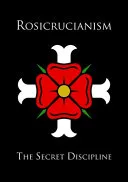
Rosicrucianism
 80
80

Rosicrucianism
The decision to compile these specific 17th-century Rosicrucian source texts is commendable, offering a vital counterpoint to the often diluted presentations found elsewhere. The inclusion of works attributed to or associated with the early movement provides an unvarnished look at its foundational claims. A notable strength lies in the raw, unmediated presentation of ideas that fueled centuries of esoteric inquiry. However, the lack of extensive scholarly apparatus or modern commentary can present a barrier for newcomers. The concept of the 'invisible college' as a vehicle for spiritual progress, particularly as explored in the 'Confessio Fraternitatis', remains a powerful and intriguing element, highlighting a desire for a hidden, yet active, spiritual network. This is an essential, if demanding, resource for dedicated researchers.
📝 Description
80
### What It Is This volume presents a collection of foundational Rosicrucian texts, offering direct access to the movement's core philosophical and spiritual propositions. It moves beyond secondary interpretations to showcase original source materials, allowing readers to engage with the ideas as they were first articulated. The compilation seeks to illuminate the historical trajectory and enduring influence of a significant esoteric current.
### Who It's For This work is intended for serious students of Western esotericism, historians of religion, and practitioners of Hermetic arts. It appeals to those seeking to understand the roots of modern occult traditions and the specific contributions of the Rosicrucian impulse. Individuals interested in the intersection of alchemy, mysticism, and early modern intellectual history will find substantial material.
### Historical Context The Rosicrucian manifestos first appeared in the early 17th century, a period of intense intellectual ferment in Europe. Emerging amidst the Protestant Reformation and the Scientific Revolution, these texts proposed a radical reform of both spiritual and material knowledge. They arrived in a climate ripe for mystical and alchemical speculation, yet also one where heterodox ideas faced scrutiny. The initial publications, such as the 'Fama Fraternitatis' and 'Confessio Fraternitatis', sparked widespread debate and imitation.
### Key Concepts The texts explore themes of spiritual alchemy, the hidden wisdom of nature, and the concept of a universal reformation. Central to the Rosicrucian vision is the idea of a hidden brotherhood dedicated to preserving and disseminating esoteric knowledge. The work emphasizes the potential for human spiritual advancement through direct experience and the study of divine science, often presented through allegorical and symbolic language derived from alchemical processes.
💡 Why Read This Book?
• Learn about the specific historical origins of the Rosicrucian movement, including the appearance of its manifestos in the early 17th century, a period of significant European intellectual change. • Understand the concept of spiritual alchemy as a path to inner transformation, distinct from purely material processes, as detailed in the foundational Rosicrucian texts. • Grasp the idea of a hidden brotherhood or 'invisible college' dedicated to esoteric wisdom, a core tenet influencing subsequent esoteric orders and philosophical societies.
⭐ Reader Reviews
Honest opinions from readers who have explored this book.
❓ Frequently Asked Questions
What are the primary Rosicrucian manifestos included in this collection?
This compilation typically features seminal texts such as the 'Fama Fraternitatis' (1714), the 'Confessio Fraternitatis' (1612), and potentially later related writings that shaped early Rosicrucian thought and its reception.
Who is Christian Rosenkreutz, and what is his connection to these texts?
Christian Rosenkreutz is presented as the legendary founder of the Rosicrucian Order. While his historical existence is debated, these texts, first published in the early 17th century, are attributed to his life and teachings.
How does Rosicrucianism differ from other early modern esoteric traditions?
Rosicrucianism uniquely blended alchemical symbolism with a call for spiritual and intellectual reformation, often proposing a hidden, organized brotherhood, distinguishing it from more solitary mystical or hermetic pursuits of the era.
What is the significance of alchemy in Rosicrucian philosophy presented here?
Alchemy in the Rosicrucian context is primarily interpreted spiritually. It symbolizes the process of inner purification and transformation of the human soul, rather than solely material transmutation.
Is this book suitable for beginners in esoteric studies?
While foundational, the original language and dense symbolism of these 17th-century texts can be challenging for absolute beginners. A prior interest in Hermeticism or comparative religion is beneficial.
When were the original Rosicrucian manifestos first published?
The key Rosicrucian manifestos, such as the 'Fama Fraternitatis' and 'Confessio Fraternitatis', were first published in the early 17th century, specifically around 1612 and 1614.
🔮 Key Themes & Symbolism
Spiritual Reformation
The texts propose a radical renewal of human knowledge and spirituality, extending beyond religious dogma. This concept envisions a universal reformation, not merely of churches, but of all sciences and philosophies, guided by esoteric wisdom. It suggests a return to a purer, divinely-inspired understanding of the cosmos and humanity's place within it, often presented as a secret legacy passed down through a hidden fraternity.
The Invisible College
Central to the Rosicrucian ideal is the notion of a secret society or 'invisible college' of enlightened individuals. This brotherhood, allegedly founded by Christian Rosenkreutz, works subtly to advance human knowledge and spiritual well-being. Their influence is not overt but operates through a network of adepts dedicated to the Great Work, preserving and disseminating wisdom across generations.
Allegorical Alchemy
Alchemy is presented not just as a physical art but as a profound metaphor for spiritual transformation. The processes of dissolution, purification, and coagulation described in alchemical treatises are reinterpreted as stages in the soul's journey toward divine perfection. This spiritual alchemy seeks the transmutation of the lower self into a higher, enlightened state.
The Book of Nature
The Rosicrucian worldview emphasizes learning directly from the 'Book of Nature,' seeing the created world as a manifestation of divine wisdom. Through careful observation and symbolic interpretation of natural phenomena, individuals can gain profound spiritual insights. This approach champions empirical study guided by esoteric principles, seeking divine signatures within the material realm.
💬 Memorable Quotes
“The Fraternity of the Rosy Cross… hath undertaken to restore and impart unto the world that which hath been lost.”
— This highlights the core mission of the Rosicrucians as presented in their early manifestos: to reintroduce forgotten spiritual and philosophical truths to a world perceived as having strayed from divine knowledge.
“We are of opinion that the world is very near its end, and that the trumpet of the Gospel is about to be sounded.”
— This reflects the apocalyptic or chiliastic undertones present in some early Rosicrucian writings, suggesting a belief in a coming era of profound change and spiritual renewal.
“The College of the Rosy Cross… is a noble company, whose members are united in their love for wisdom and the pursuit of hidden knowledge.”
— This paraphrased concept describes the idealized structure and purpose of the Rosicrucian fraternity as a collective of enlightened individuals dedicated to esoteric learning and spiritual advancement.
“The true alchemist seeks not gold, but the spiritual elixir that elevates the soul.”
— This represents the spiritual interpretation of alchemy found within Rosicrucianism, emphasizing inner transformation and the attainment of divine consciousness over material wealth.
“Nature herself is the greatest teacher, if only we learn to read her divine language.”
— This paraphrased concept underscores the Rosicrucian reverence for the natural world as a source of divine revelation, advocating for the study of its secrets through an esoteric lens.
🌙 Esoteric Significance
Tradition
Rosicrucianism is a pivotal current within Western Esotericism, deeply rooted in Hermeticism and Neoplatonism, with significant Kabbalistic and Gnostic influences. It represents a unique synthesis that sought to reform existing knowledge systems by embedding esoteric principles within a framework of spiritual alchemy and divine science. This tradition stands apart by proposing an organized, hidden fraternity as the vehicle for preserving and disseminating this wisdom, aiming for a universal reformation of both inner and outer worlds.
Symbolism
Key symbols include the Rose and Cross, representing the union of the spiritual (cross) and the material/corporeal (rose), or divine love and sacrifice. The number three, often appearing in threes (e.g., three founders, three texts), signifies divine perfection or spiritual completion. The concept of the 'Light' is central, representing divine wisdom, illumination, and the goal of the Great Work – the spiritual transformation of the adept.
Modern Relevance
Contemporary esoteric practitioners and scholars of Western Esotericism frequently engage with Rosicrucian ideas. Modern Hermetic orders, Masonic rites, and various New Age spiritual movements draw inspiration from the Rosicrucian concepts of hidden wisdom, spiritual alchemy, and the pursuit of a universal reformation. Thinkers exploring consciousness, secret societies, and the history of occultism continue to reference the Rosicrucian impulse as a foundational element.
👥 Who Should Read This Book
• Students of early modern European intellectual history seeking primary sources on esoteric movements that influenced the period. • Practitioners of Western Esotericism interested in the foundational texts of Hermeticism, alchemy, and mystical traditions. • Comparative religion scholars examining the development of secret societies and their impact on religious and philosophical thought.
📜 Historical Context
The Rosicrucian manifestos first emerged in the Holy Roman Empire during the early 17th century, a period of profound religious and intellectual upheaval. The 'Fama Fraternitatis' (1614) and 'Confessio Fraternitatis' (1612) appeared amidst the Thirty Years' War and the burgeoning Scientific Revolution. These texts proposed a radical, unified approach to knowledge, integrating Hermeticism, Kabbalah, and alchemy with a call for spiritual and scientific reform. They proposed the existence of a secret fraternity, the Brothers of the Rosy Cross, dedicated to this universal reformation. This vision contrasted sharply with both established religious doctrines and the emerging mechanistic philosophy. The writings sparked immense interest, leading to numerous imitations and responses, including critiques from figures like the theologian William Postel and engagement from early proponents of empirical science. The movement’s secrecy and ambitious claims fostered both admiration and suspicion, contributing to its mystique.
📔 Journal Prompts
The concept of the 'invisible college' and its potential for influence.
Reflecting on the 'Book of Nature' as a source of divine wisdom.
The Rosicrucian ideal of universal reformation and its contemporary echoes.
Interpreting the symbolism of the Rose and Cross in personal spiritual practice.
The process of spiritual alchemy as a metaphor for personal growth.
🗂️ Glossary
Fama Fraternitatis
One of the foundational Rosicrucian manifestos, published in 1614, which introduced the legend of Christian Rosenkreutz and his secret society.
Confessio Fraternitatis
A second Rosicrucian manifesto, published in 1612, elaborating on the ideas presented in the 'Fama' and further outlining the goals of the Rosy Cross fraternity.
Christian Rosenkreutz
The legendary founder of the Rosicrucian Order, depicted in the manifestos as an adept who traveled widely and established a secret brotherhood dedicated to esoteric knowledge.
Spiritual Alchemy
The Rosicrucian interpretation of alchemy, focusing on the inner transformation of the soul and the attainment of spiritual enlightenment rather than material transmutation.
Universal Reformation
A core Rosicrucian concept advocating for a profound renewal and unification of all human knowledge, spirituality, and society, guided by esoteric wisdom.
Great Work (Magnum Opus)
In alchemy, the process of creating the Philosopher's Stone. In Rosicrucianism, it often refers to the ultimate goal of spiritual transformation and the attainment of divine wisdom.
Hermeticism
An esoteric tradition based on the writings attributed to Hermes Trismegistus, emphasizing gnosis, the correspondences between the macrocosm and microcosm, and the pursuit of spiritual wisdom.