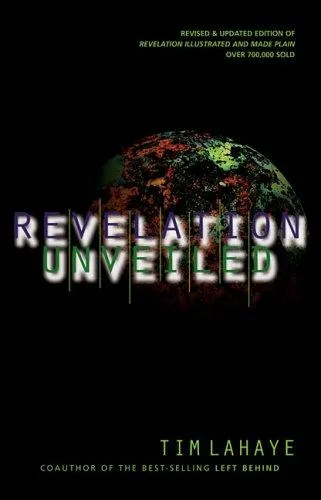
Revelation unveiled
 74
74

Revelation unveiled
Tim F. LaHaye's Revelation Unveiled offers a comprehensive, if somewhat rigidly structured, interpretation of the Apocalypse. Its strength lies in its meticulous chapter-by-chapter breakdown, which can make the daunting text of Revelation more accessible to those unfamiliar with its prophetic intricacies. LaHaye’s consistent dispensationalist viewpoint, while a limitation for those holding different eschatological beliefs, provides a clear lens through which to view his arguments. The detailed exegesis of symbolic elements, such as the "beast" and its mark, is particularly illustrative of his methodology. However, the work occasionally leans into definitive pronouncements where scholarly consensus remains divided. Ultimately, Revelation Unveiled serves as a thorough, albeit partisan, guide for readers committed to a futurist interpretation of biblical prophecy.
📝 Description
74
Tim F. LaHaye published Revelation Unveiled in 1999 to interpret apocalyptic prophecies.
Published in 1999, Revelation Unveiled by Tim F. LaHaye systematically examines the prophecies within the Book of Revelation. The book breaks down the symbolic language and historical interpretations of this biblical text, seeking to clarify its predictive elements concerning end-times events. LaHaye structures his exposition chapter by chapter, following the biblical narrative.
This volume is for readers who want a structured theological framework for understanding apocalyptic visions in the New Testament. It appeals to those who study biblical prophecy from a dispensationalist viewpoint and desire a detailed look at prophetic timelines and symbolic meanings. Readers interested in comparative religious studies, especially Christian eschatology, will find its analytical method useful. The work emerged during a time of strong interest in biblical prophecy, with many scholars offering varying interpretations.
Tim F. LaHaye's Revelation Unveiled engages with Christian eschatology, a field that often intersects with esoteric interpretations of biblical prophecy. While LaHaye adheres to a dispensationalist framework, his detailed analysis of symbolic prophecy, particularly concerning end-times events and figures like the Antichrist, touches upon themes common in apocalyptic literature. Such works, regardless of their specific theological stance, often draw readers seeking hidden meanings or divine timelines within sacred texts, a characteristic shared with broader esoteric traditions focused on uncovering ultimate truths.
💡 Why Read This Book?
• Gain a structured understanding of the Book of Revelation's prophetic sequence, moving beyond general concepts to specific interpretations of the "seals" and "trumpets" as presented by LaHaye. • Explore the dispensationalist framework for end-times prophecy, learning how LaHaye connects specific biblical events and figures to a predicted future timeline. • Examine LaHaye's detailed analysis of apocalyptic symbols, such as the "beast" and the "woman clothed with the sun," and understand their significance within his eschatological model.
⭐ Reader Reviews
Honest opinions from readers who have explored this book.
❓ Frequently Asked Questions
What is the primary interpretive framework used in Revelation Unveiled?
Revelation Unveiled primarily employs a dispensationalist and futurist interpretive framework, viewing the Book of Revelation as largely a prophecy of future events concerning the end times.
When was Revelation Unveiled first published?
The book Revelation Unveiled was first published in 1999 by Tim F. LaHaye.
Does the book discuss the Antichrist?
Yes, Revelation Unveiled dedicates significant attention to identifying and analyzing the figure of the Antichrist, a central element in its interpretation of end-times prophecy.
What is the approach to the symbolic language in Revelation?
LaHaye's approach treats much of the symbolic language in Revelation, such as the "four horsemen" or the "Great Tribulation," as literal or having direct future referents.
Is this book suitable for beginners in biblical prophecy?
The book is structured to guide readers through Revelation chapter by chapter, making it accessible for those new to the subject who are interested in a detailed, specific interpretation.
What is the significance of "dispensationalism" in this book?
Dispensationalism, as applied in Revelation Unveiled, posits distinct periods or "dispensations" in God's plan, with a particular focus on the future role of Israel and the Church.
🔮 Key Themes & Symbolism
The Great Tribulation
The book details LaHaye's understanding of the Great Tribulation, a period of intense suffering and divine judgment prophesied in Revelation. It meticulously analyzes the events associated with the opening of the seals, the blowing of the trumpets, and the pouring out of the bowls of wrath, interpreting them as distinct phases of escalating calamities preceding Christ's return. The work aims to provide a chronological map of these apocalyptic events, highlighting their significance for believers living through or anticipating these times.
The Antichrist and False Prophet
Revelation Unveiled offers an in-depth examination of the figures of the Antichrist and the False Prophet, central antagonists in the biblical narrative of the end times. LaHaye explores their predicted origins, rise to power, deceptive tactics, and ultimate defeat. The book connects these biblical descriptions to contemporary political and spiritual trends, seeking to identify potential manifestations or precursors to these end-times figures, thereby guiding readers to discern spiritual and political movements.
The Second Coming and Millennium
A core theme is the anticipation of Christ's literal, visible Second Coming. The work delineates the events immediately preceding and following this return, including the battle of Armageddon and the establishment of Christ's millennial reign on Earth. LaHaye explains the concept of the Millennium as a thousand-year period of peace and righteousness, followed by the final judgment and the creation of a new heaven and new earth, providing a comprehensive eschatological outlook.
Symbolic Interpretation of Revelation
The book is dedicated to demystifying the symbolic language of the Book of Revelation. LaHaye provides interpretations for key symbols such as the "beast," the "mark of the beast," the "woman clothed with the sun," and the "New Jerusalem." His method often involves correlating these symbols with specific historical events or identifying their direct fulfillment in future prophetic scenarios, offering readers a detailed lexicon for understanding apocalyptic imagery.
💬 Memorable Quotes
“The seals, trumpets, and bowls represent successive stages of God's judgment.”
— This paraphrased concept highlights the book's structured approach to divine wrath, presenting the apocalyptic events not as random occurrences but as a sequential unfolding of God's plan for judgment and redemption.
“The Antichrist will be a charismatic global leader who deceives many.”
— This interpretation points to LaHaye's view of the Antichrist as a figure of immense persuasive power and global influence, emphasizing the deceptive nature of his reign and his role in leading humanity astray.
“The Tribulation is a period of unprecedented suffering for the earth.”
— This captures the book's emphasis on the severity and scale of the Tribulation, portraying it as a time of intense divine judgment and human crisis that will test the faith of survivors.
“Christ's return will be a visible, physical event.”
— This interpretation underscores LaHaye's commitment to a literal, future Second Coming of Jesus Christ, contrasting with spiritualized or past interpretations of this pivotal eschatological event.
“The Millennium signifies a thousand-year reign of peace under Christ.”
— This paraphrased concept defines the Millennium as a literal period of earthly peace and righteousness established by Christ upon His return, a key element in the book's prophetic timeline.
🌙 Esoteric Significance
Tradition
While rooted in Christian eschatology, LaHaye's work engages with prophetic interpretation in a manner that can be seen as a modern manifestation of apocalyptic literature's enduring appeal. It shares with Gnostic traditions an interest in uncovering hidden meanings and divine plans, albeit through a distinct theological lens. The meticulous decoding of symbols and timelines aligns with a desire for esoteric knowledge concerning cosmic events and divine governance, positioning it within a broader spectrum of texts seeking to reveal ultimate realities.
Symbolism
Key symbols like the "beast" and its "mark" are central. In LaHaye's framework, the "beast" often represents a future world political system or leader, while the "mark" signifies adherence to this system and rejection of divine authority. The "woman clothed with the sun" is typically interpreted as Israel, underscoring the nation's pivotal role in end-times prophecy. These symbols function not merely as literary devices but as signposts to divine judgment and redemptive acts.
Modern Relevance
LaHaye's approach to Revelation continues to influence contemporary Christian circles, particularly those focused on prophecy ministries and dispensationalist theology. His detailed, systematic interpretations provide a foundational text for many seeking to understand current events through an eschatological lens. Thinkers and ministries that emphasize a literal, futurist reading of biblical prophecy often draw upon or engage with the interpretive methodologies LaHaye popularized, demonstrating the work's lasting impact on a specific segment of contemporary theological discourse.
👥 Who Should Read This Book
• Students of Christian eschatology seeking a detailed dispensationalist interpretation of Revelation's prophetic timeline. • Readers interested in understanding specific end-times symbols like the "seals," "trumpets," and the "mark of the beast" within a futurist framework. • Individuals looking for a comprehensive, chapter-by-chapter analysis of the Book of Revelation from a conservative evangelical perspective.
📜 Historical Context
Tim F. LaHaye's Revelation Unveiled emerged in 1999, a period marked by sustained popular and academic interest in biblical eschatology. The late 20th century saw a proliferation of books interpreting end-times prophecies, with dispensationalism, a prominent view since the early 1900s, being a dominant force. LaHaye’s work built upon this tradition, offering a detailed futurist interpretation that contrasted with amillennial views championed by scholars like John Calvin or postmillennial perspectives. While not facing significant censorship, the book entered a crowded field where interpretations of Revelation, the identity of the Antichrist, and the timing of the Rapture were subjects of fervent debate among theologians and lay readers alike. Its publication coincided with a growing evangelical engagement with prophecy, amplified by media and popular culture.
📔 Journal Prompts
The sequence of judgments (seals, trumpets, bowls) and their potential future manifestation.
The nature and identification of the "beast" and its mark.
Reflecting on the role of Israel and the Church in the end-times narrative presented.
Interpreting the symbolism of the "New Jerusalem" in contrast to earthly kingdoms.
The predicted events surrounding Christ's Second Coming and the Millennium.
🗂️ Glossary
Dispensationalism
A theological system that divides human history into distinct periods or "dispensations," each characterized by a different way God interacts with humanity, emphasizing a literal interpretation of biblical prophecy.
Futurism
An interpretive approach to prophecy that views most of the Book of Revelation, particularly chapters 4-22, as describing events that will occur in the future.
Tribulation
A future period of intense suffering, persecution, and divine judgment prophesied to occur before the Second Coming of Christ.
Antichrist
A figure described in biblical prophecy as a primary opponent of Christ, who will gain immense power and deceive many during the end times.
Millennium
A prophetic period of 1,000 years during which Christ will reign on Earth, characterized by peace and righteousness.
Rapture
The belief, common in dispensationalism, that believers will be suddenly and miraculously caught up to meet Christ in the air before or during the Tribulation.
Eschatology
The theological study of end times, including beliefs about the final events in history, the Second Coming of Christ, and the ultimate destiny of humanity.