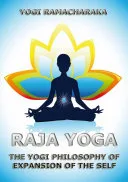
Raja Yoga
 71
71

Raja Yoga
Yogi Ramacharaka’s exposition on Raja Yoga offers a clear, if somewhat dated, presentation of the system’s core principles. The strength lies in its methodical breakdown of the eight limbs, providing a logical progression for understanding the path to Samadhi. However, the work occasionally veers into didacticism, presenting its concepts with an assuredness that might feel absolute to contemporary readers accustomed to more nuanced explorations of consciousness. The discussion on Pratyahara, the withdrawal of the senses, is particularly effective in illustrating the internal shift required, moving focus from external stimuli to inner awareness. While valuable as a historical document and a foundational text, its application requires careful contextualization within modern psychological and spiritual discourse. It remains a solid, if unadorned, guide to classical yogic mental discipline.
📝 Description
71
### What It Is Raja Yoga, often termed the "Royal Yoga" or "Classical Yoga," presents a systematic approach to spiritual self-realization and consciousness evolution that predates many modern yoga styles. It is distinguished by its emphasis on mental discipline and meditation as the primary tools for achieving higher states of awareness. This system aims to unify the mind, body, and spirit, offering a structured path for practitioners.
### Who It's For This work is intended for serious students of yoga and meditation seeking a foundational understanding of its philosophical underpinnings. It appeals to those interested in the mental and spiritual aspects of yoga rather than purely physical postures. Individuals looking to develop concentration, self-awareness, and control over their mental states will find value here.
### Historical Context The philosophy of Raja Yoga, systematized by Patanjali in his Yoga Sutras around 400 CE, represents one of the earliest comprehensive frameworks for yogic practice. It emerged within the broader landscape of Indian philosophical thought, influencing and being influenced by traditions like Samkhya and Vedanta. Its structured approach to mental control and ethical living provided a distinct path compared to more ascetic or devotional practices prevalent at the time.
### Key Concepts The core of Raja Yoga lies in the eight limbs (Ashtanga Yoga), which provide a progressive path from external observances to internal absorption. These limbs guide the practitioner from ethical conduct (Yamas and Niyamas) through physical control (Asana and Pranayama) to sensory withdrawal (Pratyahara), concentration (Dharana), meditation (Dhyana), and finally, profound absorption (Samadhi). The emphasis is on internal transformation through disciplined mental engagement.
💡 Why Read This Book?
• Gain a foundational understanding of the eight limbs of Raja Yoga as systematized by Patanjali, providing a structured framework for mental discipline and spiritual progress. • Learn the principles of Pratyahara, the withdrawal of the senses, a critical step in Raja Yoga for shifting awareness inward and developing concentration. • Understand the concept of Samadhi, the ultimate goal of Raja Yoga, as a state of profound absorption and self-realization, distinct from mere relaxation.
⭐ Reader Reviews
Honest opinions from readers who have explored this book.
❓ Frequently Asked Questions
What is the primary focus of Raja Yoga according to Yogi Ramacharaka?
The primary focus is the systematic development of the mind through meditation and mental discipline to achieve spiritual self-realization and consciousness evolution, as outlined in the eight limbs.
When was Raja Yoga first systematically developed?
Raja Yoga was first systematically developed around 400 CE, notably in Patanjali's Yoga Sutras, making it the oldest known comprehensive system of yoga.
How does Raja Yoga differ from modern physical yoga styles?
Raja Yoga emphasizes mental control, meditation, and ethical practices as the core path, with physical postures (Asana) and breath control (Pranayama) serving as preparatory steps rather than the primary focus.
What are the eight limbs of Raja Yoga?
The eight limbs are Yamas (ethical restraints), Niyamas (observances), Asana (posture), Pranayama (breath control), Pratyahara (sense withdrawal), Dharana (concentration), Dhyana (meditation), and Samadhi (absorption).
Is Yogi Ramacharaka's 'Raja Yoga' suitable for beginners?
Yes, it provides a foundational and systematic introduction to the principles of Raja Yoga, making it suitable for beginners interested in its philosophical and mental aspects.
What is the significance of 'Classical Yoga'?
'Classical Yoga' refers to Raja Yoga as the oldest systematically developed form of yoga, emphasizing a unified practice for spiritual evolution.
🔮 Key Themes & Symbolism
The Eight Limbs
The central framework of Raja Yoga, known as Ashtanga Yoga, is meticulously detailed. These eight stages—Yamas, Niyamas, Asana, Pranayama, Pratyahara, Dharana, Dhyana, and Samadhi—are presented not as separate practices but as sequential and interconnected steps guiding the practitioner toward inner mastery and spiritual enlightenment. The work emphasizes that true yogic progress stems from mastering the internal landscape through these progressive stages.
Mental Control and Concentration
A core tenet is the systematic cultivation of mental control. The text elaborates on Dharana (concentration) and Dhyana (meditation) as crucial practices for focusing the mind, reducing its inherent restlessness, and preparing it for higher states of consciousness. This focus on the mind's architecture and its potential for discipline is what earns Raja Yoga the moniker 'Mental Yoga'.
Spiritual Evolution and Self-Realization
The ultimate aim of Raja Yoga, as presented here, is spiritual self-realization and the purposeful evolution of consciousness. It posits that through disciplined practice of the eight limbs, individuals can transcend ordinary limitations, achieve a profound understanding of their true nature, and attain states of elevated awareness, culminating in Samadhi.
The 'Royal Path'
Referred to as the 'Royal Yoga' or 'Classical Yoga,' this system is presented as an inclusive and foundational approach that underlies many other forms of yoga. Its systematic and comprehensive nature suggests a direct and authoritative path ('royal') to spiritual attainment, integrating ethical living with profound inner exploration.
💬 Memorable Quotes
“The Royal Yoga is inclusive of all Yogas.”
— This statement highlights Raja Yoga's foundational and comprehensive nature, suggesting it serves as an overarching philosophy or framework that encompasses various yogic paths.
“Raja Yoga is the oldest system of yoga to be systematically developed.”
— This emphasizes the historical significance and structured methodology of Raja Yoga, positioning it as the primary classical source for yogic theory and practice.
“The Raja Yoga system emphasizes the benefits of meditation for spiritual self-realization.”
— This points to meditation as the central practice within Raja Yoga, directly linked to achieving ultimate spiritual goals and understanding one's true self.
“Raja Yoga is also referred to as the Mental Yoga.”
— This nickname underscores the system's primary focus on cultivating and controlling the mind as the principal means for spiritual advancement.
“The purposeful evolution of consciousness.”
— This phrase captures the dynamic aspect of Raja Yoga, suggesting a directed, intentional progression towards higher states of awareness and being.
🌙 Esoteric Significance
Tradition
Raja Yoga's lineage traces directly back to ancient Indian yogic philosophy, most notably Patanjali's Yoga Sutras. It fits within the broader spectrum of Indian spiritual traditions like Vedanta and Samkhya, from which it draws philosophical underpinnings. Esoterically, it represents a systematic path toward direct experience of the divine or ultimate reality through internal discipline, aligning with mystical traditions worldwide that emphasize inner transformation.
Symbolism
Key symbols include the 'eight limbs' (Ashtanga), representing a structured ascent. Asana (posture) symbolizes stability and comfort for meditation, while Pranayama (breath control) connects the vital life force (prana) to mental states. The ultimate goal, Samadhi, can be seen as a symbol of complete union or dissolution of the ego into a greater consciousness.
Modern Relevance
Contemporary mindfulness practices, secularized meditation techniques, and various schools of yoga (both physical and contemplative) owe a significant debt to the principles codified in Raja Yoga. Thinkers and practitioners exploring consciousness studies, cognitive science, and integrated approaches to well-being often draw upon its foundational concepts of mental discipline and awareness cultivation.
👥 Who Should Read This Book
• Students of classical Indian philosophy seeking a structured approach to meditation and mental discipline, moving beyond purely physical yoga practices. • Individuals interested in the historical development of yogic thought and its systematic presentation in texts like Patanjali's Yoga Sutras. • Seekers of spiritual self-realization who desire a practical, step-by-step method for cultivating inner peace, concentration, and higher consciousness.
📜 Historical Context
Yogi Ramacharaka’s work on Raja Yoga emerges from a period of intense interest in Eastern philosophies within the West, particularly in the late 19th and early 20th centuries. This era saw figures like Swami Vivekananda introducing Vedanta and Yoga to a global audience at the Parliament of Religions in Chicago in 1893. Ramacharaka, likely a pen name for William Walker Atkinson, operated within this milieu, translating complex Indian philosophical concepts for Western readers. Raja Yoga, systematized in Patanjali's Yoga Sutras around 400 CE, was presented as a distinct path from the burgeoning Theosophical movement and other esoteric traditions gaining traction. While not directly engaging with specific contemporaries in this text, the work contributed to a broader intellectual current that sought spiritual knowledge beyond conventional Western religious frameworks, making classical yogic philosophy accessible.
📔 Journal Prompts
The practice of Pratyahara: How can sensory withdrawal be cultivated in daily life?
Reflecting on the Yamas and Niyamas: Which ethical principle requires the most personal attention?
The nature of Dharana: How does focused attention differ from passive observation?
Understanding Samadhi: What does 'profound absorption' mean in your personal context?
The connection between Asana and Pranayama: How does breath influence physical stillness?
🗂️ Glossary
Raja Yoga
The 'Royal Yoga,' also known as 'Classical Yoga' or 'Mental Yoga,' emphasizing systematic meditation and mental discipline for spiritual realization.
Ashtanga Yoga
The eight-limbed path of Raja Yoga, providing a progressive framework for yogic practice and spiritual development.
Yamas
Ethical restraints or moral disciplines forming the first limb of Ashtanga Yoga, guiding conduct towards others.
Niyamas
Observances or self-disciplines forming the second limb, focusing on internal cultivation and personal conduct.
Asana
The third limb, typically translated as 'posture,' referring to a steady and comfortable physical position suitable for meditation.
Pranayama
The fourth limb, involving the regulation and control of breath, seen as a means to influence vital energy (prana) and the mind.
Pratyahara
The fifth limb, the withdrawal of the senses from external objects, turning awareness inward.
Dharana
The sixth limb, the practice of concentration, focusing the mind on a single point.
Dhyana
The seventh limb, meditation, characterized by a continuous flow of concentration.
Samadhi
The eighth and final limb, a state of profound absorption, enlightenment, or union with the object of meditation.