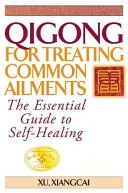
Qigong for Treating Common Ailments
 71
71

Qigong for Treating Common Ailments
Xiangcai Xu’s *Qigong for Treating Common Ailments* attempts a direct, practical application of Qigong principles to everyday health problems, a commendable goal. The strength lies in its systematic mapping of exercises to specific conditions, offering a clear if somewhat prescriptive path for practitioners. For instance, the detailed instruction for alleviating headaches through specific breathing and head movements provides actionable guidance. However, the text sometimes feels overly generalized in its diagnostic approach, attributing a wide range of symptoms to simple Qi imbalances without deeper energetic differentiation. The initial blurb’s promise of treating “so many ailments” is ambitious, and while the book offers tools, the efficacy will heavily depend on the practitioner's diligence and internal energetic sensitivity. It serves as a functional manual rather than a deep dive into Qigong philosophy. A solid, if unexceptional, resource for those seeking a structured approach to Qigong for symptom management.
📝 Description
71
### What It Is This volume presents Qigong, a traditional Chinese practice involving breathwork, meditation, and gentle movement, as a therapeutic modality for common health complaints. It moves beyond general wellness to target specific ailments, offering detailed guidance on how to apply Qigong techniques for relief and recovery. The book aims to demystify the application of Qigong for practical, everyday health concerns, positioning it as an accessible self-healing system.
### Who It's For Individuals seeking non-pharmacological approaches to manage everyday health issues will find this book particularly relevant. It caters to those interested in complementary and alternative medicine, particularly those drawn to Eastern healing arts. Patients experiencing chronic or recurring minor ailments, as well as their caregivers, can benefit from the accessible instruction. Those new to Qigong can use this as an entry point to understand its therapeutic potential.
### Historical Context Published in 2000, *Qigong for Treating Common Ailments* emerged during a period of growing global interest in Traditional Chinese Medicine (TCM) and its various practices. While Qigong has ancient roots, the late 20th and early 21st centuries saw increased Western academic and public engagement. This book contributes to that trend by offering a specific, ailment-focused application of Qigong, differentiating it from broader philosophical or martial arts interpretations of the practice. It arrived as Western medicine began to more seriously consider mind-body interventions.
### Key Concepts The core of the work lies in its systematic approach to linking specific Qigong exercises and energy cultivation techniques to particular health conditions. It emphasizes the concept of Qi (vital energy) and its flow within the body's meridians. Understanding how blockages or deficiencies in Qi manifest as illness is central. The book introduces various postures, breathing patterns, and visualizations designed to restore balance and promote healing, often drawing on principles of Yin and Yang and the Five Elements.
💡 Why Read This Book?
• Learn specific Qigong exercises and breathwork techniques directly linked to alleviating common ailments like headaches and digestive issues, as detailed in the book's practical sections. • Understand the fundamental TCM concept of Qi and meridian blockages as presented by Xiangcai Xu, enabling a new perspective on how physical symptoms arise. • Gain practical self-care methods rooted in a tradition explored in 2000, offering an alternative or complementary approach to managing everyday discomforts.
⭐ Reader Reviews
Honest opinions from readers who have explored this book.
❓ Frequently Asked Questions
What specific common ailments does *Qigong for Treating Common Ailments* address?
The book provides guidance for a range of common issues, including headaches, digestive problems, insomnia, and fatigue, by applying targeted Qigong exercises and energy cultivation methods.
Is this book suitable for absolute beginners to Qigong?
Yes, the book is designed for accessibility. It explains fundamental concepts and provides clear instructions for exercises, making it suitable for those new to Qigong who wish to learn its therapeutic applications.
What is the core philosophy behind using Qigong for health as presented by Xiangcai Xu?
The core philosophy centers on the concept of Qi, or vital energy, and its harmonious flow through the body's meridians. Imbalances in Qi are seen as the root of ailments, and Qigong practices aim to restore this balance for healing.
When was *Qigong for Treating Common Ailments* first published?
The book was first published in the year 2000, reflecting a period of increased interest in Eastern healing modalities in the West.
Does the book require special equipment or a teacher?
No special equipment is generally required, as Qigong primarily utilizes body movement, breath, and intention. While a teacher can enhance practice, the book aims to provide sufficient instruction for self-study.
How does this book differ from general Qigong practice books?
Unlike general guides, this book specifically targets the therapeutic application of Qigong for distinct ailments, offering a more focused and problem-solution oriented approach to the practice.
🔮 Key Themes & Symbolism
Qi and Meridian Theory
The book is built upon the foundational principles of Traditional Chinese Medicine, particularly the concept of Qi (vital energy) and its circulation through a network of meridians. It posits that illness arises from stagnation, deficiency, or imbalance in this vital flow. Specific Qigong exercises are presented as methods to directly influence Qi, clear blockages, and restore harmonic circulation, thereby addressing the root cause of common ailments rather than just symptoms.
Ailment-Specific Qigong Protocols
A central theme is the direct correlation between specific Qigong movements, breathing patterns, and meditative visualizations with particular health conditions. Unlike general wellness practices, this work meticulously outlines distinct Qigong sequences designed to target ailments such as digestive disturbances, insomnia, and headaches. The emphasis is on a practical, almost prescriptive, approach where precise application of technique leads to targeted energetic and physical relief.
Self-Directed Healing
The book champions the idea of accessible self-care through Qigong. It empowers readers to take an active role in their own well-being by providing them with the knowledge and tools to address minor health issues independently. This theme underscores the potential for Qigong to serve as a readily available, non-invasive, and empowering method for managing health outside of conventional medical settings.
Mind-Body Connection in Health
Underlying the entire text is the profound connection between the mind, body, and energy. The practices recommended involve focused intention and mindful execution, highlighting how mental states and energetic cultivation directly impact physical health. By engaging in these integrated practices, readers are encouraged to develop a deeper awareness of their internal landscape and its influence on their overall vitality and health.
💬 Memorable Quotes
“Ailments are often simple to treat once we have the proper knowledge.”
— This statement from the original blurb encapsulates the book's pragmatic approach. It suggests that many common health issues are not inherently complex or intractable, but rather require specific, accessible knowledge—in this case, Qigong techniques—to resolve effectively.
“The smooth flow of Qi is essential for health.”
— This paraphrased concept highlights a core tenet of Traditional Chinese Medicine and Qigong. It implies that disruptions to the body's vital energy flow are the primary cause of illness, and restoring this smooth circulation is paramount for recovery and maintaining well-being.
“Specific postures and breathing patterns address distinct imbalances.”
— This interpretation points to the book's structured methodology. It suggests that the author has identified particular Qigong exercises and breathing techniques that correspond directly to specific energetic disharmonies, offering a targeted approach to healing.
“Qigong offers a path to self-management of common health complaints.”
— This reflects the book's emphasis on empowering the individual. It positions Qigong not just as a practice, but as a practical system for taking personal responsibility for one's health and addressing everyday discomforts.
“The mind's focus directs the body's energy.”
— This highlights the psychosomatic aspect of Qigong. It suggests that conscious intention and focused mental states are integral to the effectiveness of the physical movements and breathing exercises, guiding the body's vital energy.
🌙 Esoteric Significance
Tradition
This work aligns with the Taoist and Buddhist traditions of China, which form the bedrock of Qigong philosophy. Within these traditions, Qigong is viewed as a method for cultivating vital energy (Qi) to achieve physical health, mental clarity, and spiritual development. Xiangcai Xu's approach, while practical and ailment-focused, adheres to the core esoteric principle of harmonizing internal energies with universal forces, viewing the body as a microcosm of the cosmos.
Symbolism
The primary 'symbol' is Qi itself—the invisible vital life force that permeates all things. Its flow through meridians represents the energetic circulatory system, analogous to the nervous or vascular systems but operating on a subtler plane. The specific postures and movements often subtly mimic natural forms (e.g., 'holding the tree') or energetic flows, acting as physical anchors for cultivating specific energetic qualities and intentions within the practitioner.
Modern Relevance
Contemporary practices in somatic therapy, mindfulness-based stress reduction (MBSR), and even some forms of physical therapy draw parallels with Qigong's emphasis on embodied awareness and gentle movement. Thinkers and practitioners exploring integrative medicine and holistic health often cite the principles of Qi cultivation and energy balancing as foundational. The book’s structured approach to ailment-specific exercises remains relevant for modern practitioners seeking accessible, self-administered tools for well-being.
👥 Who Should Read This Book
• Individuals seeking to supplement conventional medical treatments with natural, self-administered healing practices for common discomforts. • Students of Traditional Chinese Medicine or energetic healing modalities looking for practical applications of Qigong principles. • Anyone interested in exploring the mind-body connection through movement and breathwork for improved vitality and stress reduction.
📜 Historical Context
Published in 2000, *Qigong for Treating Common Ailments* arrived at a pivotal moment for the integration of Eastern practices into Western health discourse. The late 20th century saw a surge of interest in Traditional Chinese Medicine (TCM), spurred by figures like Dr. Andrew Weil and the growing acceptance of practices like acupuncture. This book tapped into that burgeoning curiosity by offering a practical, ailment-focused application of Qigong, a discipline often presented more broadly in terms of philosophy or martial arts. While Qigong's roots extend back millennia, its specific therapeutic protocols for common ailments were gaining traction as complementary therapies. The work emerged in an era where Western medicine was beginning to acknowledge the importance of mind-body connections, a concept central to Qigong. Its reception was likely within the growing community of alternative health practitioners and individuals seeking self-healing methods, contrasting with the more skeptical views prevalent in mainstream medical institutions at the time.
📔 Journal Prompts
The concept of Qi stagnation in relation to your personal experience.
Identifying specific Qigong postures mentioned and their potential energetic effects.
Reflecting on the original blurb's assertion about knowledge and treatment.
Your understanding of meridian blockages before and after reading.
How the mind's focus might direct energy in your daily life.
🗂️ Glossary
Qi (or Chi)
The fundamental concept of vital life force or energy in Traditional Chinese Medicine and Qigong. It is believed to animate all living things and circulate throughout the body, influencing physical and mental well-being.
Meridians
A network of pathways or channels within the body through which Qi is said to flow. These are distinct from the circulatory or nervous systems and are central to acupuncture and Qigong theory.
Dantian
Specific energy centers within the body, often located in the lower abdomen, chest, or head. They are considered reservoirs and centers for the cultivation and transformation of Qi.
Yin and Yang
The fundamental Taoist concept of complementary, interdependent, and opposing forces that govern the natural world. Health is seen as a balance between Yin (passive, cool, dark) and Yang (active, warm, light) aspects within the body.
Stagnation
A condition where Qi or blood flow is blocked or impeded within the meridians. This is often considered a primary cause of pain and illness in Traditional Chinese Medicine.
Breathing Techniques (Xi)
Specific methods of inhalation, exhalation, and breath retention used in Qigong to cultivate, direct, and harmonize Qi within the body. Different techniques serve different therapeutic purposes.
Postures (Shi)
The physical stances, movements, and forms practiced in Qigong. These are designed to open meridians, strengthen the body, and facilitate the circulation and accumulation of Qi.