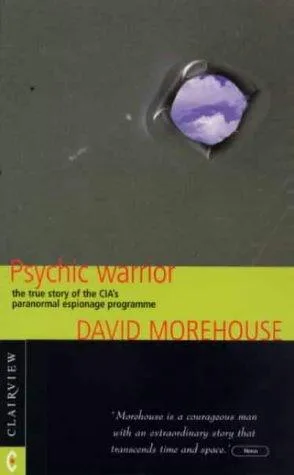
Psychic warrior
 72
72

Psychic warrior
David Morehouse's Psychic Warrior offers a gritty, insider's perspective on the military's exploration of remote viewing. Unlike many speculative works, Morehouse grounds his narrative in the procedural realities of classified projects, detailing specific training exercises and operational deployments. His account of the rigorous, almost scientific, approach taken by some of these programs is particularly striking. However, the narrative occasionally leans towards a somewhat uncritical presentation of the program's capabilities, sometimes lacking the analytical distance one might expect from a critical analysis. The descriptions of specific remote viewing sessions, while compelling, could benefit from more explicit discussion of potential interpretive biases or corroboration methods beyond anecdotal success. Nevertheless, the book provides a valuable, direct testimony from a participant in a unique chapter of Cold War-era unconventional research.
📝 Description
72
### What It Is Psychic Warrior, first published in 1997 by David Morehouse, presents a firsthand account of military remote viewing programs. It details the author's experiences within classified government projects aimed at developing and utilizing psychic abilities for intelligence gathering. The book offers insights into the training methodologies, operational procedures, and the perceived effectiveness of these programs.
### Who It's For This work is intended for individuals interested in the practical application of parapsychology, particularly within military or intelligence contexts. Readers curious about the history of classified psychic research, the potential of human consciousness, and the intersection of esoteric abilities with state-sponsored programs will find it compelling. It appeals to those who seek verifiable accounts beyond theoretical speculation.
### Historical Context Published in the late 1990s, Psychic Warrior emerged during a period of increased public awareness regarding government-funded psychic research, notably the Stargate Project. This era saw declassified documents and growing media interest in topics previously confined to the shadows of national security. The book taps into this burgeoning curiosity, offering a personal narrative against the backdrop of evolving government transparency on such sensitive subjects.
### Key Concepts The core concepts revolve around remote viewing, a psychic discipline described as the ability to perceive information about a distant or unseen target using extrasensory perception. The book explores the structured protocols used to train individuals in this skill, the challenges of maintaining operational security, and the ethical considerations surrounding the use of psychic abilities in intelligence work. It also touches upon the psychological impact on operatives.
💡 Why Read This Book?
• Learn about the operational protocols of military remote viewing, gaining insight into the structured training methods David Morehouse underwent, distinct from speculative psychic development. • Understand the historical context of government-sponsored psychic research in the late 20th century, specifically the Stargate Project, and its perceived role in intelligence gathering. • Explore the practical challenges and psychological demands faced by operatives in classified psychic programs, offering a grounded perspective on extraordinary human capabilities.
⭐ Reader Reviews
Honest opinions from readers who have explored this book.
❓ Frequently Asked Questions
What is remote viewing as described in David Morehouse's Psychic Warrior?
Remote viewing, according to Psychic Warrior, is a disciplined method of using extrasensory perception to gather information about a target that is spatially or temporally distant. It involves a structured protocol designed to access and record psychic impressions.
When was David Morehouse's Psychic Warrior first published?
Psychic Warrior by David Morehouse was first published in 1997, a period when interest in government psychic research was gaining public traction.
What was the Stargate Project mentioned in relation to Psychic Warrior?
The Stargate Project was the codename for a series of U.S. government-funded research programs investigating the potential of psychic phenomena, including remote viewing, for intelligence purposes. Morehouse's book offers a participant's view of such initiatives.
Does Psychic Warrior offer training instructions for remote viewing?
While Psychic Warrior describes the training methodologies used in military programs, it primarily serves as an account of experiences rather than a direct instructional manual for readers to learn remote viewing.
What kind of 'psychic abilities' does the book focus on?
The book predominantly focuses on 'remote viewing,' a specific extrasensory perception ability described as the capacity to perceive information about a distant or unseen target through non-physical means.
Is the information in Psychic Warrior considered classified?
The book details experiences from programs that were once classified. Its publication in 1997 contributed to the declassification and public discussion of these once-secret government initiatives.
🔮 Key Themes & Symbolism
Military Remote Viewing
The book's central theme is the practical application of remote viewing within a military intelligence framework. Morehouse details the rigorous training protocols and operational procedures employed by classified programs, aiming to harness psychic abilities for espionage and information gathering. It explores the structured environment designed to elicit and record psychic perceptions, moving beyond speculative notions of psychic powers to a disciplined, if controversial, methodology.
Classified Programs and Secrecy
A significant aspect of Psychic Warrior is its exploration of government secrecy surrounding psychic research. Morehouse recounts the challenges of operating within highly classified environments, where operational security was paramount. The narrative highlights the efforts made to conceal these programs and the eventual declassification that allowed for public accounts like his to emerge.
Consciousness and Perception
The work delves into the nature of consciousness and perception beyond conventional sensory input. By detailing his experiences with remote viewing, Morehouse offers a personal testimony to the potential for the human mind to access information independent of physical proximity or known communication channels. This challenges standard paradigms of cognition and awareness.
Personal Experience and Training
Morehouse provides a detailed personal account of his journey as a 'psychic warrior.' The book emphasizes the intensive training regimen he underwent, outlining specific exercises and techniques designed to develop and control his remote viewing abilities. This focus on personal development within a structured, often demanding, system is crucial to the narrative.
💬 Memorable Quotes
“The training was intense, demanding, and unlike anything I had experienced before.”
— This statement encapsulates the author's experience of the rigorous and unconventional nature of the psychic training he received. It suggests a departure from standard education or military drills, highlighting the unique demands of developing psychic abilities within a structured program.
“We were taught to perceive beyond the veil of normal sight.”
— This phrase points to the core objective of remote viewing as presented in the book: to access information that is not available through ordinary sensory channels. It suggests a deliberate process of expanding consciousness to perceive hidden or distant realities.
“Operational security was paramount; the success of the mission depended on our discretion.”
— This highlights the critical importance of secrecy and control within the classified programs described. It underscores the perceived value of psychic intelligence and the lengths taken to protect its source and methods from adversaries and unauthorized disclosure.
“The line between the ordinary and the extraordinary blurred with each successful session.”
— This reflects the transformative effect of consistent psychic training and operational success on the individual's perception of reality. It suggests that the repeated experience of 'anomalous' perception gradually normalized the extraordinary within the operative's worldview.
“Doubt was an obstacle we were trained to overcome.”
— This emphasizes the psychological conditioning involved in military psychic programs. It indicates that self-doubt or skepticism towards one's own abilities was seen as a hindrance to effective performance, and specific methods were employed to address and mitigate it.
🌙 Esoteric Significance
Tradition
While not strictly adhering to a single esoteric lineage, Psychic Warrior engages with themes common in Western esoteric traditions concerning the untapped potential of human consciousness and perception. It echoes concepts found in Hermeticism regarding the principle of 'As Above, So Below,' suggesting a connection between internal states and external realities, albeit framed within a military intelligence context rather than a spiritual quest.
Symbolism
The primary symbolic motif is the 'veil' separating ordinary perception from psychic insight. This veil represents the boundary between the known and the unknown, the physical and the non-physical. Overcoming or 'piercing' this veil is symbolic of achieving a higher state of awareness or accessing hidden information, a concept resonant with initiatory symbolism across various esoteric paths.
Modern Relevance
Morehouse's work continues to influence contemporary discussions on consciousness studies, non-local awareness, and the potential integration of psychic abilities into fields requiring information gathering. It serves as a reference point for those exploring the practical, applied aspects of psi phenomena, bridging the gap between esoteric concepts and empirical investigation, and inspiring modern practitioners interested in applied remote viewing.
👥 Who Should Read This Book
• Individuals interested in the history of classified U.S. government research into psychic phenomena, particularly the Stargate Project. • Readers seeking firsthand accounts of military applications of consciousness and extrasensory perception, moving beyond theoretical discussions. • Skeptics and proponents of parapsychology interested in detailed narratives of alleged psychic operations and their perceived effectiveness.
📜 Historical Context
Psychic Warrior emerged in 1997, a period marked by increasing public disclosure of once-secret government projects related to parapsychology. The US government's Stargate Project, which explored remote viewing for intelligence purposes from the 1970s to 1995, had recently been declassified. This context allowed books like Morehouse's to gain traction, offering firsthand accounts that contrasted with earlier, more speculative or theoretical works on psychic phenomena. At the time, fields like parapsychology were still often viewed with skepticism by mainstream science, yet books detailing alleged government involvement tapped into a growing public fascination with the paranormal and its potential applications. While figures like J.Z. Knight were also prominent in promoting psychic awareness, Morehouse's narrative focused specifically on the disciplined, operational aspect within a military setting, differentiating it from New Age or spiritual interpretations.
📔 Journal Prompts
The concept of 'operational security' in psychic programs: how might it mirror or diverge from security needs in other high-stakes fields?
Perceiving beyond the veil: what personal 'veils' of perception might limit your own understanding, and how could they be addressed?
The psychological impact of disciplined psychic training: reflect on how structured practice can alter one's fundamental beliefs about reality.
David Morehouse's account of overcoming doubt: identify a personal instance where doubt hindered progress and the steps taken to move past it.
The Stargate Project's legacy: consider the ethical implications of using psychic abilities for intelligence gathering, as detailed in the book.
🗂️ Glossary
Remote Viewing
A specific parapsychological discipline described in the book, involving the use of extrasensory perception to gather information about a distant or unseen target using a structured protocol.
Stargate Project
The codename for a series of U.S. government-funded research programs (1970s-1995) that investigated the potential of psychic phenomena, including remote viewing, for intelligence gathering purposes.
Operational Security (OPSEC)
The process of identifying critical information and systems and implementing measures to protect them from adversaries, a crucial aspect in the classified programs described.
PSI
A general term used in parapsychology to refer to psychic or extrasensory abilities, such as telepathy, clairvoyance, and precognition, which are not explained by conventional physics.
Target
In the context of remote viewing, the specific person, place, object, or event that the viewer is attempting to perceive information about.
Protocols
The established procedures and rules followed during remote viewing sessions to ensure consistency, reliability, and the ability to differentiate genuine psychic impressions from imagination.
Analytic Overlay (AO)
A term used in remote viewing to describe the process of the viewer's analytical mind interpreting or adding information to the raw psychic data received, potentially leading to inaccuracies.