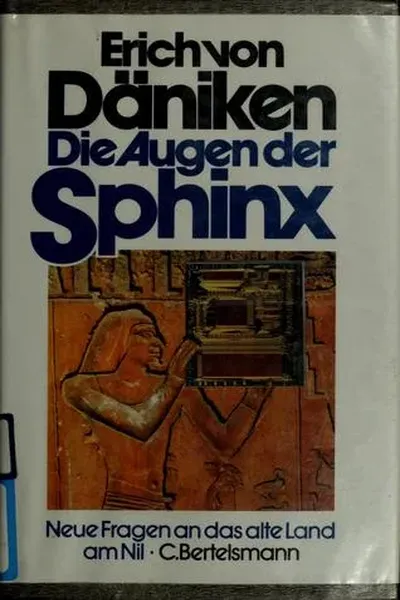
Prophet der Vergangenheit

 74
74

Prophet der Vergangenheit
Erich von Däniken’s "Prophet der Vergangenheit" continues his persistent, if sometimes strained, argument for extraterrestrial influence on ancient Earth. The book revisits familiar territory, sifting through ancient texts and archaeological anomalies with a singular focus. Von Däniken’s strength lies in his ability to present complex, often obscure, historical and mythological data in an accessible, albeit speculative, manner. He effectively highlights genuine puzzles in our understanding of antiquity, such as the precise construction methods for certain megalithic sites. However, the work’s primary limitation is its interpretive framework, which often feels predetermined. The evidence is consistently marshaled to fit the ancient astronaut hypothesis, with alternative explanations frequently dismissed without thorough consideration. A notable instance is his interpretation of certain biblical passages as direct accounts of advanced technology. While provocative, this approach risks oversimplification. "Prophet der Vergangenheit" remains a readable, if highly debatable, contribution to speculative history.
📝 Description
74
### What It Is Erich von Däniken's "Prophet der Vergangenheit," first published in 1979, presents a continuation of his controversial theories regarding ancient astronaut visitation. The work examines archaeological finds, mythological narratives, and historical records, positing that extraterrestrial beings influenced early human civilizations. Von Däniken challenges conventional historical and religious interpretations, suggesting that many monumental constructions and advanced knowledge systems of antiquity were not solely human achievements.
### Who It's For This book is intended for readers interested in alternative histories and the possibility of ancient alien intervention. It appeals to those who question established narratives and are drawn to speculative interpretations of human origins and ancient cultures. Individuals intrigued by the intersection of archaeology, mythology, and ufology will find "Prophet der Vergangenheit" a compelling read, particularly if they are already familiar with or curious about von Däniken's prior works and the broader ancient astronaut theory.
### Historical Context "Prophet der Vergangenheit" emerged during a period of heightened interest in ufology and alternative explanations for ancient mysteries. Published in 1979, it followed the success of von Däniken's earlier books like "Chariots of the Gods?" (1968), which had already ignited widespread debate. This era saw a growing counter-culture fascination with esoteric ideas and a questioning of scientific and religious orthodoxy. Von Däniken's work was often discussed alongside the burgeoning New Age movement and the ongoing exploration of paranormal phenomena, positioning him as a prominent, albeit divisive, voice in popularizing these concepts.
### Key Concepts The central thesis of "Prophet der Vergangenheit" is the "ancient astronaut theory," which posits that extraterrestrial visitors interacted with early humans, shaping their development. Von Däniken explores alleged evidence such as advanced technological artifacts found in ancient sites, interpreted religious texts as descriptions of spacecraft, and the construction of megalithic structures that seem beyond the capabilities of ancient tools. He frequently cites specific archaeological sites and ancient myths as support for his claims, seeking to demonstrate a pattern of alien influence across diverse global cultures.
💡 Why Read This Book?
• Gain an introduction to specific archaeological anomalies von Däniken uses to support his ancient astronaut theory, such as the precise construction of megalithic structures mentioned in the text. • Understand the core arguments of the ancient astronaut hypothesis as presented by its most prominent proponent, exploring his interpretation of mythological narratives from the book's era. • Examine how Erich von Däniken connects disparate ancient texts and artifacts to a singular theory of extraterrestrial influence, as detailed across the book's chapters.
⭐ Reader Reviews
Honest opinions from readers who have explored this book.
❓ Frequently Asked Questions
When was Erich von Däniken's "Prophet der Vergangenheit" first published?
"Prophet der Vergangenheit" by Erich von Däniken was first published in 1979, continuing his exploration of ancient astronaut theories.
What is the central theme of "Prophet der Vergangenheit"?
The book's central theme is the ancient astronaut theory, proposing that extraterrestrial beings influenced early human civilizations and their development.
What kind of evidence does von Däniken present in this book?
Von Däniken presents interpretations of archaeological finds, ancient myths, religious texts, and historical records to support his claims of alien visitation.
How does "Prophet der Vergangenheit" relate to von Däniken's earlier works?
It builds upon and expands the theories introduced in his earlier, highly successful books like "Chariots of the Gods?", offering further examples and analysis.
Is "Prophet der Vergangenheit" considered academic history?
No, the book is widely considered speculative and is not accepted as academic history by mainstream archaeologists and historians due to its interpretive methods.
What are some specific examples von Däniken discusses?
The book discusses various ancient sites and texts, often focusing on megalithic constructions and religious narratives that he interprets as evidence of advanced, non-human intervention.
🔮 Key Themes & Symbolism
Ancient Astronaut Hypothesis
The core of "Prophet der Vergangenheit" is the enduring argument that Earth was visited by extraterrestrial beings in antiquity. Von Däniken posits that these visitors, or 'ancient astronauts,' played a significant role in shaping human civilization, technology, and religion. He scrutinizes ancient texts, myths, and artifacts, reinterpreting them as evidence of alien interaction, suggesting that humanity's perceived leaps in knowledge and construction were facilitated by these advanced beings. The book meticulously details instances where he believes this extraterrestrial influence is evident, challenging conventional historical timelines and origins of human development.
Reinterpretation of Mythology and Religion
Von Däniken argues that many ancient myths and religious stories are not symbolic allegories but literal accounts of encounters with technologically advanced beings from other worlds. In "Prophet der Vergangenheit," he dissects narratives from various cultures, including biblical stories, to find parallels with space travel and alien technology. He suggests that divine figures and miraculous events described in these ancient texts can be understood as misunderstandings or misinterpretations of advanced alien visitors and their spacecraft, offering a radical new perspective on foundational spiritual beliefs.
Archaeological Anomalies as Evidence
A significant portion of the book is dedicated to examining archaeological discoveries that von Däniken believes cannot be adequately explained by conventional historical understanding. This includes the construction of massive megalithic structures, the precision of ancient engineering feats, and the existence of artifacts that appear technologically incongruous with their time periods. He presents these anomalies in "Prophet der Vergangenheit" as compelling, albeit controversial, proof that ancient humans possessed knowledge or received assistance beyond their known capabilities, often pointing to extraterrestrial intervention as the most plausible explanation.
Critique of Conventional History
Von Däniken consistently challenges the established paradigms of archaeology, anthropology, and history in "Prophet der Vergangenheit." He criticizes mainstream academia for what he perceives as a reluctance to consider unconventional theories and for adhering too rigidly to established narratives. By presenting his interpretations of ancient evidence, he aims to provoke a re-evaluation of human history, urging readers and scholars alike to question accepted timelines and origins. His work functions as a critique of historical determinism, proposing that external factors, specifically alien visitation, were crucial to humanity's trajectory.
💬 Memorable Quotes
“The gods descended from the heavens in fiery chariots.”
— This paraphrased concept captures von Däniken's interpretation of ancient religious texts, suggesting that descriptions of deities arriving from the sky in powerful vehicles are actually accounts of alien spacecraft.
“Ancient peoples possessed knowledge beyond their time.”
— This interpretation highlights von Däniken's central argument that ancient civilizations demonstrated technological or scientific understanding that seems impossible without external assistance, implying extraterrestrial influence.
“Earth's history is marked by visits from other worlds.”
— This paraphrased concept encapsulates the core tenet of the ancient astronaut theory as presented by von Däniken, suggesting a recurring pattern of extraterrestrial interaction throughout human history.
“Archaeological evidence points to non-human intervention.”
— This interpretation reflects von Däniken's method of analyzing artifacts and structures, arguing that their complexity and sophistication suggest they were created or influenced by beings with advanced capabilities.
“The Bible describes technological marvels.”
— This paraphrased concept represents von Däniken's approach to religious texts, where he interprets divine interventions and miraculous events as literal descriptions of advanced technology and alien encounters.
🌙 Esoteric Significance
Tradition
Von Däniken's work, while not strictly adhering to a single esoteric lineage, draws heavily from the speculative and syncretic currents that gained prominence with Theosophy in the late 19th and early 20th centuries. Theosophy, founded by Helena Blavatsky, proposed ancient, advanced root races and cosmic influences on Earth, providing a conceptual precursor for the ancient astronaut theory. "Prophet der Vergangenheit" taps into this tradition of reinterpreting ancient history through a lens of hidden knowledge and non-terrestrial intervention, though it shifts the focus from spiritual evolution to technological visitation.
Symbolism
A key symbol von Däniken frequently employs is the 'sky-god' or 'feathered serpent' motif found in various ancient cultures (e.g., Quetzalcoatl, Egyptian deities). He interprets these figures not as mythological beings but as representations of alien visitors, often depicted with helmets or suits. Another recurring motif is the depiction of ancient artifacts or structures (like the Nazca Lines or Egyptian pyramids) as evidence of advanced technology, where the sheer scale and precision are seen as symbolic of extraterrestrial capabilities, transcending human limitations of the era.
Modern Relevance
The concepts presented in "Prophet der Vergangenheit" continue to influence contemporary popular culture and niche academic discussions. Modern ufologists, proponents of ancient astronaut theories, and certain fringe archaeological groups still cite von Däniken's work as foundational. His ideas have seeped into science fiction, documentaries, and online communities dedicated to exploring extraterrestrial life and alternative histories, demonstrating a persistent interest in questioning conventional origins and the possibility of ancient alien contact.
👥 Who Should Read This Book
• Skeptics of conventional history looking for alternative interpretations of ancient civilizations and myths, particularly those interested in the ancient astronaut hypothesis. • Enthusiasts of ufology and speculative science fiction who enjoy exploring theories about extraterrestrial contact and its potential impact on human development. • Readers curious about archaeological puzzles and ancient mysteries, seeking a perspective that posits non-human intelligence as a factor in humanity's past.
📜 Historical Context
Published in 1979, "Prophet der Vergangenheit" emerged in an era where ufology and alternative history were gaining significant popular traction. The preceding decade had seen the publication of Erich von Däniken's highly influential "Chariots of the Gods?" (1968), which had already ignited global debate and brought the ancient astronaut theory into the mainstream. This period was characterized by a growing public fascination with the unknown, fueled by the space race, Cold War anxieties, and a burgeoning New Age movement that encouraged questioning established scientific and religious orthodoxies. Von Däniken's work was often discussed alongside speculative theories from authors like Zecharia Sitchin, who was also interpreting ancient texts through an extraterrestrial lens. While mainstream academia largely dismissed these theories, they resonated with a public eager for explanations beyond conventional narratives, making von Däniken a prominent, albeit controversial, figure in popular esotericism.
📔 Journal Prompts
The interpretation of ancient texts as alien encounter logs.
Archaeological anomalies suggesting advanced technology.
Re-evaluating mythological figures as extraterrestrial visitors.
The potential influence of 'Prophet der Vergangenheit' on modern speculative thought.
Connecting ancient symbols to alleged spacecraft designs.
🗂️ Glossary
Ancient Astronaut Theory
The hypothesis that extraterrestrial beings visited Earth in antiquity and influenced human culture, technology, and religion, as popularized by Erich von Däniken.
Megalithic Structures
Large stone constructions built in ancient times, such as Stonehenge or the Egyptian pyramids, whose construction methods are sometimes debated and cited as evidence by proponents of ancient astronaut theories.
Archaeological Anomalies
Artifacts, sites, or discoveries that challenge conventional historical or scientific understanding, often interpreted by alternative theorists as evidence of advanced technology or non-human intervention.
Mythological Reinterpretation
The practice of analyzing ancient myths and religious stories not as symbolic narratives but as literal accounts of historical events, often involving advanced beings or technologies.
Paleocontact Hypothesis
A term referring to the theory that extraterrestrials made contact with humans in prehistoric or ancient times, a core concept within the broader ancient astronaut framework.
Esoteric Interpretation
An approach to understanding texts, symbols, or events that goes beyond literal or conventional meanings, seeking hidden or symbolic significance, often relating to spiritual or mystical knowledge.
Extraterrestrial Influence
The concept that beings from outside Earth have had a direct or indirect impact on the development of human civilization, technology, or understanding.