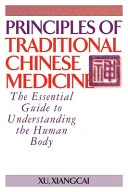
Principles of Traditional Chinese Medicine
 73
73

Principles of Traditional Chinese Medicine
Xiangcai Xu’s *Principles of Traditional Chinese Medicine* presents a lucid exposition of a health paradigm that has guided millions for centuries. The book excels in articulating the holistic ethos of TCM, moving beyond a symptom-focused approach to investigate the interconnectedness of the body, mind, and environment. Xu’s explanation of Qi as vital energy and its flow through meridians provides a crucial conceptual bridge for Western readers. A notable strength is the clear breakdown of diagnostic techniques, such as pulse-taking and tongue observation, which are essential to the TCM clinical process. However, the work could benefit from more extensive case studies to illustrate the application of these principles in complex clinical scenarios. The book’s initial publication in 2001 means some of the contemporary research and integration with Western medicine discussed in newer texts are less prominent here. Nevertheless, it remains a solid foundation for understanding TCM's philosophical underpinnings.
📝 Description
73
### What It Is Principles of Traditional Chinese Medicine offers a systematic introduction to a health philosophy rooted in millennia of clinical observation. It posits health not merely as the absence of disease, but as a dynamic state of balance within the individual and their environment. The work details how TCM views the body as an interconnected system where energy (Qi), blood, and bodily fluids interact, and imbalances in these can manifest as illness. It emphasizes understanding the root cause of ailments rather than solely treating symptoms.
### Who It's For This book is for individuals seeking a deeper understanding of holistic health practices beyond Western biomedical models. It caters to students of comparative medicine, practitioners of complementary therapies, and anyone interested in ancient healing arts that view the human being as an integrated whole. Those curious about how environmental factors and lifestyle influence well-being will find this text particularly relevant.
### Historical Context Traditional Chinese Medicine's principles have evolved over thousands of years, with foundational texts like the *Huangdi Neijing* (Yellow Emperor's Inner Canon) dating back to the Warring States period (475–221 BCE). This system developed independently of Western medical traditions, focusing on concepts like Yin and Yang, the Five Elements, and the meridian system. Its formalization and dissemination in the West gained momentum throughout the 20th century, allowing for cross-cultural exchange and integration with other healing modalities.
### Key Concepts The text explores the core tenets of TCM, including the vital energy known as Qi, its circulation through meridians, and the balance of Yin and Yang as fundamental to health. It details diagnostic methods such as pulse and tongue examination and outlines therapeutic approaches like acupuncture, herbal medicine, and dietary therapy. The interconnectedness of the body's organs and their correspondence with natural phenomena are also central themes, providing a comprehensive framework for understanding health and disease.
💡 Why Read This Book?
• Gain a foundational understanding of Qi, the vital life force central to TCM, and learn how its flow through meridians impacts health, a concept first systematically explored in ancient Chinese medical texts. • Grasp the diagnostic principles of TCM, such as observing the tongue and pulse, as detailed in the work, offering insights distinct from Western medical assessments. • Understand the Five Elements theory, a key framework in TCM, and how it relates the body's organs to natural phenomena, providing a unique lens for analyzing health imbalances.
⭐ Reader Reviews
Honest opinions from readers who have explored this book.
❓ Frequently Asked Questions
What is the primary focus of Traditional Chinese Medicine as explained in this book?
The book explains TCM as a holistic system that views health as a balance of vital energy (Qi) within the body and its environment, emphasizing the treatment of root causes of illness rather than just symptoms.
Who is Xiangcai Xu, the author of Principles of Traditional Chinese Medicine?
Xiangcai Xu is the author of *Principles of Traditional Chinese Medicine*, first published in 2001, aiming to introduce the foundational concepts of this ancient healing system to a broader audience.
What are some core concepts of TCM presented in the book?
The book covers fundamental TCM concepts like Qi, Yin and Yang, the Five Elements, and the meridian system, explaining their roles in maintaining health and causing disease.
How does TCM, as described in the book, differ from Western medicine?
TCM, as presented, focuses on the interconnectedness of the entire being and its environment, seeking root imbalances, whereas Western medicine often addresses specific symptoms or diseases with targeted treatments.
What diagnostic methods are discussed in Principles of Traditional Chinese Medicine?
The book details traditional TCM diagnostic methods, including detailed observation of the tongue and palpation of the pulse, to assess a patient's internal state and energy flow.
When was Principles of Traditional Chinese Medicine first published?
Principles of Traditional Chinese Medicine by Xiangcai Xu was first published in 2001, providing an introduction to the subject at the turn of the millennium.
🔮 Key Themes & Symbolism
Qi and Meridians
The text elaborates on Qi, the fundamental vital energy in TCM, and its indispensable role in maintaining life and health. It details how Qi circulates throughout the body via a network of pathways known as meridians. Blockages or deficiencies in this flow are presented as the primary cause of illness, forming the basis for diagnosis and treatment strategies like acupuncture and acupressure.
Yin and Yang Balance
Central to TCM philosophy, the concept of Yin and Yang duality is thoroughly explained. The book illustrates how health is achieved and maintained through the dynamic equilibrium of these opposing yet complementary forces. Imbalances, such as an excess of Yang or a deficiency of Yin, are depicted as leading to specific patterns of disharmony and disease, requiring interventions to restore equilibrium.
The Five Elements Theory
This section explores the intricate relationships within the Five Elements (Wood, Fire, Earth, Metal, Water) and their correspondences with organs, seasons, emotions, and tastes. The work demonstrates how this theory provides a comprehensive framework for understanding the systemic nature of health and disease, offering a method to predict interactions and treat complex conditions by addressing elemental imbalances.
Holistic Diagnosis and Treatment
The book emphasizes TCM's integrated approach to diagnosis, which includes careful observation of the tongue, listening to the voice, smelling, and palpating the pulse. Treatment modalities such as acupuncture, herbal medicine, and dietary adjustments are presented not as isolated interventions but as tools to address the whole person and restore the body's natural harmony, aligning with its ancient clinical experience.
💬 Memorable Quotes
“The root of a disease must be found, and that a patient must be treated according to their whole being as well as their surrounding natural conditions.”
— This statement encapsulates the core tenet of TCM: addressing underlying causes and considering the individual's complete physical, mental, and environmental context, rather than just superficial symptoms.
“Traditional Chinese Medicine is a unique, comprehensive, and scientific system.”
— This assertion highlights the author's view of TCM as a sophisticated and evidence-based practice, built upon thousands of years of clinical observation and theoretical development, deserving of serious study.
“Viewing the human as a single, integrated entity that relates with its environment.”
— This phrase underscores TCM's non-reductive perspective, emphasizing the profound connection between an individual's internal state and their external world, a key differentiator from many other medical systems.
“Wisdom from the East... for Living in the West.”
— This phrase positions TCM not merely as an ancient practice but as relevant and applicable knowledge for contemporary Western lifestyles, suggesting a practical integration of Eastern healing principles.
“Based on several thousand years of real clinical experience.”
— This emphasizes the empirical foundation of TCM, grounding its practices in a vast history of practical application and refinement, lending credibility to its methods and theories.
🌙 Esoteric Significance
Tradition
While not strictly aligned with a single Western esoteric lineage like Hermeticism or Kabbalah, TCM shares foundational principles with Taoist philosophy, particularly its emphasis on balance, natural flow (the Tao), and the interconnectedness of all phenomena. Its focus on cultivating vital energy (Qi) and harmonizing internal forces with external universal energies places it within a broad category of ancient wisdom traditions concerned with cosmic and human correspondence.
Symbolism
Key symbols in TCM include the Yin-Yang diagram, representing the duality and interdependence of all things, and the Five Elements (Wu Xing), which symbolize the cyclical processes of creation and destruction inherent in the universe and the human body. These elements (Wood, Fire, Earth, Metal, Water) are not mere representations but active forces whose balance or imbalance dictates health and disease.
Modern Relevance
Contemporary thinkers and practitioners in fields ranging from integrative medicine and functional wellness to mindfulness and somatic psychology often draw upon TCM concepts. Its holistic framework offers a valuable counterpoint to hyper-specialized Western medicine, informing practices that emphasize lifestyle, diet, and stress management as integral components of well-being, resonating with a growing global awareness of interconnected health.
👥 Who Should Read This Book
['• Students of Eastern philosophies and comparative religion: To understand a major system of thought that views the human being as an energetic and environmental whole, distinct from Western dualistic traditions.', '• Aspiring or practicing acupuncturists and herbalists: To gain a solid grounding in the theoretical underpinnings and diagnostic principles that inform TCM therapies, complementing practical training.', '• Health-conscious individuals seeking alternative perspectives: To explore a comprehensive system of health maintenance and disease prevention rooted in thousands of years of empirical observation and holistic principles.']
📜 Historical Context
Published in 2001, Xiangcai Xu’s *Principles of Traditional Chinese Medicine* arrived at a time when interest in complementary and alternative medicine (CAM) was rapidly growing in the West. TCM, with its roots stretching back over two millennia to texts like the *Huangdi Neijing* (Yellow Emperor's Inner Canon), represented a significant intellectual current distinct from the increasingly reductionist approach of Western biomedicine that dominated the 20th century. While figures like Dr. Andrew Weil were popularizing holistic approaches, TCM offered a particularly complex and systematic framework. Its reception in the West has been a gradual process, moving from curiosity to integration in some healthcare settings, though often facing challenges in scientific validation within Western paradigms. The early 2000s marked a period of increased academic study and clinical research into TCM's efficacy and mechanisms.
📔 Journal Prompts
The concept of Qi as vital energy, its flow, and potential blockages.
The interplay of Yin and Yang in maintaining personal equilibrium.
How the Five Elements manifest in your own physical and emotional states.
Reflect on a time when your surrounding environment influenced your well-being.
The importance of holistic diagnosis, considering the whole being.
🗂️ Glossary
Qi (Chi)
The fundamental vital life force or energy that flows through all living things, essential for health and maintaining bodily functions in Traditional Chinese Medicine.
Meridians
A network of pathways or channels throughout the body through which Qi circulates, connecting different organs and tissues and forming the basis for acupuncture points.
Yin and Yang
Two complementary and opposing forces that represent fundamental dualities in nature and the body. Their balance is crucial for health, with Yin associated with coolness, stillness, and substance, and Yang with heat, activity, and function.
Five Elements (Wu Xing)
A traditional Chinese cosmological model that explains the interactions and relationships between various phenomena by assigning them to five core elements: Wood, Fire, Earth, Metal, and Water.
Holistic
An approach that considers the entire system or person, emphasizing the interconnectedness of mind, body, spirit, and environment, rather than focusing on isolated parts or symptoms.
Diagnosis
In TCM, a process involving observation (tongue, complexion), listening (voice, breathing), questioning, and palpation (pulse) to identify patterns of imbalance and determine the root cause of illness.
Acupuncture
A therapeutic technique involving the insertion of fine needles into specific points on the body to regulate the flow of Qi and restore balance, thereby treating various conditions.