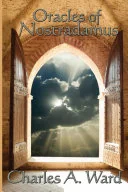
Oracles of Nostradamus
 80
80

Oracles of Nostradamus
Charles A. Ward’s "Oracles of Nostradamus" offers a welcome departure from the sensationalist compilations often found concerning the 16th-century seer. Ward situates the prophecies within a more academic framework, scrutinizing the interpretive history rather than simply presenting the quatrains as definitive predictions. A notable strength is his methodical deconstruction of how specific quatrains have been retroactively applied to historical events, revealing more about the interpreters than the prophet. However, the text occasionally treads a fine line between critical analysis and dry academic exposition, which may test the patience of readers seeking more direct engagement with the mystical elements. The chapter discussing the "Century" structure of the prophecies, while informative, could benefit from more explicit connections to the esoteric traditions Nostradamus himself likely drew upon. Ultimately, Ward provides a valuable, if occasionally dense, critical companion to the enduring enigma of Nostradamus.
📝 Description
80
Charles A. Ward's 2007 book examines the prophecies of Michel de Nostredame.
Oracles of Nostradamus by Charles A. Ward goes beyond a simple listing of Michel de Nostredame's prophecies. Published in 2007, the book analyzes the structure and interpretation of Nostradamus's quatrains. Ward scrutinizes how these predictions have been understood and applied through history, offering a critical look at the phenomenon of predictive literature. The work appeals to readers interested in a serious study of esotericism and historical prophecy. It is for those who want a deeper engagement with Nostradamus's writings and their reception, rather than a surface-level reading. Researchers of Western esotericism, historical forecasting, and the cultural impact of prophecy will find this book valuable.
The book addresses cryptographic prophecy, discussing how Nostradamus used ambiguous language and anagrams. It looks at historical interpretations where events, from Napoleon's rise to World War II, were linked to specific verses. The study also considers the astrological data often connected to Nostradamus's predictions and the ongoing discussions about the authenticity and intent behind his prophetic writings. Ward's 2007 publication situates itself within the long history of Nostradamus studies, which gained momentum in the 19th and 20th centuries.
Nostradamus studies hold a particular place within Western esotericism, a tradition that has long sought hidden knowledge and future insights. The fascination with Nostradamus's quatrains, first published in the mid-16th century, intensified in the 19th and 20th centuries, often alongside movements like spiritualism and occultism. Figures like Eliphas Lévi engaged with prophetic traditions, and interest in predicting future events surged after World War I. Ward's work engages with this history, offering a modern, analytical perspective on the enduring appeal of these cryptic verses and the methods used to decipher them.
💡 Why Read This Book?
• Gain a critical understanding of how Nostradamus's quatrains have been interpreted and reinterpreted across centuries, particularly focusing on the post-World War I era's fascination with prophecy. • Learn about the specific challenges in deciphering Nostradamus's cryptic language and astrological references, moving beyond simplistic readings of his verses. • Understand the historical reception and academic discourse surrounding Nostradamus's work, including the scholarly debates that emerged since its original publication in 1555.
⭐ Reader Reviews
Honest opinions from readers who have explored this book.
❓ Frequently Asked Questions
When was Oracles of Nostradamus first published?
The book 'Oracles of Nostradamus' by Charles A. Ward was first published in 2007, offering a modern critical analysis of the prophecies.
What is the primary focus of Charles A. Ward's analysis?
Ward focuses on the historical interpretation and cultural impact of Nostradamus's quatrains, rather than presenting them as factual predictions.
Does the book offer new prophecies from Nostradamus?
No, the book primarily analyzes existing prophecies and their historical context, not presenting new or unverified predictions.
Is this book suitable for beginners interested in Nostradamus?
It is best suited for readers with some prior interest or knowledge, as it offers a critical and analytical perspective rather than an introductory overview.
What historical periods are discussed in relation to Nostradamus's prophecies?
The book examines interpretations spanning from Nostradamus's time in the 16th century through major historical events like World War I and II.
What are 'quatrains' in the context of Nostradamus's work?
Quatrains are four-line poetic verses, which form the structure of Nostradamus's prophecies, often written in an obscure and symbolic manner.
🔮 Key Themes & Symbolism
Interpretive History
The book meticulously traces the lineage of interpretations applied to Nostradamus's quatrains, highlighting how their meanings have shifted and been adapted over centuries. It examines how events like the French Revolution and the World Wars have been 'matched' to specific verses, revealing more about the zeitgeist of the interpreters than the prophet's intent. This theme underscores the subjective nature of prophecy decipherment and its role in shaping collective consciousness, particularly during periods of upheaval.
Cryptic Language and Symbolism
Ward delves into the deliberate ambiguity and symbolic richness of Nostradamus's quatrains. The work explores the use of anagrams, neologisms, and obscure references to historical figures, places, and astrological phenomena. Understanding these elements is crucial for appreciating why the prophecies have remained open to such diverse interpretations, functioning as a kind of symbolic oracle that reflects the concerns and frameworks of those who consult it.
Nostradamus as Cultural Phenomenon
Beyond the text itself, 'Oracles of Nostradamus' positions the seer as a persistent cultural figure. It analyzes why, despite academic skepticism, Nostradamus continues to capture the public imagination, especially during times of uncertainty. This theme examines the enduring appeal of prophecy and the human desire for foresight, exploring how Nostradamus's work has been integrated into various esoteric, occult, and even popular culture narratives since its initial publication in 1555.
Astrological Underpinnings
The book touches upon the frequent association of Nostradamus's prophecies with astrological calculations and almanacs. While not solely an astrological text, it acknowledges the role of celestial observations and timing in the context of 16th-century prognosticatory practices. This theme explores how astrological concepts may have informed the structure and perceived accuracy of his predictions, contributing to their mystique.
💬 Memorable Quotes
“The quatrains have been subjected to a continuous process of reinterpretation, often driven by the events of the time.”
— This highlights how the meaning ascribed to Nostradamus's verses is not static but fluid, shaped by the historical context and biases of those seeking to understand them.
“Nostradamus employed a deliberate obscurity, blending languages and historical allusions to create a veil over his predictions.”
— This emphasizes the coded nature of the prophecies, suggesting that their decipherment requires not just linguistic skill but also an understanding of the esoteric and historical knowledge Nostradamus possessed.
“The appeal of Nostradamus lies not only in the possibility of foresight but in the enduring human fascination with the unknown.”
— This interpretation suggests that the seer's legacy is tied to a fundamental human psychological drive to seek answers about the future, regardless of verifiable accuracy.
“Many historical events have been retroactively aligned with specific verses, creating an illusion of predictive accuracy.”
— This points to the critical concept that the perceived accuracy of Nostradamus's prophecies often stems from post-hoc analysis rather than pre-ordained certainty.
“The structure of the prophecies, organized into centuries, lends itself to systematic study and compilation.”
— This suggests that the very format of Nostradamus's work facilitated its cataloging and ongoing analysis by subsequent generations of scholars and enthusiasts.
🌙 Esoteric Significance
Tradition
Nostradamus's work is often situated within the Western esoteric tradition, drawing from Hermeticism, Kabbalah, and Renaissance astrology. While not overtly a magical text like those by Agrippa, his prophecies utilize symbolic language and astrological conjunctions common in these streams. His method of cryptic foretelling aligns with a tradition of veiled wisdom, where profound truths are not presented directly but through allegorical or divinatory means, accessible to those initiated or skilled in interpretation.
Symbolism
Key symbols in Nostradamus's work include astrological signs, which he uses to denote specific times or influences. Animal imagery, such as lions or eagles, often represents nations or powerful figures. Furthermore, geographical references, though frequently obscure, anchor prophecies to specific regions or historical locales, imbuing the verses with a sense of concrete, albeit veiled, destiny tied to the terrestrial plane.
Modern Relevance
Contemporary esoteric practitioners and researchers continue to engage with Nostradamus, particularly within circles studying historical prophecy, divination, and occult history. His quatrains are still cited in discussions of predictive techniques and the psychology of belief. Modern occultists may analyze his work for symbolic resonance or historical patterns, and his enduring mystique makes him a touchstone in popular culture's perception of prophecy and the occult.
👥 Who Should Read This Book
• Students of Western esotericism and historical prophecy seeking a critical examination of Nostradamus's legacy beyond sensationalist claims. • Researchers of 16th-century intellectual history interested in the intersection of medicine, astrology, and divination during the Renaissance. • Enthusiasts of symbolic interpretation and the history of divination who wish to understand the methods and cultural impact of prophetic literature.
📜 Historical Context
Michel de Nostredame published his *Centuries* in Lyon in 1555, a period marked by both Renaissance humanism and a pervasive belief in astrology and prophecy. The 16th century saw figures like Paracelsus exploring alchemical and medical mysteries, and astrological almanacs were widely popular, indicating a cultural openness to celestial interpretations of events. While Nostradamus was trained as a physician and engaged with contemporary medical and scientific thought, his prophetic work placed him within a lineage of seer-like figures. His cryptic style, blending French, Latin, Greek, and Occitan, along with astrological references, set his work apart, leading to immediate fascination and scrutiny. Competing with more direct prophetic traditions, Nostradamus's coded approach ensured his work would be endlessly debated. His reception was complex; while initially celebrated by some, he also faced accusations that contributed to later concerns about heresy, though he largely avoided severe censure during his lifetime.
📔 Journal Prompts
The deliberate obscurity of Nostradamus's quatrains: how does ambiguity function in prophecy?
Reflect on the 'interpretive history' of a specific quatrain, considering its various proposed meanings.
Consider the role of astrological symbolism in 16th-century prognostications as presented in the text.
How does the phenomenon of Nostradamus continue to capture public imagination?
Analyze the blend of languages and allusions used by Nostradamus for prophetic effect.
🗂️ Glossary
Quatrain
A stanza of four lines, especially one having a rhyme scheme in which the first and third lines rhyme, and the second and fourth lines rhyme (ABAB) or where the first, second, and fourth lines rhyme (ABCB). Nostradamus's prophecies are primarily composed of quatrains.
Centuries
A collection of quatrains, usually presented in groups of one hundred. Nostradamus's main prophetic work, 'Les Propheties', is structured into ten 'centuries'.
Astrology
The study of the movements and relative positions of celestial bodies interpreted as having an influence on human affairs and the natural world. Nostradamus incorporated astrological references into his prophecies.
Anagram
A word or phrase formed by rearranging the letters of a different word or phrase. Nostradamus is believed by some to have used anagrams within his prophecies.
Esotericism
Beliefs and practices that are secret, hidden, or understood by only a select group of people, often involving mystical or occult knowledge. Nostradamus's work is frequently analyzed within this context.
Renaissance
The period in European history, from the 14th to the 17th century, regarded as the cultural bridge between the Middle Ages and modern history. Nostradamus lived and worked during this era.
Divination
The practice of seeking knowledge of the future or the unknown by supernatural means. Nostradamus's quatrains are considered a form of divination.