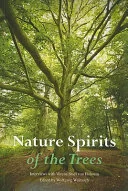
Nature Spirits of the Trees
 74
74

Nature Spirits of the Trees
Wolfgang Weirauch's "Nature Spirits of the Trees" offers a peculiar intimacy, presenting conversations ostensibly held with arboreal entities. Verena Stael von Holstein's reported channelings lend the book its unique voice, relaying what are described as the 'words' of trees. While the concept is compelling, the execution occasionally strains credulity, particularly in the anthropomorphic nature of some dialogues. A strength lies in its consistent focus on the specific consciousness of trees, moving beyond generic nature-spirit tropes. However, the lack of rigorous methodology for verifying these communications is a notable limitation for a critical reader. The passage detailing the 'slow-breathing' consciousness of an ancient oak provides a vivid, albeit interpretive, glimpse into the book's central premise. This work functions best as an evocative exploration of potential consciousness beyond human understanding, rather than a factual account.
📝 Description
74
### What It Is Nature Spirits of the Trees presents direct communications with arboreal elementals, channeled through the mediumship of Verena Stael von Holstein. This volume, published in 2009, follows her earlier work, Nature Spirits and What They Say, extending the exploration of elemental beings to those most intimately connected with the earth's ancient rhythms. The book offers a series of conversations, relaying the perspectives of various tree spirits.
### Who It's For This text is suited for individuals interested in animism, elemental magic, and the practical application of nature spirituality. It appeals to those who seek to deepen their connection with the plant kingdom and understand the subtle energies of forests and individual trees. Readers with an existing interest in Verena Stael von Holstein's previous works will find this a natural continuation of her explorations.
### Historical Context Emerging in 2009, "Nature Spirits of the Trees" arrives within a broader resurgence of interest in animistic philosophies and earth-based spiritualities. While not directly part of the earlier Theosophical movement of Helena Blavatsky, it echoes a similar quest to uncover hidden spiritual hierarchies within nature. The work engages with a contemporary trend that moves away from purely anthropocentric views, seeking dialogue with non-human intelligences. Weirauch's work can be seen as contributing to a post-millennial esoteric landscape.
### Key Concepts The core concept is the personhood and communicative capacity of trees. The book introduces the idea that trees possess distinct consciousnesses and offer wisdom relevant to human life. It explores their unique perception of time, their connection to the earth’s ley lines, and their role as guardians of natural energies. The text emphasizes a reciprocal relationship between humanity and these ancient beings, advocating for respectful interaction and understanding.
💡 Why Read This Book?
• You will learn about the distinct consciousness and perception of time as experienced by trees, as detailed in Weirauch's direct communications, offering a non-human perspective not found in general botany. • Gain practical understanding of how to approach and interact with trees spiritually, based on the 'language' and advice relayed from tree spirits in the book's dialogues. • Discover the concept of trees as 'guardians of natural energies' and their perceived role in earth's subtle network, providing a unique esoteric framework for understanding forests beyond ecological science.
⭐ Reader Reviews
Honest opinions from readers who have explored this book.
❓ Frequently Asked Questions
What is the primary focus of "Nature Spirits of the Trees"?
The book focuses on direct communications with the spirits of trees, as channeled by Verena Stael von Holstein, exploring their unique perspectives and wisdom.
Who is Wolfgang Weirauch?
Wolfgang Weirauch is the author who compiled and presented the channeled communications from tree spirits, building on Verena Stael von Holstein's earlier work.
When was "Nature Spirits of the Trees" first published?
The book was first published in 2009, following the author's previous exploration of elemental beings.
What kind of insights do the tree spirits offer?
The tree spirits reveal insights into their perception of time, their connection to the earth, and their roles as guardians of natural energies.
Is this book related to "Nature Spirits and What They Say"?
Yes, "Nature Spirits of the Trees" is a direct continuation of Verena Stael von Holstein's earlier work, "Nature Spirits and What They Say", focusing specifically on tree spirits.
What is the role of Verena Stael von Holstein in this book?
Verena Stael von Holstein is presented as the medium through whom the communications with tree spirits were received and translated into human language.
🔮 Key Themes & Symbolism
Arboreal Consciousness
The book posits that trees possess distinct sentient awareness, differing significantly from human cognition. It explores their unique perception of time, often described as vast and slow, and their deep, rooted connection to the earth's energetic matrix. Weirauch, through Stael von Holstein's channeling, presents trees not as passive flora but as ancient beings with their own form of intelligence and experience, offering perspectives on existence that challenge anthropocentric views.
Elemental Communication
Central to the work is the concept of interspecies communication, specifically with elemental beings associated with trees. The text details the process and content of these dialogues, translating the 'language' of tree spirits into human terms. This theme underscores the possibility of direct dialogue with the natural world, moving beyond scientific observation to a participatory, empathetic engagement with nature's unseen inhabitants.
Guardianship of Earth Energies
Trees are presented as vital conduits and guardians of the planet's subtle energies. The book suggests that ancient trees, in particular, act as anchors for natural forces and possess a deep understanding of earth's ley lines and spiritual currents. This perspective elevates trees from mere biological entities to active participants in the planet's energetic well-being, highlighting their spiritual significance.
Reciprocal Relationship
The work advocates for a renewed, respectful relationship between humans and trees. It implies that understanding and acknowledging tree spirits can lead to a more harmonious coexistence, benefiting both humanity and the natural world. This theme calls for a shift in human consciousness towards greater empathy and reverence for all life forms.
💬 Memorable Quotes
“Trees speak of a time that flows like sap, slow and continuous.”
— This paraphrased concept highlights the distinct temporal perception of trees, contrasting their 'slow-breathing' existence with humanity's comparatively rapid pace of life and experience.
“We are the roots that hold the world's memory.”
— This interpretation suggests trees perceive themselves as ancient repositories of earth's history and energetic patterns, serving as living libraries of the planet's past.
“Listen not with your ears, but with your stillness.”
— This advice, likely from a tree spirit, points towards a meditative or intuitive mode of perception required to connect with non-human consciousness, emphasizing inner quietude over auditory input.
“Our strength is in our connection to the deep earth.”
— This conveys the concept of trees drawing power and wisdom from their subterranean roots and their integral link to the planet's foundational energies.
“To harm a tree is to wound the earth's spirit.”
— This conveys the spiritual interconnectedness of trees and the planet, suggesting that damage to arboreal life has repercussions on a broader, energetic level.
🌙 Esoteric Significance
Tradition
This work aligns with the broader Western esoteric tradition's interest in elemental beings, a concept explored by figures like Paracelsus in his work on sylphs, undines, salamanders, and gnomes. It extends this to a more specific focus on arboreal spirits, fitting within contemporary animistic and nature-based spiritual practices that seek direct communion with the non-human world.
Symbolism
Trees themselves are potent symbols of connection between the earthly and celestial realms (the roots in the earth, the branches reaching skyward). The book likely explores specific tree types (oak, pine, birch) as symbolic archetypes, each representing different qualities of wisdom, strength, or connection to particular earth energies or elemental forces.
Modern Relevance
In an era increasingly concerned with ecological crisis and humanity's disconnection from nature, "Nature Spirits of the Trees" speaks to contemporary ecopsychology and deep ecology movements. Thinkers and practitioners exploring animism, shamanism, and pagan traditions find value in its approach to interspecies communication and the recognition of vegetal consciousness.
👥 Who Should Read This Book
• Students of animism and earth-based spirituality seeking to understand the concept of non-human consciousness and communication with nature spirits. • Practitioners of elemental magic or nature worship interested in the specific lore and perceived wisdom of tree spirits. • Readers exploring alternative perspectives on the natural world who are open to channeled or intuitive accounts of vegetal intelligence.
📜 Historical Context
Published in 2009, "Nature Spirits of the Trees" emerged during a period of renewed interest in animism and earth-based spirituality, often seen as a counterpoint to the purely materialistic science that dominated much of the 20th century. While it doesn't directly align with the foundational Theosophy of Helena Blavatsky, it echoes the Theosophical exploration of nature spirits and hidden worlds. The work can be situated within a broader esoteric landscape that sought to re-enchant the natural world, offering an alternative to purely ecological or scientific paradigms. Unlike the more academic approaches to nature spirituality explored by figures like Graham Harvey, Weirauch's work prioritizes direct, subjective communication, placing it in a lineage of channeled literature rather than ethnographic study.
📔 Journal Prompts
The slow-breathing consciousness of ancient trees: how does this contrast with your own temporal perception?
Arboreal guardians of earth energies: what might this role imply for forest conservation efforts?
The stillness required for elemental communication: how can you cultivate this inner quietude?
Reciprocity with tree spirits: what actions could demonstrate respect and understanding towards local trees?
The memory held within tree roots: what forgotten histories might they represent?
🗂️ Glossary
Arboreal Spirits
Elemental beings believed to inhabit or be intrinsically connected with trees, possessing their own forms of consciousness and communication.
Elemental Beings
In esoteric traditions, these are nature spirits associated with the classical elements (earth, air, fire, water), but can extend to specific natural forms like trees.
Channeled Communications
Information or messages purportedly received from non-physical or non-human entities through a human intermediary or 'channel'.
Earth Energies
Subtle or invisible forces believed to emanate from the planet, often associated with ley lines, sacred sites, and the vitality of nature.
Animism
The belief that natural objects, phenomena, and the universe itself possess souls or consciousness; a worldview where spirits inhabit all aspects of nature.
Vegetal Intelligence
The concept that plants possess a form of intelligence or awareness, distinct from animal or human cognition, often expressed through complex responses and interactions.
Mediumship
The practice of acting as an intermediary through which a spirit is believed to communicate with the living.