Nanhua jing

 79
79

Nanhua jing
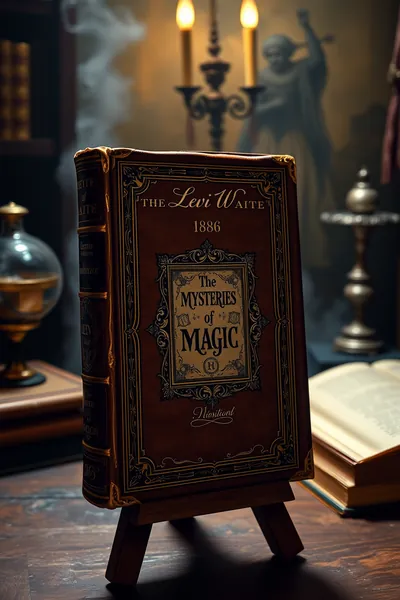
The 1926 translation of the Nanhua jing by Cox and Lowe offers a particular lens on Zhuangzi's profound and often elusive text. Its strength lies in the historical perspective it provides, situating the work within the early 20th-century Western engagement with Eastern philosophy. The annotations, while sometimes reflecting the biases of their time, can illuminate specific passages for those interested in the reception history of Taoist thought. However, the translation itself can feel somewhat dated, occasionally sacrificing the fluid, paradoxical spirit of the original for a more literal, perhaps less evocative, rendering. A notable passage that exemplifies both the brilliance and the potential stumbles of this edition is the exploration of the butterfly dream; while the core idea of subjective reality is present, the translation might not fully capture the linguistic playfulness that makes the original so potent. It serves as a valuable historical document of interpretation, but readers seeking the immediate, vibrant voice of Zhuangzi might be better served by more contemporary translations, though this edition offers a unique scholarly insight.
📝 Description
79
### What It Is The Nanhua jing, more commonly known as the Zhuangzi, is a foundational text of Taoism, compiled and attributed to the philosopher Zhuang Zhou (c. 369–286 BCE). This edition, translated and annotated by G. Cox and P. Lowe, first published in 1926, presents a critical gateway into one of China's most profound philosophical and spiritual legacies. It is not a systematic treatise but a collection of anecdotes, dialogues, parables, and philosophical musings that explore the nature of reality, the self, and the Tao.
### Who It's For This work is intended for seekers of wisdom who are drawn to philosophical inquiry and the contemplative traditions of the East. Readers interested in understanding the roots of Taoist thought, the concept of wu wei (non-action), and the pursuit of inner freedom will find substantial material. It appeals to those who appreciate allegorical storytelling as a means of conveying complex ideas, and individuals looking to challenge conventional notions of knowledge and existence.
### Historical Context The Nanhua jing emerged during the Warring States period (475–221 BCE), a time of intense philosophical ferment in China, often referred to as the "Hundred Schools of Thought." Zhuangzi's teachings offered a counterpoint to the more rigid, societal-focused philosophies like Confucianism. His emphasis on naturalness, spontaneity, and detachment from worldly concerns provided an alternative vision for living. The compilation and commentary by Cox and Lowe in 1926 situates this ancient text within early 20th-century Western academic and esoteric interest in Eastern philosophies.
### Key Concepts The text is rich with concepts that challenge ordinary perception. Central to its philosophy is the idea of the Tao, the ineffable, natural order of the universe. Zhuangzi advocates for a life lived in accordance with this flow, free from artificial distinctions and societal conditioning. Concepts like 'zestful simplicity' (pu), transformation (hua), and the relativity of all things are explored through vivid imagery and often paradoxical arguments. The work encourages a radical skepticism towards conventional wisdom and a liberation of the mind from fixed perspectives.
💡 Why Read This Book?
• Gain an understanding of the Taoist concept of 'wu wei' (non-action) as presented in the Nanhua jing, learning to align with natural flow rather than forceful intervention. • Explore Zhuangzi's radical skepticism towards conventional knowledge and societal norms, as illustrated through parables like the 'butterfly dream', to foster intellectual liberation. • Appreciate the historical context of early 20th-century Western scholarship on Taoism through the 1926 edition by Cox and Lowe, understanding how ancient texts were then interpreted.
⭐ Reader Reviews
Honest opinions from readers who have explored this book.
❓ Frequently Asked Questions
What is the main philosophical focus of the Nanhua jing?
The Nanhua jing's primary focus is on living in harmony with the Tao, the natural order of the universe. It emphasizes spontaneity, simplicity, and freedom from artificial constraints and conventional distinctions.
Who is Zhuangzi and when did he live?
Zhuangzi was a pivotal Chinese philosopher from the Warring States period, traditionally believed to have lived from around 369 to 286 BCE. He is the central figure and presumed author of the Nanhua jing.
What does 'wu wei' mean in the context of the Nanhua jing?
'Wu wei' translates to non-action or effortless action. In the Nanhua jing, it represents acting in accordance with the natural flow of things, without forcing outcomes or imposing artificial will.
What is the significance of the butterfly dream parable?
The butterfly dream parable illustrates the blurred line between reality and illusion, the self and the other, and the relativity of perception. It questions the certainty of our waking experiences and our identity.
How does the 1926 edition by Cox and Lowe differ from modern translations?
The 1926 edition reflects early 20th-century translation styles and academic perspectives. It may offer unique scholarly commentary but might lack the fluidity and nuance found in more contemporary renderings of the Nanhua jing.
Is the Nanhua jing considered a religious or philosophical text?
It is primarily considered a philosophical text that profoundly influenced Taoism, a tradition that encompasses both philosophical and religious aspects. Its teachings focus on wisdom, ethics, and the nature of existence.
🔮 Key Themes & Symbolism
The Relativity of All Things
The Nanhua jing persistently challenges the reader's fixed perceptions by demonstrating the relativity of all distinctions – good and bad, life and death, self and other. Through parables like the transformation of Zhuangzi into a butterfly, the text suggests that our judgments are often arbitrary and context-dependent. This theme encourages a detachment from rigid viewpoints and an embrace of a more fluid, adaptable understanding of reality, urging readers to question the inherent 'truth' of their own perspectives.
Embracing Spontaneity and Naturalness
Central to Zhuangzi's philosophy is the concept of 'zestful simplicity' (pu) and living in accordance with the Tao, the natural Way of the universe. The text advocates for spontaneity, urging individuals to shed artificial social conventions, desires, and intellect that obscure their innate nature. This theme promotes a return to a primal, uncarved state, where actions arise naturally and effortlessly, free from the anxieties and complications of self-conscious striving and societal pressure.
The Illusion of the Self
The Nanhua jing probes the nature of identity, questioning the solidity and permanence of the individual self. Through dialogues and allegories, Zhuangzi suggests that the 'self' is a constantly changing construct, influenced by external factors and internal states. This theme encourages a dissolution of ego-centric views, leading to a broader identification with the cosmos and a release from the suffering caused by attachment to a fixed personal identity.
Freedom Through Detachment
A pervasive theme is the attainment of freedom through detachment from worldly concerns, judgments, and the fear of death. Zhuangzi presents a vision of the sage who is unperturbed by external circumstances, finding contentment and peace within. This detachment is not apathy but a profound equanimity born from understanding the illusory nature of suffering and the ultimate unity of all existence with the Tao.
💬 Memorable Quotes
“Once upon a time, I, Zhuang Zhou, dreamt I was a butterfly, fluttering hither and thither, to all intents and purposes a butterfly. I was conscious of my happiness as a butterfly, unaware that I was Zhuang Zhou. Soon I awoke, and there I was, veritably myself again. Now I do not know whether I was then a man dreaming I was a butterfly, or whether I am now a butterfly, dreaming I am a man.”
— This iconic parable questions the certainty of our waking reality and our sense of identity. It highlights the fluid boundary between subjective experience and objective existence, suggesting that our perceived self might be as ephemeral as a dream.
“The man who has attained the Tao does not care to accumulate wealth; he does not care to make a name for himself; he does not care to become a ruler; he does not care to reform the world; he does not care to be a master; he does not care to be a physician; he does not care to be a craftsman.”
— This passage illustrates the Taoist ideal of detachment from worldly ambitions and conventional societal roles. True attainment is found not in external achievements but in inner alignment with the Tao, free from the pursuit of fame, power, or material possessions.
“When a craftsman has a son, he will teach him to be a craftsman. When a farmer has a son, he will teach him to be a farmer. When a painter has a son, he will teach him to be a painter. And when the Great Man has a son, he will teach him to be Great.”
— This quote, interpreted through the lens of the Nanhua jing, suggests that greatness and wisdom are transmitted naturally, not through rigid instruction or societal conditioning. It implies an innate capacity for understanding the Tao that transcends learned skills.
“The perfect man of ancient times...”
— This phrase often introduces descriptions of an idealized sage who embodies Taoist principles. Such figures are depicted as living in harmony with nature, free from emotional extremes and societal constraints, exemplifying the state of effortless action (wu wei).
“There is no greater mistake than to regard something as unimportant because it is small.”
— This aphorism underscores the Taoist appreciation for the subtle and the seemingly insignificant. It challenges hierarchical thinking, suggesting that true wisdom and the workings of the Tao can be found in the smallest details of existence.
🌙 Esoteric Significance
Tradition
The Nanhua jing is a cornerstone of philosophical Taoism, influencing various esoteric Taoist traditions. While not strictly a manual for magical practices, its emphasis on aligning with the Tao, cultivating inner stillness, and transcending ordinary perception aligns with the goals of many esoteric paths. It provides a philosophical grounding for practices aimed at achieving longevity, spiritual immortality, and unity with the cosmic principle.
Symbolism
Key symbols include the butterfly, representing the ephemeral nature of reality and the self, and the transformation (hua) it undergoes, symbolizing constant change. The 'Great Clod' (Earth), 'Breath' (Air/Spirit), and 'Void' are often invoked to represent fundamental aspects of the cosmos and the Tao. The imagery of the sage as one who 'roams freely' signifies liberation from worldly constraints and an unhindered spiritual existence.
Modern Relevance
Contemporary thinkers and practitioners in fields ranging from psychology (particularly depth psychology exploring consciousness and the ego) to mindfulness and certain branches of ecological philosophy draw upon Zhuangzi's insights. His ideas on non-duality, the critique of anthropocentrism, and the acceptance of change resonate with modern concerns about mental well-being, environmental stewardship, and the search for meaning beyond materialism.
👥 Who Should Read This Book
• Students of comparative philosophy and Eastern religions seeking foundational texts that challenge Western epistemological frameworks and ethical systems. • Seekers of personal growth interested in cultivating mental resilience, detachment from anxieties, and a more spontaneous approach to life's challenges. • Scholars of classical Chinese thought and literature looking for insight into the Warring States period and the development of Taoist philosophy.
📜 Historical Context
The Nanhua jing, or Zhuangzi, emerged from the intellectual ferment of China's Warring States period (475–221 BCE). This era saw the flourishing of the 'Hundred Schools of Thought,' including Confucianism, Mohism, and Legalism, each offering distinct visions for social order and governance. Zhuangzi's philosophy, however, presented a radical alternative, prioritizing individual freedom, naturalness, and skepticism towards conventional knowledge and societal structures. His work provided a significant counterpoint to the social ethics of Confucius and the rigid laws proposed by Legalists. The translation by G. Cox and P. Lowe, published in 1926, places this ancient text within the context of early 20th-century Western Orientalism and the growing academic and esoteric interest in Eastern philosophies. This period saw figures like Carl Jung exploring Eastern thought, indicating a broader intellectual current seeking wisdom beyond Western traditions.
📔 Journal Prompts
The butterfly dream's questioning of waking reality.
Zhuangzi's perspective on societal expectations.
The concept of 'zestful simplicity' (pu) in modern life.
The implications of 'wu wei' for decision-making.
The nature of the 'self' as depicted in the text.
🗂️ Glossary
Tao (or Dao)
The fundamental, ineffable principle underlying all reality in Taoism. It is the natural order, the Way, the source and driving force of everything that exists, yet it is beyond human comprehension and description.
Wu Wei
Literally 'non-action' or 'effortless action.' It refers to acting in accordance with the natural flow of the Tao, without force, struggle, or artificial intervention. It is spontaneous, effective action that arises from a state of deep understanding and alignment.
Zestful Simplicity (Pu)
An ancient, uncarved, natural state of being. It represents the ideal of returning to a simple, unadulterated existence, free from artificial distinctions, desires, and intellectual complexities that obscure one's true nature.
Transformation (Hua)
The concept of constant change and metamorphosis inherent in the universe. Zhuangzi uses this idea to illustrate the impermanence of all things, including life, death, and identity, encouraging acceptance of flux.
Sage
An enlightened individual who has attained the Tao. The sage lives in harmony with nature, is free from emotional extremes and worldly attachments, and embodies wisdom, spontaneity, and effortless action (wu wei).
Warring States Period
A period in ancient Chinese history (c. 475–221 BCE) characterized by intense conflict between various states. It was also a time of great intellectual and philosophical development, known as the 'Hundred Schools of Thought'.
Chuang Tzu
The common Westernized spelling and pronunciation of Zhuang Zhou, the philosopher attributed as the primary author of the Nanhua jing. His teachings form the core of Taoist philosophy.