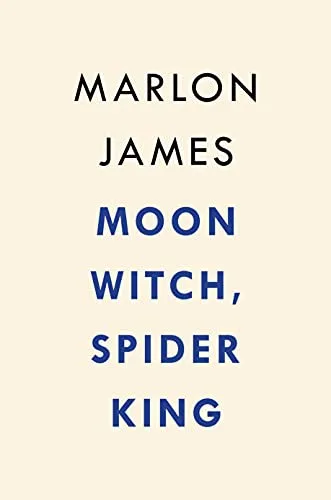
Moon Witch, Spider King
 77
77

Moon Witch, Spider King
Marlon James crafts a disorienting yet potent narrative in *Moon Witch, Spider King*. Unlike the more direct, albeit still complex, approach of its predecessor, this installment plunges the reader into a vortex of conflicting testimonies, primarily from the perspective of the titular witch. The strength lies in James's unflinching portrayal of a woman’s rage and resilience, her voice a raw, unvarnished instrument that reclaims a narrative often relegated to the sidelines of myth. However, the sheer density of its internal monologues and the deliberate obfuscation of a singular truth can, at times, feel overwhelming, testing the reader's patience as much as their interpretive skill. A passage detailing the witch's manipulation of perception, particularly her ability to warp the hunter's understanding of his own quest, stands out as a masterful demonstration of her power. The novel ultimately succeeds as a daring interrogation of history and memory, even if its labyrinthine structure occasionally threatens to become its own undoing. It is a challenging, vital piece of contemporary myth-making.
📝 Description
77
### What It Is
Marlon James's *Moon Witch, Spider King*, published in 2022, is a novel that operates on multiple planes, blending myth, history, and the visceral realities of power and identity. It is the second installment in his Dark Star trilogy, following *Black Leopard, Red Wolf*. The narrative is characterized by its fragmented structure and polyphonic narration, allowing different characters to voice their perspectives on a shared, often violent, history. This approach challenges conventional storytelling, demanding active engagement from the reader to piece together the unfolding events and motivations.
### Who It's For
This work is intended for readers who appreciate complex, non-linear narratives and are drawn to explorations of mythology and folklore reimagined through a contemporary lens. It will appeal to those interested in African mythology and its reinterpretation, as well as readers who enjoy challenging literary fiction that pushes the boundaries of form and perspective. Individuals seeking straightforward plot resolutions might find its intricacies demanding, but those who enjoy unearthing layers of meaning will find ample reward.
### Historical Context
The novel is deeply rooted in the mythology and oral traditions of East Africa, specifically drawing from figures and stories reminiscent of Ethiopian lore. James has spoken about his intention to deconstruct and re-center these narratives, moving away from colonial interpretations and placing the African voice at the forefront. The publication in 2022 situates it within a contemporary literary landscape increasingly interested in diverse mythologies and challenging Western narrative dominance. Its reception has highlighted its ambition to reshape how these ancient stories are understood and presented to a global audience.
### Key Concepts
Central to *Moon Witch, Spider King* is the exploration of truth as a subjective construct, shaped by memory, bias, and the desire for self-preservation. The novel examines the nature of power, not just political or physical, but the power of narrative and belief. It delves into themes of identity, particularly how it is formed through conflict and the stories one tells about oneself and others. The interplay between the witch, the king, and the hunter represents a dynamic struggle over agency and the very definition of reality within their world.
💡 Why Read This Book?
• Gain a profound understanding of how subjective experience shapes objective reality, as demonstrated by the witch's conflicting accounts of events, forcing a re-evaluation of historical 'truth'. • Experience a radical re-centering of African mythologies, moving beyond colonial gaze to explore the raw power and agency of female figures like the witch, as detailed in the novel's 2022 publication. • Explore the intricate dynamics of power and identity through the lens of competing narratives, particularly the witch's struggle against the established authority of the king, offering a fresh perspective on ancient conflicts.
⭐ Reader Reviews
Honest opinions from readers who have explored this book.
❓ Frequently Asked Questions
What is the primary narrative perspective in Moon Witch, Spider King?
The novel primarily features the perspective of the witch, offering a counter-narrative to the established history of the king and the hunter. This allows for a deep dive into her motivations and experiences.
Is Moon Witch, Spider King a standalone novel?
No, *Moon Witch, Spider King* is the second book in Marlon James's Dark Star trilogy, following *Black Leopard, Red Wolf* (2019) and preceding the yet-to-be-published third installment.
What mythological traditions does Marlon James draw upon?
James draws heavily from East African oral traditions and mythology, particularly those reminiscent of Ethiopian lore, reimagining them with a unique literary voice.
How does Moon Witch, Spider King explore the concept of truth?
The novel presents truth as fluid and subjective, dependent on the narrator's perspective, biases, and desires. It challenges the idea of a single, objective historical account.
What is the significance of the 'Spider King' in the title?
The 'Spider King' refers to a powerful figure within the novel's mythology, representing authority and a historical narrative that the witch's story seeks to subvert or recontextualize.
What is the publication year of Moon Witch, Spider King?
*Moon Witch, Spider King* was first published in 2022, placing it within contemporary literary discussions about narrative, mythology, and post-colonial perspectives.
🔮 Key Themes & Symbolism
Subjectivity of Truth
The novel dissects how history is not a fixed record but a shifting narrative shaped by those who tell it. The witch's perspective consistently challenges the accounts of others, revealing how personal experience, trauma, and desire construct our understanding of reality. This theme is central to understanding the fragmented narrative, where readers must piece together their own version of events from biased testimonies. It questions the very nature of objective historical accounts and the power of individual memory.
Reclamation of Narrative
James actively reclaims and re-centers African mythologies, particularly focusing on female figures often marginalized or demonized in traditional patriarchal narratives. The witch's voice is a powerful assertion of agency, demanding to be heard and acknowledged on her own terms. This theme explores how stories are used to maintain or dismantle power structures, offering a potent counter-discourse to colonial or imposed histories.
The Nature of Power
Power in *Moon Witch, Spider King* extends beyond military or political might to encompass the power of persuasion, belief, and narrative control. The witch's ability to manipulate perception and rewrite events in the minds of others is a key manifestation of this. The novel examines how individuals and societies wield power, often through deception, coercion, or the strategic deployment of stories, highlighting the complex interplay between the oppressed and the oppressor.
Identity and Transformation
Characters grapple with their identities, which are often forged in the crucible of conflict and the stories they are told about themselves. The witch's journey is one of self-definition against a world that seeks to define her. The novel explores how external pressures and internal desires lead to profound personal transformations, questioning whether identity is inherent or a performance constructed to survive and thrive within a hostile world.
💬 Memorable Quotes
“I am the witch. I am the moon. I am the spider. I am the king.”
— This declaration encapsulates the character's multifaceted identity and her claim to power. It suggests a fluidity of self and a defiance of singular labels, embodying the novel's exploration of identity as a construct.
“The hunter does not know that the king is not the king, but a puppet of the witch.”
— This highlights the theme of deception and the hidden nature of power. It reveals how perceived authority can be manipulated, suggesting a deeper, more insidious force at play behind the scenes of the narrative.
“Truth is a story that has been told for so long it has forgotten it is a story.”
— This interpretation directly addresses the novel's central theme of the subjectivity of truth. It posits that widely accepted narratives gain authority not through inherent veracity, but through repetition and ingrained belief.
“My pain is not for you to understand. It is for you to witness.”
— This asserts the witch's refusal to have her trauma explained away or simplified. It demands recognition of her suffering without demanding empathy that might diminish its power or her agency.
“He thinks he is hunting me, but I have been hunting him since before he was born.”
— This demonstrates the witch's profound foresight and control over events, suggesting a cyclical nature to their conflict and her strategic manipulation of the hunter's destiny.
🌙 Esoteric Significance
Tradition
While not adhering strictly to a single established esoteric lineage like Hermeticism or Gnosticism, *Moon Witch, Spider King* taps into a primal, shamanistic form of magic deeply connected to nature, spirits, and the manipulation of perception. It resonates with animistic traditions where natural elements possess agency and consciousness. The narrative's focus on the witch's inherent power and her connection to lunar and chthonic forces aligns with archetypal representations of the sorceress found across various mythologies, suggesting a universal, albeit raw, magical system.
Symbolism
The **moon** symbolizes cyclical power, intuition, the subconscious, and the feminine divine, often associated with hidden knowledge and emotional currents. The **spider** represents intricate creation, fate, weaving destinies, and the ability to ensnare or trap, reflecting the witch's manipulative prowess and her control over narrative threads. The **king** embodies established authority, patriarchal structures, and a linear, often rigid, view of history that the witch's fluid, cyclical power challenges and seeks to subvert.
Modern Relevance
Contemporary practitioners of witchcraft and modern pagan traditions find resonance in the novel's portrayal of female power and its connection to natural forces. Thinkers exploring post-colonial theory and the power of narrative also draw from James's work, seeing it as a vital example of reclaiming and reinterpreting cultural stories. Its exploration of subjective truth aligns with postmodern philosophical inquiries into epistemology and the construction of reality, making it relevant for those interested in the intersection of literature, psychology, and critical theory.
👥 Who Should Read This Book
• Readers interested in African mythology and folklore seeking authentic, complex retellings that move beyond colonial perspectives. • Literary fiction enthusiasts who appreciate challenging, non-linear narratives and intricate character studies, particularly those examining power dynamics. • Students and practitioners of esoteric traditions interested in shamanistic magic, archetypal symbolism, and the reclamation of feminine spiritual power.
📜 Historical Context
Marlon James's *Moon Witch, Spider King*, released in 2022, arrived within a literary landscape increasingly eager for non-Western mythologies and complex narrative structures. The novel draws inspiration from East African oral traditions, particularly those associated with Ethiopia, aiming to decolonize these narratives from colonial interpretations and center indigenous voices. This work continues James's project, initiated in *Black Leopard, Red Wolf* (2019), to build a unique literary universe rooted in African folklore, distinct from the often Eurocentric fantasy genre. Its publication followed a surge in global interest in African literature, exemplified by authors like Chimamanda Ngozi Adichie and Tsitsi Dangarembga, who also engage with history and identity. While not directly engaging with a specific competing school of thought in the same way a philosophical text might, James's approach implicitly challenges the dominance of Western epic fantasy tropes. The reception has largely focused on its ambitious scope and its bold reinterpretation of familiar archetypes, positioning it as a significant contribution to contemporary global fantasy literature.
📔 Journal Prompts
The witch's assertion of multiple identities—moon, spider, king—reflects a complex self. How does your own understanding of identity shift across different roles you inhabit?
Analyze the spider's symbolism in relation to the witch's power. What does the act of weaving signify in her narrative?
Consider the hunter's quest. What does his pursuit reveal about the nature of perceived destiny versus self-determination?
Reflect on the concept of 'truth as a story.' How have narratives you've accepted as fact been shaped by repetition or authority?
The cyclical nature of power is evident. How does the witch's understanding of time and history differ from the king's?
🗂️ Glossary
The Witch
A central character whose perspective dominates much of the narrative. She possesses potent magical abilities and seeks to assert her version of history and power against established figures.
The Hunter
A significant figure tasked with a specific mission, often manipulated by other forces. His role highlights themes of destiny, agency, and the pursuit of elusive goals.
The King
Represents established authority, tradition, and a particular historical narrative. His power is often challenged or undermined by the witch's influence and magic.
Dark Star Trilogy
The series to which *Moon Witch, Spider King* belongs. It is a collection of novels exploring African mythology and history through epic fantasy narratives, beginning with *Black Leopard, Red Wolf*.
Polyphonic Narration
A narrative technique where multiple voices or perspectives are presented, often simultaneously or in quick succession, creating a complex and layered storytelling experience.
Ogun
While not explicitly named in every context, the concept of Ogun, a Yoruba deity associated with iron, warfare, and creativity, often informs the portrayal of powerful, transformative forces and figures within African-inspired mythologies.
Chthonic
Relating to the underworld or the earth's interior. In the context of the novel, it suggests powers and magic that are primal, deep-rooted, and often associated with the feminine or earth spirits.