Miscellaneous theological works of Emanuel Swedenborg

 73
73

Miscellaneous theological works of Emanuel Swedenborg
The "Miscellaneous Theological Works of Emanuel Swedenborg" presents a formidable challenge, not for its obscurity, but for its sheer systematic ambition. The compilation offers a stark, unvarnished look at Swedenborg's post-revelatory theological constructions, a departure from more accessible introductions to his thought. A particular strength lies in the detailed exploration of the 'internal sense' of Scripture, where Swedenborg outlines a hermeneutic method that unlocks spiritual meanings beneath the literal. However, the sheer volume of theological exposition can be overwhelming; the lack of narrative or introductory framing within this specific compilation means readers must come prepared for dense doctrinal study. The section on the correspondence between the spiritual and natural worlds, while fascinating, requires significant mental exertion to fully grasp. This is not light reading, but for the dedicated scholar of esoteric theology, it provides an indispensable primary source.
📝 Description
73
Emanuel Swedenborg's theological writings were first compiled and published in 1892.
This volume gathers miscellaneous theological works by Emanuel Swedenborg, a Swedish scientist and mystic of the 18th century. These texts are not a unified treatise but a collection of his extensive writings on the divine, the human soul, and the afterlife. Swedenborg aimed to communicate his personal spiritual experiences and theological doctrines, which he believed were revealed through direct celestial communication.
This compilation is for serious students of esoteric thought, comparative religion, and early modern mysticism. It will appeal to those interested in Swedenborg's specific philosophical system or seeking to understand texts that influenced later movements like Theosophy and Spiritualism. Readers should be prepared for detailed theological discussion rooted in spiritual revelation and a systematic approach to spiritual realities.
Published in 1892, this collection appeared during a late 19th-century resurgence of interest in mysticism. Swedenborg's 18th-century writings found new dissemination through Swedenborgian societies and other esoteric publishers, aligning with a broader fascination with the occult and spiritual experiences. His work, blending personal revelation with rational inquiry, offered an alternative to traditional theology challenged by scientific and critical perspectives of the era.
💡 Why Read This Book?
• Gain insight into Swedenborg's doctrine of 'correspondences,' a foundational concept for understanding his unique method of biblical interpretation and the interconnectedness of the spiritual and natural realms. • Explore Swedenborg's detailed descriptions of the spiritual world and its societies, offering a unique cosmological perspective that influenced later esoteric movements. • Study Swedenborg's theological framework, particularly his understanding of the Divine Trinity as embodied in Jesus Christ, which offers a distinctive approach to Christian doctrine not found in mainstream theology.
⭐ Reader Reviews
Honest opinions from readers who have explored this book.
❓ Frequently Asked Questions
When were Emanuel Swedenborg's "Miscellaneous Theological Works" first compiled and published?
The "Miscellaneous Theological Works of Emanuel Swedenborg" were first compiled and published as a collected volume in 1892, long after the author's death in 1772.
What is the core concept of 'correspondences' in Swedenborg's theology?
Swedenborg's doctrine of 'correspondences' posits that every element in the natural world has a direct spiritual counterpart, revealing a divine order and an 'internal sense' within Scripture and creation.
Did Swedenborg consider himself a scientist or a theologian?
Swedenborg began his career as a scientist and inventor, but after profound spiritual experiences in mid-life, he dedicated himself to theological writing, believing he was divinely appointed to reveal spiritual truths.
How did Swedenborg's writings influence later movements?
Swedenborg's extensive writings on the spiritual world and divine revelation significantly influenced later esoteric and religious movements, including Spiritualism, Theosophy, and the New Church (Swedenborgianism).
Is this collection suitable for beginners interested in Swedenborg?
While valuable, this compilation of "Miscellaneous Theological Works" is dense. Beginners might find more introductory texts on Swedenborg's life and core ideas more accessible before tackling this comprehensive theological discourse.
Where can I find more information about Swedenborg's life and work?
Detailed biographical information and extensive analyses of Swedenborg's philosophical and theological contributions can be found through Swedenborgian societies and academic resources dedicated to his extensive literary output.
🔮 Key Themes & Symbolism
Internal Sense of Scripture
A central tenet is Swedenborg's belief in a divinely ordained 'internal sense' within the literal text of the Bible. This collection details how he interpreted passages, revealing spiritual and celestial meanings beyond the historical narrative. He proposed a complex system of allegorical and symbolic interpretation, where seemingly mundane events or figures represent profound spiritual truths about God, the human soul, and the process of salvation. This approach aimed to demonstrate the Bible's inherent divinity and its capacity to guide individuals toward spiritual enlightenment.
The Spiritual World and Societies
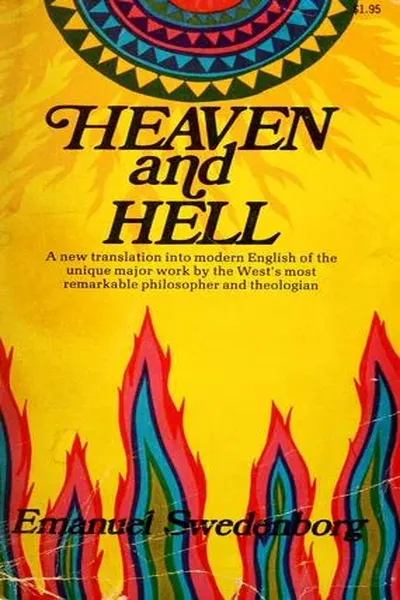
Swedenborg provides extensive, systematic descriptions of the afterlife – heaven and hell. He outlines the structure of these realms, populated by spirits who retain their individuality after death. The works detail the societies within heaven, characterized by specific forms of love and use, and the chaotic states of hell, driven by opposing evil impulses. His accounts are not abstract philosophical musings but are presented as observations derived from his direct spiritual perception, offering a detailed cartography of the unseen realms.
Divine Love and Wisdom
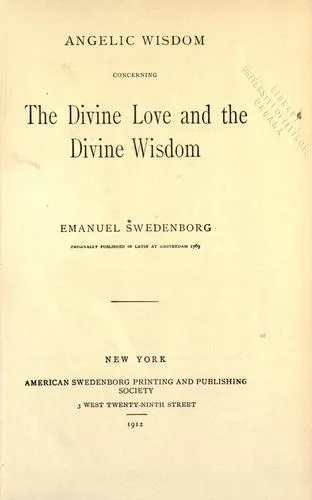
Central to Swedenborg's theology is the concept of Divine Love as the essence of God and Divine Wisdom as its manifestation. The works explore how this duality functions within the Trinity, which he understood not as three persons but as a unified Divine Man (the Lord Jesus Christ) embodying both Love and Wisdom. This divine influx is seen as the source of all life and creation, and human spiritual regeneration is a process of receiving and internalizing this divine love and wisdom.
Human Regeneration and Free Will
The texts address the process by which a human being is spiritually reborn or 'regenerated.' This involves a cooperative effort between the individual and the Divine, where one actively chooses to turn away from evil and towards good, guided by spiritual insight. Swedenborg emphasizes that while God initiates and sustains spiritual life, human freedom (or the appearance of it) is crucial for genuine spiritual growth, allowing individuals to consciously accept or reject divine influence.
💬 Memorable Quotes
“The spiritual world is so constituted that man is not sensible of its presence, but is sensible of the natural world.”
— This highlights Swedenborg's core assertion about the nature of reality: the spiritual realm is as real and tangible as the physical, yet our earthly senses are attuned only to the latter, making direct spiritual perception a distinct faculty.
“There is a correspondence of all things in the world with the spiritual world.”
— This encapsulates the doctrine of correspondences, suggesting a profound, underlying connection between the material and the immaterial. Every natural object, event, or phenomenon is seen as a symbol or reflection of a spiritual truth or reality.
“The Lord is the Divine Man, and the Church is the Divine Man.”
— This expresses Swedenborg's unique view of the Trinity and the collective spiritual body of believers. It links the divine essence of Christ directly to the community of faith, emphasizing unity and a divinely ordered structure.
“In the spiritual world, the interiors of the mind are manifested.”
— This implies that in the afterlife, a person's true character, thoughts, and intentions are no longer hidden but are openly visible, reflecting the transparency and order of the spiritual realm.
“Good is not the Lord's, nor evil the devil's, but both are from man.”
— This statement underscores Swedenborg's emphasis on human free will and responsibility in the process of spiritual regeneration. It suggests that while divine good is offered, the choice to act upon it or succumb to evil resides within the individual.
🌙 Esoteric Significance
Tradition
Swedenborg's work occupies a unique position, bridging Christian theology with esoteric traditions. While deeply rooted in Christian scripture and doctrine, his systematic exploration of the spiritual world, angelology, and the internal sense of the Bible aligns with Neoplatonic and Hermetic concepts of correspondences and celestial hierarchies. He is often seen as a precursor to modern Theosophy and Spiritualism, providing a detailed, albeit distinct, framework for understanding spiritual realities that informed later Western esoteric movements.
Symbolism
A key symbolic motif is the 'Internal Sense' of Scripture, representing layers of spiritual meaning hidden within the literal text, akin to Gnostic interpretations of sacred texts revealing deeper truths. The concept of the 'Grand Man' (or 'Macrotheos') symbolizes the universe as a unified spiritual organism, with humanity and the angelic realms reflecting the Divine Man, Jesus Christ. Celestial degrees and correspondences, like the sun representing divine love and light representing divine wisdom, are fundamental symbolic tools Swedenborg employs.
Modern Relevance
Contemporary esoteric practitioners, particularly those involved in Western magical traditions, comparative mysticism, and New Age spirituality, continue to engage with Swedenborg's detailed cosmology and angelology. His ideas on the structure of the afterlife, the nature of spiritual perception, and the interconnectedness of the spiritual and natural worlds are foundational for many who seek to understand consciousness beyond the physical. Thinkers exploring altered states of consciousness and the phenomenology of spiritual experience often reference his detailed accounts of the spiritual realms.
👥 Who Should Read This Book
• Students of comparative religion and Western esotericism seeking primary source material on a pivotal 18th-century mystic whose ideas influenced later occult movements. • Individuals interested in detailed theological explorations of Christian doctrine from a non-traditional, revelation-based perspective, particularly those fascinated by Swedenborg's unique system. • Researchers of the history of spirituality and consciousness who wish to understand the conceptual underpinnings of movements like Theosophy and Spiritualism, for which Swedenborg was a significant influence.
📜 Historical Context
Published in 1892, this collection emerged during a period of fervent spiritual exploration in the West. The late 19th century witnessed a surge of interest in the occult, mysticism, and alternative religious thought, partly as a reaction against the perceived materialism of the age and the perceived limitations of orthodox theology. Swedenborg’s extensive writings, originating in the 18th century, found a receptive audience among these burgeoning movements. Figures like Helena Blavatsky and the Theosophical Society, founded in 1875, drew heavily on Swedenborg’s cosmology and angelology, integrating his concepts into their own syncretic systems. While Swedenborgian churches (the New Church) also continued their work, his ideas permeated broader esoteric circles. This era was also marked by the rise of Spiritualism, which, though differing in emphasis, shared Swedenborg’s focus on communication with the spirit world and the reality of life after death.
📔 Journal Prompts
The doctrine of correspondences: how might natural phenomena reflect spiritual states in your own experience?
Swedenborg's description of angelic societies: what core virtues or principles do you observe as foundational in communal living?
The concept of spiritual regeneration: identify one habitual thought pattern you wish to transform and explore its spiritual significance.
Swedenborg's 'internal sense' of scripture: reflect on a familiar biblical story and consider its potential symbolic meaning beyond the literal narrative.
The nature of the spiritual world as described by Swedenborg: what aspects of its order or manifestation challenge or affirm your current worldview?
🗂️ Glossary
Internal Sense
Swedenborg's term for the hidden spiritual and celestial meanings within the literal text of the Bible, accessible through divine revelation and a specific hermeneutic method.
Correspondences
The principle that all things in the natural world have a direct symbolic relationship or parallel in the spiritual world, reflecting divine order and meaning.
Spiritual World
The realm of existence inhabited by angels and spirits after death, described by Swedenborg as real, structured, and accessible through spiritual perception.
Regeneration
The process of spiritual rebirth or renewal in an individual, involving the purification of the will and understanding through divine influence and personal effort.
Divine Man (Macrotheos)
Swedenborg's concept of God as a Divine Human form, specifically the Lord Jesus Christ, embodying the Trinity of Divine Love and Divine Wisdom.
Angelic Societies
Swedenborg's descriptions of the organized communities within heaven, each characterized by specific affections, uses, and forms of worship.
Doctrine of Use
The theological principle that the true quality of a person, and their place in the spiritual world, is determined by their useful actions and intentions in service to others.