Metamorphoses
 82
82

Metamorphoses
Ovid's *Metamorphoses* presents a sprawling panorama of myth, a narrative arc held together by the sheer force of its central conceit: transformation. The sheer volume of stories, from the creation of the cosmos to the apotheosis of Caesar, is staggering. Its enduring power lies in its ability to render ancient myths with vivid imagery and a sometimes startlingly modern psychological nuance. For instance, the tale of Narcissus offers a potent exploration of self-absorption that feels remarkably contemporary. However, the poem's episodic nature, while a strength for showcasing variety, can also lead to a certain narrative diffusion. The sheer number of characters and their often-swift demises can, at times, feel overwhelming rather than enlightening. The work's strength lies in its relentless depiction of change as the fundamental constant of existence, a concept that remains potent.
Ultimately, *Metamorphoses* remains a foundational text for understanding Western narrative and the enduring human fascination with metamorphosis.
📝 Description
82
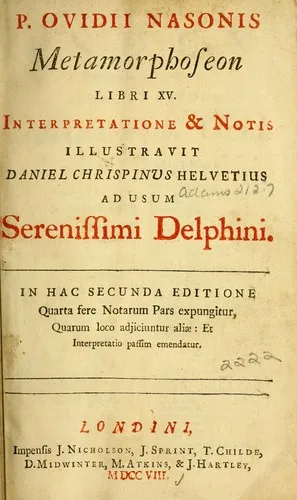
### What It Is Ovid's *Metamorphoses*, first published in 1539, is an epic Latin poem composed of fifteen books and over 11,900 lines. It chronicles the history of the world from its creation to the deification of Julius Caesar, all through the lens of transformation. The work is a collection of over 250 myths, primarily drawn from Greek and Roman mythology, each featuring a metamorphosis. These transformations are not merely physical but often represent profound changes in state, identity, or existence.
### Who It's For This collection appeals to readers interested in the foundational narratives of Western culture, mythology, and the philosophical implications of change. Scholars of classical literature, students of comparative mythology, and those exploring the archetypal patterns of transformation will find extensive material. Its influence on later art, literature, and even psychological thought makes it relevant to anyone studying the evolution of human storytelling and symbolism.
### Historical Context Published posthumously in 1539, *Metamorphoses* emerged during the Italian Renaissance, a period of intense rediscovery of classical texts. While Ovid wrote the poem around 8 AD, its survival and subsequent dissemination were critical. The work gained immense popularity, influencing artists like Titian and writers across centuries. It provided a rich source of imagery and narrative for a Europe eager to reconnect with its ancient Greco-Roman heritage, often standing in contrast to prevailing religious doctrines through its pagan themes.
### Key Concepts The central concept is metamorphosis itself – the act of changing form. This manifests in countless myths: Daphne becoming a laurel tree to escape Apollo, Narcissus transforming into a flower, and Io into a cow. These shifts explore themes of divine caprice, human passion, the consequences of actions, and the very nature of identity. The poem also examines the relationship between humans and gods, the power of fate, and the cyclical nature of history, all unified by the pervasive idea that nothing remains static.
💡 Why Read This Book?
• Understand the roots of Western mythology: Gain direct exposure to the original narratives behind figures like Apollo, Daphne, and Narcissus, as detailed in Ovid's poem, which shaped countless subsequent artistic and literary works. • Explore the philosophical concept of change: Witness how Ovid uses over 250 myths, starting from the creation in Book I, to illustrate metamorphosis as a universal principle governing gods, humans, and the cosmos. • Appreciate classical literary technique: Analyze Ovid's masterful use of poetic structure and narrative in the 1539 published edition to connect disparate myths into a cohesive, expansive history of the world.
⭐ Reader Reviews
Honest opinions from readers who have explored this book.
❓ Frequently Asked Questions
When was Ovid's Metamorphoses originally written?
Ovid composed *Metamorphoses* around 8 AD, though its first widely circulated publication occurred much later in 1539, after the poet's death.
What is the primary theme of Ovid's Metamorphoses?
The central theme is metamorphosis, or transformation. The poem presents over 250 myths where characters, gods, and even inanimate objects undergo significant changes in form.
What historical period does Metamorphoses cover?
The poem spans mythical history from the creation of the universe to the deification of Julius Caesar in the 1st century BC, effectively covering a vast, legendary timeline.
Are there specific gods or goddesses prominently featured in Metamorphoses?
Yes, numerous deities from Greek and Roman pantheons appear, including Jupiter, Juno, Apollo, Diana, Venus, and many others, often as agents or subjects of transformation.
How did Metamorphoses influence later art and literature?
Its vivid imagery and rich mythological content profoundly influenced Renaissance artists like Titian and countless writers, providing a common visual and narrative vocabulary for centuries.
Is Metamorphoses a single continuous story?
While unified by the theme of transformation, *Metamorphoses* is structured as a collection of interconnected myths, with each book presenting multiple stories that flow into one another.
🔮 Key Themes & Symbolism
The Nature of Change
Change is the fundamental constant in Ovid's universe. From the primordial chaos to the deification of Caesar, the poem relentlessly illustrates that existence is defined by flux. These transformations are not always benign; they can be punishments, escapes, or consequences of divine whim or mortal passion. The work suggests that identity is fluid and that the boundaries between human, animal, and plant states are permeable, reflecting a worldview where transformation is the ultimate reality.
Divine Intervention and Human Fate
The gods of Olympus are capricious, powerful, and often intervene directly in human affairs, frequently leading to transformations. Their desires, jealousies, and punishments shape the destinies of mortals. The myths explore the precarious relationship between humanity and the divine, where piety might offer little protection against divine lust or anger. This constant interplay highlights the vulnerability of mortals and the arbitrary nature of fate as dictated by the Olympian pantheon.
Love, Desire, and Their Consequences
Love, in its many forms – passionate, obsessive, unrequited, divine, and mortal – is a primary catalyst for metamorphosis. Many transformations occur as a result of a god's pursuit of a mortal, a mortal's defiance, or a tragic romantic entanglement. The stories of Daphne, Echo and Narcissus, and Europa exemplify how intense desire and its often painful outcomes directly lead to physical and existential change, underscoring the powerful, transformative nature of emotional experience.
Art, Beauty, and Immortality
The poem explores how art and beauty can achieve a form of immortality, often through the very transformations it depicts. The creation of statues that come to life (Pygmalion), or the transformation of mortals into natural elements that retain their beauty (like Narcissus into a flower), suggests that aesthetic forms can transcend physical death. The poem itself, through its enduring literary status since its 1539 publication, acts as a testament to the lasting power of narrative art.
💬 Memorable Quotes
“My mind is made up; for I will go and be transformed.”
— This paraphrased sentiment captures the recurring motif where characters, facing dire circumstances or divine will, accept or even embrace their impending metamorphosis as a definitive resolution.
“There is nothing permanent except change.”
— This is a common interpretation of the core theme, reflecting how Ovid consistently illustrates that the only constant in his mythical world, from creation onwards, is transformation itself.
“The world was a confused heap of elements.”
— This reflects the opening lines of Book I, describing the primordial state of chaos before creation, setting the stage for the ordered, yet ever-changing, universe that unfolds through the myths.
“Love is a form of madness.”
— This interpretation captures the frequent portrayal of intense passion and desire in the poem, often leading to irrational actions and ultimately, dramatic transformations by the gods.
“The gods are often cruel.”
— This reflects the numerous myths where divine beings, driven by jealousy, lust, or anger, inflict harsh punishments or fates upon mortals, frequently resulting in their metamorphosis.
🌙 Esoteric Significance
Tradition
While not originating from a specific esoteric school like Gnosticism or Kabbalah, *Metamorphoses* functions as a foundational text for Western esoteric traditions due to its archetypal symbolism. Its exploration of transformation, divine-human interaction, and the hidden potentials within nature aligns with Hermetic principles of correspondence and the belief in the mutable nature of reality. The poem's myths often embody alchemical processes metaphorically, presenting stages of dissolution, transformation, and reintegration.
Symbolism
Key symbols abound: the laurel tree represents Apollo's pursuit and Daphne's escape, symbolizing eternalizing beauty through nature. Narcissus transforming into a flower signifies the self-absorbed ego becoming fixed and aesthetically isolated. Rivers and water bodies often symbolize boundaries, transitions, or the source of life and change, as seen in the numerous myths involving river gods or transformations into aquatic forms.
Modern Relevance
Contemporary practitioners of Jungian psychology find rich material in the archetypal figures and transformative journeys within *Metamorphoses*. Modern mythographers and comparative religion scholars continue to analyze its structure and thematic parallels. Furthermore, neo-pagan traditions and witchcraft practitioners often draw inspiration from the poem's depiction of nature deities and the inherent magic within natural transformations, seeing it as a source of ancient wisdom about cyclical change.
👥 Who Should Read This Book
• Students of comparative mythology: Engage directly with over 250 myths that form the bedrock of Western storytelling, understanding their origins and recurring themes of transformation. • Aspiring artists and writers: Draw inspiration from Ovid's vivid descriptions and narrative techniques, analyzing how classical myths have shaped artistic expression for centuries since the 1539 publication. • Philosophers of change and identity: Explore profound questions about the nature of reality, selfhood, and the inevitability of metamorphosis through diverse mythological examples.
📜 Historical Context
Ovid's *Metamorphoses*, penned around 8 AD, gained widespread influence following its first publication in 1539. This Renaissance rediscovery occurred during a period of intense humanistic scholarship, where classical texts were eagerly unearthed and studied. The poem provided a vibrant counterpoint to the era's dominant Christian theology, offering a rich repository of Greco-Roman mythology. Its vivid narratives and complex characters deeply impacted artists like Titian and Michelangelo, and writers such as Chaucer and Shakespeare, establishing a shared symbolic language. While Ovid faced exile from Rome under Emperor Augustus, the poem itself, filled with tales of divine caprice and transformation, offered a complex, often morally ambiguous, reflection on power and fate that resonated through centuries.
📔 Journal Prompts
The transformation of Daphne into a laurel tree: explore personal feelings of escape.
Reflect on Jupiter's actions and their consequences for mortals.
Analyze the cyclical nature of creation and destruction as depicted in Book I.
Consider the myth of Narcissus and its commentary on self-perception.
Examine the role of divine will versus mortal agency in the myths.
🗂️ Glossary
Metamorphosis
The central concept of the work, referring to a profound change in form, nature, or appearance. In the poem, this often involves divine intervention transforming characters into animals, plants, or celestial bodies.
Apotheosis
The elevation of a human being to the status of a god. The poem concludes with the apotheosis of Julius Caesar, framing the mythological history within a political context.
Mythos
A collection of myths, especially relating to a particular person, culture, or theme. *Metamorphoses* is a vast compilation of Greek and Roman myths linked by the theme of transformation.
Chaos
The primordial state of existence described in Book I, a confused, undifferentiated mass from which the ordered universe was formed. It represents the unformed potential before creation.
Pantheon
A temple dedicated to all the gods, or, by extension, the collective body of gods of a particular mythology. Ovid's work heavily features the Roman pantheon.
Epic Poem
A long narrative poem, typically concerning the deeds of heroic figures or the events of a legendary history. *Metamorphoses* fits this description, albeit with a focus on transformation rather than singular heroism.
Renaissance
The period in European history, roughly from the 14th to the 17th century, marked by a revival of interest in classical art, literature, and learning. This era saw the popularization of Ovid's work.