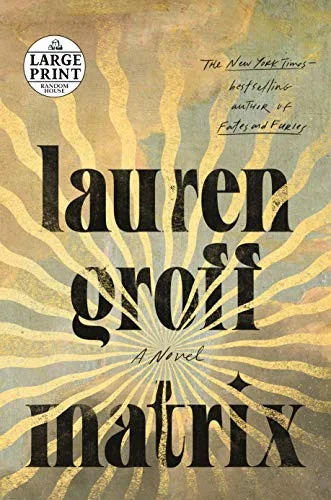
Matrix

 80
80

Matrix
Lauren Groff’s "Matrix" reimagines the life of Marie de France, presenting her not merely as a poet, but as a formidable abbess forging a new spiritual order. The novel’s strength lies in its immersive prose, which renders the stark beauty and brutal realities of 12th-century England with visceral clarity. Groff excels at portraying Marie’s fierce intellect and her unwavering, almost visionary, drive to establish her abbey, "Sainte Marie des Noyers." The depiction of Marie’s intense, almost elemental connection to the natural world as a source of spiritual power is particularly striking. However, the novel occasionally struggles with pacing; the relentless focus on austerity and spiritual discipline, while thematically crucial, can feel repetitive in the narrative’s middle sections. A passage describing Marie's vision of building the abbey as a form of divine architecture, a physical manifestation of her faith, encapsulates the book’s ambition. "Matrix" offers a compelling, if demanding, exploration of female power and spiritual conviction.
Verdict: A potent, atmospherically charged novel that reclaims a historical figure for a fierce, feminist interpretation.
📝 Description
80
Lauren Groff's 2021 novel reimagines the life of the 12th-century poet Marie de France.
The novel "Matrix" by Lauren Groff centers on Marie de France, a historical figure known for her poetry and her role as a prioress.
Groff imagines Marie's experiences establishing a new, austere abbey. The story is set against the backdrop of 12th-century England during Henry II's rule, a time of religious and political change. Marie's literary contributions, including fables and lais written in Anglo-Norman French, form the historical basis for Groff's fictional extrapolation of her influence and inner life.
The book appeals to readers interested in historical fiction that examines the inner lives of strong women. It is for those who appreciate detailed prose and a close look at the motivations and difficulties faced by individuals within strict religious and historical settings. Readers who value realistic depictions of medieval life and the complexities of women's choices will find it engaging.
While not strictly esoteric in the occult sense, "Matrix" touches upon themes that resonate with esoteric traditions. Marie's unique vision for her abbey and her connection to nature suggest a form of immanent spirituality, a focus on the sacred within the earthly and natural world. The novel's depiction of a woman creating her own spiritual order outside established hierarchies can be seen as reflecting an interest in alternative spiritual paths and the power of collective creation, mirroring some aspects found in mystical or Gnostic traditions.
💡 Why Read This Book?
• Gain insight into the challenges and triumphs of female leadership in the 12th century, as demonstrated by Marie de France’s establishment of Sainte Marie des Noyers. • Experience the power of nature as a spiritual force, a concept central to Marie’s vision and the novel’s unique approach to medieval mysticism. • Understand the interplay between earthly ambition and divine calling through Marie’s complex character, offering a fresh perspective on faith and power.
⭐ Reader Reviews
Honest opinions from readers who have explored this book.
❓ Frequently Asked Questions
Who was the historical Marie de France?
Marie de France was a poet and translator who lived in the 12th century. She is known for her collection of fables and her *Lais*, short verse romances, written in Anglo-Norman French. She is considered one of the earliest known French women poets.
What is the primary setting of Lauren Groff's 'Matrix'?
The novel is primarily set in England during the late 12th century, focusing on a convent established by Marie de France, which Groff names "Sainte Marie des Noyers."
What are the main themes explored in 'Matrix'?
Key themes include female leadership and agency, the relationship between spiritual devotion and earthly power, the creation of sacred space, and the influence of the natural world on human consciousness.
Is 'Matrix' a biography of Marie de France?
No, 'Matrix' is a work of historical fiction. While inspired by the life of the real Marie de France, Lauren Groff takes significant creative liberties to explore her character and experiences.
What kind of prose style does Lauren Groff employ in 'Matrix'?
Groff uses a rich, evocative, and often stark prose style. Her writing is known for its sensory detail, powerful imagery, and exploration of the psychological depths of her characters.
What does the title 'Matrix' refer to in the book?
The title 'Matrix' refers to several concepts: the womb or source from which life emerges, the structure or framework of the abbey Marie builds, and a foundational element or origin point for her spiritual vision.
🔮 Key Themes & Symbolism
Female Authority and Vision
The novel powerfully depicts Marie de France asserting her authority as an abbess in a male-dominated world. Her vision for Sainte Marie des Noyers is not just religious but architectural and societal, a self-contained world governed by her will. This theme challenges traditional narratives of medieval women, presenting Marie as a builder and leader who shapes her environment through sheer force of intellect and spiritual conviction, drawing parallels to the generative power implied by the 'matrix' itself.
Nature as Sacred Power
Marie's connection to the natural world is depicted as a source of profound spiritual insight and power. The harsh English landscape becomes a mirror and an ally in her quest to establish her abbey. This contrasts with conventional religious asceticism, suggesting a more immanent, earth-bound form of divinity. Her visions and spiritual experiences are often tied to natural phenomena, highlighting a proto-ecofeminist sensibility where the land itself is a divine entity.
Creation of Sacred Space
The building and maintenance of the abbey, Sainte Marie des Noyers, is central to the novel's exploration of creating a sacred space. It's not just a physical structure but a manifestation of Marie’s will and her unique spiritual philosophy. The novel details the labor, the austerity, and the communal effort involved, suggesting that sacredness is actively constructed through dedication, discipline, and a shared, albeit imposed, vision. This process redefines the boundaries of a religious community.
The Body and Asceticism
Groff's portrayal of Marie and her nuns engages with the concept of asceticism not merely as denial but as a form of intense physical discipline that can lead to spiritual clarity. The novel explores the body's limits and its potential for transcendence through rigorous self-control and communal austerity. This theme questions the traditional separation of the physical and spiritual, suggesting that the body, through extreme conditions, can become a vessel for extraordinary experiences.
💬 Memorable Quotes
“She made them build.”
— This short, declarative statement encapsulates Marie de France's driving force and her method of imposing her will and vision onto the world. It highlights her role as a builder and leader, transforming both the physical landscape and the lives of the women under her charge.
“The world was made of words, and words were made of air.”
— This reflects a philosophical or mystical understanding of creation and language, suggesting the potent, intangible force behind reality. It speaks to the power of narrative and belief in shaping existence, a concept relevant to both Marie's literary background and her spiritual leadership.
“She was a creature of the earth, a root, a stone.”
— This description emphasizes Marie's deep, almost primal connection to the physical world and the land. It portrays her as grounded and elemental, drawing strength and identity from nature, a key aspect of her unique spiritual power.
“Her abbey was a fortress, her body a battlefield.”
— This powerful metaphor illustrates the dual nature of Marie's struggle. She must defend her spiritual and physical space (the abbey) while also engaging in internal battles of will, faith, and discipline (her body as a battlefield).
“There was no God but God, and she was his instrument.”
— This assertion highlights Marie's absolute conviction in her divine mission and her role as a conduit for God's will. It speaks to her unwavering self-belief and the justification she finds for her ambitious and often ruthless leadership.
🌙 Esoteric Significance
Tradition
While not explicitly tied to a single esoteric lineage, "Matrix" echoes Gnostic themes of creating a perfect, separate spiritual order and a form of divine feminine principle. Marie's vision can be seen as a departure from or a radical reinterpretation of conventional Benedictine or Cistercian monasticism, emphasizing an immanent, earth-connected spirituality rather than strict otherworldly asceticism. Her leadership style and the communal structure she imposes suggest an attempt to manifest a divine ideal in the material world, a core Hermetic aspiration.
Symbolism
The abbey itself, Sainte Marie des Noyers, functions as a primary symbol – a matrix for a new spiritual community and a fortress against worldly corruption. The harsh English landscape, with its plants and animals, symbolizes raw, untamed spiritual power and Marie's connection to a more elemental divinity. The act of building and enclosure represents the creation of a sacred space, a controlled environment where divine will can be enacted, mirroring the alchemical process of refinement and transformation.
Modern Relevance
Contemporary thinkers exploring ecofeminism, radical spirituality, and the re-evaluation of female power find resonance in "Matrix." The novel's portrayal of creating community and sacred space outside patriarchal structures speaks to modern desires for alternative living and spiritual practice. It influences discussions on female leadership in religious and secular contexts, and its emphasis on nature as a spiritual source aligns with contemporary environmental and spiritual movements seeking deeper connections to the earth.
👥 Who Should Read This Book
• Students of medieval history and literature seeking a fictionalized yet evocative portrayal of 12th-century monastic life and the challenges faced by historical women writers. • Readers interested in feminist interpretations of history and religion who want to explore themes of female agency, power, and spiritual leadership. • Lovers of atmospheric, character-driven historical fiction who appreciate meticulously crafted prose and deep dives into the psychological landscapes of complex protagonists.
📜 Historical Context
Lauren Groff's "Matrix," published in 2021, is set in the tumultuous late 12th century England, a period dominated by the reign of Henry II and the aftermath of the Becket affair. This era saw significant religious fervor alongside political upheaval. Marie de France, the historical figure who inspires the novel's protagonist, was a rare literary voice of the time, known for her *Lais* and fables written in vernacular French, challenging the dominance of Latin. While Groff fictionalizes her life as an abbess, she places her within this milieu of burgeoning vernacular literature and established religious orders. The novel's exploration of female monasticism and spiritual vision offers a counter-narrative to the more commonly depicted male monastic experiences or the lives of queens and noblewomen. Its reception has been largely positive, with critics noting Groff's distinctive prose and her bold reimagining of a historical figure, engaging with themes of female power and spirituality that resonate with contemporary discussions.
📔 Journal Prompts
Marie de France's vision for Sainte Marie des Noyers.
The role of the natural landscape in spiritual revelation.
The construction of sacred space as an act of will.
The body as a site of spiritual discipline and transcendence.
The assertion of female authority in a patriarchal era.
🗂️ Glossary
Prioress
The woman in charge of a priory, a type of religious house subordinate to an abbey. She holds significant authority within her community, second only to an abbess or prior.
Lais
Short verse romances, typically dealing with themes of courtly love, popular in medieval France. Marie de France is famous for her collection of twelve *Lais*.
Anglo-Norman
The dialect of Old French spoken in England following the Norman Conquest of 1066. Marie de France wrote her works in this language.
Asceticism
Severe self-discipline and avoidance of all forms of indulgence, typically for religious reasons. It often involves rigorous fasting, prayer, and physical hardship.
Matrix
In the context of the novel, 'matrix' refers to a source, origin, or womb; a framework or structure; and a foundational element or generative principle, reflecting Marie's role in creating her abbey and her spiritual vision.
Sainte Marie des Noyers
The fictional name of the abbey established by Marie de France in Lauren Groff's novel. It translates roughly to 'Saint Mary of the Walnuts,' suggesting a grounded, perhaps even wild, origin.
Vernacular
The language or dialect spoken by the ordinary people in a particular country or region. Marie de France's use of vernacular French was significant for its time.