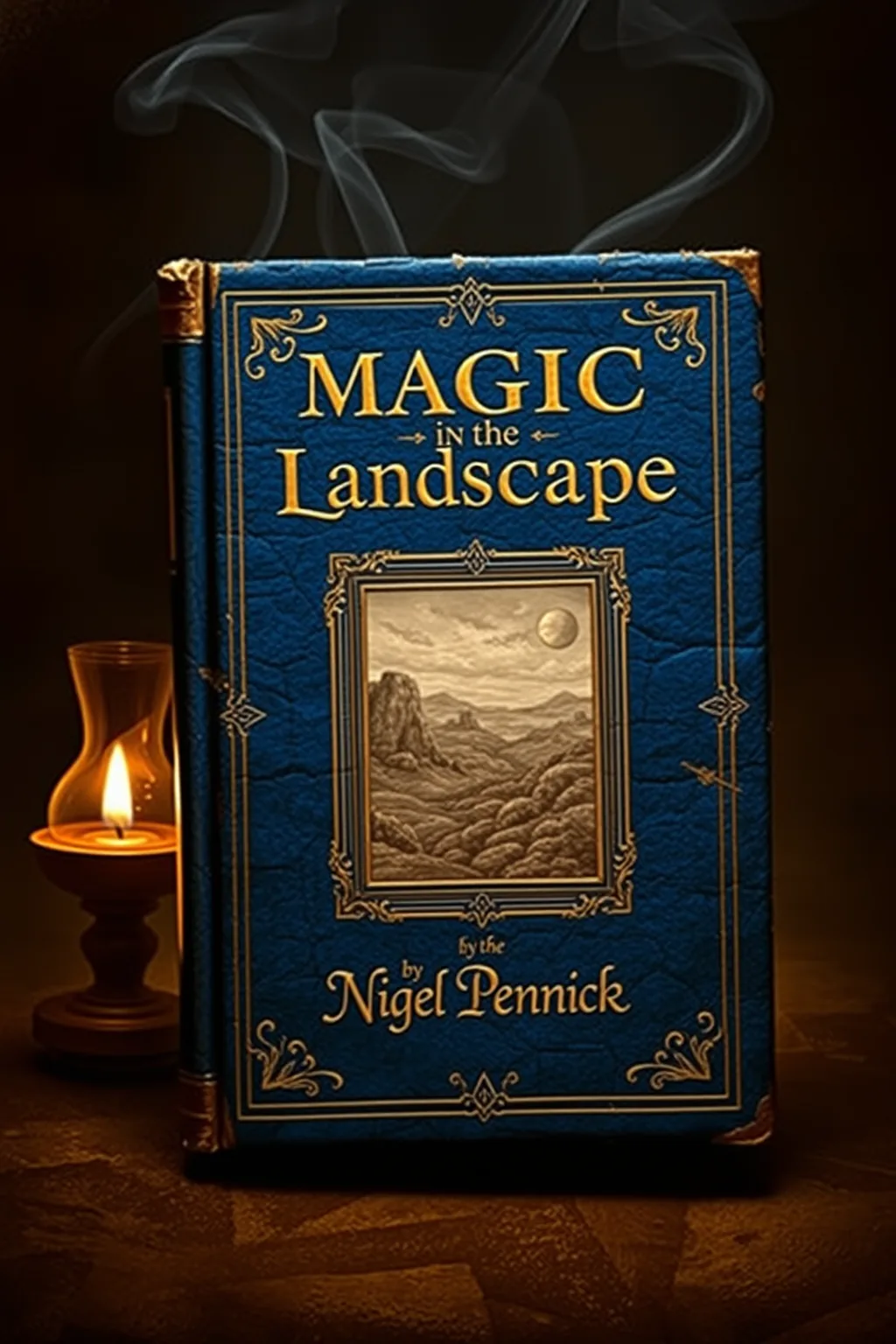
Magic in the Landscape
 72
72

Magic in the Landscape
Nigel Pennick’s *Magic in the Landscape* is a welcome return to fundamentals, eschewing modern mystical fads for a grounded approach to Earth magic. Pennick, a seasoned scholar of esoteric traditions, meticulously details the practical application of geomancy, focusing on how to establish a reciprocal relationship with one's environment. His exposition on working with ley lines and the four directions is particularly clear, offering actionable advice rather than vague speculation. A significant strength lies in its historical grounding, referencing ancient practices without romanticizing them. However, the book's dense academic style, while accurate, may prove challenging for absolute beginners seeking an immediately accessible text. The section on creating magic circles, while informative, could have benefited from more visual aids to illustrate the complex geometry discussed. Despite this, *Magic in the Landscape* offers a valuable perspective for serious practitioners looking to deepen their connection to the terrestrial realm.
📝 Description
72
Nigel Pennick's 2020 book, Magic in the Landscape, revisits Earth magic and geomancy.
This book details how our ancestors maintained a symbiotic and respectful relationship with their environment, drawing power and guidance from natural forces. It serves as a manual for understanding and interacting with the subtle energies of place, transforming mundane locations into sites of personal power.
The work is for individuals seeking to reconnect with the land on a deeper, more conscious level. It appeals to practitioners of traditional magic, geomancers, landscape designers interested in energetic principles, and anyone curious about the ancient ways of interacting with Earth energies. It is particularly suited for those who feel a calling to understand the spirit of place and to cultivate a beneficial relationship with their surroundings.
Pennick's exploration draws upon a long lineage of Earth-focused traditions, including ancient European paganism, geomantic practices that flourished through the medieval period, and the broader Western esoteric tradition. The book positions itself against a modern disconnect from nature, advocating for the revival of practices that were commonplace before industrialization and secularization.
Pennick's work taps into a deep vein of Western esotericism concerned with the earth's energies. It connects with ancient European paganism and the geomantic traditions that developed through the medieval era. The book argues for a return to practices common before industrialization, emphasizing a conscious engagement with natural forces and the subtle energies of specific locations. It suggests that by honoring the land, a potent energetic connection can be established.
💡 Why Read This Book?
• Learn to actively engage with Earth energies by understanding the function of ley lines, a concept central to ancient sacred geography. • Discover how to honor a specific place by applying principles of geomancy and directional magic, transforming it into a personal power center. • Cultivate a beneficial relationship with your surroundings through ancient practices, informed by the book's exploration of ancestral interactions with Nature's forces.
⭐ Reader Reviews
Honest opinions from readers who have explored this book.
❓ Frequently Asked Questions
What is geomancy according to Nigel Pennick in *Magic in the Landscape*?
Geomancy, as presented by Pennick, is the ancient art of divination and magic tied to the Earth's energies. It involves understanding and working with terrestrial forces, ley lines, and the four directions to honor and empower a space.
How does *Magic in the Landscape* relate to feng shui?
The book draws parallels between traditional European geomantic practices and the principles of feng shui, particularly concerning the energetic harmony of a space and the use of boundaries and protective circles.
What is the significance of ley lines discussed in the book?
Ley lines are presented as invisible pathways of terrestrial energy that connect significant geographical points. The book explains how to identify and work with these lines to harness and direct Earth's power.
Who was Nigel Pennick?
Nigel Pennick (1953-2001) was a prolific author and researcher in the fields of geomancy, folklore, and esoteric traditions. His work often focused on the practical application of ancient magical practices.
When was *Magic in the Landscape* first published?
The book *Magic in the Landscape* by Nigel Pennick was first published on May 5, 2020.
What are the four directions in the context of Earth magic?
In Earth magic, the four directions (North, South, East, West) are considered powerful energetic points. Honoring them involves specific rituals or practices to align with and draw power from each cardinal direction.
🔮 Key Themes & Symbolism
Geomancy and Earth Energies
The core of *Magic in the Landscape* lies in its detailed exploration of geomancy, the art of reading and influencing Earth's energies. Pennick moves beyond abstract theory, providing practical methods for sensing and interacting with these subtle forces. He explains how terrestrial energies flow through ley lines and how understanding these currents can empower individuals and sacred sites. The work emphasizes a reciprocal relationship, where honoring the land allows for a beneficial exchange of energy, transforming ordinary spaces into places of power.
Ancestral Relationship with Place
Pennick reconstructs the forgotten ways our ancestors related to the natural world. This theme highlights a conscious, respectful, and often magical interaction with landscapes, contrasting sharply with modern detachment. The book details how ancient cultures imbued places with significance through rituals, boundary-setting, and alignment with celestial and terrestrial cycles. It argues for the restoration of this traditional bond, suggesting that rediscovering these practices can re-enchant our perception of the environment.
Sacred Space and Boundaries
A significant portion of the book is dedicated to the creation and consecration of sacred space. Pennick discusses the power of defining boundaries, both physically and energetically, through methods like magic circles and directional alignments. He explores how these techniques were used by ancestors to demarcate areas for ritual, protection, or power amplification. The underlying principle is that by consciously shaping and honoring a space, one can imbue it with specific qualities and energies, making it a potent locus for magical work.
The Four Directions and Astrology
The text emphasizes the profound influence of the four cardinal directions and astrological principles on terrestrial magic. Pennick explains how each direction possesses unique energetic qualities and correspondences that can be invoked in ritual and practice. Similarly, he discusses the interplay between celestial movements and earthly energies, demonstrating how astrological timing can enhance geomantic workings. This integration of cosmology with landscape magic provides a comprehensive framework for understanding the forces at play.
💬 Memorable Quotes
“Learn to cultivate a traditional, beneficial relationship with the land by embracing the forgotten practices of our ancestors”
— This foundational statement encapsulates the book's primary aim: to revive ancient methods of connecting with the Earth, fostering a harmonious and purposeful interaction with nature.
“Details the ancient art of geomancy and Earth magic, including how to work with ley lines, astrology, and the four directions to honor a space and make it a place of power”
— This highlights the practical, actionable content within the book, focusing on specific techniques like geomancy and the use of directional energies to imbue locations with potent magical qualities.
“Explores the magic of the land around us and how our ancestors interacted with Earth energies and the forces of Nature”
— This emphasizes the book's focus on the immediate environment and the historical perspective of human connection to natural forces, suggesting a rediscovery of lost wisdom.
“Discusses the power of boundaries and magic circles, the proper 'feng shui' of a site”
— This points to the book's practical guidance on creating sacred or energetically charged spaces, drawing an analogy to the well-known Chinese art of environmental harmony.
“The work explores how to honor a space and make it a place of power”
— This paraphrased concept underscores the transformative potential of the techniques presented, suggesting that by applying specific methods, any location can be elevated to a higher energetic status.
🌙 Esoteric Significance
Tradition
This work firmly belongs within the Western Esoteric Tradition, specifically drawing from the rich heritage of geomancy and European folk magic. It extends the Hermetic principle of 'As Above, So Below' to the terrestrial plane, viewing the landscape itself as a living entity imbued with consciousness and energy. Pennick’s scholarship revives and codifies practices that have often been passed down orally or through fragmented texts, offering a structured approach to Earth magic that aligns with the systematic study characteristic of Hermeticism.
Symbolism
Key symbols include **ley lines**, understood as energetic conduits connecting points of power on the Earth’s surface, vital for understanding the flow of terrestrial forces. **Magic circles** represent the symbolic boundary between the mundane and the sacred, a fundamental tool for focusing intent and containing energy. The **four directions** are also potent symbols, each associated with specific elements, qualities, and spiritual influences that practitioners learn to invoke for balance and power.
Modern Relevance
In contemporary practice, *Magic in the Landscape* informs modern geomancers, landscape designers, and ecological psychogeographers. Thinkers like Daniel Pinchbeck, who explores altered states and planetary consciousness, and practitioners within contemporary pagan and Druidic movements often reference or echo Pennick’s emphasis on sensing and interacting with Earth energies. The book’s principles are applied in land healing projects and the creation of intentional, energetically attuned spaces, reflecting a growing desire for deeper ecological connection.
👥 Who Should Read This Book
• **Aspiring Geomancers:** Those seeking to learn the foundational principles and practical techniques of Earth divination and landscape magic, including working with ley lines and directional energies. • **Students of Western Esotericism:** Individuals interested in understanding the historical and practical applications of geomancy within the broader context of Hermeticism and European folk magic traditions. • **Nature Enthusiasts with a Magical Bent:** Readers who feel a strong connection to the land and wish to deepen that relationship through conscious, ritualistic engagement with natural energies and sacred spaces.
📜 Historical Context
Nigel Pennick's *Magic in the Landscape*, published in 2020, emerges within a contemporary resurgence of interest in traditional folk magic and Earth-centered spirituality, a trend that gained momentum throughout the late 20th century. Pennick's work grounds itself in the long history of geomancy, a practice that saw significant development during the medieval period, influencing everything from architecture to divination. His approach engages with the lineage of Western esoteric traditions, which often sought to understand the subtle energies of the planet, much like contemporary movements such as Earth First! or certain pagan revivalist circles. While Pennick focuses on European traditions, his work implicitly contrasts with the more Eastern-derived practices like feng shui, offering a distinct Western geomantic perspective. The book’s detailed examination of ley lines and sacred geography connects to earlier 20th-century researchers like Alfred Watkins, though Pennick’s focus is more explicitly magical rather than purely archaeological.
📔 Journal Prompts
Reflect on the energetic qualities of the four directions in your immediate environment.
Map potential ley lines in your local area based on Pennick's geomantic principles.
Consider how the concept of boundaries applies to your personal sacred spaces.
Analyze a familiar landscape through the lens of Earth energies and ancestral practices.
Meditate on the 'feng shui' of your dwelling, as described through geomantic principles.
🗂️ Glossary
Geomancy
An ancient form of divination and magic concerned with interpreting and influencing the energies of the Earth, often involving the use of figures derived from random number generation or observation of the landscape.
Ley Lines
Hypothetical invisible lines of energy that are believed to connect ancient sites of power, megaliths, and natural landmarks across the landscape, forming a network of terrestrial force.
Earth Energies
Subtle forces believed to emanate from the Earth itself, often associated with geological formations, water sources, and the planet's magnetic field, which can be sensed and worked with magically.
Magic Circle
A consecrated or energetically defined space, typically circular, used in ritual magic to contain energies, protect the practitioner, or create a sacred area for working.
Four Directions
The cardinal points of North, South, East, and West, each considered to possess distinct energetic qualities and spiritual associations within various magical and shamanic traditions.
Place of Power
A location on the Earth's surface that possesses a high concentration or specific quality of natural or supernatural energy, often chosen for ritual, meditation, or magical workings.
Feng Shui
An ancient Chinese practice focused on harmonizing individuals with their surrounding environment by arranging spaces to optimize the flow of 'qi' (life force energy).