Lucifer ascending

 71
71

Lucifer ascending
Bill Ellis's *Lucifer Ascending* offers a compelling deconstruction of a figure often reduced to a caricature. Rather than presenting a devotional or purely historical account, Ellis adopts a folklorist's scalpel, dissecting the layered meanings attributed to Lucifer across centuries. The book excels in its examination of the 'light-bringer' versus 'adversary' dichotomy, particularly its engagement with Gnostic thought and Renaissance reinterpretations. A notable strength is its meticulous tracing of how the symbol's meaning shifts with cultural context. However, at times, the dense analytical prose can obscure the more visceral impact of the Luciferian mythos. The section discussing the figure's presence in 19th-century occultism, while informative, feels somewhat detached from the potent symbolic charge it held for practitioners. Ultimately, *Lucifer Ascending* provides a valuable scholarly perspective for understanding a complex archetype, even if it prioritizes academic rigor over evocative exploration.
📝 Description
71
Bill Ellis's 2003 book analyzes Lucifer's cultural and historical construction.
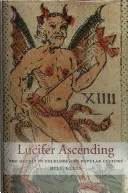
Lucifer Ascending, published in 2003, examines how the figure of Lucifer has been shaped by culture and history. It is not a theological argument but a critical look at how this powerful symbol was adopted and changed across different periods and belief systems. The book follows Lucifer's development from early myths, through its portrayal as a demon in the Middle Ages, its reappearance in Renaissance and Enlightenment ideas, and its various forms in modern occultism and popular culture.
Ellis scrutinizes Lucifer's symbolic weight as a figure representing rebellion, secret knowledge, and opposition. The work considers its lasting presence in Western thought. The book is for readers interested in the critical study of mythology, folklore, and religious symbolism, especially concerning adversarial figures. Scholars of comparative religion, cultural history, and the history of magic will find Ellis's analysis useful. It also suits occult practitioners wanting a deeper grasp of the historical and symbolic foundations of figures they might encounter, moving past simple demonological ideas. Those interested in archetype psychology and their appearance in shared stories will also find this book valuable.
Emerging in the early 2000s, a time of renewed academic and public interest in esoteric traditions, Ellis's work engages with a scholarly environment that increasingly analyzed religious and mythical figures through folklore, comparative mythology, and critical theory. While figures like Aleister Crowley had previously reinterpreted Luciferian imagery, Ellis's focus is on the cultural construction of the symbol rather than occult practice itself. This approach places the book within a tradition of critical historical examination of esoteric concepts.
💡 Why Read This Book?
• Gain a nuanced understanding of the Lucifer archetype, moving beyond simplistic good-vs-evil binaries, by examining its Gnostic interpretations and its role as a symbol of gnosis. • Trace the historical evolution of Lucifer from ancient mythology through Renaissance humanism and into modern occultism, appreciating how cultural shifts altered the symbol's meaning. • Analyze the 'light-bearer' versus 'adversary' dynamic, understanding how this duality is reflected in the symbolic landscape of Western esoteric traditions.
⭐ Reader Reviews
Honest opinions from readers who have explored this book.
❓ Frequently Asked Questions
What is the primary focus of Bill Ellis's *Lucifer Ascending*?
The book focuses on the cultural and historical construction of the Lucifer figure, analyzing how its meaning has evolved across different eras and belief systems, rather than presenting a theological argument.
Does *Lucifer Ascending* discuss Lucifer in relation to Satan?
Yes, the work explores the distinction and occasional conflation between Lucifer and Satan, examining how the Luciferian symbol has been interpreted distinctly from or in conjunction with the figure of Satan.
What historical periods does the book cover regarding Lucifer?
Ellis traces Lucifer's trajectory from its mythological roots, through medieval demonology, Renaissance and Enlightenment thought, and into modern occult and cultural interpretations.
Is *Lucifer Ascending* a practical guide to Luciferianism?
No, the book is primarily an academic and critical analysis of the symbol's history and cultural impact, not a manual for occult practice.
What specific esoteric traditions influence the book's analysis?
The work engages with Gnostic traditions, Renaissance humanism, and various strands of modern occultism to understand the symbolic transformations of Lucifer.
When was *Lucifer Ascending* first published?
Bill Ellis's *Lucifer Ascending* was first published in 2003.
🔮 Key Themes & Symbolism
The Light-Bearer Archetype
Ellis meticulously examines the etymological root of Lucifer ('light-bearer') and its association with knowledge, illumination, and the dawn. This theme contrasts the figure's potential for bringing wisdom with its later demonization. The work explores how various traditions, including early Gnosticism, viewed Lucifer as a bringer of hidden truths, a stark departure from conventional theological narratives. This concept is crucial for understanding the symbol's enduring appeal as a representation of intellectual rebellion and spiritual awakening.
The Adversary and Rebellion
A central theme is Lucifer's role as the 'Adversary,' a figure who challenges established orders, divine or human. Ellis analyzes this archetype not merely as an antagonist but as a catalyst for individuation and critical thought. The book traces the historical moments where Lucifer became a symbol for political or religious dissent, particularly during periods of intense ideological conflict. This exploration studies the psychological necessity of an opposing force for defining identity and pushing boundaries, a concept resonant in both esoteric thought and broader philosophical discourse.
Symbolic Transformation
This theme focuses on how the meaning and imagery of Lucifer have been reinterpreted and transformed across different epochs and cultural contexts. From a pre-Christian celestial entity to a medieval demon and a Renaissance emblem of gnosis, the symbol's fluidity is paramount. Ellis demonstrates how each era grafts its anxieties, aspirations, and philosophical frameworks onto the figure, making Lucifer a mirror of collective consciousness. The work highlights the adaptability of potent symbols in enduring and evolving within the Western esoteric tradition and beyond.
Gnosis and Esoteric Knowledge
The book frequently intersects the Luciferian figure with Gnostic traditions, exploring the concept of gnosis – direct, intuitive knowledge of the divine. Ellis investigates how Lucifer has been associated with the pursuit of this hidden knowledge, often in opposition to orthodox religious structures that emphasize faith or dogma. This theme connects Lucifer to esoteric paths that prioritize personal revelation and the unlocking of inner potential, positioning the figure as a patron of those seeking forbidden or esoteric wisdom.
💬 Memorable Quotes
Direct passages from the work, attributed to the author.
“Lucifer's primary role has been as a symbol of rebellion against established authority.”
— This highlights the core function of the Luciferian figure across various mythologies and historical periods, representing a challenge to existing power structures, whether divine, political, or intellectual.
“The meaning of Lucifer shifted dramatically from a bringer of light to a figure of dread.”
— This points to the profound cultural and religious transformations that recontextualized the original 'light-bearer' concept into a demonized entity, reflecting changing societal anxieties and theological doctrines.
“Gnostic traditions often viewed the creator as a lesser entity, with figures like Lucifer offering true illumination.”
— This captures the Gnostic tendency to invert traditional hierarchies, presenting Lucifer not as a fallen angel but as a liberator or revealer of hidden, superior knowledge.
“The adversary function of Lucifer is crucial for intellectual and spiritual development.”
— This interpretation emphasizes the symbolic value of opposition, suggesting that challenging established norms, represented by the Adversary archetype, is essential for growth and the acquisition of deeper understanding.
“Renaissance humanism saw a resurgence of Lucifer as a symbol of intellectual curiosity.”
— This points to a specific historical period where the figure of Lucifer was re-embraced, not as purely evil, but as an emblem of human potential, learning, and the pursuit of knowledge without constraint.
🌙 Esoteric Significance
Tradition
While not strictly adhering to a single lineage, *Lucifer Ascending* engages deeply with Gnostic traditions and their reinterpretation of creation narratives. It also touches upon Renaissance Hermeticism and later occult revivals that saw Lucifer as a symbol of illumination and rebellion against dogma. The work fits within the broader field of Western Esotericism by analyzing figures that have been central to its symbolic vocabulary, offering a critical perspective on their historical and cultural construction.
Symbolism
The primary symbols explored are Lucifer himself, representing the 'light-bringer' and the 'adversary,' and the concept of 'gnosis' as hidden, intuitive knowledge. Ellis dissects how the dual nature of Lucifer—as celestial dawn and as rebel—is interpreted. The serpent, often associated with temptation and wisdom in Judeo-Christian contexts, is implicitly examined through its connection to figures offering forbidden knowledge, a role sometimes attributed to Lucifer.
Modern Relevance
Contemporary thinkers in fields ranging from comparative mythology to critical occult studies continue to draw on analyses like Ellis's to understand the enduring power of adversarial archetypes. Luciferian and Satanic-inspired groups, while often diverging significantly in practice and belief, still grapple with the historical symbolism Ellis unpacks. His work provides a valuable counterpoint to devotional approaches, offering a critical framework for understanding the cultural resonance of figures that challenge established order.
👥 Who Should Read This Book
• Students of comparative religion and mythology seeking to understand the evolution of archetypal figures across cultures. • Occult practitioners interested in the historical and symbolic roots of Luciferian and adversarial symbolism, providing context beyond modern interpretations. • Cultural historians and folklorists examining how potent symbols are created, adapted, and wielded within societal narratives and belief systems.
📜 Historical Context
Published in 2003, *Lucifer Ascending* arrived during a period of renewed academic and popular engagement with esoteric subjects, influenced by post-modern critiques and the burgeoning internet. Bill Ellis's work contributes to a scholarly tradition that analyzes religious figures through the lens of folklore and comparative mythology, moving beyond purely theological interpretations. While figures like Helena Blavatsky and the Theosophical Society had already extensively explored and re-appropriated Luciferian symbolism in the late 19th century, Ellis's approach is more focused on cultural semiotics and historical evolution. His work can be seen as engaging with, though not necessarily agreeing with, earlier folklorists like Margaret Murray, whose theories on witchcraft were widely debated. The book avoids the more direct occult practice focus of contemporaries and instead offers a critical dissection of the symbol's persistent presence in Western consciousness.
📔 Journal Prompts
The Luciferian archetype as a symbol of rebellion: consider its manifestations in different historical eras discussed.
Analyze the duality of Lucifer as 'light-bearer' versus 'adversary' in your own understanding of esoteric principles.
Reflect on the impact of Gnostic thought on the reinterpretation of figures like Lucifer.
How has the cultural context of an era shaped the symbolic meaning of Lucifer?
The role of the 'Adversary' in challenging established dogma: explore its necessity for intellectual progress.
🗂️ Glossary
Gnosticism
A diverse set of ancient religious ideas and systems, originating in the first century CE, characterized by the belief that salvation is achieved through secret knowledge (gnosis) of the divine.
Adversary
In a religious or mythological context, a figure or force that opposes or resists the established divine or cosmic order; often associated with rebellion or temptation.
Archetype
A recurring symbol, character, or pattern of imagery that is universally understood, often believed to be inherited from the collective unconscious.
Hermeticism
A religious, philosophical, and esoteric tradition based on writings attributed to Hermes Trismegistus, emphasizing divine wisdom and the interconnectedness of all things.
Light-bearer
A literal translation of the name Lucifer, referring to a being associated with bringing light, knowledge, or illumination, often in contrast to darkness or ignorance.
Symbolic Transformation
The process by which the meaning, imagery, and cultural significance of a symbol evolve and change over time and across different contexts.
Renaissance Humanism
An intellectual movement during the Renaissance that emphasized human potential, achievement, and the study of classical antiquity, often fostering critical inquiry.
🔮 Readers Also Liked
Browse all →









More by Bill Ellis
All books →

More Free Occult Philosophy Books
View all →