Life and Death

 80
80

Life and Death
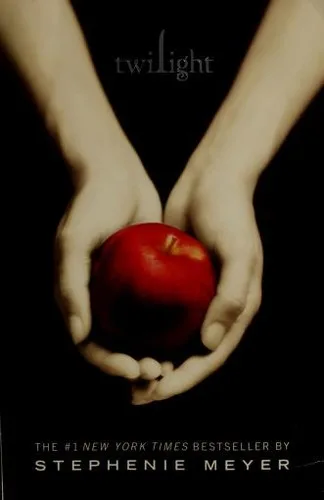
Stephenie Meyer's Life and Death, a reimagining of her earlier Twilight narrative, offers a surprising depth when viewed through an esoteric lens. The substitution of characters and gender dynamics, while a surface-level alteration, allows for a renewed examination of the core themes of sacrifice, eternal existence, and the allure of a life beyond conventional boundaries. The novel succeeds in framing these concepts within a dramatic narrative, making them approachable for a broad audience. However, its primary limitation lies in its narrative structure; the reliance on a familiar plot framework, even with reversed roles, can sometimes overshadow the philosophical inquiries it attempts to pose. The exploration of Edythe's (Bella's counterpart) struggle with her undead existence and the desire for a mortal life for Beau (Edward's counterpart) is particularly compelling, highlighting the paradox of immortal beings yearning for finitude. This work is best understood not as a direct esoteric text, but as a fictional thought experiment on the nature of being.
📝 Description
80
### What It Is Life and Death, first published in 2016, presents a unique exploration of existence and non-existence through a speculative lens. The work is not a philosophical treatise in the academic sense, but rather a narrative construct designed to probe fundamental questions about consciousness, mortality, and the nature of reality.
### Who It's For This book appeals to readers interested in speculative fiction that grapples with existential themes. It is particularly suited for those who enjoy narratives that challenge conventional understandings of life, death, and the boundaries of perception. Individuals seeking a fictional exploration of metaphysical concepts will find material for contemplation.
### Historical Context Published in 2016, Life and Death emerged during a period of intense interest in speculative fiction and its capacity to address complex philosophical and ethical questions. While not directly aligned with any single esoteric movement, its themes echo broader contemporary discussions in fields ranging from consciousness studies to quantum physics, often filtered through a narrative lens that seeks to make abstract ideas accessible.
### Key Concepts The work engages with concepts of alternate realities, the persistence of consciousness beyond physical death, and the subjective experience of time. It questions the fixed nature of identity and explores the possibility of different iterations of selfhood. The narrative itself becomes a vehicle for examining the very definition of 'life' and 'death' as we commonly understand them.
💡 Why Read This Book?
• Gain a new perspective on the concept of immortality and its potential burdens, as explored through the character of Edythe and her eternal existence dating back to the 19th century. • Contemplate the nature of consciousness and identity by examining how the narrative questions fixed realities and the possibility of different iterations of selfhood. • Experience a narrative that uses speculative fiction to probe the boundaries of life and death, offering a fictionalized exploration of metaphysical ideas for readers.
⭐ Reader Reviews
Honest opinions from readers who have explored this book.
❓ Frequently Asked Questions
Is Life and Death a new story or a retelling?
Life and Death is a retelling of Stephenie Meyer's Twilight, with the main characters' genders reversed and some plot alterations. It was first published in 2016.
What are the main themes of Life and Death?
The book explores themes of life and death, immortality, consciousness, identity, and the nature of reality. It questions what it means to be alive and the potential consequences of eternal existence.
Does this book have any connection to the Twilight saga?
Yes, Life and Death is presented as a companion novel or alternate retelling of the original Twilight story, featuring gender-swapped characters and a revised narrative.
Who are the main characters in Life and Death?
The main characters are Edythe Cullen (the vampire, analogous to Edward Cullen) and Beau Swan (the human, analogous to Bella Swan).
What is the publication year of Life and Death?
Life and Death was first published in 2016, as part of the celebration of the 10th anniversary of the Twilight novel.
Is this book considered esoteric literature?
While not a traditional esoteric text, its exploration of themes like consciousness beyond the physical, alternative realities, and existential questions aligns with broader esoteric inquiries.
🔮 Key Themes & Symbolism
The Paradox of Immortality
The narrative grapples with the allure and the profound drawbacks of an eternal existence. Edythe Cullen's millennia of life, marked by profound loss and detachment from the mortal world, highlights the existential cost of vampirism. This theme challenges the romanticized view of immortality, suggesting it may lead to a form of living death, devoid of the very experiences that define human existence. The work questions whether perpetual life is a gift or a curse when it removes one from the natural cycle of birth and decay.
Consciousness Beyond the Physical
Life and Death delves into the persistence of consciousness independent of a biological form. The vampires, though deceased physically, retain their minds, memories, and personalities. This raises questions about the soul, the nature of self, and whether identity is solely tied to the physical body. The narrative explores the idea that consciousness might be a fundamental aspect of reality, capable of existing in different states, pushing the reader to consider what truly constitutes 'life'.
Subjectivity of Reality and Time
Through its speculative framework, the book suggests that our perception of reality and time is inherently subjective. The existence of vampires, living outside the conventional flow of time, and the potential for alternate versions of existence, implies that the universe is far more fluid than commonly understood. This theme invites contemplation on how individual consciousness shapes its own perceived reality and the limitations of human understanding when confronting phenomena beyond ordinary experience.
The Nature of Sacrifice
Sacrifice is presented as a central motif, particularly concerning the choice between preserving one's own existence and ensuring the well-being or desired future of another. Edythe's internal conflict over Beau's mortality and her own immortal nature exemplifies this. The narrative questions what constitutes a meaningful sacrifice and whether the ultimate sacrifice is the relinquishing of one's own desires for the perceived happiness of a loved one, even if it means choosing a finite existence.
💬 Memorable Quotes
“The story of Beau and Edythe is an alternate telling of the classic Twilight narrative.”
— This statement frames the work as a narrative experiment, suggesting that by altering fundamental elements like gender, the author aims to re-examine core themes and character dynamics previously explored.
“Edythe Cullen struggles with the implications of her eternal, predatory existence.”
— This highlights the internal conflict of the vampire character, emphasizing the existential burden of immortality and the moral quandary of maintaining life at the expense of others, a key esoteric concern regarding unnatural existence.
“Beau Swan desires a life beyond his human limitations, drawn to Edythe's world.”
— This points to the human yearning for transcendence or escape from mortal constraints, a common theme in esoteric traditions that often seek paths to overcoming the limitations of the physical body and lifespan.
“The narrative explores the consequences of choosing a life outside the natural order.”
— This interpretation suggests the book examines the repercussions of deviating from natural laws, a central tenet in many esoteric philosophies that warn of the dangers of unnatural practices or states of being.
“The core conflict involves the tension between finite human life and unending vampiric existence.”
— This encapsulates the central dichotomy presented in the book, framing it as a philosophical exploration of mortality versus eternity and the inherent conflicts that arise from their juxtaposition.
🌙 Esoteric Significance
Tradition
While not directly a product of a specific esoteric lineage like Hermeticism or Gnosticism, Life and Death engages with themes common in Western esotericism, particularly those concerning the nature of consciousness and the potential for existence beyond the mortal coil. It mirrors, in a fictionalized manner, the interest found in traditions that explore states of being that transcend conventional life and death, such as certain interpretations of vampirism in occult lore or Gnostic ideas of spiritual awakening beyond material limitations.
Symbolism
The primary symbol is the vampire, representing an unnatural state of existence that offers immortality at the cost of humanity. This figure embodies the esoteric concept of an 'undead' state, one that persists outside the natural cycle of regeneration and decay, often signifying a distorted form of eternal life. The contrast between the immortal vampire and the finite human serves as a symbolic representation of the tension between spiritual aspiration and material limitation, or the eternal versus the temporal.
Modern Relevance
Contemporary discussions in consciousness studies, transhumanism, and speculative fiction often touch upon similar themes of altered states of being and the potential for transcending biological limitations. Authors and thinkers exploring the philosophical implications of artificial intelligence, digital consciousness, or altered perceptions of reality can find resonance with the questions Life and Death poses about what constitutes 'life' and the nature of selfhood in non-standard conditions.
👥 Who Should Read This Book
• Readers interested in speculative fiction that uses supernatural elements to examine philosophical concepts like immortality and the nature of consciousness. • Fans of Stephenie Meyer's previous works seeking an alternative narrative exploring familiar character archetypes and themes from a new perspective. • Individuals curious about fictional explorations of existential questions regarding life, death, and what it means to be human or non-human.
📜 Historical Context
Published in 2016, Life and Death emerged within a literary landscape where speculative fiction continued to explore complex philosophical and existential questions, often drawing from or commenting on established mythological and religious frameworks. While Stephenie Meyer's prior work, the Twilight saga, achieved massive commercial success in the late 2000s, this 2016 publication offered a gender-swapped reimagining. It arrived at a time when discussions around identity, consciousness, and the nature of reality were gaining traction in both academic and popular spheres, influenced by fields like neuroscience and theoretical physics. The book's thematic engagement with immortality and the supernatural can be seen as a continuation of a long tradition in literature, but its specific narrative approach is distinct from more overtly philosophical or theological texts. Its reception was largely framed by its connection to the Twilight phenomenon, rather than by engagement with contemporary esoteric scholars or movements, though its themes echo broader interests in alternative states of being.
📔 Journal Prompts
Edythe Cullen's eternal existence and her perspective on the mortal world.
The concept of consciousness persisting beyond physical death as presented in the narrative.
Beau Swan's yearning for an existence beyond his human limitations.
The symbolic representation of the vampire in relation to natural cycles.
The narrative's exploration of alternate realities and subjective experiences of time.
🗂️ Glossary
Vampire
In the context of this book, a supernatural being who sustains their existence through the consumption of blood, possessing enhanced abilities and immortality but lacking a beating heart and conventional human life.
Immortality
The state of living forever, in this book embodied by vampires, often presented with a duality of desirable eternity and burdensome unending existence.
Consciousness
The state of being aware of and responsive to one's surroundings; in the book, it is explored as potentially existing independently of a physical, living body.
Mortal
Subject to death; human. The narrative contrasts the finite lifespan of mortals with the unending existence of vampires.
Gender-Swapped
A narrative approach where the genders of established characters are reversed, offering a new lens through which to explore their relationships and motivations.
Existential
Relating to existence; concerned with the nature of being, human existence, and the search for meaning.
Alternate Reality
A hypothetical world or universe that differs from our own in some significant way, often explored in speculative fiction to examine different possibilities.