Last generation
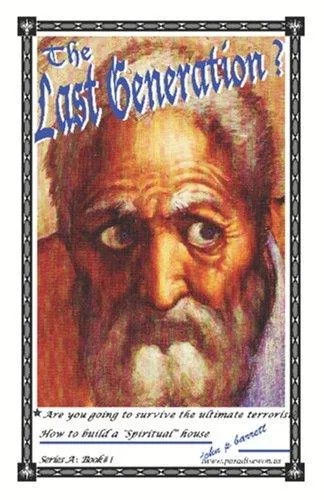
 76
76

Last generation
Barrett's "Last Generation" presents a stark, unflinching look at the potential terminus of current societal trajectories. The 1996 publication date lends it a peculiar prescience, examining anxieties that have only amplified in the intervening decades. Barrett's strength lies in his ability to synthesize historical observation with esoteric principles, framing societal decline not as a random event but as a predictable phase within larger cycles. However, the work's densely philosophical nature can sometimes obscure its core arguments, requiring significant reader investment to fully grasp. A particularly striking passage discusses the 'entropy of consciousness,' a concept that encapsulates the book's central thesis about collective spiritual inertia. While challenging, "Last Generation" offers a potent, if somber, framework for understanding our present moment.
📝 Description
76
Published in 1996, John P. Barrett's "Last Generation" examines societal decay and spiritual resurgence.
John P. Barrett's 1996 book, "Last Generation," analyzes societal decline and the possibility of spiritual renewal. The text argues humanity is at a critical juncture, facing the results of its actions. It is not a prediction of disaster, but an examination of recurring patterns in history and human thought. Barrett views the forces influencing the modern world through an esoteric perspective. The book is for readers interested in philosophical questions about civilization and the human experience. It will appeal to those curious about alternative historical views, spiritual philosophy, and critiques of current societal trends. Those seeking esoteric explanations for global events and paths to personal change amidst societal shifts will find relevant material.
The work addresses generational cycles, positing that distinct stages of human development and social expression are unavoidable. Barrett considers collective karma and the potential for a spiritual awakening to alter these cycles. The book also discusses consciousness and its influence on perceived reality, promoting increased awareness. It emerged in the mid-1990s, a time of growing globalization and unease about the digital age. Barrett's writing counters prevailing secular viewpoints with a spiritual and cyclical interpretation of history.
Emerging in the mid-1990s, "Last Generation" offers a spiritual counterpoint to secular narratives of the time. Barrett's work connects to traditions that view history not as linear progress but as cyclical. It engages with ideas about archetypal patterns in collective consciousness, akin to but distinct from the work of Carl Jung. The book specifically addresses end-times anxieties prevalent in various spiritual groups during that era, framing them through an esoteric, generational lens. This perspective suggests a potential for transformation through heightened awareness and spiritual awakening.
⭐ Reader Reviews
Honest opinions from readers who have explored this book.
❓ Frequently Asked Questions
When was 'Last Generation' first published?
John P. Barrett's 'Last Generation' was first published in 1996, offering a perspective on societal cycles and spiritual evolution at the close of the 20th century.
What is the main theme of 'Last Generation'?
The primary theme is the examination of societal decay as a phase within cyclical historical patterns, and the potential for spiritual awakening to influence or transform these cycles.
Is 'Last Generation' a prophecy of the end times?
No, the work is framed as an analysis of societal trends and spiritual dynamics, rather than a predictive prophecy of apocalyptic events.
Who is the author of 'Last Generation'?
The book is authored by John P. Barrett, with an initial publication credited to John Barrett.
What kind of reader would appreciate 'Last Generation'?
Readers interested in esoteric philosophy, alternative historical perspectives, critiques of modern society, and spiritual inquiries into collective consciousness would find this book engaging.
Does the book offer solutions to societal problems?
While not a prescriptive guide, the book suggests that heightened spiritual awareness and understanding of cyclical patterns are key to navigating societal transitions.
🔮 Key Themes & Symbolism
Societal Cycles
The work posits that civilizations and human societies move through distinct phases, akin to natural cycles of birth, growth, decay, and potential rebirth. Barrett frames the contemporary era not as a unique crisis but as a predictable stage within a grander, recurring pattern. This perspective challenges linear notions of progress, suggesting that understanding these cycles is crucial for spiritual discernment and for preparing for transformation. The book explores the energetic and consciousness-based forces that drive these shifts, moving beyond purely materialist explanations.
Spiritual Resurgence
In contrast to the perceived decay, Barrett introduces the concept of spiritual resurgence as a vital counter-force. This is not necessarily a mass movement but an awakening within individuals that can influence the collective. The book suggests that a heightening of consciousness, a return to esoteric principles, or a re-evaluation of core spiritual truths can act as catalysts for transformation. This resurgence is presented as a necessary element to break free from the downward spiral of societal entropy and to usher in a new phase of human development.
Entropy of Consciousness
A core concept explored is the 'entropy of consciousness,' which describes a state where collective awareness becomes increasingly disorganized, materialistic, and disconnected from deeper spiritual realities. This decline in consciousness is presented as a primary driver of societal decay. Barrett analyzes how this loss of spiritual focus leads to fragmentation, loss of meaning, and an inability to address fundamental challenges. Understanding this process is key to recognizing the symptoms of societal decline and seeking pathways toward renewal.
Generational Thresholds
The title 'Last Generation' refers to a perceived threshold or culmination point in a generational cycle. Barrett suggests that specific generations bear the brunt of societal culmination and possess the potential to either accelerate decline or initiate a significant shift. This concept emphasizes the responsibility and potential inherent in the present moment and the specific challenges and opportunities faced by those living through this period of transition. It calls for a conscious engagement with the forces at play.
💬 Memorable Quotes
“Humanity stands at a threshold where the patterns of the past can no longer sustain the future.”
— This statement encapsulates the book's central thesis: that current societal structures and consciousness are unsustainable, indicating a need for radical change or transformation.
“The decay of the outer world is but a reflection of the inner state of collective consciousness.”
— This highlights the esoteric principle of correspondence, suggesting that external societal breakdown is a manifestation of a deeper spiritual or psychological imbalance within humanity.
“To perceive the cycle is to gain the power to influence its unfolding.”
— This suggests that awareness of historical and consciousness cycles is not merely academic but offers a practical means for individuals to consciously participate in shaping future outcomes.
“The 'last generation' is not defined by years, but by a quality of consciousness facing culmination.”
— This clarifies that the term 'last generation' refers to a specific spiritual or energetic condition, a point of critical transition, rather than a literal chronological epoch.
“True resurgence begins with the re-establishment of connection to deeper spiritual currents.”
— This points to the solution proposed by Barrett: that societal healing and transformation are rooted in a reconnection with fundamental spiritual principles and energies.
🌙 Esoteric Significance
Tradition
The work draws heavily from cyclical theories of history found in various esoteric traditions, including certain interpretations of Hermeticism and Gnosticism, which often view human history as a series of ages or cycles of descent and potential ascent. Barrett's framework suggests a departure from purely linear, Abrahamic historical progression, emphasizing recurring patterns and the potential for conscious intervention within these cycles.
Symbolism
The concept of 'cycles' itself serves as a primary symbol, representing the recurring patterns of societal and spiritual evolution. The 'threshold' or 'culmination point' symbolizes a critical juncture where choices have profound consequences. The 'entropy of consciousness' symbolizes the gradual dissipation of spiritual energy and connection, leading to fragmentation and materialism, a state from which 'resurgence' offers escape.
Modern Relevance
Contemporary thinkers and practitioners exploring societal collapse, deep ecology, and consciousness studies often revisit the themes presented in "Last Generation." Its ideas on cyclical patterns and the energetic state of collective consciousness resonate with current discussions on global crises and the need for paradigm shifts. Schools of thought focused on spiritual evolution and the potential for individual and collective awakening find Barrett's analysis a valuable, albeit challenging, perspective.
👥 Who Should Read This Book
['• Students of esoteric philosophy and comparative religion seeking alternative frameworks for understanding history and societal dynamics.', '• Readers interested in critiques of modern civilization from a spiritual or philosophical standpoint, who are open to cyclical rather than linear historical models.', '• Individuals drawn to inquiries about collective consciousness, generational patterns, and the potential for spiritual transformation in challenging times.']
📜 Historical Context
Published in 1996, "Last Generation" emerged amidst a cultural landscape increasingly dominated by secular materialism and the burgeoning digital age. The work offered a significant counter-narrative to the prevailing optimism surrounding technological progress and globalization. Barrett's approach, rooted in esoteric cyclical theories of history, stood in contrast to the linear historical progression often assumed in mainstream thought. While figures like Teilhard de Chardin had explored evolutionary spirituality and Carl Jung had examined archetypes, Barrett's specific focus on a 'culmination generation' provided a more direct, esoterically-informed commentary on end-times anxieties. The book's reception was likely within specialized spiritual and philosophical circles, resonating with those seeking deeper meaning beyond the surface-level narratives of the era.
📔 Journal Prompts
The concept of 'societal cycles' and its manifestation in your lived experience.
Reflect on the 'entropy of consciousness' as observed in current global discourse.
What does 'spiritual resurgence' mean in the context of your personal journey?
Identify potential 'threshold' moments in your own life or historical periods.
How can one consciously influence the unfolding of generational patterns?
🗂️ Glossary
Societal Cycles
The theory that civilizations and human societies progress through recurring phases of development, decline, and potential renewal, rather than following a purely linear path.
Spiritual Resurgence
A process of awakening or intensification of spiritual awareness and connection within individuals or groups, acting as a counter-force to societal decay or materialism.
Entropy of Consciousness
A state where collective awareness becomes increasingly disorganized, materialistic, and disconnected from deeper spiritual realities, leading to societal fragmentation.
Last Generation
Refers to a specific phase or threshold within a generational or historical cycle, characterized by culmination and the potential for significant transformation.
Threshold
A point of transition or critical juncture, particularly in the context of societal or consciousness evolution, where choices have profound implications.
Consciousness
In this context, refers not only to individual awareness but also to the collective state of human perception, understanding, and spiritual connection.
Cyclical Theory
A philosophical or historical perspective that views time and events as recurring in patterns or cycles, rather than progressing in a straight line.