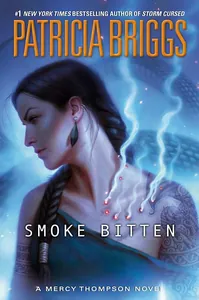
Iron kissed

 83
83

Iron kissed
Patricia Briggs' 'Iron Kissed' offers a compelling, if sometimes relentless, exploration of pack dynamics and supernatural territorial disputes. The strength of this novel lies in its unflinching portrayal of consequences; when Mercy Thompson makes a choice, the repercussions are felt viscerally by her and those around her. A particularly effective sequence involves the tense negotiations and subsequent confrontations within the werewolf governing body, showcasing the brutal pragmatism that underpins their society. However, the sheer density of characters and interwoven plotlines can occasionally feel overwhelming, demanding close attention to keep track of allegiances and motivations. The pacing, while generally brisk, falters slightly under the weight of exposition required to maintain the intricate lore. Despite these minor points, 'Iron Kissed' solidifies its place as a significant entry in the urban fantasy canon by prioritizing complex character arcs over simplistic resolutions.
📝 Description
83
### What It Is
'Iron Kissed', penned by Patricia Briggs and first published in 2008, is the third installment in the Mercy Thompson series. It diverges from typical urban fantasy by embedding complex supernatural politics and character development within a narrative focused on shapeshifters, specifically werewolves and were-coyotes. The novel plunges readers into a world where fae creatures and ancient beings coexist with modern society, often in hidden enclaves.
### Who It's For
This work is best suited for readers who appreciate intricate world-building and character-driven plots within the paranormal genre. Fans of Patricia Briggs' previous novels will find continuity and deepening of established relationships and lore. It appeals to those interested in exploring themes of loyalty, family (both biological and chosen), and the moral ambiguities faced by supernatural beings living among humans.
### Historical Context
Published in 2008, 'Iron Kissed' emerged during a period of significant growth and diversification within the urban fantasy genre. Authors like Charlaine Harris and Jim Butcher were also exploring similar themes of supernatural integration into contemporary life. Briggs' contribution lies in her nuanced portrayal of werewolf pack dynamics and the inherent tensions between different supernatural species, a theme that gained traction as the genre matured beyond simple monster-of-the-week formats.
### Key Concepts
The novel explores the concept of pack law and its application to non-pack members, the intricate hierarchy and politics of werewolf society, and the nature of fae bargains. It also delves into the personal consequences of wielding power, particularly for the protagonist, Mercy Thompson, a coyote shapeshifter caught between various factions and loyalties. The integration of Slavic folklore elements adds another layer to its thematic richness.
💡 Why Read This Book?
• Gain insight into the intricate, often brutal, politics of werewolf packs as depicted in the novel's exploration of pack law and hierarchy, a concept central to the narrative's conflict. • Experience the unique pressures faced by Mercy Thompson, a coyote shapeshifter navigating alliances and enmities between fae and werewolf factions, offering a distinct perspective on supernatural coexistence. • Understand the consequences of power and choice through specific plot points, such as the fallout from Mercy's actions in the early chapters, demonstrating a tangible impact on character relationships.
⭐ Reader Reviews
Honest opinions from readers who have explored this book.
❓ Frequently Asked Questions
What is the primary conflict in Iron Kissed by Patricia Briggs?
The primary conflict in 'Iron Kissed' revolves around Mercy Thompson's entanglement with werewolf pack politics and her efforts to protect her allies from supernatural threats and internal strife.
Who are the main supernatural species featured in Iron Kissed?
The main supernatural species featured are werewolves (specifically the Alpha pack and others), were-coyotes (Mercy's own kind), and various fae creatures, highlighting the diverse magical ecosystem Briggs has created.
What year was Iron Kissed first published?
'Iron Kissed', the third book in the Mercy Thompson series, was first published in 2008.
Does Iron Kissed feature significant character development for Mercy Thompson?
Yes, 'Iron Kissed' significantly develops Mercy Thompson's character, forcing her to confront difficult moral choices and solidify her place within the supernatural world, often through direct confrontation.
What is the role of pack law in Iron Kissed?
Pack law is a central thematic element, dictating much of the social structure, conflict, and character motivations within the werewolf community depicted in 'Iron Kissed'.
Are there connections to Slavic folklore in Iron Kissed?
Yes, Patricia Briggs incorporates elements inspired by Slavic folklore, particularly in the depiction of certain supernatural beings and their ancient origins, adding depth to the world-building.
🔮 Key Themes & Symbolism
Pack Law and Hierarchy
The novel meticulously details the rigid structure and unwritten rules governing werewolf packs. This theme is explored through the consequences faced by characters who transgress these laws, highlighting the tension between individual agency and collective survival. Briggs uses pack law not just as a plot device but as a lens through which to examine loyalty, duty, and the often brutal nature of maintaining order in a supernatural society. The internal politics and power struggles within the werewolf community are central to the narrative's progression.
Chosen Family vs. Biological Ties
Mercy Thompson's relationships form a core element, emphasizing the strength found in her chosen family over biological connections. This theme is illustrated through her deep loyalty to characters like Adam Hauptman and her protective instincts towards allies, regardless of species. The narrative contrasts the stability and understanding she finds in her chosen circle with the often fraught dynamics of traditional or biological families, particularly within the werewolf context where pack can mean family.
Moral Ambiguity of Power
'Iron Kissed' consistently presents characters, especially Mercy, grappling with the ethical implications of their supernatural abilities and the choices they make. The novel avoids simplistic portrayals of good versus evil, instead focusing on characters operating in shades of gray, driven by survival, loyalty, or necessity. The exercise of power, whether by werewolves, fae, or Mercy herself, often leads to unforeseen and morally complex outcomes, challenging readers to consider the burdens of extraordinary capabilities.
Inter-Species Relations and Conflict
The book delves into the delicate and often volatile relationships between different supernatural factions – werewolves, fae, and others. Tensions arise from territorial disputes, ancient grudges, and differing societal structures. Briggs uses these interactions to explore themes of prejudice, diplomacy, and the constant struggle for balance in a world where humans are largely unaware of the hidden magical society. The precarious alliances and betrayals between these groups drive much of the plot's momentum.
💬 Memorable Quotes
“When you get to the end of your rope, tie a knot and hang on.”
— This quote encapsulates the resilience and determination of the protagonist, Mercy Thompson, highlighting her refusal to give up even when facing overwhelming odds and complex supernatural challenges.
“Pack is family, and family is everything.”
— This statement underscores the central theme of loyalty and belonging within the werewolf community depicted in the novel, emphasizing the profound importance of pack affiliation as a source of strength and identity.
“Some debts you don't pay. You pass them on.”
— This interpretation reflects the novel's exploration of consequences and the cyclical nature of conflict. It suggests that certain actions or obligations may not be resolved but rather create a legacy of debt or retribution for others.
“The fae don't understand boundaries. They think the whole world is theirs to play in.”
— This observation points to the distinct nature and perceived arrogance of fae beings within the book's world, contrasting their worldview with the more grounded or territorial concerns of other supernatural species like werewolves.
“Mercy’s coyote nature made her an outsider, but also gave her unique perspectives.”
— This highlights a key aspect of the protagonist's identity: her dual nature as a coyote shapeshifter. It suggests that her 'otherness' provides her with valuable insights and advantages that those fully immersed in werewolf or fae society might lack.
🌙 Esoteric Significance
Tradition
While 'Iron Kissed' is primarily an urban fantasy novel, its exploration of pack dynamics, ancient pacts, and the inherent power of certain bloodlines touches upon themes found in certain interpretations of animism and shamanism, particularly concerning shapeshifting and the connection to animal spirits. It departs from classical Western esotericism by focusing on a more visceral, instinctual form of power and social structure, less concerned with codified magical systems and more with primal loyalties and territorial imperatives.
Symbolism
The primary symbol is the werewolf pack itself, representing both fierce loyalty and oppressive hierarchy; it embodies the duality of community and constraint. Mercy's coyote nature symbolizes adaptability, independence, and the outsider perspective, crucial for navigating the complex inter-species politics. The recurring motif of territory and boundaries signifies control, identity, and the fundamental conflicts between supernatural groups vying for dominance or survival.
Modern Relevance
Contemporary urban fantasy writers and readers continue to draw inspiration from Briggs' nuanced portrayal of supernatural societies. The focus on complex pack dynamics and the moral ambiguity of power in 'Iron Kissed' resonates with modern audiences seeking more depth in genre fiction. Practitioners interested in animistic or shamanic themes might find value in the novel's depiction of deep connections to animalistic natures and the consequences of disrupting natural orders.
👥 Who Should Read This Book
• Readers fascinated by intricate werewolf lore and pack politics, seeking detailed explorations of social structures within supernatural communities. • Fans of character-driven urban fantasy who appreciate narratives focusing on loyalty, difficult choices, and the consequences of power dynamics. • Enthusiasts of paranormal fiction interested in the interplay between different supernatural species (werewolves, fae) and the challenges of coexistence in a hidden world.
📜 Historical Context
Published in 2008, 'Iron Kissed' emerged during a vibrant period for urban fantasy. The genre was moving beyond simple monster-of-the-week narratives, with authors like Charlaine Harris (Southern Vampire Mysteries) and Jim Butcher (The Dresden Files) already establishing complex supernatural worlds. Patricia Briggs' contribution, particularly within the Mercy Thompson series, distinguished itself by its deep dive into werewolf sociology and pack law, presenting a more intricate and often brutal portrayal than many contemporaries. The work engaged with prevailing themes of supernatural beings living hidden among humans, but foregrounded the specific, often harsh, realities of werewolf pack structure and inter-species politics. Unlike some lighter fare, Briggs' narrative did not shy away from the consequences of violence and difficult choices, reflecting a growing reader appetite for darker, more character-driven paranormal fiction.
📔 Journal Prompts
Mercy Thompson's dual coyote and human nature – reflect on moments where this duality created conflict or advantage.
The concept of pack law – analyze how its enforcement shapes character decisions and relationships in the novel.
Adam Hauptman's role as Alpha – consider the pressures and responsibilities associated with his leadership.
Analyze the fae's perceived disregard for boundaries – how does this contrast with werewolf territoriality?
Reflect on the theme of chosen family as depicted through Mercy's core relationships.
🗂️ Glossary
Werewolf Pack
A social unit primarily composed of werewolves, characterized by a strict hierarchy, territorial claims, and strong bonds of loyalty, often functioning as a surrogate family.
Alpha
The leader of a werewolf pack, typically the strongest and most dominant individual, responsible for making key decisions and maintaining order.
Fae
A broad category of supernatural beings, often depicted as magical, capricious, and possessing their own complex societal rules and motivations, distinct from werewolves.
Coyote Shapeshifter
An individual with the ability to transform into a coyote, often portrayed as more solitary or independent than werewolves, with unique survival instincts.
Pack Law
The set of rules, customs, and traditions that govern the behavior and interactions within a werewolf pack, often enforced with severe consequences.
Territory
A defined geographical area claimed and defended by a supernatural group, such as a werewolf pack, representing control, resources, and identity.
Bargain
An agreement, often struck with fae or other powerful entities, that involves an exchange of services, favors, or promises, usually carrying significant, sometimes hidden, costs.