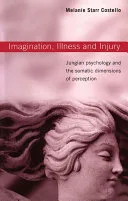
Imagination, Illness and Injury
 79
79

Imagination, Illness and Injury
Melanie Starr Costello's *Imagination, Illness and Injury* offers a compelling examination of how our inner worlds color our physical realities. The author adeptly applies Jungian principles, particularly the idea of the persona and shadow, to explain how psychological distress can manifest as somatic symptoms. A notable strength is the exploration of specific case studies, which ground abstract theories in lived experience. For instance, Costello's analysis of how a patient's imaginative narrative around their ailment directly impacted their recovery is particularly illuminating. However, the dense theoretical application, while thorough, might occasionally feel inaccessible to readers unfamiliar with Jungian terminology. The work's focus on cognitive processes is a valuable contribution, but at times, it risks underemphasizing purely biological or environmental factors in illness. Overall, *Imagination, Illness and Injury* presents a sophisticated argument for the psychosomatic basis of much human suffering and healing. It is a significant contribution to understanding the symbolic dimension of physical well-being.
📝 Description
79
### What It Is Imagination, Illness and Injury, by Melanie Starr Costello, first published in 2013, investigates the intricate relationship between the mind's imaginative faculties and the body's physical state. The work bridges psychological theory with somatic experiences, proposing that cognitive processes significantly shape our perception of health and reality.
### Who It's For This book is intended for readers interested in psychosomatic phenomena, Jungian psychology, and the symbolic language of the body. It will appeal to therapists, medical professionals, and individuals seeking to understand how subjective experiences, particularly those involving the imagination, can manifest as physical symptoms and influence recovery paths.
### Historical Context Costello's work emerges from a lineage of thought exploring the mind-body connection, influenced by figures like Carl Jung, whose theories on archetypes and the collective unconscious provide a framework for understanding these psychosomatic links. Published in 2013, it arrives at a time when mind-body medicine has gained broader acceptance, moving beyond the more esoteric interpretations prevalent in earlier 20th-century movements like Theosophy, and engaging with contemporary neuroscience and psychological research.
### Key Concepts The core of Costello's analysis lies in the concept of 'cognitive schemata' as mediators between inner psychological states and outward physical manifestations. The book examines how limiting beliefs or imaginative fixations can contribute to illness narratives, and conversely, how altered perception and imaginative engagement can facilitate healing. It explores the body as a text, readable through its symptoms and linked to the individual's psychological landscape.
💡 Why Read This Book?
• Understand how your personal narratives and imaginative frameworks, as explored through Costello's analysis of cognitive schemata, directly influence your physical health and perception of illness. • Gain insight into the Jungian perspective on how the psyche, particularly concepts like the persona, can manifest psychosomatic symptoms, offering a unique lens beyond conventional medical explanations. • Learn to interpret physical ailments not just as biological events but as symbolic expressions of internal states, a perspective advanced by the book's exploration of illness narratives originating from its 2013 publication.
⭐ Reader Reviews
Honest opinions from readers who have explored this book.
❓ Frequently Asked Questions
What is the central argument of Melanie Starr Costello's *Imagination, Illness and Injury*?
The book argues that psychological factors, particularly cognitive processes and the imagination, significantly influence how we perceive and experience illness and injury, often leading to psychosomatic manifestations.
Which psychological theories does the book draw upon?
The work primarily applies Jungian theory, examining concepts such as archetypes, the collective unconscious, and the persona to understand the links between the psyche and somatic experiences.
When was *Imagination, Illness and Injury* first published?
The book was first published on October 31, 2013.
How does the book explain the connection between illness and perception?
It posits that our internal cognitive frameworks and imaginative patterns create perceptual limitations or distortions, which can then be expressed somatically, shaping our experience of health and disease.
Who would benefit most from reading this book?
Therapists, medical professionals, students of psychology and Jungian studies, and individuals interested in psychosomatic medicine and the symbolic meaning of physical symptoms would find this book valuable.
Does the book offer solutions for overcoming psychosomatic issues?
Yes, the book analyzes the resolution of somatic manifestations by linking them to their underlying cognitive processes and suggests that altering perception and imaginative engagement can facilitate healing.
🔮 Key Themes & Symbolism
Cognitive Schemata and Somatic Manifestation
The central thesis revolves around how ingrained cognitive schemata, or mental frameworks, act as mediators between psychological states and physical symptoms. Costello explores how these patterns, often unconscious, can shape our perception of illness and injury, leading to specific bodily expressions. The book posits that these schemata are not unique to pathology but are fundamental to human cognition, suggesting that understanding them can unlock pathways to healing and altered perception.
The Imagination as a Healing Modality
This theme delves into the active role of imagination in both the onset and resolution of physical ailments. Costello examines how the imaginative faculty, when influenced by psychological distress or limiting beliefs, can contribute to illness narratives. Conversely, she explores how conscious engagement with the imagination, reframing perceptions, and symbolic representation can become powerful tools for recovery and transformation.
Jungian Framework for Psychosomatics
Applying Carl Jung's theories, the book interprets psychosomatic phenomena through the lens of archetypes, the collective unconscious, and the persona. Illness is viewed not merely as a biological malfunction but as a potential manifestation of deeper psychological dynamics and symbolic conflicts within the individual's psyche. This perspective offers a symbolic language for understanding bodily symptoms.
Illness Narratives and Identity
The work analyzes how individuals construct narratives around their illnesses and injuries, and how these stories become intertwined with their identity. Costello investigates how the way we frame our suffering, influenced by our imagination and psychological state, impacts our ability to heal and integrate the experience into our lives. The book explores the body's role in these unfolding life narratives.
💬 Memorable Quotes
“Psychosomatic phenomena arise from cognitive processes common to us all.”
— This interpretation suggests that the mind's way of processing information and forming beliefs is intrinsically linked to physical health. It implies that understanding these universal cognitive patterns is key to addressing the roots of many physical ailments.
“The body expresses what the psyche cannot articulate.”
— This highlights the symbolic nature of illness, positing that physical symptoms can serve as a non-verbal language for repressed emotions, unresolved conflicts, or unconscious psychological states that remain unexpressed verbally.
“Perceptual limitations are often rooted in imaginative fixations.”
— This concept suggests that our ability to see and understand the world, including our own health, can be restricted by rigid or biased imaginative patterns, indicating that expanding our imaginative scope is crucial for broader understanding.
“Illness can be a catalyst for profound psychological transformation.”
— This viewpoint frames sickness not just as a negative event but as a potential turning point, an opportunity for the psyche to confront inner issues, leading to personal growth and a re-evaluation of one's life path.
“The body's response is influenced by subjective meaning-making.”
— This emphasizes that physical reactions are not purely mechanical but are deeply affected by the personal significance and interpretation an individual attaches to their experiences and symptoms.
🌙 Esoteric Significance
Tradition
While not strictly adhering to a single esoteric lineage, Costello's work draws heavily from analytical psychology, a school with significant overlaps with esoteric traditions due to its exploration of archetypes, the unconscious, and symbolic meaning. It shares with Hermeticism a focus on the interconnectedness of macrocosm and microcosm, viewing the body as a reflection of inner states. The emphasis on symbolic interpretation also aligns with Gnostic and Kabbalistic approaches that seek hidden meanings in human experience.
Symbolism
The body itself functions as a primary symbol in Costello's work, acting as a canvas upon which psychological dramas are played out. Specific illnesses or injuries can be interpreted symbolically, representing aspects of the shadow self, unresolved complexes, or the psyche's attempt to communicate vital information. The 'imagination' is also a key symbolic motif, representing the bridge between the conscious and unconscious, the inner and outer worlds, and the potential for both suffering and healing.
Modern Relevance
Costello's exploration of psychosomatic links resonates with contemporary fields like psychoneuroimmunology (PNI) and trauma-informed care. Thinkers and practitioners in somatic experiencing, transpersonal psychology, and even some branches of mindfulness-based stress reduction echo her insights on the mind's role in physical well-being. Her work provides a theoretical underpinning for practices that address the whole person, integrating psychological and physical health.
👥 Who Should Read This Book
['• Students and practitioners of Jungian psychology seeking to understand the application of analytical psychology to psychosomatic conditions and the symbolic language of the body.', '• Therapists and counselors interested in integrating mind-body approaches into their practice, particularly those looking for frameworks to interpret physical symptoms as expressions of psychological distress.', '• Individuals experiencing chronic physical ailments who are curious about the potential psychological roots of their conditions and are open to exploring the symbolic dimensions of their illness narratives.']
📜 Historical Context
Melanie Starr Costello's *Imagination, Illness and Injury*, published in 2013, enters a dialogue shaped by early 20th-century explorations of the psyche's influence on the body. While figures like Sigmund Freud and Carl Jung laid foundational groundwork in psychoanalysis and analytical psychology, respectively, their initial explorations of psychosomatics often remained within the confines of neurosis and hysteria. Costello's work, however, benefits from decades of subsequent development in fields ranging from psychosomatic medicine to cognitive psychology. It arrives at a time when mind-body approaches are increasingly integrated into mainstream wellness, moving beyond the more esoteric interpretations found in movements like Theosophy, which often linked physical ailments to spiritual progress or karmic debt. Unlike contemporaries who might focus solely on neuroscience or behavioral therapy, Costello's distinct contribution lies in her direct application of Jungian theory to a broad spectrum of somatic manifestations, engaging with contemporary research while grounding her analysis in established psychological frameworks.
📔 Journal Prompts
The role of cognitive schemata in personal health narratives.
Interpreting physical symptoms as symbolic messages from the psyche.
Exploring how imaginative fixations might be limiting one's perception of well-being.
The body's articulation of unspoken psychological material.
Transformative potential found within illness narratives.
🗂️ Glossary
Cognitive Schemata
Mental frameworks or patterns of thought that organize our understanding of the world. In this context, they influence how individuals perceive and react to illness and injury.
Psychosomatic Phenomena
Physical symptoms or illnesses that are influenced or caused by mental and emotional factors, such as stress, anxiety, or repressed emotions.
Jungian Theory
A school of psychology founded by Carl Jung, emphasizing archetypes, the collective unconscious, individuation, and the symbolic interpretation of psychological experiences.
Somatic Manifestations
The ways in which psychological distress or internal states express themselves through physical symptoms or bodily experiences.
Illness Narrative
The story an individual constructs about their illness, including its causes, progression, and impact on their life, which shapes their experience and recovery.
Perceptual Limitations
Restrictions or biases in how an individual perceives reality, often stemming from underlying psychological or cognitive patterns.
Persona (Jungian)
In Jungian psychology, the social mask or role that individuals present to the world, which can sometimes obscure their true self and contribute to psychological imbalance.