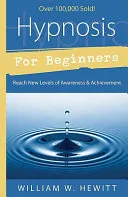
Hypnosis for Beginners
 84
84

Hypnosis for Beginners
William W. Hewitt’s "Hypnosis for Beginners" approaches its subject with an admirable directness. The book’s strength lies in its methodical breakdown of techniques, offering clear, step-by-step instructions that are genuinely helpful for novices. It successfully grounds the often-mystified practice of hypnosis in accessible psychological principles. However, the work’s primary limitation is its brevity; while thorough for an introduction, it necessarily skims over deeper theoretical implications or advanced applications. A passage detailing the mechanics of suggestion, for instance, is practical but lacks the nuance one might find in more comprehensive texts. Hewitt provides a solid starting point, but readers seeking advanced understanding will need to look further. It serves its purpose as an introductory guide effectively.
📝 Description
84
### What It Is Hypnosis for Beginners by William W. Hewitt offers a foundational exploration of hypnotic phenomena. It demystifies trance states, presenting them not as arcane rituals but as accessible psychological tools. The work focuses on practical application, moving beyond theoretical discussions to provide actionable techniques.
### Who It's For This book is tailored for individuals curious about hypnosis, whether for personal development, stress reduction, or an introduction to altered states of consciousness. It serves as an initial guide for those seeking to understand and potentially practice basic hypnotic induction and suggestion, without requiring prior esoteric knowledge.
### Historical Context Published in 1997, Hewitt's work emerged during a period of renewed interest in altered states and consciousness studies, following the more sensationalized eras of mesmerism and early psychoanalysis. It positions itself as a clear, instructional manual against a backdrop of both academic inquiry and popular fascination with the mind's potential.
### Key Concepts The text introduces core hypnotic principles, including the nature of suggestion, the role of the subconscious mind, and methods for achieving a relaxed, focused state. It elaborates on techniques for self-hypnosis and explores the concept of regression, guiding readers through the initial steps of accessing past experiences within a controlled framework.
💡 Why Read This Book?
• Learn foundational hypnotic induction techniques directly from Hewitt's 1997 guide, enabling you to initiate trance states safely and effectively. • Understand the principles of suggestion and its application as detailed in the book's exercises, empowering you to guide mental states with precision. • Explore the concept of regression and self-regression as presented by Hewitt, offering a structured method to potentially access and process past experiences.
⭐ Reader Reviews
Honest opinions from readers who have explored this book.
❓ Frequently Asked Questions
What is hypnosis according to William W. Hewitt in 'Hypnosis for Beginners'?
Hewitt presents hypnosis as an accessible psychological state of focused attention and heightened suggestibility, achievable through structured techniques rather than inherent mystical ability.
Are the exercises in 'Hypnosis for Beginners' safe for self-practice?
Yes, the book emphasizes safe and controlled practice, focusing on relaxation and suggestion techniques designed for personal development and exploration.
Does 'Hypnosis for Beginners' cover advanced hypnotic techniques?
No, as the title suggests, the book focuses on foundational concepts and basic techniques suitable for individuals new to the practice of hypnosis.
What is self-regression as discussed in Hewitt's book?
Self-regression, as outlined by Hewitt, involves guiding oneself back through memories or past experiences while in a hypnotic state, often for therapeutic or introspective purposes.
When was 'Hypnosis for Beginners' first published?
William W. Hewitt's 'Hypnosis for Beginners' was first published in 1997, positioning it within late 20th-century explorations of consciousness.
Can I learn to hypnotize others after reading this book?
The book primarily focuses on self-hypnosis and understanding the principles, providing a basis from which one could potentially learn to guide others with further study.
🔮 Key Themes & Symbolism
Foundational Hypnotic Induction
Hewitt meticulously details the process of inducing a hypnotic state, emphasizing relaxation and focused attention. The book breaks down complex concepts into manageable steps, allowing readers to practice techniques such as progressive muscle relaxation and guided imagery. This theme is crucial for anyone seeking to understand how trance states are reliably accessed, moving beyond sensationalized portrayals to a practical methodology.
The Power of Suggestion
Central to hypnosis is the concept of suggestion, and Hewitt dedicates significant attention to its mechanics. The text explores how to formulate and deliver suggestions effectively, both for oneself (self-hypnosis) and potentially for others. This theme addresses the core of how hypnotic work influences perception, behavior, and inner states, making it a vital component for practical application.
Exploration of Regression
The book introduces the intriguing subject of regression and self-regression. Hewitt guides readers through the initial understanding of accessing past memories or experiences within a hypnotic context. This theme touches upon the mind's capacity for recall and its potential use in self-discovery, presented here as a structured exploration rather than a definitive therapeutic tool.
Practical Self-Development
Ultimately, 'Hypnosis for Beginners' frames hypnotic techniques as tools for personal growth and self-improvement. Whether for stress management, focus enhancement, or general exploration of consciousness, the book empowers the individual. This overarching theme underscores the practical utility of hypnosis, making it accessible for everyday application and personal benefit.
💬 Memorable Quotes
“The hypnotic state is one of focused attention.”
— This concise statement cuts through esoteric jargon, defining hypnosis in practical terms. It emphasizes that the core of the experience is a mental state of concentration, accessible through specific techniques.
“Suggestion works by bypassing the critical factor of the conscious mind.”
— This interpretation highlights a key mechanism of hypnosis. It suggests that by quieting the analytical part of the mind, suggestions can be more readily accepted by the subconscious.
“Self-regression allows access to past experiences.”
— This paraphrased concept points to the book's exploration of regression. It frames the technique as a method for revisiting personal history, potentially for insight or understanding.
“Practice is essential for mastering hypnotic techniques.”
— This emphasizes the experiential nature of learning hypnosis. Hewitt implies that theoretical knowledge alone is insufficient; consistent application is required to develop proficiency.
“The subconscious mind readily accepts suggestions.”
— This highlights the receptivity of the subconscious during hypnosis. It underscores the power and potential impact of carefully crafted suggestions delivered in a trance state.
🌙 Esoteric Significance
Tradition
While "Hypnosis for Beginners" is presented primarily as a psychological guide, its exploration of altered states, suggestion, and the subconscious mind touches upon themes common in Western esoteric traditions. Practices involving focused will, visualization, and influencing one's own mental landscape are foundational to Hermeticism and ceremonial magic. Hewitt’s work, though secular in tone, provides a modern, demystified framework that can serve as an entry point for individuals interested in the practical application of mental discipline often explored in these older lineages.
Symbolism
The primary 'symbol' within Hewitt's work is the hypnotic state itself, representing a malleable interface between conscious and subconscious awareness. The concept of 'suggestion' acts as a symbolic key, unlocking or directing mental processes. Regression, another key theme, can be viewed symbolically as journeying into the inner landscape of personal history, a common motif in initiatory traditions where revisiting formative experiences is part of self-understanding.
Modern Relevance
Hewitt's approach remains relevant today for practitioners of mindfulness, self-hypnosis for stress management, and even those in fields like performance coaching. His clear, step-by-step methodology provides a practical foundation that resonates with contemporary interest in mental wellness and biohacking. Modern cognitive science and neuroplasticity research also echo the book's emphasis on the mind's ability to change through focused attention and suggestion, making his 1997 work a surprisingly prescient guide.
👥 Who Should Read This Book
• Aspiring practitioners of self-hypnosis seeking clear, actionable techniques for relaxation and personal development. • Students of psychology interested in understanding the mechanics of suggestion and altered states of consciousness beyond academic theory. • Individuals curious about exploring their inner world and past experiences through guided self-exploration methods.
📜 Historical Context
William W. Hewitt's "Hypnosis for Beginners," first published in 1997, emerged in an era where interest in the mind and consciousness studies was experiencing a resurgence, albeit often filtered through popular culture. The late 20th century saw a shift from the more dramatic public displays of hypnotism in the early to mid-20th century towards a greater focus on therapeutic applications and psychological research. This period was influenced by figures like Milton H. Erickson, whose indirect hypnotic techniques gained prominence, and a broader New Age movement that explored altered states. Hewitt's book can be seen as a response to a public appetite for accessible guides to the mind, standing apart from more academic texts or the more esoteric traditions. While not directly engaging with a specific contemporary author in its introduction, its practical, instructional approach echoed the self-help and personal development trends prevalent in the 1990s, offering a secular, psychologically-oriented entry point into a practice often shrouded in mystery.
📔 Journal Prompts
The process of focused attention described in the induction techniques.
Formulating effective suggestions for self-improvement.
Personal reflections on the concept of regression explored in the text.
The role of the subconscious mind in accepting suggestions.
Your initial experiences with relaxation exercises from the book.
🗂️ Glossary
Hypnosis
A state of focused attention and heightened suggestibility, characterized by deep relaxation and an altered state of consciousness.
Suggestion
An idea or instruction presented to an individual, particularly during hypnosis, that is intended to influence their thoughts, feelings, or behavior.
Trance
A state of consciousness altered by hypnosis, meditation, or other means, often characterized by deep relaxation and focused awareness.
Subconscious Mind
The part of the mind not currently in focal awareness, believed to store memories, emotions, and influence behavior; highly receptive to suggestion in hypnosis.
Induction
The process or technique used to guide an individual into a hypnotic state.
Self-Hypnosis
The practice of inducing a hypnotic state in oneself, typically for personal development, stress reduction, or self-exploration.
Regression
The process, often within hypnosis, of accessing memories or experiences from an earlier point in time.