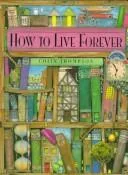
How to live forever
 82
82

How to live forever
Colin Thompson's "How to Live Forever" offers a welcome departure from sensationalist claims about eternal life, opting instead for a sober philosophical dissection. Its strength lies in its methodical deconstruction of the very concept, forcing the reader to consider what "forever" might mean beyond the biological. Thompson avoids definitive answers, which is both a virtue and a limitation. While the exploration of psychological immortality is compelling, the work occasionally feels like a scholarly essay rather than a deeply engaging esoteric text. A passage discussing the legacy of artists as a form of enduring existence, for instance, highlights the book's intellectual approach but may leave some seeking more mystical interpretations wanting. Ultimately, Thompson provides a rigorous intellectual framework for a timeless human aspiration.
📝 Description
82
### What It Is Colin Thompson's "How to Live Forever," first published in 1995, presents a unique exploration into the perennial human desire for extended existence. It is not a manual of practical immortality, but rather an examination of the philosophical, psychological, and perhaps even metaphysical underpinnings of the concept. The work approaches the subject with intellectual rigor, drawing on various historical and philosophical perspectives to deconstruct what "living forever" might truly entail, moving beyond simplistic notions of physical preservation.
### Who It's For This book is suited for readers interested in the philosophical implications of mortality and the human quest for meaning beyond a finite lifespan. It will appeal to those who enjoy critical thinking about abstract concepts, particularly within the realms of esoteric thought, comparative religion, and existential philosophy. Readers seeking a purely scientific or practical guide to life extension will not find it here; instead, they will discover a deep dive into the conceptual architecture of the desire itself.
### Historical Context Published in the mid-1990s, "How to Live Forever" emerged during a period of increasing interest in New Age philosophies and a resurgence of esoteric studies. The internet was beginning to democratize access to information, fostering communities around fringe beliefs and ancient wisdom. Thompson's work can be seen as part of a broader cultural conversation that sought to reconcile traditional spiritual ideas with modern scientific understanding, exploring concepts that echoed the inquiries of earlier thinkers like Aleister Crowley or the broader Hermetic Order of the Golden Dawn, who also grappled with transformative states and the potential for spiritual longevity.
### Key Concepts The book examines the idea of "living forever" not as a literal biological state, but as a psychological and spiritual achievement. It dissects common myths and desires associated with immortality, contrasting them with potential interpretations rooted in personal growth, legacy, and altered states of consciousness. Thompson questions whether true immortality lies in transcending the fear of death through understanding, or in the continuation of one's essence through impact and memory. The work also touches upon the role of belief systems in shaping perceptions of existence and its potential duration.
💡 Why Read This Book?
• Gain a nuanced understanding of "living forever" by examining its psychological and philosophical dimensions, as explored in Thompson's critique of traditional immortality myths. • Discover how the desire for longevity can be reframed as a pursuit of legacy and lasting impact, a concept Thompson elaborates on through historical examples. • Develop a critical perspective on esoteric claims by understanding the conceptual architecture behind the pursuit of eternal life, a theme central to the book's 1995 publication context.
⭐ Reader Reviews
Honest opinions from readers who have explored this book.
❓ Frequently Asked Questions
What is the primary focus of Colin Thompson's "How to Live Forever"?
The book primarily focuses on a philosophical and psychological examination of the human desire for immortality, rather than offering practical methods for achieving it.
Does "How to Live Forever" provide scientific methods for life extension?
No, the book is not a scientific treatise. It explores the concept of living forever from intellectual and esoteric viewpoints, not biological or medical ones.
When was "How to Live Forever" first published?
"How to Live Forever" by Colin Thompson was first published in 1995.
What kind of reader would benefit most from this book?
Readers interested in philosophy, existentialism, comparative religion, and the esoteric tradition, who enjoy critical thinking about abstract concepts, will find this book rewarding.
Does the book discuss specific esoteric traditions or practices?
While not a practical guide to specific traditions, the work touches upon concepts that resonate with various esoteric inquiries into consciousness and existence.
Is "How to Live Forever" a lengthy read?
The book offers a substantial exploration of its themes, providing in-depth analysis suitable for dedicated readers interested in philosophical contemplation.
🔮 Key Themes & Symbolism
The Nature of Immortality
Thompson challenges conventional notions of eternal life, suggesting that immortality might be achieved not through physical preservation but through psychological transcendence, enduring legacy, or a profound understanding of existence. The work critically analyzes the cultural narratives and individual desires that fuel the pursuit of longevity, positing that true "forever" could be a state of being rather than an indefinite duration of physical life, a concept explored in various philosophical and mystical systems since antiquity.
Psychological Endurance
A significant thread in the book is the exploration of how the human psyche grapples with mortality. Thompson suggests that a form of immortality can be found in mental fortitude, the ability to transcend the fear of death through wisdom, and the cultivation of a consciousness that perceives existence beyond linear time. This perspective aligns with certain contemplative practices aiming for altered states where the ego's perceived boundaries dissolve, offering a glimpse into enduring awareness.
Legacy and Continuation
The book examines the idea that one's essence or impact can persist long after physical death, forming a kind of immortality through remembrance, creative works, or influence on future generations. Thompson explores how individuals and societies construct narratives of enduring existence, often through art, philosophy, or spiritual teachings, thereby extending their perceived presence across time. This concept resonates with historical figures whose ideas or creations continue to shape thought centuries later.
The Desire for Forever
Thompson dissects the inherent human yearning for permanence and its manifestation in the quest for immortality. He questions the motivations behind this desire, suggesting it is deeply intertwined with our understanding of purpose, meaning, and the fear of oblivion. By exploring the cultural and personal dimensions of this yearning, the work invites readers to reflect on their own relationship with time and mortality, a central theme in many esoteric philosophies.
💬 Memorable Quotes
“The desire for eternal life is often a projection of unmet needs within our finite existence.”
— This paraphrased concept suggests that the yearning for immortality may stem from a dissatisfaction with one's current life, a wish to correct perceived shortcomings or fulfill unachieved aspirations beyond the natural span.
“Immortality is less about escaping death and more about transcending the fear of it.”
— This interpretation highlights a key theme: that true liberation from mortality's dread comes not from avoiding physical demise, but from achieving a state of inner peace and understanding that diminishes its perceived power.
“Our legacy is the echo of our being in the minds and actions of those who follow.”
— This sentiment underscores the idea that personal continuation can be achieved through the lasting influence one has on the world, a form of existence that transcends the physical body.
“The pursuit of endless physical existence often distracts from the richness of finite experience.”
— This paraphrased concept implies that an excessive focus on prolonging life can paradoxically lead to a diminished appreciation for the present moment and the unique value of a limited lifespan.
“Belief systems shape our perception of permanence and our ultimate fate.”
— This statement points to the power of ideology and spirituality in constructing our understanding of life, death, and the possibility of continuation, influencing how we approach the concept of forever.
🌙 Esoteric Significance
Tradition
While not explicitly tied to a single lineage, "How to Live Forever" engages with themes resonant in Hermeticism and Gnosticism, particularly their focus on esoteric knowledge as a means of transcending mortal limitations. It shares with these traditions a critical view of material existence and an emphasis on inner transformation. The work departs from purely dogmatic approaches by framing immortality as a conceptual and psychological construct, inviting personal interpretation rather than adherence to a specific creed.
Symbolism
The concept of the 'Eternal Return,' explored in various philosophical traditions, serves as a symbolic framework for contemplating endless cycles of existence, a recurring motif in discussions of immortality. Additionally, the 'Philosopher's Stone,' though not explicitly named, can be seen metaphorically in the book's exploration of transformative processes that lead to a form of enduring existence or enlightenment, symbolizing the ultimate alchemical achievement of overcoming mortality.
Modern Relevance
Thompson's work finds resonance in contemporary discussions surrounding transhumanism, digital consciousness, and the philosophical implications of life extension technologies. Thinkers and communities exploring the boundaries of human potential, such as those in the longevity research field and digital immortality advocates, can find in Thompson's text a foundational critique of what 'living forever' truly signifies, pushing beyond mere biological extension to consider the qualitative aspects of enduring existence.
👥 Who Should Read This Book
• Students of comparative philosophy and existentialism: To critically examine the human quest for meaning and permanence across diverse intellectual traditions. • Seekers of esoteric wisdom: For those interested in how concepts of immortality are explored beyond literal interpretations, focusing on consciousness and legacy. • Reflective readers of any age: Individuals contemplating their own mortality, legacy, and the broader philosophical questions surrounding life and death.
📜 Historical Context
Published in 1995, Colin Thompson's "How to Live Forever" emerged during a cultural moment where Western societies were increasingly engaging with Eastern philosophies, New Age spirituality, and the burgeoning field of consciousness studies. The work arrived in a landscape influenced by thinkers like Timothy Leary and the counter-culture's exploration of altered states, and paralleled the growing academic interest in comparative religion and the history of esotericism, exemplified by scholars like Frances Yates and her work on Hermeticism. Thompson's book provided a philosophical counterpoint to the more pragmatic, albeit often pseudoscientific, life-extension claims prevalent in some circles. Its reception was within a context of intellectual curiosity rather than widespread public debate, positioning it as a thoughtful inquiry for those already exploring the boundaries of existence and mortality.
📔 Journal Prompts
Reflect on the concept of legacy as a form of enduring existence.
Analyze the psychological motivations behind the desire for immortality.
Consider how belief systems, as discussed in the book, shape our perception of forever.
Explore the idea of psychological endurance as a means of transcending mortal fear.
Evaluate the book's critique of literal life extension versus conceptual immortality.
🗂️ Glossary
Psychological Immortality
A state of enduring existence achieved through mental and spiritual transformation, rather than biological means. It involves transcending the fear of death and finding meaning that persists beyond physical life.
Legacy
The lasting impact or influence an individual leaves behind through their actions, creations, or contributions, serving as a form of continuation after physical death.
Conceptual Immortality
The idea that 'living forever' is an abstract concept or a state of being understood through philosophy and consciousness, rather than a literal, measurable outcome.
Existentialism
A philosophical movement emphasizing individual existence, freedom, and choice. It often grapples with themes of meaning, death, and the human condition.
Hermeticism
A philosophical and religious tradition based on writings attributed to Hermes Trismegistus, emphasizing esoteric knowledge, the interconnectedness of all things, and spiritual transformation.
Gnosticism
A diverse set of religious and philosophical systems that emphasize knowledge (gnosis) as the key to salvation, often viewing the material world as flawed or evil.
Finite Experience
The totality of experiences within a limited lifespan, highlighting the value and unique qualities that arise from a bounded existence.