Heroes and villains
 76
76

Heroes and villains
Alsford's "Heroes and Villains" presents a compelling argument for viewing archetypal forces not as external actors but as intrinsic components of the psyche. The strength of the work lies in its systematic deconstruction of dualistic thinking, particularly how it examines the necessary relationship between perceived 'heroes' and 'villains' as integral to psychological and spiritual development. The author’s exploration of the Shadow, for instance, avoids simplistic condemnation, instead positioning it as a vital, often misunderstood, source of power and transformation. A limitation, however, is the occasional dense prose which, while precise, can sometimes impede the flow for readers less accustomed to philosophical discourse. A passage detailing the 'alchemical marriage' of opposites, while conceptually rich, could benefit from more direct illustrative examples. Ultimately, "Heroes and Villains" offers a sophisticated lens for understanding the enduring power of archetypes.
📝 Description
76
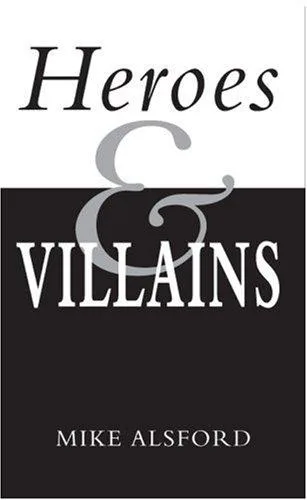
### What It Is Mike Alsford's "Heroes and Villains," first published in 2010, examines the archetypal forces that shape human narratives and spiritual understanding. It moves beyond simplistic good-versus-evil binaries to explore the dynamic interplay of shadow and light within individuals and societies. The work is structured to dissect the psychological and metaphysical underpinnings of these dualistic concepts, offering a framework for understanding their manifestation across different belief systems and historical periods.
### Who It's For This book is intended for readers interested in esoteric psychology, comparative mythology, and the philosophical underpinnings of archetypal studies. It will appeal to those seeking to understand the energetic and symbolic dimensions of human conflict and personal growth. Individuals engaged in self-inquiry, spiritual development, or those studying the evolution of consciousness will find particular value in its analytical approach.
### Historical Context The early 21st century, particularly around 2010 when "Heroes and Villains" was released, saw a continued interest in Jungian psychology and archetypal theory. This period was marked by a growing public engagement with concepts of the shadow self, often discussed in popular psychology and self-help circles. Alsford's work contributes to this discourse by grounding these ideas within a broader esoteric framework, distinguishing it from purely psychological interpretations. It emerges in a landscape where thinkers like Joseph Campbell had already laid significant groundwork in comparative mythology.
### Key Concepts The central focus of "Heroes and Villains" revolves around the concept of the Anima and Animus, as well as the archetypal manifestations of the Hero and the Shadow. Alsford explores how these primal patterns are not static but exist in a fluid, dialectical relationship. The book investigates how societal structures and individual psyches are built upon and influenced by these foundational archetypes, often presenting them as necessary, albeit challenging, forces for individuation and collective evolution. The exploration extends to the alchemical process as a metaphor for integrating these opposing forces.
💡 Why Read This Book?
• Gain a nuanced understanding of archetypal dynamics, moving beyond simplistic good-vs-evil narratives, by examining the specific concept of the Anima and Animus as presented in chapter 3. • Discover how societal structures and personal development are shaped by primal forces, as detailed in the book's analysis of the Hero's journey through its discussion of the Shadow archetype. • Learn to integrate perceived negative aspects of self and society, as the work explores the alchemical concept of the 'coniunctio' as a pathway to wholeness.
⭐ Reader Reviews
Honest opinions from readers who have explored this book.
❓ Frequently Asked Questions
What is the primary focus of Mike Alsford's "Heroes and Villains"?
The book primarily focuses on dissecting archetypal forces, such as the Hero and the Shadow, and their dynamic interplay. It moves beyond simple good-versus-evil narratives to explore the metaphysical and psychological underpinnings of these dualistic concepts.
When was "Heroes and Villains" by Mike Alsford first published?
"Heroes and Villains" by Mike Alsford was first published in 2010.
Who would benefit most from reading "Heroes and Villains"?
Readers interested in esoteric psychology, comparative mythology, Jungian archetypes, and spiritual development will find this book particularly valuable for its analytical approach to dualistic concepts.
Does the book offer practical applications for self-improvement?
Yes, the book provides a framework for self-inquiry by offering insights into how archetypes like the Shadow influence individual psychology, thereby aiding in personal growth and the integration of one's own 'villainous' aspects.
How does "Heroes and Villains" relate to Jungian psychology?
The book builds upon Jungian concepts of archetypes, the Shadow, and the Anima/Animus, but frames them within a broader esoteric and philosophical context, examining their manifestation across different belief systems.
Are there specific historical figures or movements discussed?
While the book focuses on archetypal figures, it situates its discussion within the context of intellectual currents like Jungian psychology and comparative mythology, referencing foundational ideas from figures in these fields.
🔮 Key Themes & Symbolism
The Shadow Archetype
The work systematically dissects the Shadow archetype, not merely as the repressed or negative aspects of the self, but as a fundamental, potent force. Alsford posits that understanding and integrating the Shadow is crucial for individuation, arguing that its denial leads to projection and societal conflict. The book explores how this archetype manifests in narratives and personal psychology, challenging readers to confront their own shadow aspects as a source of power rather than shame.
Duality and Integration
Central to "Heroes and Villains" is the exploration of duality – the apparent opposition between forces like light and dark, hero and villain. Alsford argues that these are not mutually exclusive but are interdependent components of a larger whole. The book examines this through various lenses, including psychological integration and the alchemical concept of the 'coniunctio,' suggesting that true spiritual development lies in harmonizing these perceived opposites.
Mythic Narrative Structures
The book analyzes how foundational mythic structures, particularly the Hero's journey, are built upon the interplay of heroic and villainous archetypes. Alsford traces how these narrative patterns shape human understanding of morality, purpose, and conflict. By examining these structures, the work offers a framework for interpreting personal experiences and societal events through an esoteric lens, highlighting the enduring power of these ancient storytelling forms.
Esoteric Psychology
"Heroes and Villains" positions itself within esoteric psychology, moving beyond purely clinical interpretations of the psyche. It investigates the soul's journey and the development of consciousness through the engagement with archetypal forces. The work suggests that understanding these deeper, often symbolic, dynamics is essential for spiritual growth and achieving a more integrated sense of self, drawing parallels with ancient wisdom traditions.
💬 Memorable Quotes
“The perceived villain is often the unacknowledged shadow of the hero.”
— This statement encapsulates the book's core thesis: that the forces we label as 'evil' or 'other' are frequently projections of our own repressed psychological material, highlighting the interconnectedness of opposing archetypes.
“Integration, not elimination, is the path to wholeness.”
— This refers to the book's emphasis on accepting and incorporating all aspects of the psyche, including those deemed negative or undesirable, as a means to achieve a balanced and complete sense of self.
“Archetypes are the grammar of the soul's expression.”
— This metaphor suggests that archetypal patterns are the fundamental structures through which the deeper self communicates and manifests its experiences, both individually and collectively.
“The shadow holds the keys to untapped power.”
— This interpretation emphasizes the transformative potential found within the often-feared shadow self, suggesting that confronting and understanding it can unlock hidden strengths and creative energies.
“Villainy is often a distortion of necessary cosmic forces.”
— This concept frames antagonistic figures not as purely evil entities, but as expressions of fundamental energies that have become unbalanced or misdirected, urging a more nuanced understanding of conflict.
🌙 Esoteric Significance
Tradition
The work draws heavily from the Western Esoteric Tradition, particularly Jungian analytical psychology, which itself is deeply influenced by Gnostic and Hermetic ideas regarding the soul's journey and the nature of consciousness. Alsford's approach to archetypes as fundamental psychic and spiritual forces aligns with traditions that explore the microcosm reflecting the macrocosm, framing the interplay of hero and villain within a larger cosmic order.
Symbolism
Key symbols include the 'Shadow,' representing the repressed, unacknowledged aspects of the psyche often associated with darkness or fear, but also vital energy. The 'Hero' symbolizes the drive for individuation, transformation, and overcoming obstacles. The 'Alchemical Marriage' (coniunctio) is another significant motif, symbolizing the integration of polar opposites, such as the masculine and feminine, or light and dark, into a unified whole.
Modern Relevance
Contemporary thinkers in depth psychology, comparative mythology, and spiritual development continue to engage with Alsford's concepts. His analysis of archetypal dynamics provides a valuable lens for understanding modern narratives in film and literature, as well as for personal growth practices focused on shadow work and self-integration. Schools of thought emphasizing the integration of psychological and spiritual perspectives find resonance in his work.
👥 Who Should Read This Book
• Students of Jungian psychology and comparative mythology seeking to understand the deeper esoteric implications of archetypal theory. • Individuals engaged in personal spiritual growth and self-inquiry who wish to explore the nature of duality and integration within themselves. • Writers and storytellers looking to develop richer, more complex characters and narratives by understanding the archetypal forces at play.
📜 Historical Context
Published in 2010, Mike Alsford's "Heroes and Villains" emerged during a period of intensified popular interest in Jungian psychology and archetypal theory, building upon the foundations laid by thinkers like Carl Jung himself and Joseph Campbell. The early 21st century saw a proliferation of self-help literature that touched upon concepts of the 'shadow self,' yet Alsford’s work distinguishes itself by embedding these discussions within a richer esoteric and philosophical framework. It engaged with a broader intellectual current that sought to understand the deeper symbolic meanings behind human behavior and societal patterns, moving beyond purely materialist or psychological explanations. The work did not face significant documented censorship or major awards at its release but contributed to the ongoing discourse on comparative mythology and esoteric thought, offering an alternative perspective to more secular psychological analyses prevalent at the time.
📔 Journal Prompts
The Shadow archetype's potential for power.
The necessity of the 'villain' in narrative and personal development.
Reflecting on personal projections of the Shadow.
The symbolic meaning of the Hero's confrontation with internal 'monsters'.
The concept of the 'alchemical marriage' in one's own life.
🗂️ Glossary
Archetype
A primordial, universal pattern or image that recurs in the collective unconscious, shaping human perception, emotion, and behavior. Examples include the Hero, the Mother, and the Shadow.
Shadow
In esoteric psychology, the unconscious aspects of the personality that the conscious ego does not identify in itself. It is often seen as the repository of repressed desires, instincts, and negative traits.
Anima/Animus
The unconscious feminine aspect in the male psyche (Anima) and the unconscious masculine aspect in the female psyche (Animus), representing contrasexual archetypes that influence relationships and self-understanding.
Individuation
The psychological process of integrating the conscious and unconscious aspects of the self to develop a unique personality and achieve wholeness, often involving the confrontation and integration of archetypes.
Coniunctio
Latin for 'union' or 'conjunction,' often used in alchemy and esoteric traditions to describe the union of opposites, such as masculine and feminine, conscious and unconscious, leading to a higher state of integration.
Mythic Narrative
Stories that contain fundamental truths or principles about human existence, often structured around archetypal figures and journeys that reflect universal psychological and spiritual processes.
Esoteric Psychology
A branch of psychology that explores the deeper, hidden, or inner dimensions of the human psyche, often drawing upon spiritual, mystical, and symbolic traditions beyond mainstream psychological frameworks.