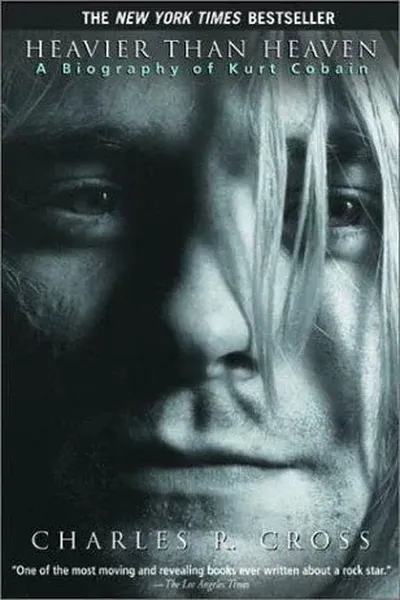
Heavier than Heaven

 73
73

Heavier than Heaven
Cross's *Heavier Than Heaven* is an unflinching, almost forensic, account of Kurt Cobain's life. The sheer volume of detail, culled from hundreds of interviews, creates a palpable sense of immersion in Cobain's chaotic world. Its strength lies in its refusal to romanticize Cobain or his struggles, presenting the grim realities of addiction and mental health with stark clarity. However, this relentless focus on the downward spiral can feel overwhelming, occasionally overshadowing the creative brilliance Nirvana achieved. A particularly affecting passage details the band's early days in Aberdeen, Washington, contrasting the raw energy with the bleak environment that fueled it. While it meticulously documents the tragedy, one wishes for slightly more space dedicated to the music's transcendence. It is a vital, if difficult, chronicle of a doomed icon.
📝 Description
73
### What It Is
Charles R. Cross's *Heavier Than Heaven*, first published in 2001, offers a comprehensive examination of the life and times of Kurt Cobain and the band Nirvana. It moves beyond a simple biography, meticulously reconstructing the events and environments that shaped Cobain's trajectory. The book functions as a detailed historical account, drawing on extensive interviews with those closest to Cobain and the band, painting a vivid picture of the grunge music scene's ascent.
### Who It's For
This work is intended for individuals interested in the cultural phenomena of the early 1990s, particularly the rise of grunge music and its most prominent figures. It appeals to readers who appreciate in-depth biographical narratives and cultural analysis, rather than purely academic studies of music. Those seeking to understand the personal struggles of artists within the context of rapid fame and the music industry will find it particularly engaging.
### Historical Context
The book situates Nirvana's explosive success within the broader cultural landscape of the late 1980s and early 1990s. It highlights the shift away from the dominant hair metal of the 1980s towards a more introspective and raw musical expression. The work explores the impact of Seattle as a burgeoning hub for alternative music, contrasting it with the established music scenes elsewhere. Cross details the band's journey from independent labels to global superstardom, a period marked by significant shifts in mainstream music consumption and artistic authenticity.
### Key Concepts
*Heavier Than Heaven* explores the concept of authenticity in art, the pressures of immense fame, and the destructive potential of addiction. It examines the interplay between personal trauma and creative output, suggesting that Cobain's artistic intensity was inextricably linked to his internal turmoil. The book also touches upon the societal reception of alternative culture, showing how grunge moved from underground obscurity to mainstream dominance, and the subsequent impact this had on its creators.
💡 Why Read This Book?
• Understand the specific pressures Kurt Cobain faced following Nirvana's 1991 breakthrough with *Nevermind*, learning how external fame exacerbated internal conflicts. • Gain insight into the grunge movement's emergence from Seattle in the late 1980s, recognizing how its raw aesthetic challenged prevailing 1980s musical trends. • Explore the complex relationship between artistic creation and personal suffering, as depicted through Cobain's documented struggles with addiction and mental health.
⭐ Reader Reviews
Honest opinions from readers who have explored this book.
❓ Frequently Asked Questions
When was *Heavier Than Heaven* first published?
Charles R. Cross's *Heavier Than Heaven* was first published in 2001 by Hyperion Books, offering a detailed look at Kurt Cobain's life and the grunge era.
What kind of sources did Charles R. Cross use for *Heavier Than Heaven*?
Cross conducted over 400 interviews with friends, family, bandmates, and associates of Kurt Cobain and Nirvana, alongside extensive research into contemporary media and personal documents.
Does *Heavier Than Heaven* focus solely on Kurt Cobain?
While Kurt Cobain is the central figure, the book extensively covers Nirvana's formation, rise to fame, and the dynamics within the band, providing context for Cobain's experiences.
How does the book portray the grunge scene of the early 1990s?
It depicts the grunge scene as a reaction against the perceived superficiality of 1980s rock, highlighting its roots in Seattle and its rapid mainstream acceptance.
Is *Heavier Than Heaven* considered an objective biography?
The book strives for objectivity by relying on a vast array of interviews and documented facts, though its intense focus on Cobain's personal struggles lends it a deeply empathetic, though not uncritical, tone.
What is the significance of the book's title, *Heavier Than Heaven*?
The title is derived from a lyric in Nirvana's song 'Lithium', reflecting themes of despair, burden, and the overwhelming nature of Cobain's life and struggles.
🔮 Key Themes & Symbolism
The Weight of Fame
The book meticulously details the crushing impact of global celebrity on Kurt Cobain. It illustrates how the immense pressures of fame, starting from Nirvana's 1991 breakthrough, exacerbated his pre-existing vulnerabilities. Cross shows how the constant scrutiny, the demands of the music industry, and the loss of privacy eroded Cobain's sense of self, pushing him further into isolation and addiction. This theme explores the destructive dichotomy between the public persona and the private individual under unbearable strain.
Authenticity and the Artifice
A central thread in *Heavier Than Heaven* is Cobain's struggle with perceived inauthenticity, particularly as Nirvana achieved mainstream success. The book examines his disdain for the commercialism of the music industry and his discomfort with being hailed as a spokesperson for a generation. Cross highlights Cobain's attempts to maintain artistic integrity amidst the manufactured nature of rock stardom, exploring the tension between genuine expression and the expectations of a massive audience.
Addiction as a Corrosive Force
The narrative unflinchingly portrays the destructive role of drug addiction in Kurt Cobain's life and career. From early experimentation to severe dependency, the book traces how addiction became a primary battleground, consuming his physical and mental health. Cross links addiction not just to personal failing but also to the environment of fame and the search for relief from pain, illustrating its pervasive and ultimately fatal influence.
The Seattle Grunge Crucible
The book provides a rich context for Nirvana's rise by exploring the unique cultural milieu of Seattle in the late 1980s and early 1990s. It details the emergence of the grunge sound as a counterpoint to the dominant pop and rock of the era. Cross illustrates how this specific time and place fostered a community of musicians with a shared aesthetic and ethos, ultimately launching a global musical movement that redefined alternative rock.
💬 Memorable Quotes
“Cobain felt the weight of expectation from fans, press, and his own artistic conscience.”
— This interpretation highlights Cobain's internal conflict, suggesting that his creative output and public persona were constantly under pressure from external forces and his own high standards.
“Nirvana's success in 1991 shifted the musical landscape dramatically.”
— This emphasizes the pivotal impact of Nirvana's breakthrough album, *Nevermind*, on the music industry, signaling a major transition from the prevailing sounds of the late 1980s.
“The early days in Aberdeen provided fertile ground for Cobain's artistic angst.”
— This suggests that Cobain's formative experiences in his hometown, marked by a sense of alienation, contributed significantly to the raw emotion and themes present in his music.
“Cobain struggled to reconcile his art with the commercial demands of fame.”
— This points to the central tension in Cobain's career: his desire for artistic integrity versus the pressures and expectations that came with massive commercial success.
“Addiction became an inescapable aspect of Cobain's life post-fame.”
— This interpretation underscores the pervasive and ultimately fatal nature of Cobain's struggle with substance abuse, particularly as it intensified following Nirvana's rise to global recognition.
🌙 Esoteric Significance
Tradition
While not explicitly tied to a single esoteric lineage, *Heavier Than Heaven* resonates with themes found in existentialist philosophy and certain interpretations of Gnosticism. Cobain's profound sense of alienation, his struggle with perceived societal artifice, and his search for meaning in a chaotic world echo Gnostic notions of a flawed material existence and the yearning for authentic selfhood. His creative output, born from intense personal suffering, can be seen through a lens of the suffering artist archetype, a concept explored in various mystical traditions where pain is a catalyst for spiritual insight.
Symbolism
The recurring motif of the 'smelly cat' in the book, originating from Cobain's childhood, can be interpreted as a symbol of the grotesque and the marginalized, an emblem of his own self-perceived ugliness and alienation. The omnipresent imagery of heroin needles and addiction paraphernalia functions as a stark symbol of corruption and decay, representing both physical deterioration and the spiritual void Cobain experienced. The relentless rain and grey skies often associated with Seattle in the narrative symbolize a pervasive melancholy and the oppressive atmosphere that seemed to mirror Cobain's internal state.
Modern Relevance
Contemporary artists grappling with fame, mental health, and the pressures of the digital age often find parallels in Cobain's story as chronicled by Cross. Thinkers and practitioners in fields exploring the intersection of art, trauma, and consciousness may reference *Heavier Than Heaven* to understand the extreme effects of celebrity on the psyche. The book's detailed portrayal of addiction's grip continues to inform discussions on mental health and recovery, serving as a cautionary tale for musicians and creatives navigating the often-toxic environment of the entertainment industry.
👥 Who Should Read This Book
• Fans of Nirvana and Kurt Cobain seeking a comprehensive, in-depth understanding of his life beyond the music, particularly those interested in the origins of grunge. • Cultural historians and students of 1990s popular culture who wish to analyze the phenomenon of grunge and its impact on society and music. • Readers interested in biographical studies that explore the complex interplay of fame, mental health, and addiction, and their devastating consequences on artistic individuals.
📜 Historical Context
Published in 2001, *Heavier Than Heaven* emerged during a period of intense retrospective analysis of the grunge phenomenon and its tragic figures. The early 1990s, when Nirvana achieved global superstardom, marked a significant cultural pivot, challenging the established order of hair metal and pop music with a raw, introspective sound. This shift was heavily influenced by independent music scenes, particularly Seattle's, which fostered a DIY ethos. While Kurt Cobain became an unwilling icon, his struggles resonated with a generation disillusioned by corporate excess. The book's reception was largely positive, cementing its status as a definitive biography, though some critics noted its unflinching depiction of Cobain's decline. Contemporaries like Eddie Vedder of Pearl Jam also navigated similar pressures, though their trajectories differed, offering a contrast to Cobain's fate. The work arrived long enough after Cobain's 1994 death for a comprehensive, though often somber, historical perspective to form.
📔 Journal Prompts
Cobain's perceived inauthenticity as a rock star.
The symbolic weight of Seattle's environment on Nirvana's sound.
The impact of *Nevermind*'s 1991 release on Cobain's personal life.
Moments where Cobain sought genuine connection amidst fame.
The role of addiction in fueling or hindering Cobain's creative process.
🗂️ Glossary
Grunge
A subgenre of alternative rock that emerged in the mid-1980s in Seattle, Washington. Characterized by distorted guitars, angst-filled lyrics, and a raw, unpolished sound, it became a dominant force in the early 1990s music scene.
Sub Pop Records
An independent record label founded in Seattle in 1988. It was instrumental in popularizing the grunge sound and signing early influential bands like Nirvana, Mudhoney, and Soundgarden.
Nevermind
Nirvana's second studio album, released in 1991. Its unexpected commercial success propelled the band to international stardom and is widely considered a landmark album that brought alternative rock into the mainstream.
Kurt Cobain
The lead singer, songwriter, and guitarist of Nirvana. Widely regarded as an icon of the grunge movement, his personal struggles with addiction and mental health profoundly shaped his public image and artistic output.
Aberdeen, Washington
The small logging town where Kurt Cobain spent much of his childhood and adolescence. Its perceived insular and bleak atmosphere is often cited as a significant influence on his early artistic development and themes of alienation.
Alternative Rock
A broad genre of rock music that emerged in the 1980s, characterized by its departure from mainstream rock conventions. Grunge is a prominent subgenre within alternative rock.
Lollapalooza
A touring music festival founded in 1991 by Perry Farrell of Jane's Addiction. It became a significant platform for alternative and underground music acts throughout the 1990s, showcasing bands like Nirvana.