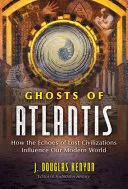
Ghosts of Atlantis
 83
83

Ghosts of Atlantis
Kenyon's "Ghosts of Atlantis" offers a compelling compilation of disparate theories and archaeological enigmas, aiming to reconstruct a picture of a lost global super-civilization. The strength lies in its breadth, connecting phenomena from the Gulf of Cambay’s submerged ruins to the enigmatic structures of Rapa Nui. However, the work’s tendency to present speculative connections as near-certainties can be a limitation for the critical reader. A particularly striking element is the discussion surrounding the "Zep Tepi" period in Egypt, positing a far more advanced origin for its monumental architecture than Egyptology typically allows. While Kenyon marshals an impressive array of supporting data, the interpretive leaps sometimes strain credulity. The book serves as a provocative overview of fringe historical hypotheses concerning advanced ancient cultures.
📝 Description
83
### What It Is J. Douglas Kenyon's "Ghosts of Atlantis" presents a synthesis of evidence suggesting a technologically advanced prehistoric civilization predating recorded history. The work examines anomalies in archaeology, linguistics, and ancient texts to propose the existence of a lost global culture, potentially Atlantis, which experienced a cataclysm. Kenyon compiles findings from diverse fields, including geology and paleoclimatology, to support a timeline that challenges conventional historical understanding.
### Who It's For This book targets readers interested in alternative histories, ancient mysteries, and the potential for lost civilizations. It appeals to those who question mainstream archaeological narratives and seek evidence for advanced ancient knowledge, including topics like proto-science, early cosmologies, and prehistoric global interactions. Individuals curious about connections between myths and geological events will find relevant material here.
### Historical Context Kenyon's work, published in 2021, emerges within a resurgence of interest in ancient advanced civilizations, following figures like Graham Hancock. It engages with a long tradition of Atlantean scholarship that began in earnest with Ignatius Donnelly's "Atlantis: The Antediluvian World" (1882). The book situates itself against established archaeological consensus, particularly concerning the dating of megalithic sites and early human migration patterns, drawing on research that often operates at the fringes of academic acceptance.
### Key Concepts The central thesis revolves around the concept of a sophisticated global civilization that existed tens of thousands of years ago, possessing advanced scientific and technological understanding. Kenyon explores the implications of anomalous artifacts, such as ancient maps depicting Antarctica before glaciation, and proposes that phenomena like the Sphinx's erosion patterns and the construction of megalithic sites like Gobekli Tepe point to a high level of development far earlier than commonly accepted. The book also touches upon the potential for temporal displacement and the catastrophic events that may have led to this civilization's demise.
💡 Why Read This Book?
• Gain a unique perspective on prehistoric global history by examining evidence for advanced ancient technology, such as crystal science and sophisticated mapping, as presented in Kenyon's synthesis. • Explore the archaeological mysteries of sites like Gobekli Tepe and the Sphinx, understanding how Kenyon interprets their construction and age as indicators of a lost civilization. • Consider the implications of cataclysmic events on ancient societies, with the book discussing the possibility of an ancient Armageddon and its potential connection to the demise of Atlantis.
⭐ Reader Reviews
Honest opinions from readers who have explored this book.
❓ Frequently Asked Questions
What evidence does J. Douglas Kenyon present for advanced ancient technology in 'Ghosts of Atlantis'?
Kenyon explores evidence for technologies like crystal science, advanced astronomical knowledge, and sophisticated mapping techniques that suggest a civilization far beyond what is conventionally accepted for prehistoric eras.
Does 'Ghosts of Atlantis' connect the biblical narrative with lost civilizations?
Yes, the book examines potential links between the biblical account of antediluvian times and the theories surrounding Atlantis, suggesting a shared historical or mythological root.
What is the significance of Gobekli Tepe in Kenyon's argument?
Kenyon posits that the Stone Age high-tech found at Gobekli Tepe, with its complex carvings and massive megaliths, points to a level of societal organization and knowledge not typically attributed to that period, supporting the idea of an advanced ancient culture.
How does 'Ghosts of Atlantis' address the age of the Sphinx?
The work explores theories regarding the true age of the Sphinx, particularly focusing on geological evidence of water erosion patterns that suggest a much older origin than the commonly accepted dynastic period.
What role does Antarctica play in the theories presented in 'Ghosts of Atlantis'?
Kenyon examines evidence suggesting what might lie beneath the ice of Antarctica, including potential ancient structures or maps that could indicate a connection to lost civilizations like Atlantis.
What does the book suggest about Rapa Nui (Easter Island)?
The book investigates the mysteries of Rapa Nui, exploring theories about the island's inhabitants, their advanced construction capabilities for the Moai statues, and their potential links to a wider ancient global network.
🔮 Key Themes & Symbolism
Prehistoric Technological Advancement
The book presents a compelling case for a sophisticated global civilization existing tens of thousands of years ago, possessing knowledge and capabilities far exceeding conventional historical timelines. This includes exploring concepts like crystal science, advanced astronomical understanding, and potentially even time manipulation, suggesting that ancient peoples were not primitive but inheritors of advanced wisdom lost to a cataclysm.
Geological Anomalies and Lost Worlds
Kenyon scrutinizes geological evidence and anomalous archaeological sites, such as the submerged ruins in the Gulf of Cambay and the erosion patterns on the Sphinx, to argue for a much older Earth history. The existence of Atlantis and other submerged or ice-covered lands like Antarctica are explored as potential remnants of this advanced global culture, challenging established dating methods for human civilization.
Ancient Cataclysms and Global Memory
A significant theme is the impact of catastrophic global events on ancient civilizations. The work investigates the possibility of an 'ancient Armageddon' and how collective memory, myths, and legends across diverse cultures might represent distorted echoes of these world-altering disasters, ultimately leading to the fragmentation and disappearance of advanced societies.
Redefining Ancient Maps and Knowledge
The book delves into the interpretation of ancient maps that appear to depict continents, particularly Antarctica, in pre-glacial states. This suggests a profound understanding of global geography and cosmology among ancient peoples, challenging the notion that cartographic and scientific knowledge only emerged in recent millennia.
💬 Memorable Quotes
“Evidence of advanced ancient technology, anomalous ancient maps, time travel, crystal science, ancient Armageddon, and Atlantis in the Bible.”
— This statement encapsulates the core subjects Kenyon investigates, suggesting a radical reinterpretation of ancient history where advanced science and global cataclysms played a significant role, potentially linking myth and historical possibility.
“Explores the true age of the Sphinx, the Stone Age high-tech found at Gobekli Tepe, the truth of Rapa Nui (Easter Island), the Zep Tepi monuments of Egypt.”
— These specific examples highlight Kenyon's method of examining disparate, often controversial, archaeological sites and artifacts as pieces of a larger puzzle pointing towards a forgotten epoch of advanced human achievement.
“Examines the advanced knowledge of the ancients and how the search for Atlantis and other lost worlds reflects a deep human need to understand our origins.”
— This interpretation suggests that the enduring fascination with lost civilizations like Atlantis is not mere fantasy but a subconscious recognition of a forgotten past and a fundamental human drive to connect with our deepest historical roots.
“What lies beneath the ice of Antarctica.”
— This phrase points to the speculative yet intriguing possibility that Antarctica holds tangible secrets about ancient civilizations, perhaps buried ruins or geological records that could rewrite our understanding of Earth's history and humanity's place within it.
“The Gulf of Cambay provides clues to a submerged civilization.”
— This refers to specific underwater archaeological findings, suggesting that geological and archaeological anomalies can provide concrete evidence for lost coastal cities or entire civilizations that predate current historical models.
🌙 Esoteric Significance
Tradition
While not strictly adhering to a single esoteric lineage, "Ghosts of Atlantis" draws heavily on themes prevalent in Theosophy and esoteric interpretations of ancient history, particularly the concept of cyclical ages and lost root races. It aligns with a broader esoteric worldview that posits humanity's past contains forgotten epochs of advanced spiritual and technological development, often suppressed or misunderstood by mainstream science.
Symbolism
The book implicitly engages with symbols of lost knowledge and cataclysm. Atlantis itself serves as a potent symbol of a fallen golden age, representing both human potential and the dangers of hubris. Maps, particularly those depicting unknown or ancient geographies like Antarctica before ice, symbolize hidden truths and the rediscovery of lost wisdom. The recurring motif of cataclysmic destruction signifies cyclical patterns of creation and destruction inherent in cosmic and terrestrial evolution.
Modern Relevance
Contemporary thinkers in fields such as archaeoastronomy, ancient astronaut theories, and consciousness studies often reference or echo the core ideas presented in "Ghosts of Atlantis." Its exploration of advanced ancient science and lost global cultures resonates with communities seeking to integrate esoteric knowledge with scientific inquiry, influencing discussions on human origins and potential future trajectories.
👥 Who Should Read This Book
• Armchair archaeologists and history enthusiasts seeking to challenge conventional timelines and explore evidence for advanced prehistoric civilizations. • Readers interested in the mythology of Atlantis and its potential historical or scientific basis, looking for a synthesis of disparate theories. • Individuals drawn to esoteric interpretations of ancient texts, geological anomalies, and global myths, who appreciate a broad, speculative approach to human origins.
📜 Historical Context
Published in 2021, "Ghosts of Atlantis" arrived during a period of heightened public interest in alternative histories and the potential for sophisticated ancient civilizations, a trend notably amplified by authors like Graham Hancock. Kenyon's work engages with a long lineage of Atlantean scholarship that gained significant traction with Ignatius Donnelly's 1882 book, "Atlantis: The Antediluvian World." Kenyon's approach, however, synthesizes a broader range of scientific and archaeological anomalies than many predecessors. The book positions itself in contrast to mainstream archaeology and geology, particularly regarding the accepted timelines for the development of complex societies and the dating of geological formations. While not directly engaging with a specific contemporary scholar's critique in the text itself, its arguments implicitly challenge the consensus views presented by figures such as the late Colin Renfrew, a prominent archaeologist who championed the study of early European societies.
📔 Journal Prompts
The concept of advanced ancient technology and its potential rediscovery.
Interpreting anomalous ancient maps and their implications for global history.
Reflecting on the evidence for the true age of the Sphinx.
The potential for an ancient Armageddon and its echoes in global myths.
Considering what lies beneath the ice of Antarctica in relation to lost civilizations.
🗂️ Glossary
Zep Tepi
An ancient Egyptian concept referring to the 'First Time' or primordial era, often associated with a period of divine rule and advanced knowledge preceding dynastic Egypt. Kenyon uses it to suggest a much earlier, technologically superior civilization.
Gobekli Tepe
A prehistoric archaeological site in southeastern Turkey, featuring massive carved stone pillars. Its age and sophistication challenge conventional understandings of Neolithic societies, suggesting complex organization and symbolic expression much earlier than previously thought.
Rapa Nui
The indigenous name for Easter Island, famous for its monumental statues (Moai). The book explores the advanced capabilities required for their creation and transport, linking it to broader theories of ancient global connections.
Gulf of Cambay
A gulf off the west coast of India where underwater archaeological findings, including geometric structures and artifacts, suggest the presence of a lost ancient civilization dating back potentially 9,000 years or more.
Antediluvian
Literally 'before the flood,' referring to the biblical period before Noah's flood. Kenyon uses the term in discussions about a potential global cataclysm that wiped out advanced prehistoric civilizations, linking it to the Atlantis narrative.
Crystal Science
A speculative field concerning the potential use of crystals by ancient civilizations for energy, communication, or healing. Kenyon explores this concept as evidence of advanced prehistoric technology.
Ancient Armageddon
Kenyon's term for a hypothetical global cataclysm or series of destructive events in prehistory that led to the downfall of advanced civilizations, potentially leaving fragmented records and myths.