Ghosts and Poltergeists
 76
76

Ghosts and Poltergeists
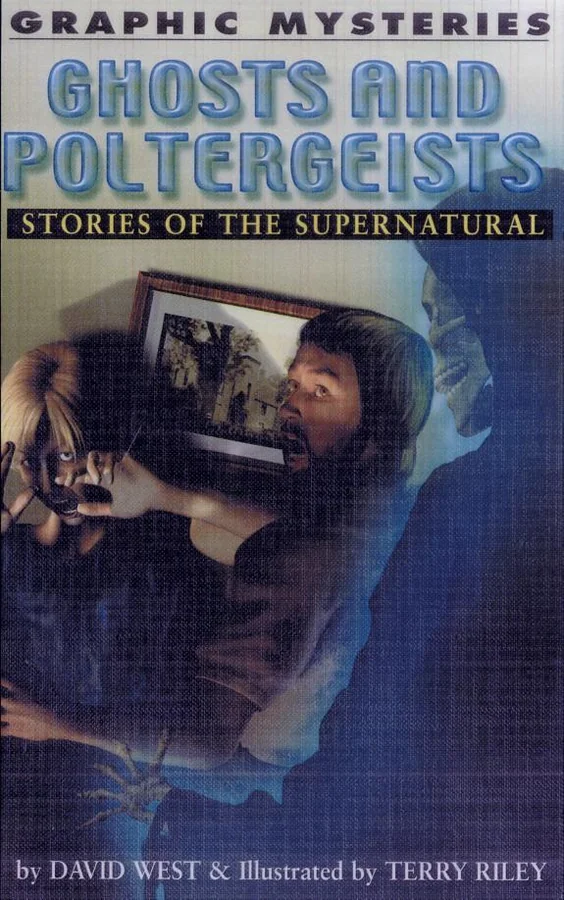
David West's "Ghosts and Poltergeists" distinguishes itself by approaching its subject with a commendable degree of analytical rigor. Rather than simply recounting ghost stories, West attempts to categorize and explain them, offering a framework that is both informative and intellectually stimulating. A particular strength lies in its careful dissection of the poltergeist phenomenon, exploring theories that link it to psychokinesis or localized environmental disturbances. However, the work occasionally suffers from a certain dryness; while factual, it sometimes lacks the evocative power one might expect when discussing such inherently mysterious subjects. The chapter detailing the 1977 Enfield Poltergeist case, while thorough in its presentation of evidence and witness testimony, feels more like a case file than an exploration of the uncanny. Despite this, West provides a solid foundation for understanding the persistent fascination with spectral presences. It is a valuable resource for those who prefer their paranormal studies grounded in evidence and reasoned argument.
📝 Description
76
### What It Is
David West's "Ghosts and Poltergeists" offers a meticulous examination of spectral phenomena, moving beyond sensationalism to explore historical accounts and theoretical frameworks. The work investigates the nature of hauntings, the purported entities involved, and the psychological and environmental factors that may contribute to reported occurrences. It addresses the persistence of belief in ghosts across cultures and eras.
### Who It's For
This book is designed for readers with a serious interest in parapsychology, folklore, and the history of belief. It is suitable for those seeking a scholarly yet accessible overview of spectral phenomena, including students of the occult, researchers into unexplained events, and individuals curious about the cultural impact of ghost stories. It appeals to those who appreciate detailed case studies and theoretical discussions.
### Historical Context
The book situates the study of ghosts and poltergeists within the broader history of psychical research, a field that gained significant traction in the late 19th and early 20th centuries. It acknowledges earlier traditions of ghost lore, tracing how beliefs evolved with scientific and philosophical shifts. The work implicitly engages with the debates surrounding spiritualism and the scientific method's application to the paranormal, particularly in the wake of figures like J.W. Dunne and his theories on time.
### Key Concepts
West explores several core concepts central to understanding reported hauntings. These include the distinction between apparitions and poltergeist activity, the role of psychic energy, and the investigation of residual hauntings versus intelligent hauntings. The book also examines theories regarding the psychology of witnesses, the potential for environmental influences, and the challenges in objectively verifying paranormal claims. It touches on the concept of 'haunting' as a localized, persistent energetic imprint.
💡 Why Read This Book?
• Understand the historical trajectory of ghost studies, from early folklore to 20th-century psychical research, as detailed in the book's exploration of figures like those investigated in the 1977 Enfield case. • Gain a structured understanding of different types of hauntings, such as residual versus intelligent hauntings, and the theoretical frameworks West uses to analyze them. • Develop critical thinking skills regarding paranormal claims by examining the methodologies and challenges presented in the investigation of spectral phenomena, as West outlines.
⭐ Reader Reviews
Honest opinions from readers who have explored this book.
❓ Frequently Asked Questions
What is the primary focus of David West's "Ghosts and Poltergeists"?
The book primarily focuses on a systematic examination of reported ghost and poltergeist phenomena, moving beyond anecdotal accounts to explore historical cases, theoretical explanations, and the psychological aspects of belief in the paranormal.
Does "Ghosts and Poltergeists" offer proof of ghosts?
The work does not claim to offer definitive proof of ghosts. Instead, it presents documented cases and various theories attempting to explain these occurrences, encouraging readers to critically assess the evidence and hypotheses.
What historical period does the book cover regarding ghost sightings?
While acknowledging ancient beliefs, the book heavily draws on accounts and investigations from the late 19th and 20th centuries, periods of significant activity in psychical research and documented paranormal claims.
What distinguishes poltergeist activity from other types of hauntings according to West?
West differentiates poltergeist activity by its often disruptive, physical manifestations (moving objects, noises) and its apparent focus on a specific individual, contrasting with more static apparitions or residual hauntings.
Is this book suitable for beginners in parapsychology?
Yes, the book provides a comprehensive overview that is accessible to beginners while offering enough depth for those with prior knowledge of parapsychology and esoteric studies.
When was "Ghosts and Poltergeists" first published?
The book was first published in 2006, placing its research and analysis within the context of early 21st-century understanding of paranormal phenomena.
🔮 Key Themes & Symbolism
The Nature of Hauntings
West meticulously categorizes reported hauntings, distinguishing between apparitions, residual hauntings (imprinted energies), and poltergeist activity, which often involves physical disturbances and appears more interactive. The book examines the conditions under which these phenomena are reported, considering environmental factors and witness psychology as potential contributing elements to the perception or occurrence of hauntings.
Psychical Research Methodologies
The work critiques and analyzes the methods employed in the study of ghosts and poltergeists, from early anecdotal collection to more structured investigations. It highlights the inherent challenges in objectively verifying subjective experiences and the scientific skepticism that often surrounds paranormal claims, referencing historical attempts to apply scientific rigor to the unexplained.
Belief and Cultural Persistence
"Ghosts and Poltergeists" explores why beliefs in spectral entities remain so pervasive across cultures and throughout history. It touches upon the psychological needs that ghost stories might fulfill, the role of folklore, and how societal changes influence the interpretation and reporting of paranormal events, suggesting a deep-seated human engagement with the unknown.
The Poltergeist Phenomenon
A significant portion of the book is dedicated to the specific case of poltergeists, examining their characteristic displays of physical disturbances. West discusses various theories attempting to explain these events, including psychokinesis (PK) and environmental factors, presenting case studies that illustrate the complexity and often unsettling nature of these reported occurrences.
💬 Memorable Quotes
“Distinguishing between apparitions and poltergeist activity is crucial for analysis.”
— This statement emphasizes the need for careful classification when studying paranormal phenomena. It suggests that different types of reported events require distinct theoretical approaches and investigative methods for accurate understanding.
“The persistence of ghost lore across centuries indicates a deep human engagement with the unknown.”
— This highlights the enduring nature of spectral beliefs, suggesting they fulfill a fundamental psychological or cultural need. It implies that understanding ghosts is not just about phenomena, but about human psychology and societal narratives.
“Objective verification of subjective paranormal experiences presents significant methodological challenges.”
— This points to the core difficulty in validating claims of ghosts or poltergeists. It acknowledges that the personal, internal nature of many reported encounters makes them hard to measure or prove using conventional scientific tools.
“Environmental factors may play a role in the manifestation or perception of hauntings.”
— This suggests that the physical surroundings where a haunting is reported could be a contributing cause, rather than solely attributing it to a disembodied entity. It opens the door to exploring non-supernatural explanations.
“The 1977 Enfield Poltergeist case remains a significant point of reference in documented hauntings.”
— This highlights a specific, influential case study within the field. It implies that the details and investigation of the Enfield event offer valuable insights into the nature and reporting of poltergeist activity.
🌙 Esoteric Significance
Tradition
While not strictly adhering to a single esoteric lineage, "Ghosts and Poltergeists" engages with themes common in Western Esotericism, particularly concerning subtle energies, non-corporeal consciousness, and the interaction between the material and immaterial worlds. It shares an investigative spirit with traditions like Spiritualism and Theosophy, which explored mediumship and survival of consciousness, but approaches the subject with a more analytical, less dogmatic perspective.
Symbolism
The book does not focus on overt symbolism in the traditional esoteric sense but rather on the symbolic weight of hauntings themselves. Ghosts can symbolize unresolved issues, past traumas, or the fear of death, while poltergeist activity might symbolize repressed psychological energy or chaotic forces. The recurring motif of the unexplained disturbance serves as a potent symbol of the limits of human understanding and the persistent presence of mystery.
Modern Relevance
Contemporary thinkers and practitioners in fields like parapsychology, cryptozoology, and even certain branches of quantum physics exploring consciousness continue to reference the foundational case studies and theoretical discussions found in works like West's. The book’s analytical approach is relevant to modern ghost hunting groups seeking more structured methods and to academics studying the sociology of belief and the cultural impact of paranormal narratives.
👥 Who Should Read This Book
• Students of parapsychology and the history of psychical research seeking a structured overview of spectral phenomena. • Researchers interested in folklore, belief systems, and the cultural significance of ghost stories throughout history. • Skeptics and believers alike who wish to engage with a balanced, analytical examination of ghost and poltergeist case studies and theoretical explanations.
📜 Historical Context
Published in 2006, David West's "Ghosts and Poltergeists" emerged during a period where interest in the paranormal remained strong, yet scientific skepticism was also prevalent. The book situates itself within the lineage of psychical research that flourished particularly from the late 19th century onwards, a movement that sought to apply scientific methods to phenomena like telepathy, clairvoyance, and hauntings. Key figures like Frederic W. H. Myers and the Society for Psychical Research were pioneers in this endeavor. West's work implicitly engages with contemporary debates by examining case studies that were often controversial, such as the 1977 Enfield Poltergeist case. While not engaging directly with rivals like the growing field of ghost hunting television programs, it offers a more academic counterpoint. The reception of such works typically involves a division between believers seeking validation and skeptics demanding rigorous proof, a dynamic that characterized the study of the paranormal throughout the 20th century.
📔 Journal Prompts
The concept of residual hauntings and its implications for energetic imprints.
Examining the psychological factors contributing to witness accounts of spectral activity.
The challenges in applying scientific methodology to subjective paranormal experiences.
The cultural persistence of ghost narratives across different eras and societies.
Analyzing the distinguishing features of poltergeist phenomena as presented in the book.
🗂️ Glossary
Apparition
A visual manifestation of a spectral entity, often appearing as a ghost or phantom, typically perceived by one or more witnesses.
Poltergeist
A type of haunting characterized by disruptive physical phenomena, such as moving objects, unexplained noises, and physical disturbances, often linked to a specific person.
Residual Haunting
A type of haunting theorized to be an imprint of past events or emotions replaying like a recording, rather than an interactive or intelligent entity.
Intelligent Haunting
A haunting where the perceived entity appears to be aware and interactive, responding to witnesses or environmental changes, suggesting a form of consciousness.
Psychical Research
The interdisciplinary study of alleged psychic phenomena and other paranormal claims, often employing scientific or pseudoscientific methods.
Psychokinesis (PK)
The alleged ability to influence physical objects or systems with the mind alone, sometimes proposed as an explanation for poltergeist activity.
Case Study
A detailed examination of a specific instance or event, used in this context to analyze documented ghost or poltergeist occurrences.