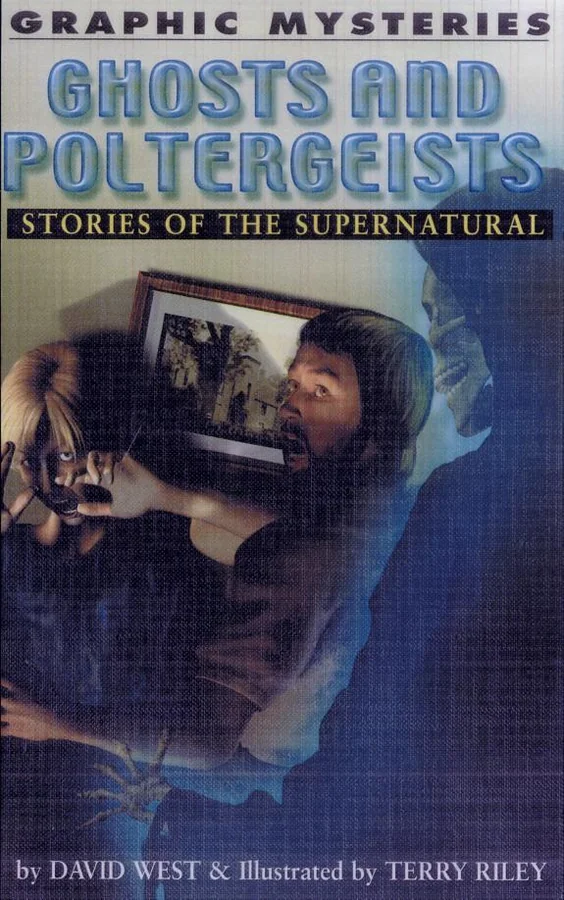
Ghosts And Poltergeists
 73
73

Ghosts And Poltergeists
West's "Ghosts And Poltergeists" avoids the common pitfall of treating spectral phenomena as mere sensational curiosities. Instead, it offers a methodical survey of reported hauntings and poltergeist activity, grounded in historical accounts and critical analysis. A notable strength is the book's structured approach, differentiating between various manifestations and considering potential psychological underpinnings. For instance, the discussion on recurrent hauntings, often linked to specific locations and emotional residues, provides a compelling framework for understanding persistent reports. However, the work occasionally feels constrained by its desire for empirical grounding, sometimes leaving the more esoteric or deeply subjective aspects of spiritual experience less explored. The exploration of the 1974 Enfield Poltergeist case, while detailed, could have benefited from a deeper dive into the witnesses' psychological states beyond mere suggestion. Ultimately, West delivers a sober, fact-oriented account that is valuable for its clarity, though it may not satisfy those seeking purely metaphysical explanations.
📝 Description
73
### What It Is David West's "Ghosts And Poltergeists," first published in 2005, offers a deep examination of spectral phenomena and their manifestations. This work moves beyond sensationalism to explore the underlying theories and reported experiences of hauntings and poltergeist activity. It surveys a range of historical accounts and contemporary investigations, seeking to understand the patterns and possible explanations for these enduring mysteries of the paranormal.
### Who It's For This book is intended for those with a serious interest in the paranormal, particularly individuals seeking a structured approach to understanding ghost and poltergeist phenomena. It appeals to researchers, students of folklore, and anyone intrigued by the intersection of psychology, physics, and unexplained events. Readers who prefer evidence-based inquiry and historical context over purely anecdotal accounts will find value here.
### Historical Context West's 2005 publication emerged during a period when paranormal research continued to grapple with its scientific legitimacy. Following earlier popularizations of ghost stories in the 20th century, including works by figures like Harry Price who investigated Borley Rectory, "Ghosts And Poltergeists" arrives in a landscape shaped by both continued public fascination and academic skepticism. The work implicitly engages with a long tradition of spiritualism and psychic research, while also acknowledging the growing influence of psychological explanations for perceived hauntings.
### Key Concepts The book systematically breaks down the complex subject of hauntings into manageable categories. It distinguishes between different types of spectral apparitions, explores the energetic and physical manifestations associated with poltergeists, and critically examines the role of the observer in reported phenomena. West also addresses the psychological and environmental factors that may contribute to experiences of the uncanny, providing a nuanced perspective on these persistent reports.
💡 Why Read This Book?
• Gain a structured understanding of paranormal phenomena, differentiating between ghost types and poltergeist activity as detailed in West's categorizations. • Explore historical accounts of hauntings, such as the detailed case studies presented from the 20th century, to contextualize modern reports. • Examine the interplay of psychology and unexplained events, learning how West's analysis considers observer influence and environmental factors.
⭐ Reader Reviews
Honest opinions from readers who have explored this book.
❓ Frequently Asked Questions
What is the primary focus of David West's 'Ghosts And Poltergeists'?
The book primarily focuses on a systematic examination of reported ghost and poltergeist phenomena, analyzing historical accounts and contemporary investigations with a critical perspective.
When was 'Ghosts And Poltergeists' first published?
'Ghosts And Poltergeists' by David West was first published in 2005, placing it within a period of continued public interest in the paranormal alongside ongoing academic debate.
Does the book offer scientific explanations for hauntings?
While not strictly a scientific treatise, the book critically examines phenomena and explores potential psychological and environmental factors, rather than solely relying on supernatural explanations.
What distinguishes poltergeist activity from other types of hauntings according to the book?
West's work typically distinguishes poltergeist activity by its focus on physical disturbances and often a perceived agent, contrasting with more passive spectral apparitions.
Is 'Ghosts And Poltergeists' suitable for beginners in paranormal studies?
Yes, its structured approach and clear explanations make it suitable for beginners who wish to understand the subject matter beyond sensationalized accounts.
What historical periods or cases are discussed in the book?
The book covers a range of historical accounts, often referencing cases from the 20th century and earlier periods to provide context for spectral and poltergeist phenomena.
🔮 Key Themes & Symbolism
Categorization of Phenomena
West meticulously categorizes spectral occurrences, differentiating between residual hauntings, intelligent hauntings, and poltergeist disturbances. This structured approach helps readers understand the diverse manifestations reported throughout history. It moves beyond a monolithic view of the paranormal, allowing for a more nuanced analysis of specific reported events and their potential underlying mechanisms or interpretations.
Historical Case Studies
The book draws upon a wealth of historical records, examining classic and lesser-known cases of hauntings and poltergeist activity. By referencing documented accounts from various eras, West provides a chronological perspective, illustrating how beliefs and interpretations of these phenomena have evolved. This historical grounding is crucial for understanding the enduring nature of these mysteries and their cultural significance.
Psychological and Environmental Factors
A significant aspect of West's analysis involves exploring the potential psychological and environmental influences that contribute to reported experiences. The work considers how human perception, suggestion, and the physical environment might play a role in the genesis or interpretation of paranormal events, offering a balanced perspective that includes empirical considerations alongside the unexplained.
The Nature of Evidence
West critically evaluates the nature of evidence presented in paranormal investigations. He discusses the challenges of verifying anecdotal accounts, the impact of observer bias, and the difficulties in applying conventional scientific methods to subjective experiences. This theme underscores the book's commitment to a rational yet open-minded inquiry into spectral phenomena.
💬 Memorable Quotes
“Distinguishing between residual hauntings and poltergeist activity is crucial for analysis.”
— This highlights West's methodical approach, emphasizing that not all unexplained events are the same. Understanding the specific type of manifestation is the first step in seeking a coherent explanation or interpretation.
“The role of the observer in shaping perceived phenomena.”
— This concept suggests that the subjective experience and psychological state of the person witnessing or experiencing an event can significantly influence its interpretation and even its perceived nature.
“Historical accounts provide a framework for understanding contemporary reports.”
— West utilizes past occurrences and folklore as a basis for contextualizing current claims of hauntings, showing how patterns and archetypes persist across different time periods.
“Poltergeist phenomena often involve physical disturbances.”
— This points to the characteristic nature of poltergeist activity, which is typically associated with tangible effects like moving objects or strange noises, setting it apart from visual apparitions.
“Skepticism and belief must both be critically examined.”
— The work implies a balanced perspective, acknowledging that both outright dismissal and unquestioning acceptance can hinder genuine understanding of complex unexplained events.
🌙 Esoteric Significance
Tradition
While "Ghosts And Poltergeists" does not adhere to a single esoteric lineage, it engages with themes common in Western Esotericism, particularly those concerning the nature of consciousness, the afterlife, and subtle energies. It touches upon concepts found in Spiritualism and Theosophy regarding discarnate entities and hauntings, but approaches them with a critical, analytical lens rather than purely devotional or dogmatic adherence.
Symbolism
The book implicitly engages with the symbolism of place and memory. Haunted locations themselves become symbols of unresolved emotional energy or historical trauma. Objects that move inexplicably in poltergeist cases can symbolize chaotic or repressed forces attempting to manifest, disrupting the mundane order and forcing acknowledgment.
Modern Relevance
Contemporary paranormal investigation groups and online communities often draw upon the foundational categorizations and analytical frameworks that West's work helps to solidify. His emphasis on differentiating phenomena and considering psychological factors remains relevant for modern researchers seeking to bring a more rigorous approach to the study of hauntings and spectral encounters.
👥 Who Should Read This Book
• Students of folklore and mythology interested in how ghost stories and spectral legends evolve and persist across cultures. • Researchers of anomalous phenomena seeking a structured overview of reported hauntings and poltergeist activity with a critical perspective. • Individuals curious about the intersection of psychology, environment, and subjective experiences of the uncanny.
📜 Historical Context
David West's "Ghosts And Poltergeists," published in 2005, entered a field still heavily influenced by the legacy of paranormal investigators like Harry Price and the Society for Psychical Research, which began its work in the late 19th century. The early 2000s saw a continued public fascination with the supernatural, often fueled by media portrayals, yet academic circles remained largely skeptical, leaning towards psychological explanations for hauntings. West's work navigates this landscape by attempting a structured, analytical approach. It implicitly responds to the ongoing debate between spiritualist interpretations and more materialistic or psychological theories. While not directly engaging with a specific contemporary critic, the book's methodology reflects a broader academic trend of seeking empirical data and logical frameworks within the study of anomalous phenomena, contrasting with earlier, more intuitive approaches to spiritualism.
📔 Journal Prompts
The classification of residual hauntings versus intelligent hauntings: Which type feels more plausible given your own experiences or beliefs?
Reflect on a historical case study presented in the book. What factors might have contributed to the reported events?
Consider the concept of the observer's role. How might your own presence influence a potentially anomalous event?
Analyze the distinction between poltergeist activity and other spectral phenomena discussed.
How does the book's approach to evidence challenge or support your prior understanding of ghosts?
🗂️ Glossary
Poltergeist
A type of paranormal phenomenon characterized by physical disturbances such as moving objects, noises, and other disruptive physical manifestations, often believed to be caused by an unseen agent.
Residual Haunting
A type of haunting where an event or emotion from the past is believed to be replaying itself in a location, often without conscious interaction or intelligence behind it.
Intelligent Haunting
A haunting believed to be caused by a conscious, discarnate entity that can interact with its environment and living individuals.
Apparition
A visual manifestation of a ghost or spirit, often appearing as a human figure or a shadowy form.
Observer Effect
In the context of paranormal studies, this refers to how the presence or actions of an observer might influence or even cause the phenomena being observed.
Discarnate Entity
A disembodied spirit or consciousness that is believed to exist without a physical body.
Anecdotal Evidence
Evidence based on personal accounts or stories rather than on scientific investigation or verifiable facts.