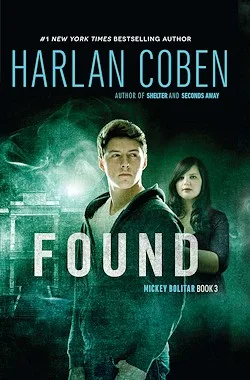
Found
 79
79

Found
Harlan Coben’s 'Found' presents a familiar yet effective narrative of a long-lost child resurfacing, triggering a cascade of revelations. The strength lies in Coben's mastery of pacing, keeping the reader engaged through a series of escalating twists. One particular passage detailing the protagonist's fragmented memories of the abduction moment effectively conveys the lingering trauma. However, the resolution, while providing closure, occasionally strains credulity with its intricate plotting. The book serves as a solid entry in the mystery genre, offering a satisfying, if somewhat predictable, unraveling of secrets.
📝 Description
79
### What It Is
'Found' by Harlan Coben, first published in 2014, is a thriller that centers on a missing person case with deeply personal stakes. The narrative follows the search for a boy who disappeared years prior, a search that uncovers a complex web of secrets and past traumas.
### Who It's For
Readers who enjoy suspenseful plots, intricate mysteries, and character-driven narratives will find 'Found' compelling. It appeals to those who appreciate a story where the past significantly impacts the present, and where uncovering hidden truths is paramount.
### Historical Context
Published in 2014, 'Found' emerged during a period where the thriller genre continued to thrive, with authors like Gillian Flynn gaining prominence for psychological depth. Coben's work in this era often explored themes of suburban secrets and the lasting impact of childhood events, a trend that resonated widely.
### Key Concepts
The book explores themes of memory, identity, and the consequences of buried secrets. It questions how much we truly know about the people closest to us and the lengths to which individuals will go to protect their past or uncover the truth.
💡 Why Read This Book?
• Understand the psychological toll of prolonged uncertainty, exemplified by the protagonist's decade-long search, offering a visceral portrayal of hope and despair. • Explore the theme of hidden identities and the consequences of a past deliberately obscured, as seen in the central mystery surrounding the boy's disappearance. • Experience a masterclass in suspenseful storytelling, with Coben's signature tight plotting and unexpected reveals, mirroring the deliberate construction of secrets within the narrative.
⭐ Reader Reviews
Honest opinions from readers who have explored this book.
❓ Frequently Asked Questions
What is the central mystery in Harlan Coben's 'Found'?
The central mystery revolves around the disappearance of a young boy years prior and his unexpected reappearance, which unravels a complex network of past secrets and ongoing deceptions.
Who are the main characters in 'Found'?
The primary characters include the protagonist who is searching for the missing boy, and the individuals connected to the boy's past and present, whose lives become entangled in the unfolding mystery.
What themes does Harlan Coben explore in 'Found'?
Coben explores themes of family secrets, the impact of trauma, the nature of identity, and the lengths people go to protect the truth or uncover it.
When was 'Found' originally published?
'Found' was originally published in 2014, placing it within Coben's prolific career of crafting contemporary thrillers.
Is 'Found' part of a series?
While 'Found' features characters and themes common in Coben's work, it is generally considered a standalone novel and not part of a specific series.
What makes Harlan Coben's thrillers unique?
Coben is known for his compelling plots, relatable characters often grappling with ordinary lives disrupted by extraordinary events, and his signature twists.
🔮 Key Themes & Symbolism
The Echoes of the Past
The narrative hinges on how events from years prior continue to dictate the present. The disappearance, occurring a decade before the main plot, casts a long shadow, influencing decisions, relationships, and the very identities of the characters. Coben demonstrates how unresolved past traumas can fester, creating a hidden landscape of fear and deception that eventually demands confrontation. The act of 'finding' is not just about locating a person, but about unearthing buried truths that have shaped everyone involved.
Identity Under Siege
Central to 'Found' is the question of who people truly are, especially when their past has been manipulated or erased. The reappearance of the missing boy challenges established narratives and forces everyone to re-examine their understanding of him and themselves. This theme explores the fragility of identity when built upon foundations of secrecy or falsehood. Coben uses the mystery to probe how external revelations can shatter internal perceptions, leading characters to confront uncomfortable aspects of their own lives and connections.
The Nature of Truth and Deception
'Found' meticulously dissects the layers of truth and deception that surround the central mystery. Characters operate with incomplete information, driven by a mix of genuine concern and self-preservation. The book highlights how deliberate falsehoods, even those intended to protect, ultimately create more complex problems. The search for the boy becomes a quest for objective truth in a world clouded by suspicion and manipulation, forcing protagonists to discern reality from carefully constructed lies.
Familial Bonds and Betrayal
The narrative delves into the complex dynamics of family, exploring both the fierce loyalty and the potential for profound betrayal. The search for the missing child is motivated by deep familial connections, yet the secrets unearthed often reveal hidden betrayals within these same bonds. Coben examines how the desire to protect family can lead to morally ambiguous actions, and how the revelation of such secrets can irrevocably alter familial relationships, testing the very definition of kinship.
💬 Memorable Quotes
“The past is never really past.”
— This concept underscores the novel's central theme: that unresolved events and buried secrets from earlier times continue to exert a powerful influence on the present, shaping characters' lives and the unfolding plot.
“Sometimes, the truth is more dangerous than the lie.”
— This highlights the perilous nature of the protagonist's quest. Uncovering the truth about the disappearance and subsequent events carries significant risks, potentially exposing dangerous individuals or shattering deeply held beliefs.
“We are defined by the questions we cannot answer.”
— This interpretation suggests that the unknown aspects of a person's history or identity, particularly the mystery surrounding the missing boy, are crucial to understanding who they are and the impact they have.
“The hardest part of searching is not knowing when to stop.”
— This captures the relentless drive of the protagonist and the emotional toll of a prolonged investigation. It speaks to the difficulty of letting go when faced with uncertainty and the hope that the next step might yield answers.
“Every family has its secrets.”
— This aphorism sets the stage for the intricate web of deceptions and hidden histories that Coben typically weaves into his narratives, suggesting that beneath a calm surface, turmoil often lies.
🌙 Esoteric Significance
Tradition
While 'Found' is primarily a contemporary thriller, its thematic exploration of hidden realities, the persistence of past events, and the quest for truth can be viewed through a lens of hermetic principles. The idea that 'as above, so below' might metaphorically apply to the hidden influences of the past on the present, or that hidden causes (secrets) lead to observable effects (the mystery). It aligns with the hermetic emphasis on uncovering hidden knowledge and understanding the interconnectedness of events, even if not explicitly framed within a mystical doctrine.
Symbolism
The recurring motif of 'finding' can symbolize the hermetic pursuit of hidden knowledge or the philosopher's stone – the ultimate truth or solution. The concept of 'lost time' or 'missing years' functions as a symbol for obscured understanding or the veils that hide reality from perception. Characters grappling with fragmented memories symbolize the alchemical process of dissolution and reformation, where old identities and understandings must break down to reveal a new truth.
Modern Relevance
Contemporary psychological thrillers and true crime narratives often draw upon the narrative structures and thematic concerns present in 'Found'. Thinkers and practitioners interested in narrative psychology, the impact of trauma on memory, and the construction of identity in the face of hidden information might find the book's exploration relevant. The focus on uncovering buried secrets and the psychological fallout mirrors aspects of modern investigative techniques and therapeutic approaches to dealing with repressed memories.
👥 Who Should Read This Book
• Readers who appreciate tightly plotted suspense narratives and the satisfaction of unraveling complex mysteries, particularly those involving long-buried secrets. • Fans of Harlan Coben's previous works looking for another gripping story that explores the darker side of suburban life and familial relationships. • Individuals interested in narratives that examine the psychological impact of trauma and the persistent influence of the past on the present.
📜 Historical Context
Published in 2014, Harlan Coben’s 'Found' arrived in a literary landscape dominated by psychological thrillers and domestic noir, a trend exemplified by the success of Gillian Flynn’s 'Gone Girl' the previous year. Coben’s work consistently tapped into anxieties about suburban life and the hidden darkness beneath seemingly ordinary facades. 'Found' continued this exploration, resonating with a readership accustomed to intricate plots and morally ambiguous characters. The genre in the early 2010s saw a rise in narratives focusing on unreliable narrators and the unreliability of memory, a current 'Found' engages with. Unlike some of the more literary explorations of trauma, Coben’s approach remained firmly rooted in suspense and a propulsive narrative, distinguishing him from contemporaries who might focus more on stylistic experimentation. The reception of such thrillers often hinged on their ability to surprise and satisfy a demanding audience, a challenge Coben met with his characteristic blend of intricate plotting and emotional stakes.
📔 Journal Prompts
The protagonist's relentless search for the missing boy.
Moments of fragmented memory concerning the abduction.
The hidden motivations of characters protecting secrets.
The definition of family when secrets are revealed.
Confronting the consequences of a decade-old deception.
🗂️ Glossary
Abduction
The act of forcibly taking someone away against their will, a central event that drives the mystery in 'Found'.
Protagonist
The main character of the story, whose perspective and actions are central to the plot and the resolution of the central mystery.
Red Herring
A misleading clue or piece of information intended to distract readers or characters from the real solution to the mystery.
Suspense
A state of excited or anxious uncertainty about what may happen, a key element cultivated by Coben's storytelling techniques.
Twist Ending
An unexpected turn of events near the conclusion of a story that alters the reader's perception of the narrative.
Deception
The act of misleading someone, often involving lies or hidden truths, a pervasive element in the relationships and plot of 'Found'.
Trauma
A deeply distressing or disturbing experience, the lingering effects of which significantly impact characters' lives and decisions throughout the novel.